
Defending the Undefendable II: Freedom in All Realms
29. Dwarf Thrower
29.
DWARF THROWER
Dwarves, or little people as they are sometimes called, engage in a variety of professions. But some heed a rather unique calling, that of the use of themselves as human projectiles. Sometimes they are thrown, and the contest depends upon distance, or hang times, or grace through the air, or some other such criterion. On other occasions, they are used as human bowling balls, with the number of pins knocked down as the earmark of success. But, whatever wacky activity they are engaged in, all have two things in common. First, not even one of these midgets is ever forced to take part in these “sports” against his will and only adults can take on these jobs. If any little people were coerced into such occupations, libertarians would be opposed, but to the compulsion, not to the job. Secondly, this practice is universally reviled by all busybodies and do-gooders. In other words, these games consist of “capitalist acts between consenting adults.” Thus, they are grist for the mill of this book, which defends behavior which is out of favor on the part of many, and yet violates no stricture of libertarian law.
Why do the little people allow themselves to be used in such a manner? This is similar to the question put to Willie Sutton: “Why do you rob banks?” His answer? “That’s where the money is.” In like manner, one of the motivating forces in the present context is the lure of the payoff. The practice of dwarf throwing offers more money than many other careers or pastimes.
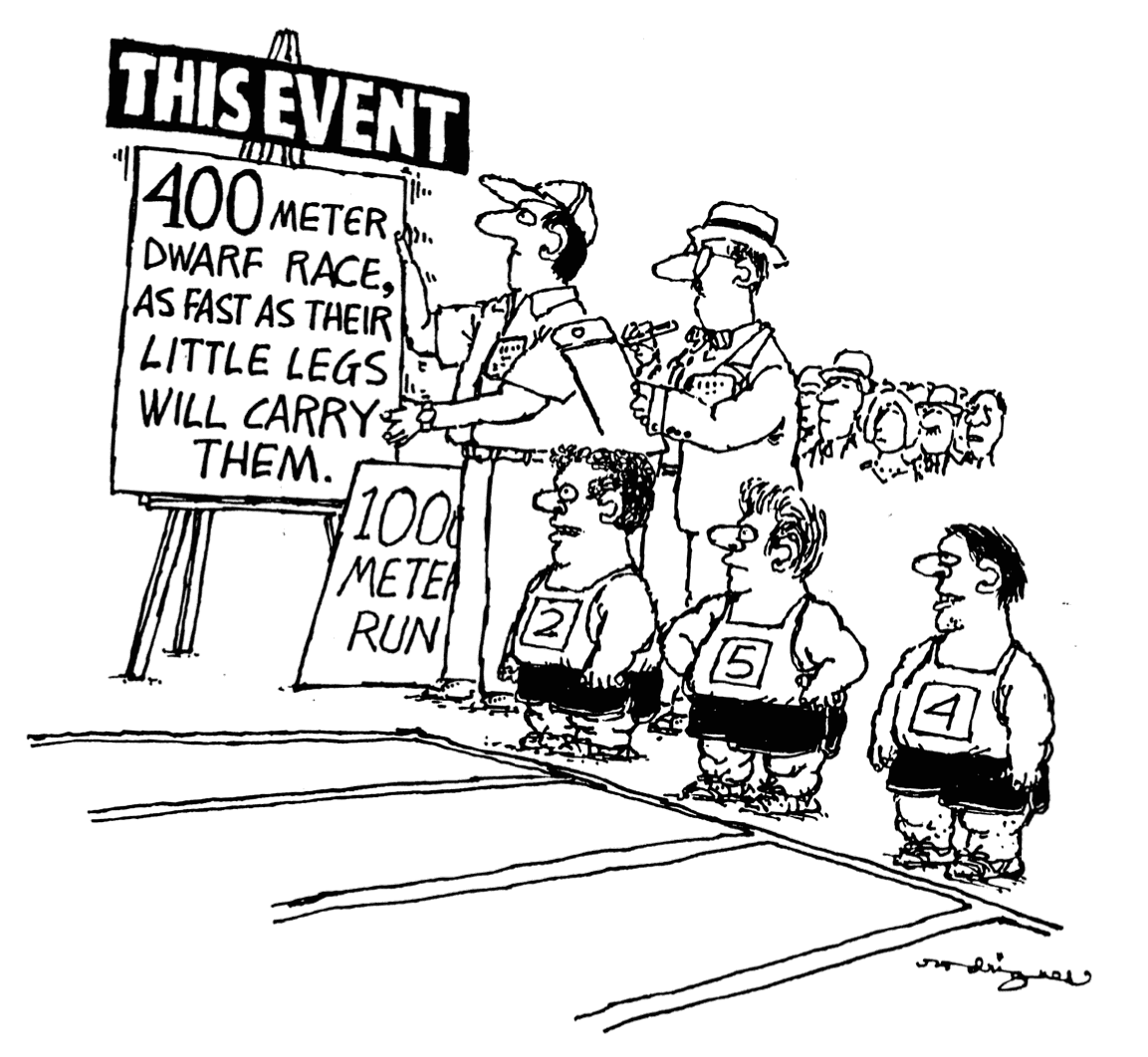
And what explains that phenomenon? This is part and parcel of the economics of compensating differentials. First, it is a dangerous occupation. They may fly through the air with the greatest of ease, but they must come back down to earth at some point and when they do it is, at the very least, a jarring experience, no matter how much padding they wear. Secondly, many of these diminutive human beings may well have an aversion to being treated in such a manner. If so, it will take even more in the way of compensation to induce them to put up with what they regard, quite reasonably, as an indignity. If these are not their motivations, wages will be unaffected. If they enjoy the experience and see the social aspects of their calling in a positive manner, then money wages will fall as they queue up to take these jobs.
Economists know that, all things considered, dwarves make a profit on every “jump” they undergo. Were this not the case, they would scarcely agree to be used in such a manner. If a dwarf is paid one hundred dollars to be hurled, we can deduce that all the negative aspects of this experience—the risk of being injured, the alternatives they must forego to take part in this game, the possible shame they may suffer—are together of less import to them than the amount of money they are paid. The difference is profit accruing to the midget.
Why do the do-gooders do what they do? Why are they dead set in their attempt to call a halt to these goings-on? Part of the explanation must be that they are would-be dictators, ever ready to impose their views over the choices made by others. Another part may be that they are disgusted by the specter of people being (mis)treated in this manner. Further, they may be poor economists and do not realize that all voluntary acts are necessarily beneficial at least in the ex ante sense. That is, after being tossed the small person may come to regret what he has done (or, rather, allowed to be done to him). For example, he may wish he had not participated in the tossing if he is injured, or “outed” to his family. But, beforehand, he expected more benefit than harm, or he would not have agreed to the deal.
However, the same may be said of any human action from buying, selling, renting, gambling, indeed, getting out of bed in the morning. We all engage in such acts because we perceive the gain as greater than the loss. And, as with any activity, sometimes we err. Thus there is nothing unique about dwarf tossing.
Then, too, the same considerations apply to the manager who organizes dwarf bowling. He, too, expects to make a profit: the returns from the ticket sales will be greater than all the costs. Sometimes, he also can be disappointed.
So, no matter how reviled is this practice, it is one that must be permitted in the free society. And, for agreeing to be thrown, in the face of ridicule, opprobrium, and revulsion, the dwarf tossee (and tosser as well) must be considered heroic.

