
Defending the Undefendable II: Freedom in All Realms
11. The Smoker
11.
THE SMOKER
Cigarette smokers are now an endangered species. No-smoking zones have been established in hospitals, office buildings, recreational centers, shopping malls, and other places of congregation all over the United States. Cities and municipalities coast to coast have amended their health by laws so as to further proscribe the limits within which smoking is still allowed. In many cases, outright bans have been imposed. For example, cigarette smoking has been prohibited entirely in bars as well as all restaurants, in both San Francisco and New York. Tobacco advertising has long been severely limited, and there are now calls from otherwise respectable quarters for its outright elimination. There is little doubt that at this rate, government will soon prohibit smoking altogether on a nationwide basis, indoors and out.
The reason for this spate of activity is not hard to discern. Smoking has long been regarded as harmful to those who indulge in it. Moreover, recent medical evidence appears to suggest that non-smokers who inhabit the same enclosed rooms as smokers are also endangered, by the secondary effects of this practice. It may be rather hypocritical for a government which still subsidizes tobacco growers to climb onto the anti-smoking bandwagon, and even attempt to lead the parade, but in the furor to wipe out this “vile” habit, logical consistency has been one of the first victims.
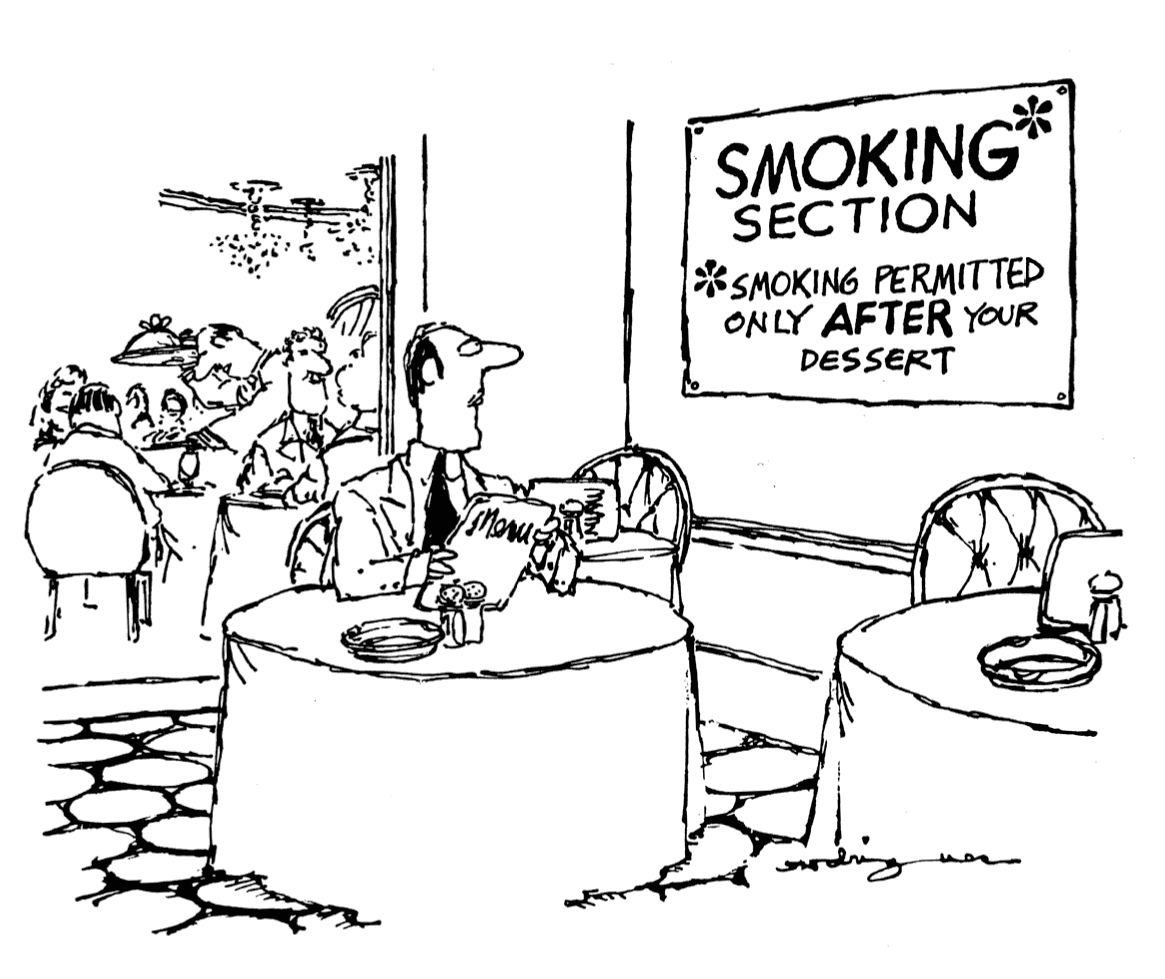
There are basically two ways to address the issue of smoking. One is by government fiat, and the second is by allowing the institutions of the free enterprise system to deal with the problem. Unfortunately, the political leaders of our society are so philosophically accustomed to use legislation as a bludgeon for all difficulties that the second type of solution has never even been publicly contemplated. Indeed, it is no exaggeration to say that most people have never even heard of it. How, then, would the market deal with the challenge of tobacco use?
Although it is always risky to try to anticipate the workings of a free marketplace, one scenario would have each business firm deciding for itself whether or not to impose a smoking ban, and if so, of what type. Some might allow smoking in all areas at all times. Others might set aside special zones, which might vary with the time of day or the day of the week. Still others might be tempted to deal with the problem in ways that are not yet known.
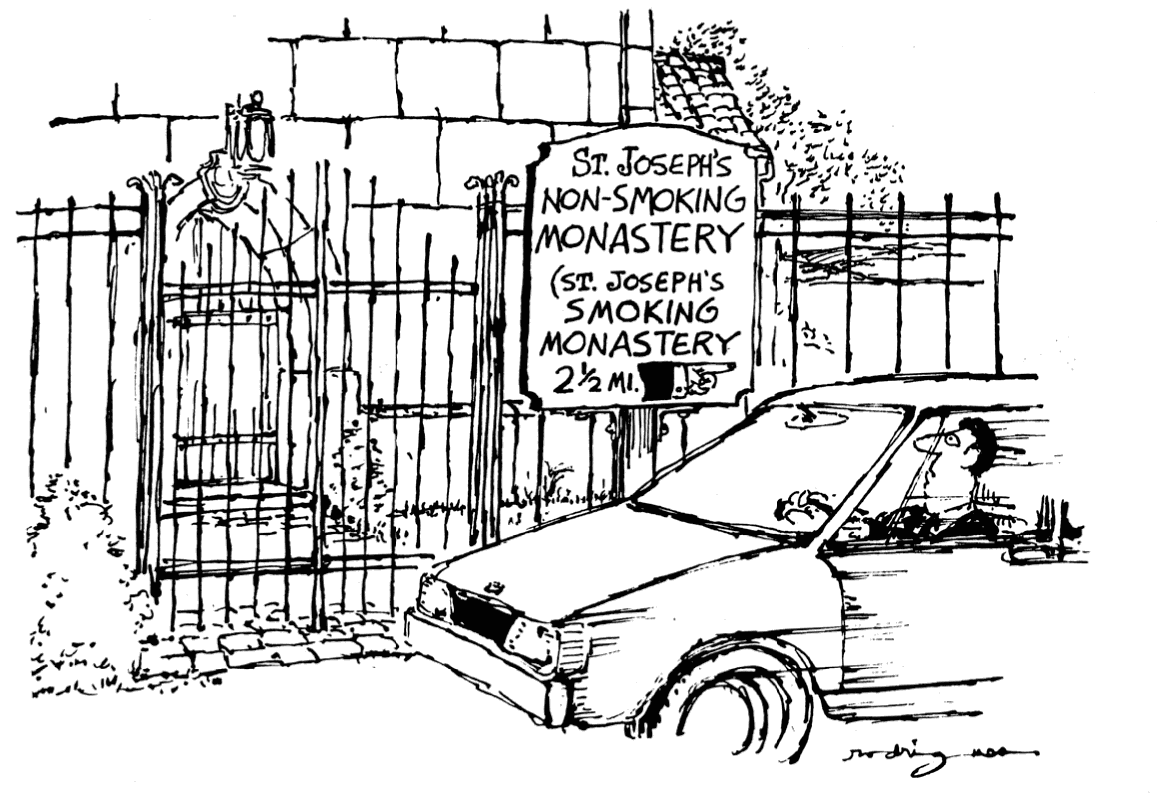
Given this panoply of different smoking rules at different establishments, customers would then sort themselves out accordingly. They would patronize those which pleased them most. Firms would now compete with one another, not only with regard to their primary good or service (restaurant, department store, etc.) but also as pertains to the smoking rules they had set up.
And the same analysis applies to the workplace. There would be an “invisible hand” in operation here too, guiding employers to set up the smoking rules which would best suit their respective employees. How would this work? Let us suppose that a given industry is composed of people who are avid anti-smokers (for example, producers of health food products). Allowing this practice to take place on the factory premises, even in small and strictly limited areas, would thus be for them a strong negative non-pecuniary effect; it would be equivalent to imposing upon them any other undesirable working condition. In such a case, the workers would be more likely than otherwise to quit and take jobs elsewhere. They would only maintain their former high attachment to their present employer if compensated for this—by higher pecuniary wages. In such circumstances, it would clearly be in the interest of the firm to prohibit smoking throughout the premises.
Now, consider a business concern which employs people who are quite oblivious to the dangers of smoking (rodeo cowboys might be an example). A ban on the practice in this case would be viewed as an undesirable working condition, just the opposite of its interpretation in the previous example. Here, the forces of the market would work in the direction of allowing the widest range for smoking. Otherwise, the employees would be attracted elsewhere, to places that better catered to their habit.
The advantages of allowing the market, not government, to set up smoking rules—whether for the consumer or in the workplace—are numerous. First of all, with each entrepreneur making up his own rules, there may be in existence dozens, if not hundreds, of different methods of dealing with the problem of secondary smoke pollution. Given that the best means for solving the difficulty are yet to be discovered, leaving it up to the marketplace will likely maximize the chances for quickly uncovering the most efficient solution.
Secondly, the market process is more flexible than government intervention. There can usually be only one set of legislation in a given geographical area, but under free enterprise, businesses may be able to tailor their smoking rules to fit their widely diverging clientele. For example, it may well best suit the patrons of a pool hall, or bowling alley, or discotheque to allow smoking on the entire premises. The customers of this sort of establishment are least likely to object, and most likely to be comfortable in such circumstances. In contrast, health food stores and vegetarian restaurants may only be able to survive by imposing a complete ban on all use of tobacco products. The market can accommodate both types of people, but it is difficult to see how coercive legislation can do so.
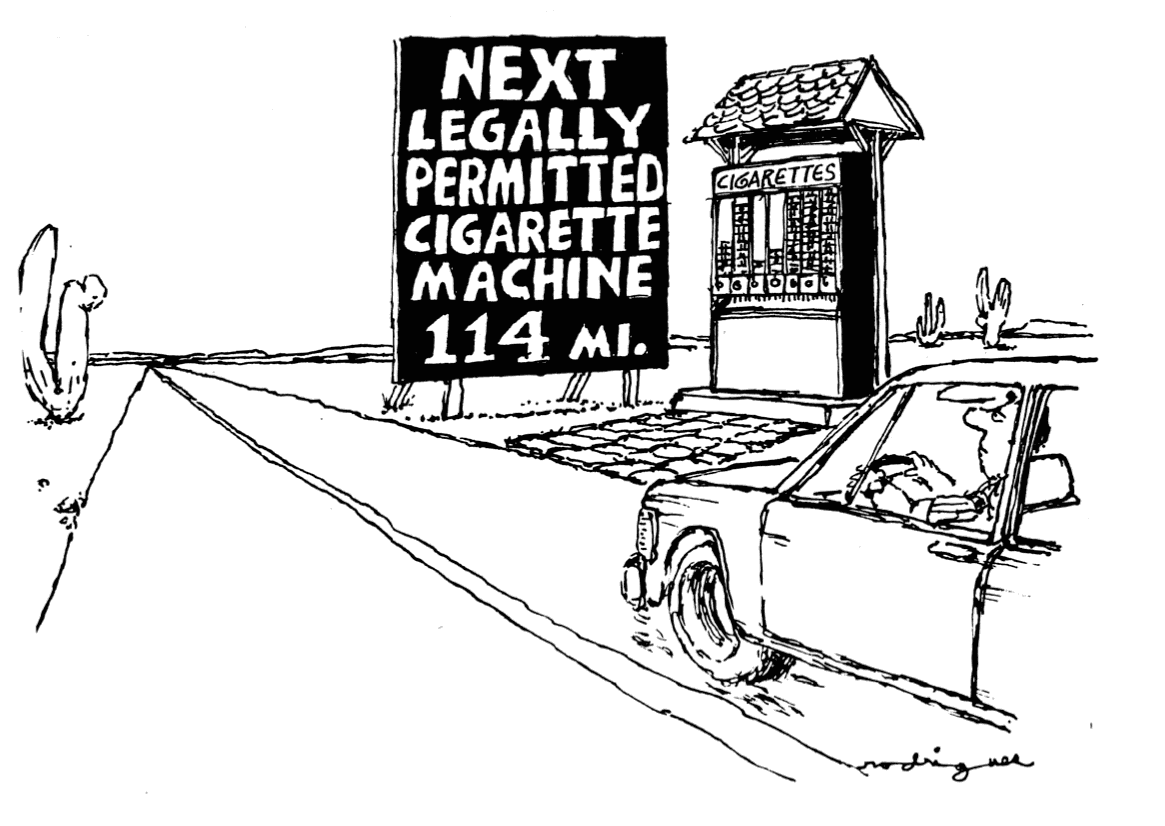
Thirdly, and perhaps most important, there is that often overlooked matter of freedom and individual liberty. Despite the desires of some people, the United States is still a country at least partially buttressed by the institution of private property. According to this doctrine, we are each of us the kings of our own little castles. It is thus our human right to be able to determine for ourselves how people must comport themselves in privately owned stores, restaurants, shopping centers, etc. If government is allowed to take over this realm and to dictate policy against the wishes of the owners of these establishments, then our liberty will be curtailed.
There is one argument, however, that directly challenges the freedom of every individual, but still has appeal in some quarters nevertheless. Under our present institutional arrangements of state subsidized health care, if a person contracts cancer or emphysema or some other dread disease as a result of smoking, his care may be financially underwritten out of general tax funds. Under such circumstances, it is argued, the state has a right to insist that people maintain their health if only to avoid becoming a drain on the public purse.
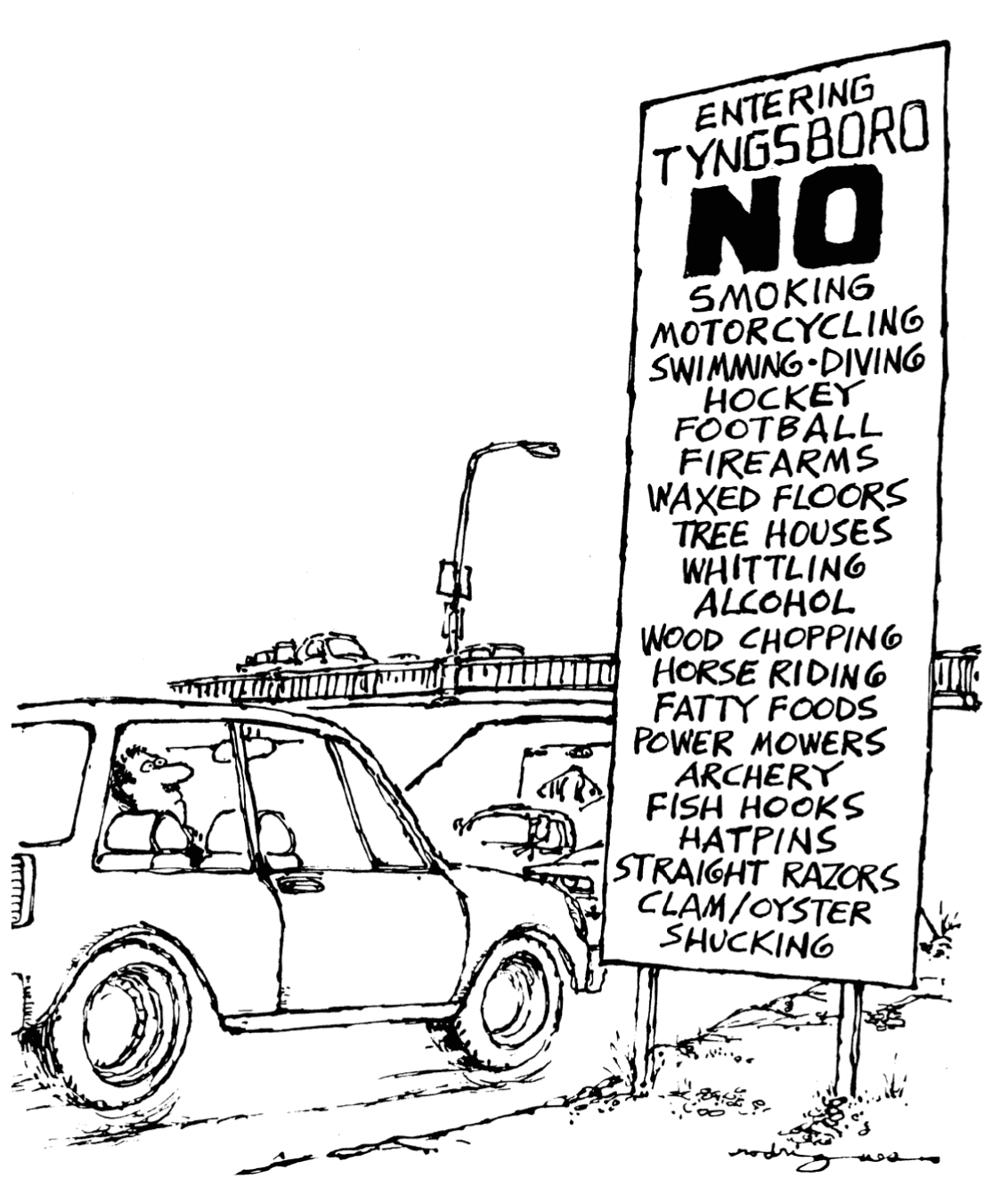
The problem with this line of reasoning is that it puts the cart before the horse. The western democratic nations are supposedly predicated on the basic assumption that the state exists to serve the people’s desires, not that the citizens exist in order to promote the interests of government. If people can be prohibited from smoking on the ground that the state finds inconvenient the resulting threat to their health, they can be forbidden to engage in any number of other potentially dangerous activities. But, do we really want a super nanny society which outlaws football, soccer, hockey, marathon running, triathlons, hang gliding, motorcycle riding, ice cream, candy, alcohol, and any and all other behavior which might put us at risk? Hardly. If push comes to shove, it would be far better to eliminate public funding of medical care, or at the very least allow people who insist on endangering their health in these ways to opt out.

