
Defending the Undefendable II: Freedom in All Realms
23. The Colorizer
23.
THE COLORIZER
Colorization has taken our society by storm. This process, which re-issues in color the older black-and-white movie classics such as Citizen Kane or City Lights, has been greeted with howls of outrage by the arts community. Even though TV watchers can simply dial out the color and view these movies in their original, pristine black and white, the culture vultures are still vociferously opposed.
What is their argument? First of all, there is the claim that these films are part of a “landmark heritage” and any tampering with them is akin to sacrilege. This is a very peculiar view to be put forth by people who are not known for their innate conservatism. Apart from the hypocrisy thus involved, the difficulty with the “whatever is, is right” philosophy is that it is simply not true. Things can be improved, the protestations of the recent converts to stick-in-the-mudism notwithstanding.
Nor is it even true that the precious artistic inheritance of black and white will be lost forever. On the contrary, there are several copies of these old films in the vaults, and the colorizers always leave a few untouched. The argument on the basis of heritage is specious. It is not that the vintage editions will disappear, merely that they will not be exhibited as widely. And why should they be, given the preference of a new generation of viewers for color?
One might wince at the prospect of the Mona Lisa being “recolored.” It might appear on the same level as drawing graffiti on the picture, or adding a mustache. The integrity of the object would disappear. However, there is a huge difference between the cinema and the great works of art. In the former case, there are several indistinguishable originals; in the latter, there is only one.
Then, there are complaints about the quality of the colorization, and charges that the decision as to which hue shall be used in what places is being made by “unqualified” computer technicians. This argument, too, is erroneous, for the market will tend to ensure that only the most gifted colorists will be allowed to touch these precious motion pictures. As well, what we now have before us is the product of a revolutionary process. In time, with technological breakthroughs, we can expect vast improvements.
But the major complaint about the colorizer is that he rides roughshod over the rights of the artist. Says Woody Allen in this regard, “No one should be able to alter an artist’s work in any way whatsoever, for any reason, without the artist’s consent. It’s really as simple as that.” There is, however, an obvious retort; these films are not owned by the artists who created them. On the contrary, they are the property of those who took the up-front risks of financing them. The point is that when the artist agreed not to become the residual income claimant, i.e., the property owner, but instead to work for him for a fixed fee, he in effect consented to the right of the latter to alter the product.
What is really at stake here is an attempt to satisfy or ignore the wishes of the consumer. This is clear when we ask, “Why is it that the colorizer is attempting to improve these old motion pictures? Is it out of a destructive impulse? Is it because he enjoys ruining the work of artists, better men than he?” Not a bit of it. It is solely because in attempting to maximize profits, he is led, as if by an “invisible hand,” to produce that which will best satisfy the customer.
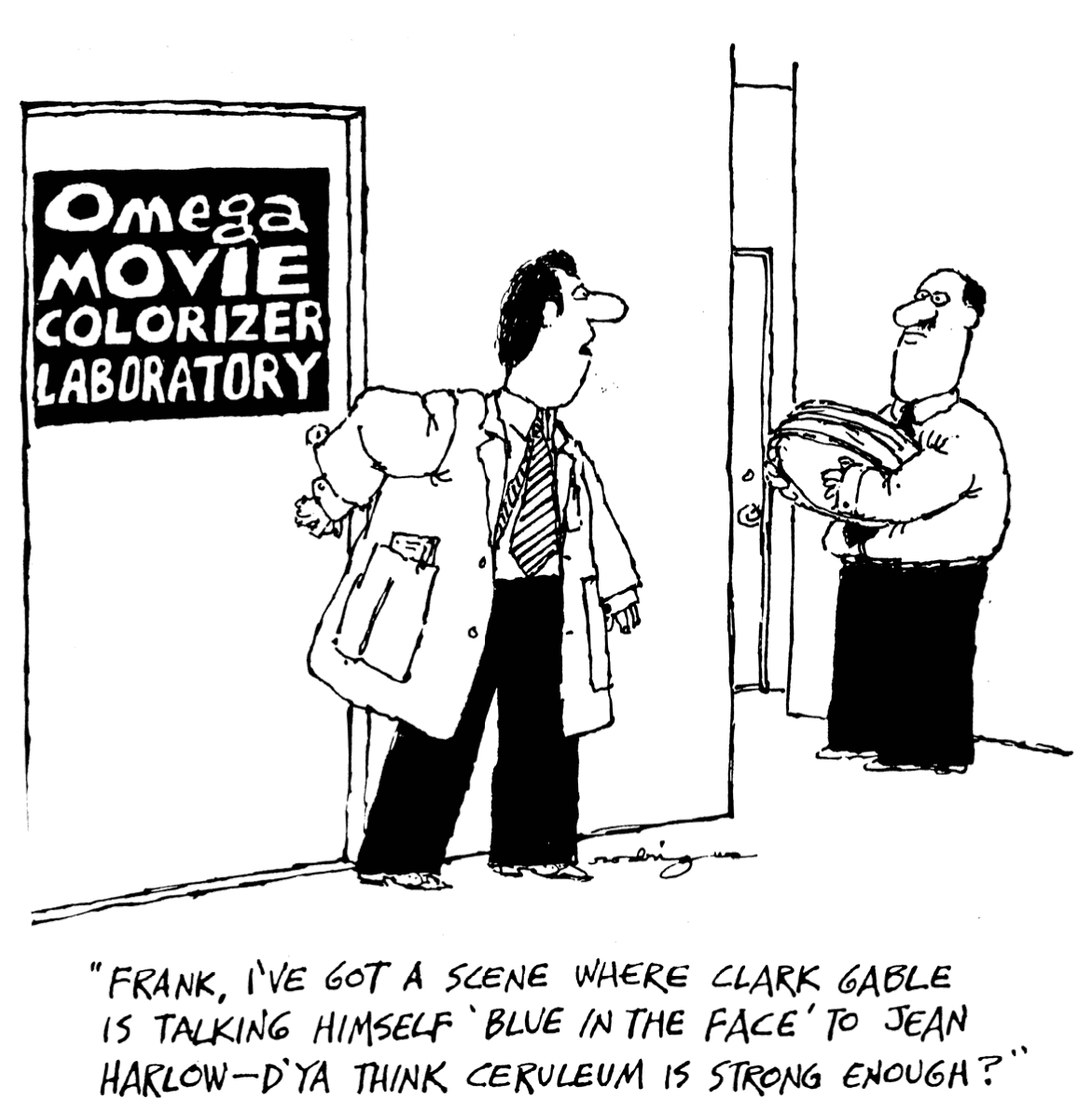
And the motives of the colorizer’s antagonists are equally clear: contempt for the wishes and desires of the public. For example, states Mr. Allen, one of the chief critics, “Nor would I want to see my film Manhattan in color. Not if it would bring in ten times the revenue. Not if all the audiences in the world begged or demanded to see it that way.” Now, of course, as the owner of this particular movie, he has the complete and absolute right to make this decision. (This statement is subject to qualifications made in the chapter on intellectual property.) Were he only the artist, and not both the artist and the owner, he would not.
Complains Woody Allen, “In our society, merchants are willing to degrade anything or anyone so long as it brings in a financial profit.” The answer to this charge is that artists have the right to try and amass the resources necessary for the creation of a motion picture. If they succeed, then they, as owners, have the right to determine matters such as colorization. But if they do not or cannot, they must be bound by the contract they have signed, which gives these ownership rights to other people.
The merchant in this case is not degrading anything or anyone. He is merely allocating resources in such a way as to maximize consumer satisfaction. This is both the beauty of the free enterprise system and one of its most noble aspects.

