
Abundance, Generosity, and the State
11. Haunted Donations
11
HAUNTED DONATIONS
Government interventionism tends to impair the welfare services that are provided by the private sector. It slows down or diminishes the ability and willingness of households, associations, and firms to make donations of time and money. It substantially weakens the family and corrupts the intellectuals. At the same time, monetary interventionism creates artificial wealth and artificial concentrations of wealth that have been used to fund large-scale philanthropic organizations, a phenomenon that is today often referred to as philanthro-capitalism.
In what follows, we shall discuss these consequences of government interventionism in more detail. We shall conclude this chapter with a quantitative overview of present-day donations in the US.
IMPOVERISHED HOUSEHOLDS
Government interventions tend to paralyze the production of economic goods. They tend to be destructive of wealth. Taxation and regulation curb the free initiative of individuals, and as a consequence the production of wealth is hampered. Government subsidies and guaranties encourage irresponsible attitudes and behavior and thereby promote malinvestments and other wasteful uses of available resources.
Impoverishment through Repressive Interventions
This is obvious in the case of repressive interventions such as prohibitions and regulations. They prevent market participants from pursuing their preferred course of action, thereby impairing their ability to create wealth. The same negative impact is also quite straightforward in the case of taxation, which represents an additional cost of doing business and an additional household cost of living.
A related issue is the taxation of successions. In chapter 5, we saw that the inheritance of material goods plays a paramount role in coordinating the division of labor across generations. The prospect of bequeathing one’s fortune to a worthy successor is an important motivation for saving and capital accumulation. By taxing inherited wealth, more often than not in a confiscatory way, governments hamper this vital function of successions.
To be sure, the government usually does not stockpile the money it has taken from the citizens but spends it in various ways. This expenditure creates revenues for the beneficiaries and might there-fore encourage productive activities.However, the overall impact of this taxation-and-public-spending redistribution game is still negative. On the one hand, as we shall argue in more detail, government spending tends to encourage reckless behavior and wasteful projects. On the other hand, at least a part of the government’s expenditure is a deadweight loss because it remunerates the bureaucrats and politicians involved in the redistribution process. Unfortunately, increased taxation tends to go hand in hand with disproportionately growing bureaucracies, and therefore the deadweight loss of government spending is ever increasing. Repressive interventions therefore always and everywhere tend to have a negative impact on the production of material wealth.
Because interventionism diminishes the wealth of the nation, it also tends to impair the ability of households, associations, and firms to donate their time and money. As wealth is destroyed, the need for gratuitous assistance increases, while the ability to provide such gratuitous services is diminished. Fewer donations are made, fewer private charities are founded and operated. Political leaders may then seek to further increase taxation and expand welfare programs designed to assist the needy out of the public purse.
The result is often a vicious circle. Government interventions hamper the private provision of genuine gifts and replace it with the public provision of false gifts—the mixed bag of loot sharing and hidden prices that we discussed in previous chapters—which further impair the ability of private-sector agents to donate their time and money.
These general tendencies can be neutralized or compensated for by the simultaneous influence of other factors. One should not expect to see a rigid quantitative relationship between interventionism and aggregate real income (or aggregate wealth), on the one hand, and between aggregate real income and gift giving, on the other hand.
McQuillan and Park (2017) have recently examined the empirical relationship between economic freedom and charitable giving. They used data from the World Giving Index, published by the US-based Charities Aid Foundation, as well as from the Fraser Institute’s Economic Freedom of the World report, and from the Property Rights Alliance’s International Property Rights Index. The authors found a strong relation between economic freedom and charitable giving (R-squared = 0.19) and an even stronger one between respect for property rights and charitable giving (R-squared = 0.25). Both relations are statistically relevant at the 99 percent confidence level. McQuillan and Park concluded:
The ability to create wealth, to secure that wealth, and to transfer it easily to other people are key drivers of private charity. In contrast, government redistribution through taxes and transfer programs shrink total wealth in society. The more the government shifts income around, the less total income there is to redistribute A poorer society has fewer resources available to help the disadvantaged. (McQuillan and Park 2017, p. 42; see also Hülsmann 2014b)
Impoverishment through Permissive Interventions
The destructive character of permissive interventions is much less known than that of repressive interventions. When governments grant to some (or all) citizens additional liberties or powers that they would not have in a social order where private-property rights are fully respected, most observers spontaneously suppose that this will spur the creative activities of the beneficiaries and thereby of the economy as a whole. The common perception is that there might be moral shortcomings in this approach, but the positive impact on wealth creation seems to be obvious.
The most important practical example is the monetary system.Within the past 150 years or so, governments step by step discouraged, and finally abolished, the monetary use of precious metals. In their place they have established a fiat-money regime that allows for the production of unlimited amounts of money through central banks and which greatly facilitates the creation of credit though commercial banks. These changes seem to carry significant advantages, not only for the immediate beneficiaries, but for society as a whole. Under a precious-metal monetary system, the overall money stock is strictly limited at any point in time and can be increased only marginally and at very high cost. By contrast, fiat money allows for rapid and theoretically unlimited extensions of the money supply, and thereby also of the supply of credit. Fiat money therefore allows for unlimited expansionary monetary policies designed to increase the overall volume of monetary spending within the economy. Each dollar spent by one man is revenue for another man. More spending by some people therefore eventually begets more spending by everybody else. Thus, the economy seems to enter a virtuous circle in which increasing revenues entail increasing expenditure, thereby raising employment and aggregate production.
However, this happy tale is nearly all wrong. The grain of truth it contains is that more spending may encourage aggregate production in the short run. But whenever and wherever these short-run benefits are obtained, they come at the expense of long-run growth. Thanks to increased spending on consumers’ goods, it is possible that more of the existing resources (labor and raw materials) and producers’ goods (machines, equipment, etc.) will be drawn into the production of consumers’ goods in the near future. It is this reallocation of the available capital goods that leads to an increase of consumers’-goods output in the short run. But the very same capital goods are now lacking elsewhere in the economy. Most notably, they are no longer available to produce other capital goods or to repair the existing ones. In the long run, therefore, aggregate production will be lower than it would have been without the stimulus given to short-run output (see Ruys 2017).
Expansionary monetary policies may entail a similar effect by discouraging savings, that is, by reducing the proportion of aggregate income held in cash or invested. When it becomes possible to finance investments with the printing press or, what in contemporary monetary systems is the same thing, with credit created from thin air, would-be investors are less dependent on their own savings. There is less incentive for them to save. And this tendency is reinforced through the fact that an expansion of the money supply typically entails lower interest rates, so that marginal savers are discouraged.
Also notice that such a drop in interest rates impairs the ability of all charitable organizations to live off their endowments. Mises ([1949] 1998, p. 834) was on the mark when he stated that
inflation and the endeavors to lower the rate of interest below the potential market rate virtually expropriate the endowments of hospitals, asylums, orphanages, and similar establishments. As far as the welfare propagandists lament the insufficiency of the funds available for assistance, they lament one of the results of the policies that they themselves are advocating.
Furthermore, monetary interventions may tip the balance between saving and consumption in favor of the latter by increasing the funding of the state. Under republican political regimes, the purposed of government spending is not a return on investment. Rather, the purpose is to finance various endeavors (unemployment relief, poor relief, public administration, etc.) that could not exist if they were not subsidized out of the public purse. This implies that under modern conditions, government spending is essentially consumptive spending. Therefore, whenever expansionary monetary policy increases the proportion of government spending in the economy, the share of consumptive spending increases relative to investment spending, with adverse effects for aggregate production in the long run.
Last but not least, permissive interventionism may reduce the long-run growth potential of the economy by increasing the probability of intertemporal disequilibria; that is, of erroneous investment decisions which waste the available capital goods. Here different causal chains may come into play.
According to the famous Austrian business cycle theory that Mises ([1912] 1981, pt. 3, chap. 5) first presented more than one hundred years ago, the artificial lowering of the loan-market interest rate through an expansion of the money supply entails an intertemporal disequilibrium between the various productive activities. On the one hand, the shortrun consumption of goods and services is encouraged; on the other hand, entrepreneurs are enticed to invest more capital goods in projects that can only bear fruit in the longer run and which therefore need more, not less, savings to be completed. Because these savings are simply not there, many of these projects will eventually need to be abandoned partway. Time and savings will have been wasted. The precise moment when the market participants understand their errors is when the artificial boom turns into a bust (see also Huerta de Soto [1998] 2006; Garrison 2001; Braun 2012).
There are variants of this disequilibrating impact of permissive monetary interventionism. Most notably, consider that present-day central banks usually pursue a policy of bailing out too-big-to-fail investors; that is, investors who are so large or so strongly intertwined with the rest of the economy that their bankruptcy is likely to trigger a collapse of the overall economy. Clearly, whatever the merits of this policy approach, it entices the beneficiaries to incur risks that they would not accept if they expected to pay for all losses out of their own pocket. The consequence is excessive risk taking within the economy as a whole. It is unavoidable that losses will increase in the aggregate. Now, when the central bank bails out the unsuccessful investor by granting him additional loans, or by lending money to the state so that the government may cover the losses, this boils down to redistributing income and wealth. Ultimately it is the ordinary money users who foot the bill, because all money units will lose some of their purchasing power. The benefits are concentrated in the hands of the too-big-to-fail investors, who are bailed out by the central banks. The aggregate impoverishment that results from the wasteful investments is compounded by a redistribution of income and wealth.
To sum up, permissive interventions impair the overall ability of households, associations, and firms to donate their time and money. Because they destroy the wealth of the nation, these interventions have a negative impact on the gift economy. There is in this regard not the slightest difference between them and the repressive interventions that we discussed before. However, in distinct contrast to the latter, permissive interventions are not harmful for the gift economy for this reason alone. They also exercise a negative influence by raising the opportunity costs of donations.
GENEROSITY DISCOURAGED
Government interventionism not only impairs the ability of households to make gifts. It also makes them less willing to donate their time and material resources. The residents of a country with permissive interventions tend to donate less of their time and money than the residents of a country without such interventions, ceteris paribus. Again, we will focus on the case of permissive monetary interventions to illustrate our point.
The Saturation of Capital Accumulation
In a market economy, the return on capital tends to fall under the impact of increased savings. This tendency is not an iron law; there are other factors that can influence the return on capital and exercise an opposite effect. As we saw in chapter 5, technological innovations, immigration, and the discovery of new mining opportunities tend to bring about an increased demand for capital, and this creates a tendency for the return on capital to increase. If increased savings occur at the same time as an increased demand for capital, the return on capital can tend in either direction, depending on the specific case. However, as far as the influence of savings on the return on capital is concerned, our contention still holds true. Whenever and wherever savings increase, the return on capital tends to drop below the level it would otherwise have reached.
Now, under a monetary order based on the effective circulation of silver or gold coins, any savings-induced decline in the return on capital will sooner or later discourage the investment of savings. We may call this the saturation mechanism of capital accumulation. In chapter 5, we highlighted the implications. If savings increase and less savings are being invested, then more savings are available for all other purposes. Some of the savings that are no longer being invested will now be used to fund future personal projects such as the embellishment of the family home, the acquisition of a secondary residence, or family trips. But clearly some other part of these savings will become available for donations.
Hence, we may conclude that under a monetary order based on the effective use of silver or gold coins, increased savings sooner or later manifest themselves in increased monetary donations. A savings-induced decline in the return on capital diminishes the opportunity cost of donations. People will therefore tend to donate more of their money.
Destruction of the Saturation Mechanism under Monetary Interventionism
Things are quite different in an economy ruled by permissive monetary interventions, especially when two conditions are united. The first condition is that the interest rate on the loan market is consistently lower than the return on capital on other markets. The second one is that the central bank—usually along with the state— socializes some of the investment risks by bailing out some (or all) market participants in dire straits. Let us explain how these conditions combine to raise the opportunity costs of donations.
If the interest rate on the loan market is lower than the return on capital in the stock market or in the real sector of the economy, then the market participants have a strong incentive to leverage their investments. That is, they will take out a loan at a low rate and invest the money in the real economy or in the stock market, where the rate of return is higher. They do not have to take the pains to accumulate any savings of their own. They just borrow other people’s money, or money fresh from the printing press, invest it, and hope to reap a nice profit. The only consideration that might give them pause is that leveraged investments involve an increased risk of insolvency. This brings us to the second condition.
If the central bank or the government, or both conjointly, pursue a policy of bailing out insolvent market participants, then insolvency risks are diminished for all market participants. This benefits in the first place all those who may expect to be bailed out. But indirectly all other investors benefit just as well from the increased overall stability of the market. They therefore have an incentive to incur greater risks than the ones they would have accepted if there had been no bailout policy. Most notably, they will accept higher levels of debt. They will tend to leverage their investments more often or more strongly.
Both conditions have been united in the Western world for much of the past 150 years, but especially after 1981. Since then, interest rates on the loan market have declined almost without interruption. Central banks and governments have tried to prevent market meltdowns through massive interventions in times of crisis. The consequence has been the greatest asset bull-market era ever known.
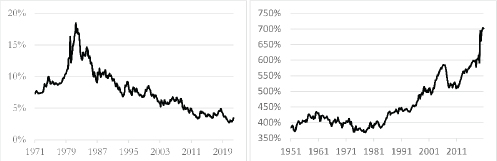
FIGURE 7: MONETARY POLICY AND ASSET GROWTH IN THE USA
Source: Federal Reserve Bank of St. Louis, times series GDP, DGS10, and TFAABSHNO.
Figure 7 illustrates this evolution. The left panel shows the long and very steady decline in interest rates in the private sector since the early 1980s (interest rates on public debt followed an analogous movement). The right panel shows the value of US household assets relative to GDP between 1951 and 2021. This value had been near flat for thirty years and then increased from its initial level of around 400 percent to the current level of around 700 percent. Notice the strong growth spurts during times of especially accommodative monetary policy, in 1995–2000, 2002–7, 2012–17, and 2020–21.
Donations in an Insatiable Economy
The implication for donations seems to be patent. In our present-day economy, investment revenue never declines for those who are willing to leverage their investments. The saturation mechanism that we analyzed above and which slows down the pursuit of monetary revenue in a natural monetary order is voided under the influence of permissive monetary interventions (see Hülsmann 2013, pp. 239–41).
Not only is the saturation mechanism voided, but to some extent it is even turned into its opposite, for leveraging is especially easy for those who are already rich and who therefore have the substantial “collateral assets” needed to secure additional loans. In the topsy-turvy economic world created by permissive monetary interventionism, the richer you are, the greater are the opportunities for leveraged investments and the greater are therefore the incentives not to donate any money. In other words, our monetary policy creates significant incentives, especially for wealthy people who prima facie could donate especially large amounts, not only to invest every last penny of their assets, but also to borrow the savings of other (poorer) people to do this.
The excesses of the contemporary economic world are widely known, but their causes are ignored. And who can blame the noneconomists for shoddy explanations of our quagmires if the economists have such difficulties coming to grips with the effects of government interventionism? One example among many: a few years back, Pope Francis (2015, sec. 53) described the bizarre world created by permissive monetary interventions in these words: “Today everything happens according to the criteria of competitiveness and according to the law of the stronger, where the more powerful destroys the weaker.” That certainly hits the nail on the head. It is also quite appropriate when the pope speaks of a “fetishism of money” and of the “dictatorship of an economy without a face and without a genuinely human goal” (sec. 55), when he scourges “ideologies” that “defend the absolute autonomy of markets and financial speculation” (secs. 56, 202). As Francis points out, this autonomy is not the essence of a truly free society. Indeed, as we have seen, it arises from the fact that inflationary monetary interventionism has enabled investors to overstep the boundaries that would limit their activities in a natural order based on the common law of private-property rights.
DEPLETING THE SOURCES OF DONATIONS
We have repeatedly highlighted the crucial importance of families in the economy of gratuitous goods. Families are schools of love and virtue. They are therefore fountains of sacrifice, generosity, and leisure. But families have not only a spiritual foundation, but also an economic one. They embody the division of labor between the sexes and between generations. The formation and maintenance of family life is therefore premised on a reasonable relationship between its costs and benefits. Under normal circumstances, this relationship is overwhelmingly favorable to the spouses and the different generations. However, the interventions of the state may change this. We have just seen how permissive interventions create incentives to use all available resources in the pursuit of monetary income. This also concerns the time and money that could sustain family life.
The Evaporation of the Family
According to Joseph Schumpeter, the traditional family has been withering away under the impact of growing rationalism. Once citizens begin to weigh the costs and benefits of children soberly, they inevitably conclude that, in the short term, personal costs are greater than personal benefits. In the long term, the situation could look quite different, but the short-term calculation leads away from the family. In his words:
As soon as men and women learn the utilitarian lesson and refuse to take for granted the traditional arrangements that their social environment makes for them, as soon as they acquire the habit of weighing the individual advantages and disadvantages of any prospective course of action—or, as we might also put it, as soon as they introduce into their private life a sort of inarticulate system of cost accounting—they cannot fail to become aware of the heavy personal sacrifices that family ties and especially parenthood entail under modern conditions and of the fact that at the same time, excepting the cases of farmers and peasants, children cease to be economic assets. These sacrifices do not consist only of the items that come within the reach of the measuring rod of money but comprise in addition an indefinite amount of loss of comfort, of freedom from care, and opportunity to enjoy alternatives of increasing attractiveness and variety—alternatives to be compared with joys of parenthood that are being subjected to a critical analysis of increasing severity. The implication of this is not weakened but strengthened by the fact that the balance sheet is likely to be incomplete, perhaps even fundamentally wrong. For the greatest of the assets, the contribution made by parenthood to physical and moral health—to “normality” as we might express it—particularly in the case of women, almost invariably escapes the rational searchlight of modern individuals who, in private as in public life, tend to focus attention on ascertainable details of immediate utilitarian relevance and to sneer at the idea of hidden necessities of human nature or of the social organism. (Schumpeter [1942] 2003, pp. 157–58)
Notice that Schumpeter conceded that the utilitarian calculus was most probably a spurious one. The balance sheet of pleasures and pains “is likely to be incomplete, perhaps even fundamentally wrong.” But then why do men and women accept and adopt what he calls the utilitarian lesson? Why do they focus “on ascertainable details of immediate utilitarian relevance” rather than on the long-run emotional and material benefits of family life?
Schumpeter answered, very unconvincingly, that this was the work of rationalism and utilitarianism. Indeed, whatever else may be held against these philosophical doctrines, they do not champion a focus on tangible benefits in the short run. Something else must therefore be at stake, something that biases the choices of men and women in such a way.
Permissive monetary interventions fit the bill. As we have seen, they destroy the natural saturation mechanism of the market economy and incite the market participants to dedicate ever more time and money to commercial investments rather than to other purposes, such as donations or building a family. Moreover, when these investments are leveraged, there is an even stronger—almost irresistible—incentive for this change of focus. With debt comes the necessity to service debt monthly. For a family with large loans to service, the economic priorities almost automatically shift to earning income and earning it now. And from this short-run perspective, family ties and parenthood represent a heavy sacrifice indeed.
Schumpeter was writing in the 1940s. His times had seen heavy-handed monetary interventions and the concomitant effects on family life. But more was yet to come. The postwar era brought forth the blossoming of the welfare state and of the enabling state, and with them a further assault on what Schumpeter had called the traditional “family motive” of economic decision-making.
In the past, state interventions more often than not served to protect the family (tax privileges, child benefits, etc.), but today’s policies are almost exclusively harmful to it (overview in Mlčoch 2017, chap. 5). Admittedly, deliberate harm is rare. More important in practice is unintentional harm. In fact, the family-damaging effects of government intervention are sometimes not even considered. For example, our current monetary system is designed to create constant (moderate) price inflation, which in turn creates irresistible incentives to buy a family home and other assets with the help of bank loans. The risks are obvious. How many families have been broken because they turned out to be unable to handle the debt burden? Those who craft monetary policy probably have no intention of producing such problems. They simply do not take them into account when they make their decisions.
In other cases, damage to the family is condoned as a side effect of public policy. This concerns in particular the policies of the enabling state that we reviewed in the previous chapter. When the state intervenes to “liberate” citizens from authorities such as the church, fathers, and mothers, it damages family life. Indeed, on the one hand, such interventions need to be funded by taxation and therefore burden families financially. On the other hand, they tend to make families superfluous.
An important example is ostensibly “pro-female” policies. Statefunded all-day schools and kindergartens aim to alleviate the life constraints of mothers. One of their purposes is to take a heavy load off women’s shoulders so that they can develop freely. But their side effect has been to reduce the relative benefits of a life as a home-maker and to reduce the relative costs of raising children alone, at least in the short run. Public schools and kindergartens are financed through taxation. Therefore, the relative advantage of raising children at home diminishes, while the need for additional monetary income increases due to taxation. Females join the labor market in greater numbers. The increased economic independence of women then reduces the costs of exiting the family community. There are more divorces and more single mothers. At the same time, there are also fewer incentives for men to start a family, since divorce becomes more likely, along with greater economic hardship resulting from pro-female divorce laws and legal outcomes.
All in all, therefore, such policies have reduced the incentives to start a family and to keep it alive under pressure. From a woman’s short-run economic perspective, the family becomes increasingly unnecessary and superfluous as a result of public schooling and other welfare services. But as the family withers, the performance of the economy as a whole is weakened. The tax base shrinks, and it becomes more difficult to fund pro-female policies.
In light of such absurdities, one may yearn for the classic welfare state. The good old welfare state—pay-as-you-go pensions and public healthcare systems—was in no way aimed at enabling individual self-fulfillment at the expense of the taxpayer. Its goal was not to liberate the individual from all life constraints, but only to provide some protection against major economic emergencies.
However, the welfare state, too, deteriorated the relationship between the costs and benefits of family life. It, too, weakened the community of solidarity between the spouses—and between parents and children—even if not quite as quickly, brutally, and cynically as the more recent “enabling” policies. The welfare state did not slaughter the family. It slowly decomposed it. As the economic logic of the welfare state has it, families bear the costs of bringing up children, while they must share their children’s future tax payments—and the tax-funded benefits of the welfare state—with all other citizens, including the childless. The financial benefits of children are there-fore socialized, while the financial and psychic costs of raising children remain private. This seems to be a very effective way of shrinking the number of families, as well as the population at large.
In Schumpeter’s words, we may say that the consequence of the welfare state and of the enabling state has been the fading away of the “family motive”—the desire to care for spouse and children. And as this motivation lost its grip on the businessman, the latter turned into a shortsighted and materialistic egomaniac. In Schumpeter’s words:
With the decline of the driving power supplied by the family motive, the businessman’s time-horizon shrinks, roughly, to his life expectation. And he might now be less willing than he was to fulfill that function of earning, saving and investing even if he saw no reason to fear that the results would but swell his tax bills. He drifts into an anti-saving frame of mind and accepts with an increasing readiness anti-saving theories that are indicative of a shortrun philosophy. (Schumpeter [1942] 2003, pp. 161)
The Corruption of the Clerks
Government interventions do not only deplete the economic foundations of family life. For the same reasons that we have just discussed, they also afflict donations of time and effort to scientific and artistic activities carried out for their own sake. They discourage the practice of the liberal arts as liberal arts, whereas they encourage their practice out of purely commercial considerations.
Moreover, government interventions have an insidious and far-reaching effect on intellectual life. Ever since the rise of royal absolutism and then especially with the onset of the French Revolution, governments have been the main employers of intellectuals. They have provided employment within the public administrations and in publicly funded universities and academies. And they have also funded the arts and the sciences through state subsidies, advertisements, and various other ways. The consequence has been the corruption of the intellectual class. Government funding has seduced lawyers, philosophers, economists, writers, painters, and sculptors into sycophantism and alienated them from the common man. This was the central theme of Julien Benda’s (1927) famous Trahison des clercs, but it was also discussed by Josef Pieper (1948) and, more recently, by Jacques Ellul ([1975] 1978), George Steiner (1989), and Christopher Lasch (1996).
An infamous expression of this corruption was a speech delivered by the German physiologist Emil du Bois-Reymond, in his capacity as the rector of the University of Berlin, at the onset of the 1870–71 war between Germany and France. He claimed that “the University of Berlin, quartered opposite the king’s palace, is, by the deed of its foundation, the intellectual bodyguard of the House of Hohenzollern.”Another expression of this corruption is the Marxist phrase the “intellectual worker” (Kopfarbeiter) and the corresponding national-socialist catchword the “forehead worker” (Arbeiter der Stirn), both of which stand for the rejection of leisure and contemplation in connection with intellectual activity.
However, the corrupt intellectual was not a German invention, as Benda had it, but a creature of the interventionist state. The men of arts and letters and the sciences have willingly turned themselves into minions of the omnipotent state. They have cultivated the art of double logic, useful and necessary for the justification of modern government. The case for taxation and conscription necessitates a double standard, whereas they would be rejected as theft and slavery under the common law.
On the economic level, this duplicity creates a formidable moral hazard for the beneficiaries. Intellectuals, too, stand to obtain substantial material benefits if they can contribute to maintaining, developing, and glorifying the double standard (see Hoppe 2012, chap. 1).
On the psychological level, the beneficiaries of government interventions, and the civil servants first among them, are brought to feel different and better than all others. Unsurprisingly, civil service and political activities are likely to be attractive to sociopaths of all colors. According to the Polish psychiatrist Andrzej Łobaczewski (2006), interventionist regimes therefore have the tendency to turn into what he calls “pathocratic” regimes.
On the intellectual level, the double standard works like a poison. It leads to the rejection of what might be called the “intellectual commons” of humanity, most notably the universal ideas of logic, truth, justice, and beauty. On this central point, Benda was right on target. The intellectual rot of double logic was not limited to lawyers but crept into wider circles. It was manifest in the Marxist doctrine of polylogism (Mises 1944b, chap. 6, sec. 6), according to which any argument brought forth by a “bourgeois” did not have the slightest relevance for a “proletarian” because the minds of each class were differently structured. There was no common logic, no common ground. George Steiner (1989, pp. 94–101) unearthed a similar repudiation of the common ground in the aesthetics of Stéphane Mallarmé and Arthur Rimbaud. By severing language from external reference, and by deconstructing the first-person singular, these poets had “broken the contract” with the rest of humanity.
When universal standards are rejected, there is no hope for spontaneous communion with others—for any common understanding, for agreeing on truth and beauty and justice, for dedication to the common good. Instead of communion, there is partisanship. When intellectual life is thoroughly politicized, as it has been, for example, under National Socialism and under Bolshevism, one is either in or out. He who is not one of the initiated and co-opted happy few can never hope to achieve any artistic or intellectual creation that “counts” in the eyes of those who decide who gets published, broadcasted, and paid.
Last but not least, the double logic inherent in interventionism has deteriorated the quality of intellectual output. It has produced a lot of nonsense. Harry Frankfurt ([2005] 2009), who has dedicated a book to the topic of bullshitting, points out that liars do care for the truth, whereas bullshitters do not. While Frankfurt admits that he has no good explanation for this, he notices that bullshitting is manifest and widespread in marketing and communication. But why are marketing and communication so important today? And why are they so full of humbug? One explanation may be that they are vehicles for selling government interventions and for obtaining government funding. Justifications for government interventions are always humbug. The rot is likely to start and spread from there.
An Existential Challenge
Today the great majority of intellectuals harbor an opposition to the market economy. As we have seen, this can be explained to some extent by the fact that many of them are government employees or live on government handouts. Professors and artists at state universities, to name just these cases, use the government to rip off their fellow citizens in order to fund their lifestyle and output. But other factors come into play, too, and have been discussed by Mises (1956), Hayek ([1949] 1960), Schelsky (1975), Baader (2002), Nozick (1998), Hoppe (2021), Zitelmann (2020), and others. In the light of our theory of gratuitous goods, we may add the following consideration.
Intellectual activity requires leisure. It requires a mental attitude opposite to the self-interested activities that drive market exchange. For a passionate artist or scientist, it is essential not to let his activity be corrupted by his own material self-interest. Art that is produced in order to please paying customers is usually trash. Studies that are produced for marketing campaigns or in order to justify public policies more often than not do not have the slightest scientific value. It is therefore understandable that intellectuals would wish to keep the market at bay. However, as we have seen, it is neither possible nor desirable to completely separate leisure and the market. Both are part and parcel of human life. Both are essential. Failure to reconcile them is likely to entail market paranoia and to alienate the intellectuals from their ordinary fellow human beings.
CROWDING OUT PRIVATE WELFARE SERVICES
When the government provides poor relief, unemployment relief, and various other sorts of assistance, it becomes less important that similar services be provided by families and private organizations. The welfare state discourages donors who might have considered funding such private organizations. Why should they give their money to them if the state provides for the poor and the needy? Why should they donate more money or time when they have already made their contribution in the form of taxes? Many people think this way. It is the welfare state itself that makes the social mortar crumble, which then serves as a pretext to demand even more taxes for welfare purposes.
Unsurprisingly, in the UK, middle-class donations plummeted under the twentieth-century welfare state. At the end of the Victorian age, middle-class families donated about 10 percent of their salaries to charitable causes. One hundred years later, that percentage had shrunk to 1 percent (see Bartholomew 2014, p. 42).
Likewise, the welfare state weakens the resolve of people who are considering dedicating their lives to working with the poor and the needy. Why donate time and energy if the same services are already provided by the welfare state? Why collaborate gratuitously in private organizations if the same mission can be pursued as a paid civil servant or as a private foundation employee?
When welfare services are remunerated, the relationship between the service provider and the beneficiary is changed. The orientation of the service providers changes. The fate of the poor and needy is no longer their exclusive concern. They are now also interested in the preservation and expansion of their own budget. This is reinforced by the fact that, more often than not, it is precisely the people who serve primarily for money who will eventually take control of the public welfare services.
A glimpse into the history of the nineteenth and early twentieth centuries shows us how, before the advent of the welfare state, poverty had been alleviated by private means and how the state has systematically crowded out these private initiatives. Alexis de Tocqueville famously underscored the central role that free associations played in the United States of America in all areas of life:
Americans of all ages, of all conditions, of all minds, constantly unite. Not only do they have commercial and industrial associations in which they all take part, but also they have a thousand other kinds: religious, moral, serious ones, useless ones, very general and very particular ones, immense and very small ones; Americans associate to celebrate holidays, establish seminaries, build inns, erect churches, distribute books, send missionaries to the Antipodes; in this way they create hospitals, prisons, schools. If, finally, it is a matter of bringing a truth to light or of developing a sentiment with the support of a good example, they associate. Wherever, at the head of a new undertaking, you see in France the government, and in England, a great lord, count on seeing in the United States, an association. ([1835] 2010, p. 896; see also Green 1993; Seldon 1996; and Hughes 1990, p. 46)
But the most important “production site” for social services in the early United States, as elsewhere, was the family. Tocqueville ([1835] 2010, p. 820) discussed the central role of women in American life. They ran households where “a great deal of order and purity reigned” and thereby created an “essential condition for the order and tranquillity of political society itself.” Women were (and are still) the main producers of a variety of social services ranging from nursing to geriatric care, from schoolwork to teaching values and attitudes.
In Great Britain, the gratuitous provision of welfare services through families was supplemented by “friendly societies” consisting of villagers and neighbors who would pay small sums into common funds out of which aid could be provided in times of need, such as sickness, old age, a death in the family, or the death of livestock. Twenty-seven thousand such private welfare associations were officially registered by the end of the nineteenth century (see Gosden 1961). This was the heyday of private welfare services and self-reliance, as celebrated most notably in Kropotkin ([1902] 1908) and Smiles (1907).
The private welfare industry was not just limited to families and charities. Many professionals in the liberal arts, particularly doctors and lawyers, acted philanthropically by making their prices dependent on the customers’ income.The poor paid less, the rich more. Such practices, too, were discouraged and eventually destroyed by the fees and ordinances enacted by the state.
Richard Ebeling (2019) points out that the enormous success of the friendly societies and similar private charity organizations can be inferred from William Stanley Jevons’s 1870 address to the British Academy for the Advancement of Science. Jevons was one of the foremost British economists of the day. He addressed the academy in his capacity as the president of the section of economic science and statistics. Intriguingly, he argued that private charity provided too much assistance:
I wish especially to point out that the wise precautions of the present poor law are to a great extent counteracted by the mistaken humanity of charitable people. Could we sum up the amount of aid which is, in one way or other, extended by the upper to the lower classes, it would be almost of incredible amount, and would probably far exceed the cost of poor law relief. But I am sorry to believe that however great the good thus done, the evil results are probably greater. Nothing so surely as indiscriminate charity tends to create and perpetuate a class living in hopeless poverty. . . . Mr. Goschen and the poor law authorities have of late begun to perceive that all their care in the administration of relief is frustrated by the over-abundant charity of private persons, or religious societies. The same family often joins parish relief to the contributions of one or more lady visitors and missionaries. Not only improvidence but gross fraud is thus promoted, and cases are known to occur where visitors of the poor are duped into assisting those who are secretly in possession of sufficient means of livelihood. ( Jevons 1883, pp. 197–98)
He went on to single out and chastise welfare services by religious congregations:
Far worse, however, than private charity are the innumerable small charities established by the bequest of mistaken testators. Almost every parish church has its tables of benefactions holding up to everlasting gratitude those who have left a small patch of land, or an annual sum of money, to be devoted to pauperising the population of the parish throughout all time. Blankets, coals, loaves, or money are doled out once or twice a year, usually by the vicar and churchwardens. More or less these parish charities act as a decoy to keep the most helpless part of the population nominally within the fold of the Church. The Dissenters, where they are strong enough, retaliate by competing for the possession of the poor by their own missions, and thus the reproach of the Roman Catholic Church, that it fostered mendicancy, holds far too true of our present sects. With private charity no law can interfere, and we can do nothing but appeal to the discretion of individuals. With testamentary charities it is otherwise. ( Jevons 1883, p. 198)
Last but not least, Jevons drew the attention of his audience to medical charities, opposing them with the argument that they discouraged the for-profit provision of medical services by professional doctors, or “artisans,” as he called them. According to Jevons, such services should not be dispensed gratuitously:
The wealthy classes are, with the best motives, doing all they can to counteract the healthy tendencies of the artisans. They are continually increasing the number and resources of the hospitals, which compete with each other in offering the freest possible medical aid to all who come. The claims of each hospital for public support are measured by the number of patients it has attracted, so that, without some general arrangement, a more sound system is impossible. Hospitals need not be self-supporting, and in cases of really severe and unforeseen suffering, they may give the most lavish aid; but I conceive that they should not relieve slight and ordinary disease without a contribution from those benefited. As children are expected to bring their school pence, though it be insufficient to support the school, and as Government has wisely refused to sanction the general establishment of free schools, so I think that every medical institution should receive small periodical contributions from the persons benefited. Arrangements of the kind are far from uncommon, and there are many self-supporting dispensaries, but the competition of free medical charities has, to a great extent, broken them down. ( Jevons 1883, p. 199)
Such, then, was the state of the private provision of gratuitous services in the United Kingdom around 1870. In the course of the twentieth century, the welfare state has set out to absorb these activities one by one. The process is still not complete, but the general mechanism that drives it is already well known.
Tax-funded welfare services replace the work of mothers and fathers because, on the one hand, more time is needed to work for money to pay the taxes; and because, on the other hand, an entire panoply of government interventions destroys the family from within. Without going into full detail, let us mention that women are subject to constant government-funded propaganda denigrating motherhood. Let us also point out that various legal reforms ostensibly designed to protect women (facilitating divorce, increasing the financial obligations of divorced husbands, reducing the parental rights of divorced husbands, and so on) have dissuaded large numbers of young people from entering a marriage covenant.
A similar fate was shared by the private charities that dominated the welfare sector in the nineteenth century. At the time, they usually saw their job as helping those who fell through the family’s social network. They were “private welfare producers” fulfilling a function that corresponds to that assumed today by the welfare state. The welfare state has been able to crowd out these competitors by obliging the taxpayers to fund the public institutions. In the United Kingdom, there are only some two hundred friendly societies left today.
PHILANTHRO-CRONYISM
While permissive interventionism impairs the ability and the willingness to make donations, it also redistributes income and wealth. While there are fewer donors, these donors become larger. But these larger donors, too, remain subject to the incentives springing from interventionism.
The beneficiaries of permissive interventionism have a greater ability to make donations of time and money. But they do not thereby have a greater disposition to this effect. As we have seen, permissive interventionism tends to reduce the willingness to make donations among both the poor and the rich. It creates a stingy culture in which the newly rich are less and less generous. Donations are still made, but increasingly in the form of grants rather than in the form of pure donations. In today’s world, this tendency is embodied most notably in the presence of thousands of ostensibly philanthropic foundations which are engaged in the grant-making business and some of which are very large (see Maclean, Harvey, Yang, and Mueller et al. 2021).
Philanthropic foundations benefit from a special tax status that exempts them from income taxes, wealth taxes, and capital taxes in order to pursue an agenda in the interest of the common good. The trouble is that the “common good” is easy to understand in a general sense but defies concrete definition. If almost anything could potentially benefit the common good, then it becomes possible to set up foundations for any objective that nominally satisfies the letter of the law. Unsurprisingly, foundations have proliferated, and the typical foundation pursues a rather selfish agenda (see, for example, McGoey 2015).
This phenomenon has misleadingly been called philanthro-capitalism. Its true origin is not the market, but the gigantic redistribution of incomes and wealth that results from massive government interventions combined with legal privileges for ostensibly philanthropic foundations. We should therefore speak more properly of philanthro-interventionism, or philanthro-cronyism.
Modern and Ancient Philanthro-cronies
As Paul Veyne has pointed out, philanthro-cronyism already existed in Greek antiquity. Affluent citizens donated large chunks of their wealth to fund public games and military expeditions. Following André Boulanger, Veyne ([1976] 1990) called this practice evergetism (or euergetism,  the practice of doing good deeds (see more recently Zuiderhoek 2009; the abundant literature on plutocracy is also pertinent here, starting with classic texts like Sumner 1913, pp. 283–304, and including Mitchell 2022). The do-gooders of antiquity are exactly what we would expect to find in an interventionist economy. Greek antiquity was riddled with all sorts of government intrusion, including inflationary monetary policies. The natural consequence was the creation of a caste of privileged beneficiaries.
The philanthro-cronyism of our day shares all the essential features of its ancient predecessor. It has its philanthropic businessmen and its intellectual ringleaders, both of whom typically come from the same ultra-rich families (see Rhonheimer 2021). The businessmen more often than not obtain their immense wealth through legal monopolies, government interference in labor conflicts, and other forms of privilege. At the end of their distinguished careers, they feel the desire to “give back to the community” in the form of donations, but also in the form of advocating higher taxes on incomes and inherited wealth.
Whether this is a genuine change of heart, a political tit for tat, some shrewd maneuver, or all of these at the same time remains hidden in their hearts. The fact is that both modern and ancient philanthro-cronies have championed the taxation of incomes and inheritance. The fact is, too, that they have denounced fellow businessmen who have raised objections to such taxation.
Andrew Carnegie’s Gospel of Wealth (1901) is the prime literary expression of this mindset, but it can also be found in various public statements by Warren Buffet, Bill Gates, and other billionaires of our own day (Carnegie’s case has been studied with great acumen by Bostaph 2015). It has long been known that the taxation of incomes and inheritance is a most effective way to protect established wealth against an onslaught of young competitors. But it turns out that the mantle of philanthropy is just as effective in cloaking anti-competitive policies.
Unsurprisingly, the modern and the ancient philanthro-cronies share a vision of the economy as a zero-sum game (see Rhonheimer 2021). And this vision corresponds exactly to their own situation. Whereas ordinary economic activity and market exchange typically lead to win-win outcomes, government interference creates winners and losers.
Moreover, the large-scale philanthropic foundations of our day, and the US foundations in particular, have in various ways sapped the sources of gratuitous goods. They have done this most notably by promoting the ever-greater expansion of government interventionism, up to and including full-blown socialism. They have sawn with great relish the capitalist branch that supports them and all others (see Nielsen [1985] 2017; Mac Donald 1996; Finn 1998; Ferguson 2021).
Philanthro-cronyism has thereby undermined generosity and the beneficial side effects of market exchange. Yet the root cause of this problem is not to be seen in the natural operation of a free-market economy, but in permissive interventionism—especially monetary interventionism—combined with special tax regimes for philanthropic organizations. These are the forces that have put artificially large fortunes in the hands of socialists (see Hülsmann 2021).
DONATIONS TODAY
In conclusion let us discuss the available information on the overall quantitative impact of government interventions on philanthropy in the US. In chapter 5, we saw that in a free-market setting, philanthropy is symbiotically intertwined with market activities. It grows with a growing market and shrinks with a shrinking market, but it tends to both grow and shrink faster than the market.
In this chapter, we have explained why these tendencies tend to be inverted in interventionist systems, and especially under expansionist monetary policy. The past fifty years have been marked by very robust monetary interventionism all over the Western world, starting with the demise of the gold-based Bretton Woods system in 1971. This interventionism brought about a long decline in interest rates into the present day of zero-interest-rate and negative-interest-rate policies. As we have seen, such policies strongly undermine the willingness to devote resources to genuinely philanthropic causes. They also undermine the ability to make gifts, with the notable exception of the relatively small groups of people who stand to benefit from the redistribution of wealth through the printing press.
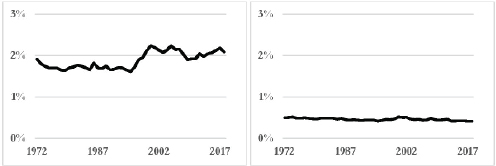
Unsurprisingly, under these circumstances, the philanthropy metrics do not show any tendency to grow faster than the for-profit sector. In fact, in the US they have been flat. Figure 8 displays monetary giving to charitable institutions as a percentage of GDP (left) and as a percentage of total household and nonprofit net worth (right). They show that monetary giving rose marginally during the stock-market bull years of the late 1990s and early 2000s. Otherwise, within the past forty years, Americans have habitually donated around 2 percent of their income and about 0.5 percent of their net wealth each year.
FIGURE 8: MONETARY GIVING IN THE USA, 1972—2018
Source: Giving USA Foundation, St. Louis Fed.
Notice that these figures are but an incomplete reflection of charitable activities in the US. They only concern monetary gifts, and only gifts made to philanthropy intermediaries, whereas direct gifts to other people are not included. In chapter 5, we saw that annual bequests in the US may plausibly be estimated to be in excess of 9 percent of GDP. This alone would be a substantially greater sum than what is given to charitable institutions. The above figures therefore significantly underestimate the quantitative dimension of gifts in the US. They do not include spending on personal gifts or intra-family transfers such as bequests and the funding of education.They also do not represent nonmonetary gifts, most notably the donation of one’s time inside and outside of the family.
While the above figures do not adequately represent the general level of giving, one could argue that the flattening of monetary giving to charitable institutions probably represents the evolution of the gift economy as a whole. However, this argument would be questionable. It would be premised on the assumption that in the past fifty years there has been a somewhat constant quantitative relation between monetary donations to philanthropic intermediaries and all other forms of giving. Yet this assumption is almost certainly wrong. From a theoretical point of view, we should expect that all forms of genuine gifts tend to drop under the prolonged impact of permissive interventionism. In regard to monetary donations, as we have seen, this decline might be partially offset by redistribution effects and by the tendency to use foundations and grants as a vehicle for tax evasion. However, we should still expect the overall impact to be negative because grants are not genuine gifts and because the offsetting tendencies concern only monetary donations, not donations of time.
Some attempts have been made recently to quantitatively assess donations of time, but the data only go back to the 2000s. The available time series are therefore not useful for assessing the long-run impact of government interventionism and of monetary interventionism in particular.
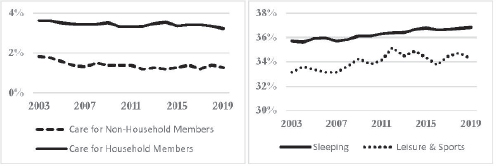
FIGURE 9: TIME DONATIONS IN THE US, 2003–19
Source: Bureau of Labor Statistics, US Census Bureau; calculations by JGHülsmann.
The American Time Use Survey since its inception in 2003 has shown a marginal decline in average time donations and an increase in time spent sleeping and on hobbies. These are average trends for people aged fifteen years and older. Significant differences exist most notably between men and women, and between age groups. More-over, we should keep in mind that it is strictly speaking impossible to distinguish gifts from grants without looking into the hearts of the donors. What appear to be donations of time may just as well be time transfers that are part and parcel of an intergenerational exchange (see, for example, Mazzotta and Parisi 2020).
The Survey of Health, Ageing and Retirement in Europe (SHARE) has a different focus. It seeks to provide information on the living conditions and health status of individuals aged fifty and over in various countries of the European Union and in Israel. The SHARE surveys have so far been conducted in eight waves, starting in 2004. Some of the data concern intergenerational transfers, especially the impact of welfare-state policies on transfers from parents to children (downstream) and from children to parents (upstream). Unsurprisingly, the data show a significant crowding-out effect (see, for example, Attias-Donfut, Ogg, and Wolff 2005; Mudrazija 2014, 2016).
All in all, therefore, when it comes to assessing the general tendencies of donations today, we can propose two reasonable hypotheses. One, the massive government interventions of the past fifty years, especially in the field of monetary policy, are likely to have entailed a significant overall decline in time donations and in money donations relative to income and wealth. Two, this decline is probably least pronounced in monetary giving to charitable institutions because of the countervailing tendencies that we have discussed.
_______________________________
But it might also discourage them. See pp. 302ff. on the welfare state.
For more exhaustive discussions, see Mises (1949) and Rothbard (1962, 1970, [1973] 1994). This does not mean that each and every intervention will be followed by a reduction of the economic growth rate as compared to previous months or years. Rather, it means that each and every intervention will reduce the growth rate below the level it would otherwise have reached. Interventionism entails a relative impoverishment, not necessarily an absolute one. See Hülsmann (2003, 2004).
Mises ([1949] 1998, p. 834) contended: “The greater part of those assisted by charitable institutions are needy only because interventionism has made them so.”
Another important example is the promotion of nonprofit firms, or social enterprises, with taxpayer money, tax exemptions, and dispensations from business regulations. See Bennett and DiLorenzo (1989). Their book has received important annotations and criticisms from the pen of Mark Hughes (1990). He argues that Bennet and DiLorenzo’s arguments are valid as far as public or government-sponsored enterprises are concerned, most notably, because such ventures can tap into taxpayer money. But the same arguments do not apply to genuinely private organizations. For example, Hughes (1990, p. 54) points out: “The argument that, in the name of fairness, commercially active nonprofits should not be exempt from taxation and regulation is tantamount to arguing that we can’t free one slave since that would be unfair to the rest who were not freed. The authors’ solution to this so-called unfair competition does not level the competitive playing field; it simply makes everyone play on the bumpiest part!”
Left panel: 30-Year Fixed Rate Mortgage Average in the US, 1971–2022. Right Panel: Total Household Assets relative to GDP, 1951–2021.
Very similarly, Lubomir Mlčoch (2017, pp. 40–43) has recently argued that prioritizing short-term material revenue at the expense of family time (“Baumol’s disease”) results from information asymmetries.
Empirically, as Jeffery Degner (2019) has recently pointed out, the relentless price inflation that results from permissive monetary policies has contributed to increasing divorce rates all over the world. The rising cost of higher education and housing have put a cap on the number of first marriages, increased the average age at first marriage, reduced childbearing, and increased divorce rates.
For the empirical record of the relationship between the welfare state and fertility rates, see Engels (1996, pp. 23–32); Murray (2012); and Boldrin, De Nardi, and Jones (2015).
“Nun wohl, die Berliner Universität, dem Palaste des Königs gegenüber einquartirt [sic], ist durch ihre Stiftungsurkunde das geistige Leibregiment des Hauses Hohenzollern” (Bois-Reymond 1870, p. 45).
Eric Voegelin ([1952] 1959, p. 4; 2000) has interpreted modern political history as a succession of gnostic movements. He argues that this succession had early roots in the ninth century with Scotus Eriugena, broke into the open in the twelfth century with Joachim of Fiore, and then had a decisive breakthrough in England with the Puritan Revolution and the Hobbesian reaction. Gnosticism has two characteristic features: the conviction that the world is inherently disorderly and can only be made to work with the progress of human knowledge, and the conviction that the pertinent knowledge is reserved to small circles of special persons (esoterism, elitism). In the light of Voegelin’s analysis, it appears that the history of gnosticism is the history of modern government. We may venture to say that it is the history of interventionism. It has produced a strong esoteric strand in intellectual life.
See the empirical study by Payne (1998). Andreoni and Payne (2003) found that charitable foundations make significantly less effort to fundraise once they receive government money. Other cases are less unequivocal, most notably lotteries. In the 1990s, there was a debate in the UK about the impact of the national lottery on charitable giving. The national lottery had been established in 1994. It had the mission to allocate its profits to fund large-scale public projects, the arts, charitable organizations, and similar activities, but it quickly turned into the major source of funding for many of these. Surveys brought to light that the majority of lottery players considered playing a good way to support charity and that 28 percent of those surveyed had cut their charitable giving as a consequence (see Wright 2001, p. 403). By contrast, Landry et al. (2006) found that funding through lotteries had increased total donations to charities.
On the important case of medical doctors, see Green (1985) and Riley (1997).
Left panel: Total Monetary Giving Relative to GDP. Right Panel: Total Monetary Giving Relative to Household and Nonprofit Net Worth.
According to estimates of the Bureau of Labor Statistics (2014), for the year 2013, gifts of goods and services represented 2 percent of all consumer expenditures. The largest gift items were education funding (25 percent of all personal gifts), especially for college tuition.
Left panel solid line: Caring for and helping household members (including travel), as an average percentage of daily waking hours. Left panel dotted line: Caring for and helping non–household members (including travel), as an average percentage of waking hours. Right panel solid line: Average sleeping hours as a percentage of 24 hours. Right panel dotted line: Leisure and sports (including travel), as an average percentage of daily waking hours.

