

US farms and ranches face rising debt in 2026. New York based Kroll Bond Rating Agency (KBRA) released an article on February 25, 2026, entitled, “Farm Debt on the Rise as Federal Aid Counters Rising Expenses” The article described this federal government intervention from the Austrian economics viewpoint encouraged rising farm debt from federal aid. This article will cover US soybean farmers impacted by US government interventions described as aid programs.
The article described net farm income decreasing by $2 billion from 2025 to 2026. One farm income aid program from the article is, “Those (federal) payments are expected to total more than $44 billion in 2026, an increase from $31 billion in the year prior, and representing 7.2% of all gross cash farm income.”
The bar graph below from the article shows federal government direct farm program payments from 2020 through 2026. Billions of dollars in annual payments seem small compared to other annual federal government entitlement programs like Medicaid, Medicare, and Social Security. This aid program or waste annually harms US farmers and ranchers from being able to operate on their own and let free market pricing operate freely and voluntary exchange happen by human action.
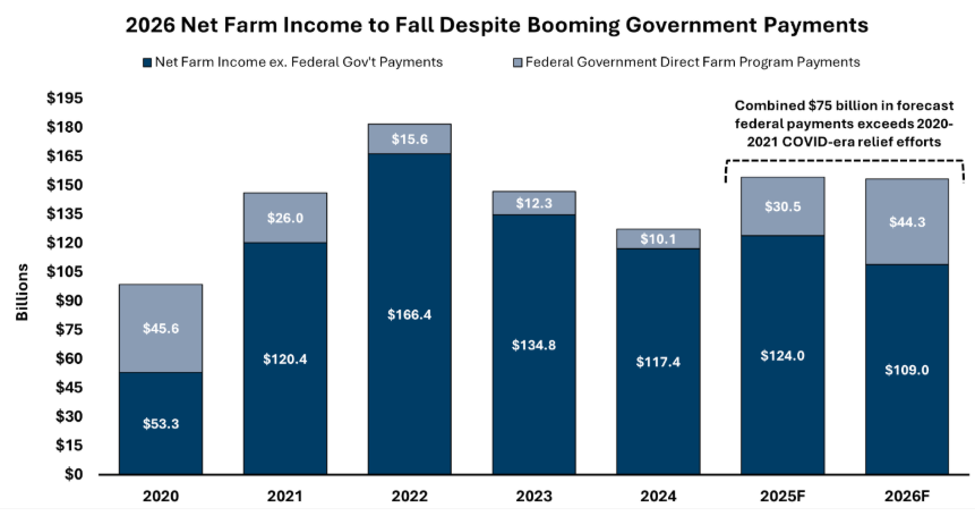
The article stated, “Federal farm aid had dropped significantly from a pandemic-related surge in 2020, narrowing to just $10 billion by 2024, but has more recently widened again to compensate American farmers with disaster aid and price loss coverage related to the impact of U.S. trade tensions with China.”
Trade tension with mainland China was exacerbated by President Trump’s tariffs in 2025 on Chinese imports to the US. China retaliated by not buying US grown soybeans creating a $12.8 billion loss in soybean trade for US soybean farmers. Another KBRA article posted on November 14, 2025, stated, “The White House reportedly plans to fill that gap with a similar sum, funded by the federal government’s surge in income from increased trade duties on imports.” US soybean farmers are zinged by federal government interventions for what they grow and sell.
The federal government aid program in one part of the economy creates a problem. Washington policymakers see this new problem. They believe the federal government should create a new aid program to solve the problem created by the earlier government aid program. Funding for the second aid program will come from the increase in import tariff payments made to the US Treasury since February 2025.
Moving toward solutions, drop US tariffs on all trade with mainland China including soybeans, zero out federal government aid to US soybean farmers, and cancel all government farm and ranch aid programs. Fewer US government aid program staff, reduced regulation, and reporting requirements for US soybean farmers to follow and more peace in the US soybean marketplace would be some results from this approach. Zeroing out federal government farm aid programs would initiate US marketplace soybean price reality over time leading to a long-term win for US soybean farmers, downstream customers, and the US taxpayer.

