

United States President Donald Trump signed three presidential proclamations on July 20, 2026, under section 338 of The Tariff Act of 1930 also known as the Smoot-Hawley Tariff Act, “. . . to impose additional 50 percent tariffs on certain goods of Canada in response to Canada’s discriminatory treatment of American products.” Canada implements import tariffs, but they increased tariffs in August 2026 on many items imported from the United States in retaliation for President Trump’s recent executive order increasing tariffs on Canadian imports.
A tantrum is a violent demonstration of rage or frustration or a sudden burst of ill temper. This needless, US-initiated tariff war with Canada reflects President Trump’s tariff tantrum.
Trump’s executive order on increasing tariffs on aluminum and steel imports began on February 11, 2025. A USA Today article, released on February 11, 2025, stated, “Roughly half of all aluminum used in the US is imported, with most of it coming from Canada. At 3.2 million tons last year, Canadian imports were twice the next nine countries combined. . .”
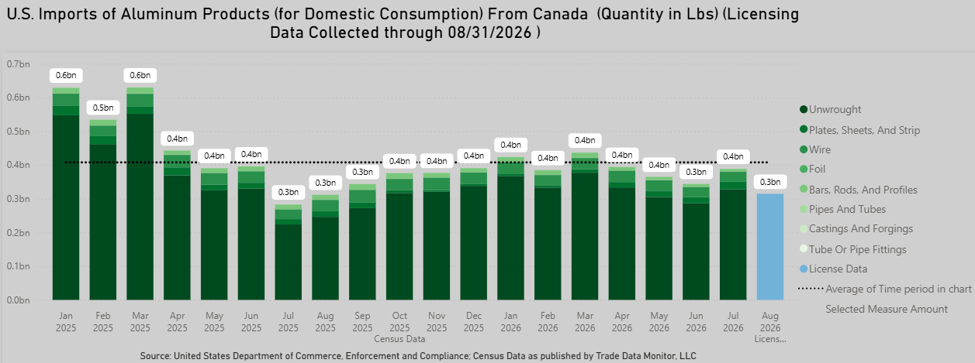
A US Department of Commerce bar graph shows pounds per month of Canadian imported aluminum products from January 2025 to August 2026. A noticeable drop in Canadian aluminum imports started in April 2025, probably resulting from Trump’s February 2025 aluminum import tariff increase. An import decline is estimated to have occurred in August 2026 due to Trump’s July 2026 executive order Canadian import tariff increase.
One White House press release stated (July 20, 2026), “The Section 338 tariffs imposed today make America wealthier and stronger, offsetting the burden and disadvantage on U.S. commerce from Canada’s discriminatory treatment of U.S. Commerce.” This statement is a blatant lie when everyday Americans are poorer when paying more for many imported Canadian products caused by these needless US federal government authorized tariffs. This economic intervention created more monthly price inflation making Americans economically poorer and weaker.
On the brighter side, “These Section 338 tariffs will not apply to energy, potash, products subject to tariffs under Section 232, and certain other goods, such as fish or critical minerals.” This brighter side is deceptive when the history of tariffs make imported products more expensive, reduce product choices for the US consumer and product innovation is decreased.
The initial results of these July 2026 and the February 2025 executive order-imposed tariffs is recorded in an Associated Press news story (July 20, 2026),
Tariffs are taxes on imports, which companies can then pass along to consumers in the form of higher prices. The president maintains that the costs created by tariffs will cause manufacturing to relocate to the U.S., though there is little evidence of that in the economic data.
The AP writer understands the detrimental effects of Trump’s tariffs on everyday Americans and basically understands the Austrian economic viewpoint on tariffs.
Trump’s tariff tantrum is not helping everyday Americans in real time as he promised to do in the 2024 presidential campaign. One practical solution is admit your tantrum was a poor economic public policy choice in a press release and issue an executive order rescinding these tariffs on Canadian imported products. These practical actions will probably not happen when personal pride would be severely bruised by publicly admitting you made a wrong choice with poor results for the Americans you represent.

