
Image 9
10. The Soviet Union
10
The Soviet Union
The Soviet Union today presents the best example of a mature and long-lived total wage and price control policy in operation. Its planned economy has been almost totally rigid in its opposition to any form of price structure ever since the end of Lenin’s “New Economic Policy” in the 1920s.
11. Two Democracies in the Second World War
11
Two Democracies in the Second World War
Having already reviewed the many attempts to make price and wage controls work in the two major dictatorships, the Soviet Union and National Socialist Germany (including their wartime efforts), we will examine briefly in this chapter the experience of two of the major democracies, Canada and the United States.
12. Postwar Rent Controls
12
Postwar Rent Controls
The rent which a landlord charges for his accommodation is merely an instance of a price for a commodity, like all other prices for all other commodities. And like all other prices and all other commodities, rents have been a prime target for government restrictions. The postwar experience with rent control has been particularly revealing in regard to the adequacy of controls in general.
13. A Postwar Survey of Six Continents
13
14. The Price of World Currency
14
The Price of World Currency
When someone buys a share in a large corporation for $100, he is merely exchanging one commodity (money) for another (stock). Similarly, one international currency (say, dollars) can be exchanged for another (say, yen or sterling). The exchange rate between dollars and stock which buyer and seller agree on is the price of the share; the exchange rate between currencies is usually referred to only as the exchange rate, although in every way it is just like a price.
Image 14
15. The U.S., Britain and Canada: 1970–78
15
The U.S., Britain and Canada: 1970–78
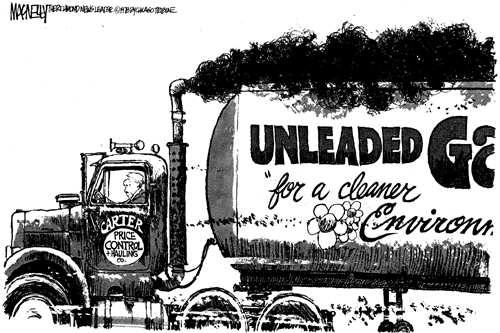
Two roughly parallel programs aimed at keeping down prices and wages were introduced on both sides of the Atlantic in the early seventies. The persons in charge of each of these programs must have had at least a few misgivings as they set out to tread a well-worn path. Milton Friedman had just written in Newsweek (on January 11, 1971) that
16. On the Causes of Inflation
16
On the Causes of Inflation
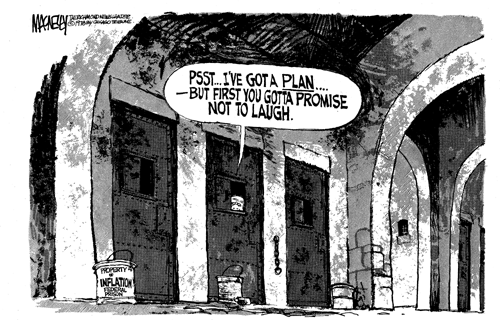
Before a policymaker jumps to the conclusion that wage and price controls can actually cure an inflation, he should make an attempt to understand the true causes of that phenomenon. The absence of such understanding is one of the reasons that wage and price controls have had such a long and painful history of failure and ineffectiveness; controls may be able to suppress the symptoms of inflation, but the evidence shows that they are not a cure for the disease itself.
17. Coping with Inflation
17
Coping With Inflation
Before jumping to conclusions about the cure for inflation, it is important to understand its cause. The lack of such an understanding explains why price and wage controls have had such a painful and ineffective history.
