Dedication
For
Milton and Rose Friedman
Fm
ROBERT L. SCHUETTINGER is Director of Studies of The Heritage Foundation and editor of its quarterly journal, Policy Review. He was recently elected to the presidency of a national association of university professors (UPAO).
Foreword
Foreword
Attempts to control and fix prices and wages span most of recorded history. As Robert Schuettinger and Eamonn Butler record in such illuminating and interesting detail in this book, price and wage controls cover the times from Hammurabi and ancient Egypt 4,000 years ago to this morning’s newspaper accounts of rent controls in New York, Boston and other U.S. cities, the Carter Administration’s program of “voluntary” price controls, the mandatory price and wage controls in Norway, Denmark and Iran, and so forth.
Preface
Preface
The co-authors began working on this book in 1974, just after the termination of President Nixon’s controls in the United States. Since that time, we have examined over one hundred cases of wage and price controls in thirty different nations from 2000 B.C. to A.D. 1978.
Inflation Results When Money Increases Faster Than Output
Inflation Results When Money Increases Faster Than Output
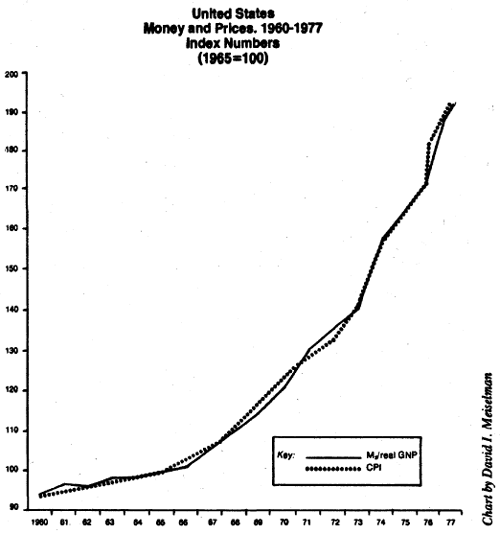
(Sources: CPI, Monthly Labor Review; GNP, Economic Report of The President; Money Supply (M2), Federal Reserve Bulletin).
1. The Ancient World
1
The Ancient World
From the earliest times, from the very inception of organized government, rulers and their officials have attempted, with varying degrees of success, to “control” their economies. The notion that there is a “just” or “fair” price for a certain commodity, a price which can and ought to be enforced by government, is apparently coterminous with civilization.
2. The Roman Republic and Empire
2
Image 2
3. From Medieval to Early Modern Times
3
From Medieval to Early Modern Times
In the Middle Ages, the doctrine of the “just price” made price regulation a religious imperative. This concept, combined with the theological objection to interest (called “usury”), led to more and more economic regulation and undoubtedly was an obstacle to a rising standard of living.
Samuel Brittan and Peter Lilley in their recent book, The Delusion of Incomes Policy, tell us that
Image 3