

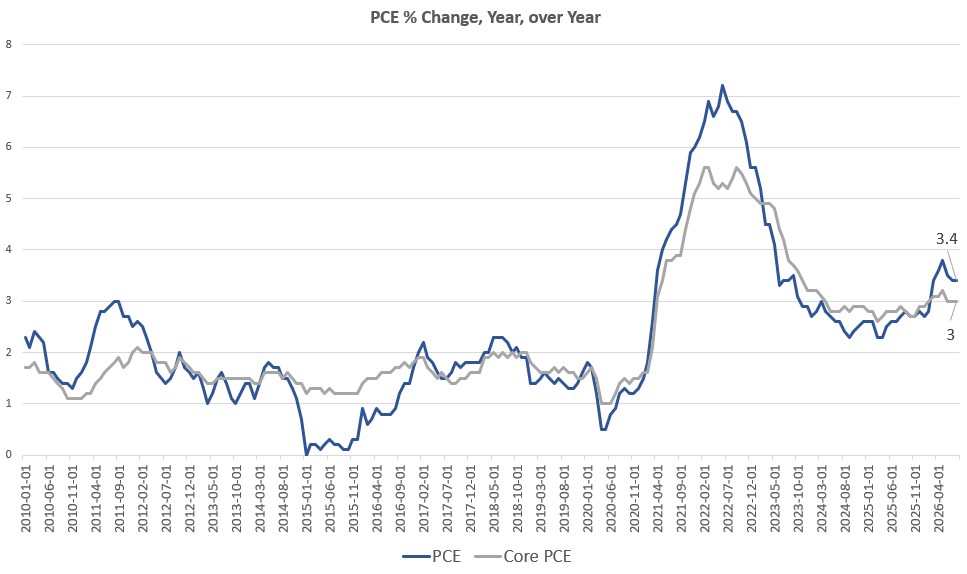
The August personal consumption expenditures price index, the Fed’s main inflation gauge, saw an increase of 3.4%, year over year. Meanwhile, the core PCE, excluding food and energy, rose by 3%.
This now means that the Fed’s preferred measure of price inflation has been above the two percent target for 66 months in a row. That is, the last time price inflation came in somewhere below two percent—according to the federal government’s own data—was February 2021, in the early days of the Biden presidency. That’s how committed the Fed has been to so-called “price stability.”
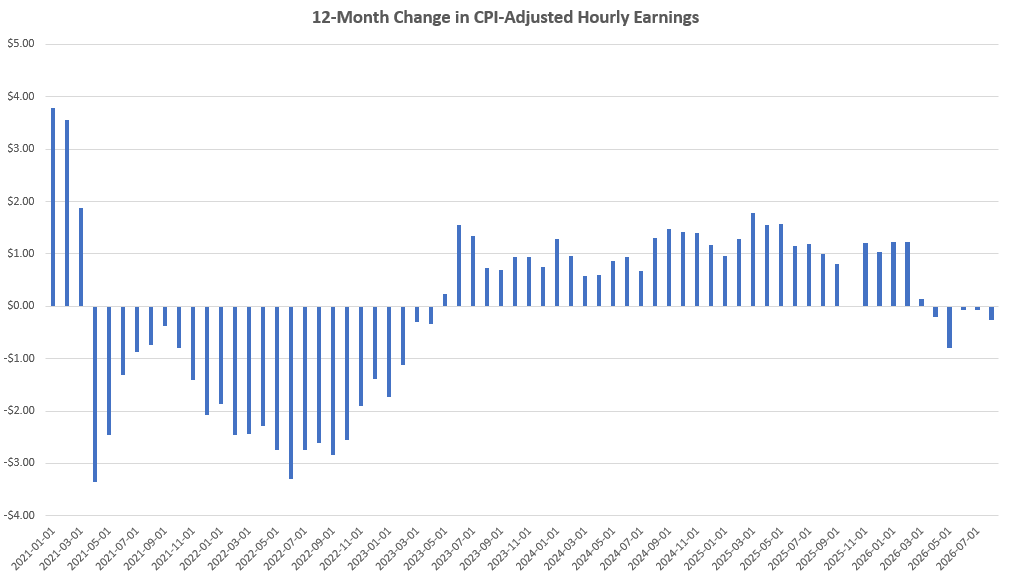
The result has been repeated periods of falling real wages, and housing affordability at historic lows. It turns out that there is a downside to having the central bank buy up trillions in Treasurys and mortgage-backed securities with newly created money.
Some new outlets have made much of the fact that the reported PCE number was slightly below “expectations,” but even this very minor bit of “good news” is more likely attributable to a change in the methodology of the PCE measure. That is, new benchmarks are now being used, but even with the change, the PCE number remains well above the target level.
The media narrative around this slight steadying in the PCE level states that the Federal Reserve now has more breathing room to back off rate hikes since price inflation is now allegedly more under control.
That’s reading a whole lot into an extremely minor downward blip in price inflation rates. Indeed, the bond markets appear to be unimpressed by the new PCE number, and bond investors apparently see no reason to think that price inflation is now being reined in. The 10-year Treasury rose to a new 24-year high today. The benchmark yield climbed as high as 5.31%, up 5 basis points in afternoon trading, reaching levels last seen in spring 2002. This also took the yield above its previous peak from 2007. The 10-year yield has risen about 55 basis points this month.
This was not limited to the 10-year, and yields climbed today across the yield curve. The two-year Treasury yield rose 2 basis points to 4.89%, while the five-year yield gained 4 basis points to 5.10%. The 30-year yield is now over 5.6 percent, the highest since 2002.
As Barron’s puts it, “The 10-year note hasn’t had a quarter this ugly in over 3 decades.”
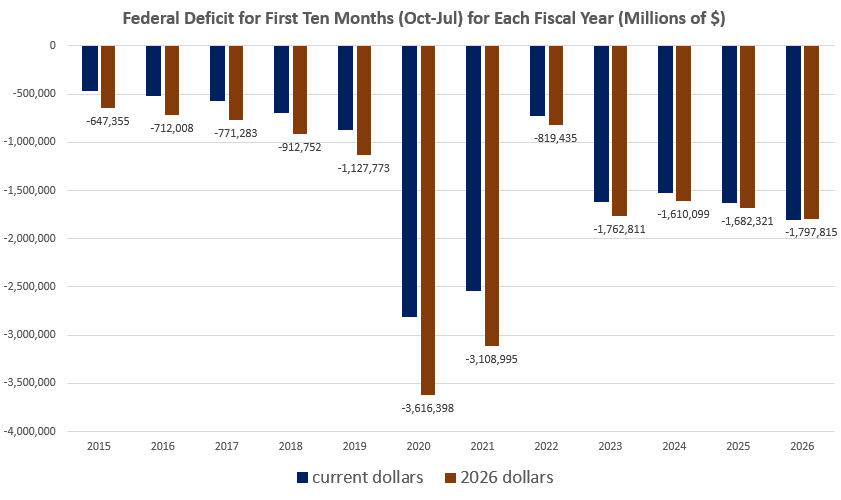
The bond markets have every reason to believe two things: that federal deficits will continue to pile up, meaning more Treasurys will need to be dumped into the market as the federal government borrows to the tune of more than two trillion per year going forward. Meanwhile, price inflation can be assumed because the central bank clearly has no stomach for tightening monetary policy, and is likely to inflate away a portion of its debt rather than rein in spending. Thus, we can expect more upward pressure on yields, especially in the longer-term bonds.
Of course, the situation could change substantially once a financial crisis or recession hits. At that point, the Federal Reserve will frantically attempt to bring down interest rates, although it’s unclear that the Fed has the power to do push down rates beyond short term debt. One thing is for sure: the current situation is volatile, and we are witnessing something quite different from the past thirty years of relentlessly falling interest rates. Indeed, the US is in uncharted water because the last time interest rates rapidly increased, during the early 1980s, the total public debt as a percentage of GDP was about 30 percent. Today, the federal debt is more than 120 percent of GDP, and the US is paying out more than a trillion dollars per year just in debt service. This, of course, is thanks to the US’s $40 trillion debt. Continued upward movements in yields will place far greater pressure on the Treasury than was the case during the large run-up in deficits during the 1980s.

