
The Transformation of the American Economy 1865-1914
IV. The Ups and Downs of the Farmer

This is a new age to the farmer. He is now, more than ever before, a citizen of the world. Cheap and excellent books and periodical publications load the shelf and the table in his sitting room and parlor. He travels more than he ever did before, and he travels longer distances. His children are receiving a better education than he received himself, and they dress better than he did when he was a child. They are more frequently in contact with town and city life than he was. They have a top buggy, and a fancy whip, and a pretty lap robe, with a fast stepping horse, whereas their father had an old wagon and a less expensive horse. The farmer’s table is better too; his food is more varied, and more of it is bought by him and less of it is raised on his farm.
GEORGE K. HOLMES
[N]o splendor of cloud, no grace of sunset could conceal the poverty of these people, on the contrary they brought out, with more intolerable poignancy, the gracelessness of these homes, and the sordid quality of the mechanical routine of these lives.
HAMLIN GARLAND
AGRICULTURAL DEVELOPMENT
The development of American agriculture in the half century after the Civil War was so complex—not to say perplexing—that no simple description is possible. In some ways this period was a veritable Golden Age of agriculture; in other ways, it was, at least until the late 1890’s, a time of massive failure and disappointment for farm people. In this chapter we shall attempt to sort out these conflicting aspects of the story, applying some elementary economic theory to understand the relation between agricultural development and the economic growth and transformation of the whole nation. Only recently have historians of American agriculture begun to apply economic theory and to test their hypotheses statistically. As a result, many important questions remain to be answered by further research. Given this state of knowledge, our discussion here must necessarily be incomplete and unsatisfactory, but perhaps we can suggest some ways in which a new approach to the subject might prove useful in future studies.
The output of agricultural products expanded rapidly in the post-Civil War era. Between 1869 and 1914, estimated wheat output increased from 290 to 897 million bushels, corn from 782 to 2524 million bushels, and oats from 284 to 1066 million bushels. The output of cotton, the great Southern cash crop and the nation’s major export product, rose from 2.5 to 16.1 million bales of 500 pounds gross weight. The estimated slaughter of cattle went from 4.6 to 11.5 billion pounds of live weight, while the same measure for hogs increased only from 9.0 to 12.0, a reflection of a shift in consumer demand away from pork and toward beef as incomes increased. Various indexes of total farm output show an increase of about 200 percent during this period (Table 4.1), while the nation’s population increased about 150 percent.
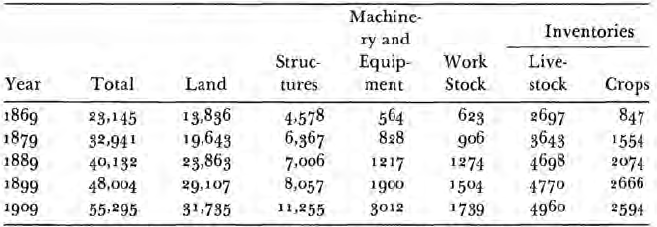
One source of this outpouring of farm products was an expansion of measurable inputs. Between 1870 and 1910, improved land in farms increased from 189 to 479 million acres. Investors also augmented the stocks of other forms of material capital, increasing the stock of farm machinery and equipment fastest of all (Table 4.2). Though it became a progressively smaller part of the economy’s total labor force, the farm labor force grew substantially in absolute terms, from 6.8 to 11.8 million workers.
TABLE 4.1
GROSS AND NET FARM OUTPUT (MILLIONS OF 1929 DOLLARS)
| Year | Gross Farm Output | Intermediate Products Consumed | Net Farm Output |
| 1869 | 3,950 | 440 | 3510 |
| 1879 | 6,180 | 730 | 5450 |
| 1889 | 7,820 | 1000 | 6820 |
| 1899 | 9,920 | 1360 | 8560 |
| 1909 | 10,770 | 1620 | 9150 |
SOURCE, John W. Kendrick, Productivity Trends in the United States (Princeton, N.J.: Princeton University, 1961), p. 347.
TABLE 4.2
MATERIAL CAPITAL STOCKS IN AGRICULTURE (MILLIONS OF 1929 DOLLARS)
SOURCE. John W. Kendrick, Productivity Trends in the United States (Princeton, N. J.: Princeton University, 1961), p. 367.
As the ratio of capital of all kinds (material, human, and intellectual) to labor increased, output per man-hour rose. Between 1869 and 1914, net farm output per man-hour increased by about 50 percent. Using the same method employed in the Appendix, we can calculate that only about 30 percent of this increase was directly due to the accumulation of material capital, the remainder being attributable to (unmeasurable) human and intellectual capital accumulation. Inventions of improved reapers, threshers, plows, cultivators, and a great variety of other agricultural machinery and the progressive dissemination of these instruments apparently played major roles in augmenting agricultural technology, though “unembodied” technological advances such as the development of dry farming methods and better crop rotations were also evident, especially after 1900.
Regional differences in agricultural development were marked. In the South, 15 years or more were required merely to restore the losses sustained during the Civil War. Eugene Lerner has given an excellent summary:
During the decade 1870–1880, the physical capital destroyed by war was replaced and by 1880, 15 years after the end of the war, most of the series reached or exceeded their 1860 levels. The number of cattle (other than cows) and acres of farms in the South were almost as great in 1880 as they were in 1860; the number of horses, mules, cows, and improved acres in the South ranged from 4 to 27 per cent higher. However, in spite of this growth of resources, the value series, though generally higher in 1880 than in 1870, were still below their 1860 levels. In 1880 the value of farms was 33 percent below its 1860 level, the value of farm implements was 31 percent lower and the value of livestock was down 24 per cent. . . . After the war, the South’s farm labor force, predominantly Negro, became seriously disorganized, thus retarding the recovery of agriculture. . . . In addition to a disorganized labor force, the destruction of capital itself was a powerful force retarding agricultural expansion. Livestock could only be replaced with the passing of time, and even had the labor force been efficient, fields could not give abundant yields with a shortage of mules, plows, and horses. Moreover, capital markets must have been highly imperfect right after the war. Planters and farmers probably could not borrow to replace their depleted stock, and the principal source of funds available to farmers undoubtedly came from internal sources, Since output was low, savings were low, and recovery retarded. The curse of the poor is their poverty!1
In the highly industrialized Northeastern states, agricultural output remained on a plateau, although its composition changed substantially as farmers shifted out of cereals and livestock into vegetables, fruits, dairy products, and poultry—outputs for which the rate of return depended crucially on immediate access to large urban markets. Elsewhere east of the Mississippi River, including the South, farm outputs expanded substantially, but the most rapid growth occurred west of the Mississippi, where settlement brought a vast and fertile area quickly under the plow. In 1869 the states west of approximately the 95th meridian produced about 6 percent of the nation’s farm output; 40 years later they accounted for about 30 percent.
Before World War I, patterns of regional specialization clearly emerged. Cotton production, which continued to predominate in the “old” South, pushed westward into Texas and Oklahoma, the former state becoming the nation’s leading producer. Winter wheat production concentrated in central Kansas and Nebraska, spring wheat in Minnesota and the Dakotas, while the “corn and hog belt” stretched from Ohio into eastern Nebraska. Cattle raising most heavily occupied an area between southern Texas and Chicago, the nation’s greatest market for live beef cattle. Figures 4.1–4.5 give a good indication of the enduring patterns of regional specialization in agriculture, except that the distribution of wheat production changed substantially during 1900–1915 as California’s output declined and that of Kansas and Nebraska increased.
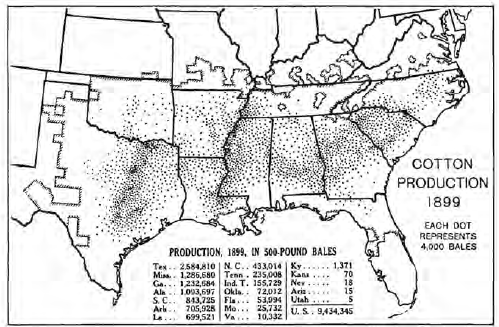
Figure 4.1 Spatial distribution of cotton production, 1899. Source: U. S. Department of Agriculture, Yearbook, 1921 (Washington: Government Printing Office, 1922), p. 332.
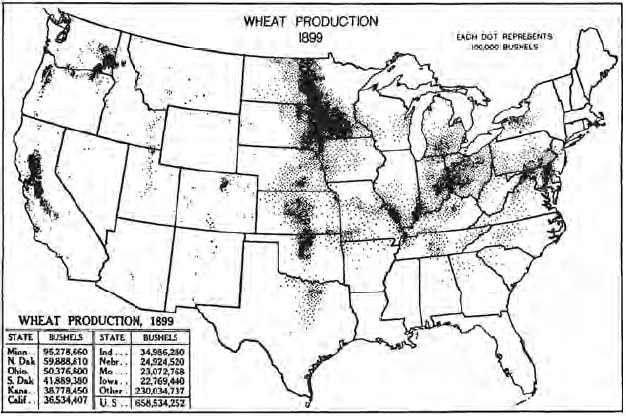
Figure 4.2 Spatial distribution of wheat production, 1899. Source: U. S. Department of Agriculture, Yearbook, 1921 (Washington: Government Printing Office, 1922), p. 94.
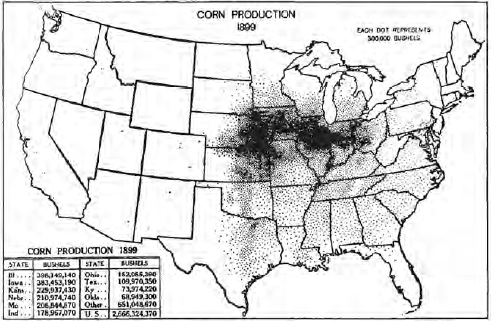
Figure 4.3 Spatial distribution of corn production, 1899. Source: U. S. Department of Agriculture, Yearbook, 1921 (Washington: Government Printing Office, 1922), p. 173.
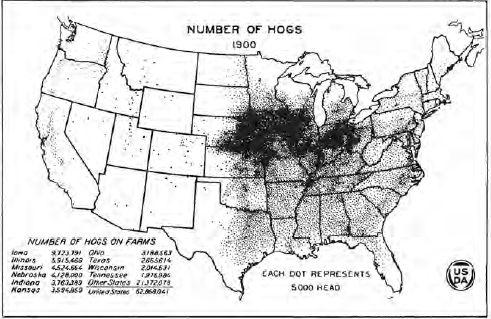
Figure 4.4 Spatial distribution of hogs, 1900. Source: U. S. Department of Agriculture, Yearbook, 1922 (Washington: Government Printing Office, 1923), p. 190.
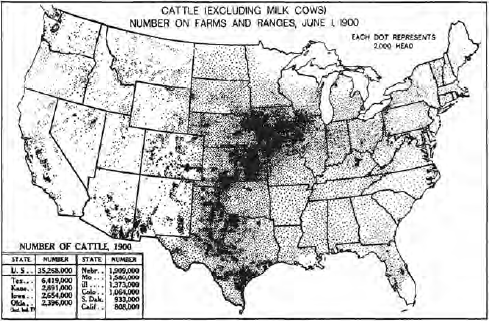
Figure 4.5 Spatial distribution of cattle, 1900. Source: U. S. Department of Agriculture, Yearbook, 1921 (Washington: Government Priming Office, 1922), p. 237.
The productivity of farmers varied enormously from region to region, and the relative dispersion actually became greater between 1870 and 1910. In 1870 output per farmer was lowest in the South, highest in the Northeastern and Pacific Coast states; 40 years later the Southern states remained at the bottom, the Northeastern and Pacific states had fallen somewhat closer to the national average (although they remained substantially above it), and farmers in the Corn Belt, Great Plains, and Rocky-Mountain regions had made major productivity gains.2 Economic theory asserts that differences in output per worker result from differences in capital per worker. A major problem in testing this hypothesis is that stocks of human and intellectual capital cannot, in the present state of our knowledge, be measured. However, on the reasonable assumption that the accumulation of these kinds of capital is highly correlated with the accumulation of material capital, the hypothesis becomes as follows: output per worker and material capital, including land, per worker are directly related. Evidence shown in Figure 4.6 is remarkably consistent with this hypothesis, indicating that regional differences in the productivity of farmers can indeed be ascribed to differences in the amounts of capital each farmer had to assist him in production.
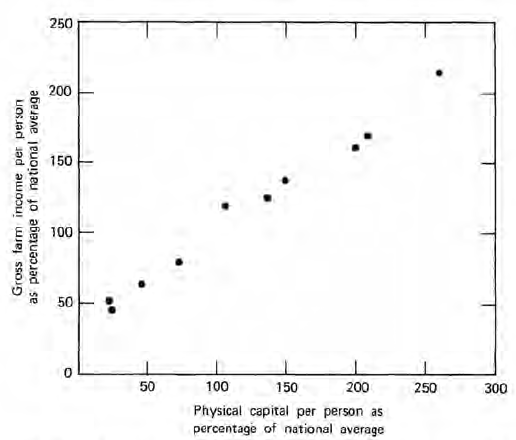
Figure 4.6 Gross farm income and physical capital per person engaged in agriculture, ten farming regions, 1910. Source: Alvin S. Tostlebe, Capital in Agriculture: Its Formation and Financing Since 1870 (Princeton, N. J.: Princeton University, 1957), p. 95.
THE FARMER’S COMPLAINTS
From the late 1860’s to the late 1890’s numerous agrarian protest movements enlivened the American political scene. They included the Patrons of Husbandry, better known as the Grangers, whose political strength was concentrated in the Midwest in the 1870’s; the Farmers’ Alliances of the South and the Midwest in the 1880’s; and the People’s Party, or Populists, well represented in the South, the Great Plains, and the Far West in the 1890’s. These movements differed in a variety of ways, but they had at least one significant belief in common: that the American farmer received less than his “fair share” of the national product. The explanations advanced to account for this alleged inequity were many: railroads charged the farmer rates that were “too high”; “speculators” and “land monopolists” engrossed the best of the public lands, while the homestead system that might have relieved the farmer played only a minor role in the disposition of the public domain; pernicious land-tenure systems, especially in the South, shackled the farmers and resulted in rapacious “mining” of the soil and destruction of its fertility; money lenders charged interest rates that were “too high”; a falling price level increased the real burden of debt repayment on the farmers’ mortgages; farmers sold in competitive markets but purchased from “monopolists,” and the result was a steady deterioration in their terms of trade; we might extend the list almost indefinitely.
To what extent were these charges valid? Unfortunately we cannot offer a complete answer, even though several generations of historians have concerned themselves with these issues. The early historians usually accepted the farmers’ charges quite uncritically, and these biased interpretations color the accounts of widely used textbooks even today. Modern agricultural historians approach these subjects much more critically than did their predecessors, but the marshalling of evidence and its systematic analysis are still at an early stage. Although the evidence is sufficient for an evaluation of some of the farmers’ complaints, it is almost nonexistent on others, and in some cases the most interesting questions have never been asked. We shall examine in turn each of the complaints catalogued above.
Railroad Rates
For 30 years after the Civil War, “excessive” railroad freight rates were a persistent grievance among farmers. During the past two decades, however, economic historians have generally dismissed this complaint as inconsistent with the facts. The historians are apparently unanimous in believing that railroad freight rates fell steeply and steadily throughout the Gilded Age. A recent study has shown, however, that the historians’ belief, insofar as it concerns farmers, is probably false.3 The evidence on which it rests is certainly inadequate, consisting almost exclusively of nominal rates. While these were typically falling, so were most other prices until the late 1890’s, when the downward trend of the overall price level finally gave way to an upward trend. Since only the relative price of transportation is meaningful, nominal transport rates must be compared with a relevant price index. Making this comparison, we shall discover periods of increase as well as periods of decline in real freight rates. In this case historians failed to ask the right question. They asked whether railroad rates had fallen, but that question is really meaningless. They should have asked whether railroad rates fell faster or slower than the prices farmers received for their products.
Figure 4.7 shows the movement over time of the wheat prices, corn prices, and cotton prices received by farmers divided by an index of railroad freight rates for the 1867–1915 period. Given the descriptions of recent historians, we would expect that, despite year-to-year fluctuations, the trends of the curves would move steadily upward. It is evident that they do not. In fact, three aspects of the series stand out: first, they vary enormously from year to year; second, before 1897 the trend is approximately horizontal;4 and third, real improvement in the farmers’ position begins only in the late 1890’s. The depression of the mid-1890’s put growers of all three crops at a particular disadvantage. Wheat growers in 1894 were in their worst position in the entire period, with the exception of the years 1869, 1870, and 1874. Corn growers in 1896 had not faced such unfavorable terms of trade with the railroads since 1878. For cotton, where reliable data are unavailable before 1876, the low mark for the entire period occurred in 1894. It must be emphasized, however, that more is involved here than farmers suffering from the depression of the 1890’s. Even if we consider only the years before 1893, the data still fail to show any substantial (statistically significant) improvement in the farmers’ position. In brief, farmers did not benefit from lower transportation charges over the three decades before 1897. The amounts of cotton, corn, or wheat exchanged for a ton-mile of railroad transportation remained substantially unchanged throughout the Gilded Age. This finding makes the farmers’ complaint about “high’’ railroad freight rates somewhat more comprehensible.
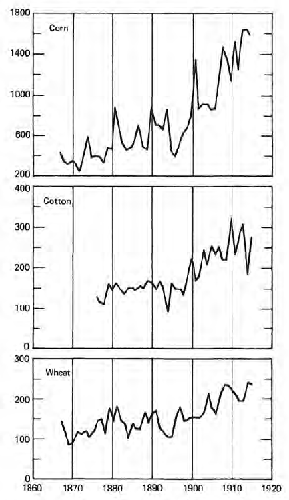
Figure 4.7 Indexes of farm price/railroad rate ratios. Source: Robert Higgs, “Railroad Rates and the Populist Uprising.” Agricultural History, XLIV (July 1970), 295.
Transport charges were an important part of farmers’ costs. In some areas of the Great Plains and the Far West the freight charges incurred in moving crops to a market might absorb as much as half of the crops’ value at that market. Under such circumstances the failure of transport rates to decline by more than 10 to 15 percent while farm prices were collapsing by 30 to 50 percent was a genuine economic source of farm distress in the mid-1890’s. Where transport charges were a relatively high proportion of farm costs—for example, in Kansas, Nebraska, and the Dakotas—the Populists were most active and successful, while relatively little protest came from areas where transport charges were less important, such as Iowa, Missouri, and Illinois. And most importantly, the experience of the previous 25 years gave farmers no reason to expect an imminent improvement. It is difficult to say whether they objected that rates were higher than they “should” have been or whether they considered their position to have been worsening, but one thing is clear: they recognized no recent improvement with respect to railroad rates. Notably, the two decades preceding the World War, for which the data show such substantial improvement in the farmers’ position (Figure 4.7), also witnessed the disappearance of widespread agrarian unrest. Of course, we should not attribute the decline of agrarian radicalism exclusively to declining real railroad rates, since other aspects of the rural economy also improved during the two decades preceding the American entry into World War I; but neither was this correspondence entirely accidental.
“Land Monopolists,” “Speculators,” and the Homestead System
In 1862 Congress passed the Homestead Act, which provided that 160 acres of the public domain might be acquired by a settler if he lived on the land or cultivated it for five consecutive years. The federal government continued, however, to sell some land at auction as well as to donate land to the states and to railroad companies as subsidies. Because several different methods of transferring the public domain to private owners were simultaneously employed, the disposition of federal lands in the post-Civil War era has been characterized as occurring within an “incongruous land system.” In a famous article, the historian Paul Gates criticized this system, asserting that competing methods of disposition subverted the true purpose of the Homestead Act and that “speculation and land monopolization continued after its adoption as widely perhaps as before.”5 This interpretation, which continues to influence historians, suffers from a fundamental misconception of how a market economy operates.
Economists use the term “monopoly” to describe a market within which only one seller offers a well-defined product. Certainly, when historians speak of “land monopoly” they do not mean that all the land belonged to a single owner. Economists also use the expression “monopoly power” to denote an attribute of a seller who provides such a large part of the market supply that by varying the amount he offers for sale he can affect the market price of the product. Certainly no one in the nineteenth century ever owned enough land to be able to affect the price of land in general. Millions of different owners held land, and even the very largest—like William Chapman, who held over a million acres of California land in the 1870’s, or the land-grant railroad companies, which held much more—were incapable of influencing the average price of land: their holdings were simply insignificant in comparison with the total stock of land. Of course, an owner might set any price he liked for his own land, but that is trivial, because if he set the price too high no one would buy. The market for land was everywhere highly competitive. What the historian really means when he speaks of a “land monopolist” is an owner of an unusually large acreage, sometimes no more than 500 or 1000 acres. That the size of holdings varied widely is common knowledge, however, and the expression “land monopolist” neither adds anything to that knowledge nor is useful in analysis. The term is simply pejorative and ought to be abandoned.
Historians have similarly erred by using the term “speculator” to characterize a person who buys solely with the intent to resell and not to cultivate. The objection to this usage is that in a private property system every owner of an asset is necessarily a speculator in the sense that he bears the risk of reductions in the value of the asset but hopes that the value will rise. Of course land speculators purchased the public domain; every purchaser was a speculator. Allan Bogue has observed that “certainly the man who came west, bought a tract of the size that he thought necessary for his farming operations, and then tilled it for the rest of his life was rare indeed. The more common picture was one of several moves or repeated purchases and sales.”6 And the settler who continued to hold his land was no less a speculator than his neighbor who sold out and moved on, but merely one who perceived that the highest rate of return could be obtained by continuing to hold what he had. Some purchased large acreages, others small acreages; all speculated. To describe the large purchasers as speculators and the small purchasers as “actual settlers” obscures the identity of their reasons for holding land: to obtain the highest possible rate of return. Bogue also found in his excellent study of agriculture in Illinois and Iowa that “from the very beginning, large numbers of settlers and farmers in this region had a strong commercial orientation. They sought to maximize the returns from their farming operations, and, if in the early years cash itself was scarce, they undoubtedly evaluated the material possessions that they accumulated—their lands and livestock—in terms of money,”7 Rational people, it might be added, could hardly have calculated their real incomes in any other way.
The great bulk of the land put into cultivation after 1865 was purchased from federal and state governments and from land-grant railroads; less than one fifth was homesteaded. This fact has led some historians to conclude that the Homestead Act was a failure. Perhaps a more interesting question concerns the effect of the homestead system on the economic growth of the nation. We might ask: was the national product greater or less as a result of the homestead system? Economic theory provides a straightforward answer.
For considering this question, it is most useful to conceive of the homestead system as one of many possible ways of transferring ownership of the land from the federal government to private individuals. Any system of transferring ownership—whether homesteading, outright sales, or something else—required the commitment of resources: land must be surveyed, titles established, and records kept in any event. The opportunity cost of the resources involved in such activities constituted the “transaction cost” of transferring property rights. But the homestead system of transferring ownership involved additional transaction costs, for it required the recipient of the land to live on or cultivate the land for five consecutive years before he could receive the title; moreover, the law provided that a maximum of 160 acres could be acquired. In effect, these provisions of the Homestead Act, to the extent that they were enforced, required the recipient to combine certain minimum amounts of labor and capital with the land. It is certainly conceivable that in many instances the required commitments of labor and capital exceeded the economically optimal amounts. For example, in areas suited only for grazing, the homestead system dictated too much labor and capital relative to land. Under such circumstances the opportunity cost of the economically excessive resources constituted a pure transaction cost of transferring ownership to the private individual.
Some scholars have argued that the homestead system had the effect of luring too much labor and capital into agriculture, that the system misallocated resources and thereby reduced the national product. This argument is correct only in the transaction-cost sense noted above; and such misallocation must surely have been negligible in its effect on the national product. The important point is that whatever resource misallocation did occur was transitory. Had the land been sold at auction instead of being homesteaded, it would have commanded a certain price based on its ability to contribute toward earning the farmer an income. That price is exactly what the land commanded once the private owner had acquired the title through homesteading. Therefore, whether the land was sold or homesteaded, its price was ultimately the same, and hence farmers combined labor and capital with it in exactly the same proportions in both cases. Homesteading induced no long-term misallocation of resources.
The real importance of the homestead system was that it transferred wealth to the recipients of the land and away from federal taxpayers, whose taxes could have been less had the land been sold. Whether this redistribution of wealth affected patterns of saving and investment in a way that altered the growth path of the economy is unknown. In fact, scholars are at present uncertain whether this wealth transfer made the distribution of total wealth more or less equal, for little is known about the wealth of those who acquired the homesteads, and widespread fraud within the homestead system complicates research on the subject.
Ownership, Tenure, and Efficiency
No one considers it paradoxical that today many wealthy people rent rather than own their houses or apartments. For various reasons some people simply prefer to rent; and the decision to rent or purchase is really a decision about the form in which people wish to hold their wealth. Many historians, however, continue to use the extent of farm tenancy as an index of farm distress, relying upon statistics like those in Table 4.3 to illustrate their argument. Such statistics are valuable, but for a different reason; they are certainly not a reliable index of farm distress.
Why did many farmers rent rather than buy? The answers are many, but probably one is most important: they lacked the money to buy and were unable to borrow on acceptable terms. One should not, however, jump to the conclusion that such men were dispossessed former owners or necessarily poor. Farms were expensive, varying from less than a dollar to more than a hundred dollars per acre depending on the time and place. At these prices a hundred-acre farm ranged from $100 to $10,000, substantial amounts at a time when farm laborers typically earned less than a dollar a day. Many tenants were young men accumulating the savings that would ultimately permit them to purchase a farm. Newcomers to an area, even though they had the money to buy immediately, often rented for a year or two while searching for information about the relative merits of lands for sale. In the South tenancy provided a way to bring the labor of millions of penniless former slaves together with the lands and tools of the former slave owners. It should be noted, however, that in all the regions, including the South, at least 62 percent of the farms in 1890 were cultivated by their owners (Table 4.3).
TABLE 4.3
PERCENTAGE DISTRIBUTION OF FARMS BY CLASS OF TENURE, 1890
| Region | Cultivated by Owners | Rented for Fixed Money Value | Rented for Shares of Products |
| North Atlantic | 82 | 8 | 10 |
| South Atlantic | 62 | 13 | 26 |
| North Central | 77 | 8 | 16 |
| South Central | 62 | 14 | 24 |
| Western | 88 | 5 | 7 |
| United States | 72 | 10 | 18 |
SOURCE. United States Census, 1890: Agriculture (Washington: Government Printing Office. 1895), pp. 118–19. Percentages may not sum to 100 because of rounding. Regions are defined as follows. North Atlantic: Maine, New Hampshire, Vermont, Massachusetts, Rhode Island, Connecticut, New York, New Jersey, and Pennsylvania. South Atlantic: Delaware, Maryland, District of Columbia, Virginia, West Virginia, North Carolina. South Carolina, Georgia, and Florida. North Central: Ohio, Indiana, Illinois, Michigan, Wisconsin, Minnesota, Iowa, Missouri, North Dakota, South Dakota, Nebraska, and Kansas. South Central: Kentucky, Tennessee, Alabama, Mississippi, Louisiana, Texas, Oklahoma, and Arkansas. Western: all other states and territories within the continental United States.
Within the two great classes of tenancy, cash rental and sharecropping, a large variety of distinct subtypes of rental arrangement existed. What determined the form of these contracts? Steven Cheung has proposed the following hypothesis:
[T]he choice of contracts is determined by weighing the gains from risk dispersions and the costs of contracting associated with different contracts. Two factors appear to be important in explaining different patterns of contractual choices in different localities. First, different physical attributes of crops and types of climate often result in different variances of outputs in different agricultural areas. Second, different legal arrangements . . . affect the variances of incomes as well as affecting transaction costs for the contracting parties.8
To clarify this hypothesis, consider two areas identical except that one is subject to a larger variation in rainfall from year to year. Because erratic rainfall increases the risk of occasional crop failure, we would expect sharecropping to be a more prevalent form of lease in the area of erratic rainfall than in the other area. Share leases allow the tenant to shift some of the risk onto the landlord, while cash leases give the landlord a fixed money rent whether crops be good or bad and hence place all the risk on the tenant. Tenants therefore demand share leases and persuade landlords to shoulder some of the risk by offering them higher shares.
Contracts must be enforced as well as made, and the costs of enforcement vary with the form of the contract. Bogue found that in Illinois and Iowa,
share leases probably were always more common than cash leases. Under such agreements the landlord shared the uncertainties of nature. Absentee landlords, however, always preferred a cash payment, since share agreements were difficult to supervise from a distance. Declining grain prices during the last quarter of the nineteenth century and an active demand for rental farms also inclined the landlords to ask for cash rather than share agreements.9
Local landlords were more likely to accept a share lease because their proximity to the land allowed them more cheaply to ensure that the tenant did not dispose of some of the crop before the shares were divided.
It seems clear that contract forms and terms varied with changes in the relative supply of and demand for contracts of a particular sort. This hypothesis furnishes a basis for improving our understanding of land tenure patterns and should be tested more extensively by future research.
For at least a century, students of land tenure systems have asserted that sharecropping is inimical to improvement of the soil because the tenant has no secure claim to the long-term returns from his investments in the land, and, especially in the South, they have blamed the deterioration of soil quality on the prevalence of sharecropping. Data shown in Table 4.3 cast doubt on this interpretation. Most of the farmers everywhere, including the South, owned their farms, and the returns from an investment would have accrued directly to them. Why did landowners not invest more in preserving the fertility of their land? One interpretation is that until the late nineteenth century farmers of all classes, both owners and tenants, paid little attention to preserving the fertility of their land. And such action, or lack of action, was probably quite rational, at least from a private wealth-maximizing point of view. When virgin land was cheaply available farther west, it simply did not pay to invest in fertilization and other costly improvements; a more lucrative strategy was to “mine” the soil and then move on. Notably, the farmers of Georgia and the Carolinas, far from the frontier and faced with relatively high costs of migration westward to virgin soil, were the first to make major applications of commercial fertilizers.10
The economic theory of share tenancy provides an additional argument against the view that sharecropping was especially damaging to the soil. In Cheung’s words:
It does not matter whether the landlord stipulates that the tenant is to invest more in land and charges a lower rental percentage or whether the landowner invests in land himself and charges the tenant a higher rental percentage; the investment will be made if it leads to a higher rental annuity.11
And again Bogue’s evidence for the prairie region is consistent with the hypothesis: “The less improved a farm was, the greater the chance that the tenant could negotiate leasing terms that would reward him for improvements.”12
These bits of hypothesis and evidence suggest very strongly that the whole subject of land tenure in United States history needs to be restudied in the light of recent advances in economic theory. Until that is done, our understanding of the relative efficiency of different tenure arrangements must remain highly imperfect. It now appears that in this field, as in so many others, failure to consider the influence of competition within the constraints of private property rights has led to errors of analysis.
Interest Rates, Debts, and Deflation
During the last third of the nineteenth century, agrarian radicals increasingly vilified the moneylender: the agent of an Eastern, or even international, “conspiracy,” this “hyena-faced Shylock” tricked innocent farmers into borrowing funds they did not “need” at interest rates that were “too high,” his object being to “rob” them of their lands through foreclosures. This description is an obvious caricature, but the business of mortgage lending was a source of concern also to less impassioned observers. Fortunately, recent research on this subject sheds considerable light on the problems surrounding farm mortgages.
Why did farmers mortgage their lands? The answers are legion, for farmers used the funds obtained on the security of farm real estate to pay alimony, erect tombstones, provide daughters with dowry, and enter horses in races—to mention only a small fraction of the more interesting uses. The bulk of the funds borrowed, however, was put to more prosaic, and more productive, uses. In areas of recent settlement farmers frequently borrowed to purchase livestock, machinery, and other farm equipment, but the principal use of funds everywhere was apparently the acquisition of real estate. In short, farmers borrowed on the security of their present land holdings in order to acquire even more land. Such borrowing was concentrated in periods of prosperity and hardly qualifies as an index of agricultural distress.
Though moneylenders were often accused of being “monopolists,” competition was active in most areas of the country during the 1870’s and grew even more intense over time. In Illinois and Iowa, Bogue found that
by 1870 at least, most country towns had several agents competing for the mortgage business. The farmer with good security and a fine personal reputation in the community might play them off against each other and win concessions on the interest rate, the amount of commission charged by the agent, or in the form and type of paper. . . . [I]f the lenders of one town combined they might find themselves undercut by the energetic agents of some nearby prairie center, as well as by petty lenders.13
The accumulation of savings in the Eastern states, in combination with a relatively high demand for credit in the Western agricultural areas, gave rise to a new kind of business agent, the Western mortgage broker. Hundreds of these brokers organized during the 1890’s, and 1880’s. Many failed during the depression of the 1890’s, but some survived to facilitate the continuing transfer of funds from an area of low interest rates to one of relatively high interest rates. The broker’s task was essentially the collection and sale of information. He sought out potential credit-worthy borrowers and willing lenders and brought them together in mutually agreeable loan contracts; that is, he informed them of one another’s demands. The result was that Easterners earned higher rates of return on their savings, Westerners paid lower rates of interest on their loans, and the mortgage broker’s commission gave him an income for his trouble. More generally, the broker’s information-gathering and -disseminating services allowed a more efficient functioning of the credit market on a national scale.
The interest rate on farm mortgages tended to fall everywhere throughout the last quarter of the nineteenth century, though rate differences among places persisted, reflecting differences in the risks attending loans. In the areas of Illinois, Iowa, Kansas, and Nebraska for which Bogue obtained evidence, the interest rate on farm mortgages fell by at least one half during the last third of the nineteenth century, and the same downward trend was probably the case elsewhere. In Texas, “competition among the lending agencies was keen by 1886 at least. . . . By 1888 there was talk of combination to halt the decline in lending rates, but there was evidently no concerted action on this score.”14 As many states passed usury laws placing an unreasonably low ceiling on the rate of interest, lenders devised a variety of commission charges to circumvent the restriction, and only detailed studies can reveal what the full interest rate paid by the farmer actually was. J. B. Watkins, a mortgage broker who loaned millions of dollars in the Great Plains area, obtained interest of 16 to 17 percent in the mid-1870’s. Bogue found that “in all probability the total rate stood between 10 and 12 percent in western Kansas during the late 1880’s. Meanwhile rates had dropped in central Kansas, where money could be obtained on the security of good land at a total cost of between 8 and 9 percent.”15 By the turn of the century rates were in the neighborhood of 5 to 6 percent over large areas of the Midwest. Stories of mortgage interest rates reaching 40 or 50 percent, of which the Populist orators were so fond, were certainly atypical, if true at all.
Interest rates fell for two reasons. First, with increasing accumulation of savings, and new business agents like the Western mortgage brokers and the representatives of insurance companies to channel these funds where they would earn the highest rate of return, competition among lenders forced interest rates down. Farm mortgages were generally drawn for terms of one to five years, and when extensions or new loans were negotiated farmers usually contracted at a new, lower rate of interest. A second reason for the decline in rates was the general downward trend in prices during the three decades before 1897. General deflation made a dollar increasingly more valuable in terms of its purchasing power over goods. The real rate of interest was the nominal rate adjusted for changes in the purchasing power of money.16 For example, the farmer who borrowed at 10 percent for a year during which the price level declined by 5 percent paid the same real rate as the farmer who borrowed at 15.8 percent for a year during which prices were stable. Recognizing that deflation seemed to be a fact of life, many farmers no doubt bargained with lenders for a lower rate of interest in anticipation of falling prices.
Falling prices inspired much complaint among agrarian radicals. In a recent study, Robert Fogel and Jack Rutner have argued, however, that the increased real burden of debt repayment attributable to falling prices was almost negligible for farmers in general. “[C]apital losses on mortgages due to unanticipated changes in the price level had only a slight effect on the average profit of farmers. [See Table 4.4.] . . .
TABLE 4.4
AVERAGE ANNUAL PERCENTAGE CAPITAL GAIN ON FARMS
| Period | Without Adjustment | Adjusted for Loss on Mortgages |
| 1869–79 | 2.8 | 2.3 |
| 1879–89 | 2.8 | 2.6 |
| 1889–99 | –0.4 | –0.4 |
SOURCE. Robert William Fogel and Jack Rutner, “The Efficiency Effects of Federal Land Policy, 1850–1900: A Report of Some Provisional Findings,” University of Chicago Center for Mathematical Studies in Business and Economics, Report 7027, June 1970, p. 17. The adjustment is made on the assumption that price changes were never anticipated; the adjustment is therefore an upper limit.
[T]he debt to asset ratio was low (about 13 percent) for most farmers. It was only the farmer with a high debt to asset ratio who was badly hurt by the declining price level. But such farmers were atypical.”17 We need not dispute this finding to maintain that the combination of deflation and heavy indebtedness probably hurt the farmers of some areas badly; and after all, farmers who joined actively in the various agrarian protest movements were also atypical. Heavy indebtedness was typical of newly settled areas. Walter Nugent’s careful study of Kansas revealed that “mortgage distress was not only real, but particularly severe for the Populists.”18 And the same conditions probably prevailed in Nebraska, the Dakotas, and other Western strongholds of Populism, though the quantitative research that would test this hypothesis remains to be done.
Relative Prices and Incomes
Farmers often complained that the prices they paid declined more slowly or rose more rapidly than the prices they received. During some short periods their claim was surely valid, but they were seldom heard from when the reverse obtained, as was also the case from time to time. What we would like to know is the trend of prices paid relative to prices received by farmers. Unfortunately such statistics were not collected before 1910, so proxies will have to serve. Several price series exist for goods at wholesale markets; they do not tell us exactly what we would like to know because they do not take into account the costs of getting farm products from the farmer to the wholesale market and of carrying nonfarm goods in the opposite direction. We know, however, that transport charges during the three decades before 1897 probably fell on average about as rapidly as the prices received by farmers for wheat, corn, and cotton; on the assumption that this decline applied equally to the carriage of both farm and nonfarm goods, it is probably safe to use the wholesale price ratios to indicate the trend of relative prices received and paid by farmers. Wholesale price series show the trend of farm prices falling about as fast as the trend of nonfarm prices before 1897; if any difference existed it was that nonfarm prices fell more rapidly than farm prices. In cases where the quality of nonfarm goods increased substantially, the farmer’s true terms of trade improved even faster than the price ratios indicate. During the two decades before the American entry into World War I, farm prices clearly advanced more rapidly than nonfarm prices.
Merely knowing the trend of relative prices, however, tells us nothing about farmers’ relative incomes. A farmer’s income depended not only on the price he received for his output, but also on the amount of output he produced. During the post-Civil War era, farm productivity did not grow as fast as nonfarm productivity. Therefore, during the period 1865–96, when relative prices were approximately unchanged, the average farmer’s income grew at a slower rate than that of the average nonfarm producer. Although farmers became substantially better off in absolute terms, they became worse off relative to others. And even though relative prices turned in the farmer’s favor after 1896, relative farm incomes might still have declined, because farm output per man-hour hardly increased at all during the next two decades. The overall trends mask substantial differences among regions: farmers’ incomes rose hardly at all in the Northeastern states, somewhat more rapidly in the South, and fastest in the Midwest.
Production for home use and receipts from sales were not the sum of the farmer’s income. Farmers owned large stocks of capital, mainly land, the real value of which steadily appreciated. To find the farmer’s total income in any year, we must add to the receipts from sales and the implicit value of production for home use an amount equal to the appreciation of the farm capital stock. The amount added in this way would certainly be substantial for some times and places, especially for areas in an early stage of settlement or for most areas in the early twentieth century, when land values appreciated rapidly. Farmers obviously took such capital gains into account in deciding on their best course of action. A failure to consider capital gains as part of income has marred much discussion of the relative income of the farmer; that such gains were typically “automatically reinvested” is beside the point. Even when we correctly compute the farmer’s income, however, we find that it is still lower on the average than that of nonfarm income earners. The major consequence of this difference was that farm people seeking to better themselves migrated in a steadily swelling stream into nonfarm occupations.
A Summary and Some Additional Grievances
Our survey of the farmer’s major complaints has yielded no striking conclusions. During the late nineteenth century particular groups of farmers, though not farmers in general, were hurt by a combination of falling prices and heavy indebtedness; the homestead system probably contributed to a slight, temporary misallocation of resources but had little or no effect on either the national income or the development of agriculture generally; interest rates fell markedly, while the relative price of railroad transport and the farmer’s overall terms of trade were approximately stable. Taken together, all these findings do not amount to much, certainly not enough to enlarge substantially our understanding of nineteenth century agrarian radicalism. Farmers’ incomes, however, did not increase as fast as did the incomes of nonfarm producers, a difference attributable to the relatively slow advance of farm productivity. Complaint, political protest, and migration were the predictable consequences of this widening gap, but any conclusions must be qualified by substantial differences among crops, times, and places.
Perhaps other sources of unrest were also at work. Farmers generally led quite isolated lives. Unlike the practice in Europe, where farmers lived together in villages and went out each day to tend their fields in the surrounding countryside, the American farmer generally lived on his farm, a half mile or more from the closest neighbor and several miles from the nearest town. The loneliness of such a life must have cut deeper as the number of urban alternatives grew and became more accessible. Farm women appear to have suffered most from the social barrenness of the countryside, but perhaps the historians have merely recorded disproportionately the women’s expressions of grievance and both sexes suffered equally. One hundred and sixty acres was a small world, and many had less.
Probably greater sources of unrest were the extreme instability and consequent unpredictability of farm production. Insects, diseases, droughts, prairie fires, floods, hailstorms and blizzards—all took their erratic toll from year to year. Yields fluctuated madly. Because these random occurrences affected differently the various parts of the supplying area—which might be national or even international, depending on the crop—the farmer could not expect that a low yield would necessarily be offset by a high price. It might be, but then it might not be; one could only hope. Farmers generally understood the reasons for this instability but could neither control nor reduce it.
Economists now recognize that certainty itself is for most people an economic good. When faced with two alternative occupations, both having the same expected average earnings over the long run but one fluctuating wildly around the mean while the other remains stable from year to year, most people prefer the job with stable earnings. Expected average earnings are the same in each, but one offers greater certainty. Earnings in nonfarm occupations were by no means perfectly predictable in the post-Civil War era; urban workers knew the meaning of unemployment and wage cuts. But the uncertainty surrounding farm production was substantially greater than that associated with most types of nonfarm work. It is reasonable to conclude, therefore, that farmers migrated to nonfarm jobs seeking greater certainty as well as higher real incomes.
THE LEARNING PROCESS IN AGRICULTURE
The American farmer in the post-Civil War era necessarily had to make frequent decisions. What crops should he plant, when, and in what proportions? Should he buy or sell livestock? Should he purchase or hire a newly devised implement? Should he buy or rent more land? Should he use fertilizer, and if so, what kind and how much? Not even the farmers of the older states could avoid such choices, for the technological and economic environments within which they operated changed constantly. They had acquired familiarity with the topography and climate of their areas through long experience, but new competition from the West, the growth of nearby urban markets, new technology, and a host of other changes forced adjustment on them if they were to continue to earn their accustomed rate of return. In the newly settled areas the range of necessary choices was considerably wider. The weather, insects, crop and animal diseases, length of growing season, soil conditions—all these were different, and hence new choices were required. A Norwegian immigrant wrote from Iowa: “I can truthfully say that the only things that seem to be the same are the fleas, for their bite is as sharp and penetrating here as elsewhere.”19
The rapid growth and transformation of the economy and the sweep of settlement across half a continent in less than 50 years created an environment of extreme flux for the farmer. He had to adjust to the new conditions. But how? Distinguishing the influence of long-run shifts in supply or demand from the temporary vagaries of the market was a difficult task. Quickly determining the best production methods or crops in a newly settled area called for greater scientific prowess than the scientists of the day—much less the farmers—could boast. Yet new choices were made that ultimately resulted in a more or less successful adjustment to the new economic and natural environments. A learning process lay at the heart of these adjustments. The economic theory of learning, which seeks to explain both the creation of new and the dissemination of old knowledge, has only recently been much explored, but already it promises some useful clues for the historian.
The creation of new knowledge can occur in several ways: within special research institutions, through individual experimentation, and by learning from experience. In the first two cases resources are deliberately committed to the search for new knowledge; in the third case the knowledge is a by-product of efforts made for other purposes. The quantity of resources committed to seeking new knowledge within research institutions or through individual experimentation depends on the expected rate of return, though in the former case political influences often intervene, because the institutions are publicly supported and administered. The output of new knowledge is, on the average, proportional to the input of resources. The output of new knowledge acquired as a by-product of production experience depends crucially on the kind of production. Some activities almost inevitably involve a good deal of learning, while others might be pursued indefinitely without yielding an intellectual by-product.
The United States Department of Agriculture, created in 1862, and the state experiment stations, established by the Hatch Act of 1887, were the principal research institutions concerned with agriculture during the post-Civil War era. Until the twentieth century, however, their output of new knowledge had little effect in expanding agricultural technology. The land-grant colleges, established by the Morrill Act of 1862, likewise had little effect. They trained a few students and provided speakers for farmers’ meetings, but throughout most of the period they occupied themselves with establishing the basic curriculum and staff that would allow them later to make a genuine contribution to education and research. Of course, these institutions, especially the Department of Agriculture and the colleges, had other duties besides research, and their success or failure should be evaluated in terms that include their other activities as well.
Lacking institutions to provide a substantial flow of new knowledge, American farmers were left to their own devices—individual experimentation and learning from experience. In a sense, farmers were always experimenting, for they seldom conducted their affairs in precisely the same way from one year to the next, but the instability of nature and of markets made the results of such inherent experimentation difficult to evaluate. Deliberate, controlled experimentation was almost exclusively the province of the wealthy farmer, and for good reason. Lacking a body of scientifically established principles as a starting point, the farmer who experimented assumed substantial risks. For the rich farmer with a large and perhaps geographically dispersed holding, a few failures did not lead to disaster, but the small farmer simply could not afford to take such chances. The problem was not, as too often asserted, that the bulk of the farmers were backward, stubborn, or too unenlightened to see the virtue of trying new methods. In general, the small farmer’s traditional conservatism and skepticism about “book farming” were rational attitudes toward the assumption of large risks.
Learning from experience was open to all farmers, but the rate at which they acquired new knowledge depended crucially on the technical and economic characteristics of the crop. Nathan Rosenberg has suggested that the difference between the rates of learning in the Midwest and in the South might be explained in these terms:
Some crops require an unskilled labour input performing nothing but simple, routinized, repetitive tasks—e.g., cotton. . . . [M]idwestern U.S. agriculture has provided a radically different experience. The pattern of agricultural activity in the American midwest was of such a nature that it developed a high degree of commercial and technical sophistication on the part of the labour inputs. Much of the explanation lies in the fact that this was an agriculture centered on livestock husbandry which required a highly efficient and sophisticated system of managerial decision-making. . . . The midwestern farm is often a fairly elaborate enterprise where the decision-maker must be close to the detailed day to day operations of the farm and which require a familiarity with market phenomena and a wide range of technical skills. Midwestern farming has therefore produced effective managers and people well-versed in mechanical skills. . . .20
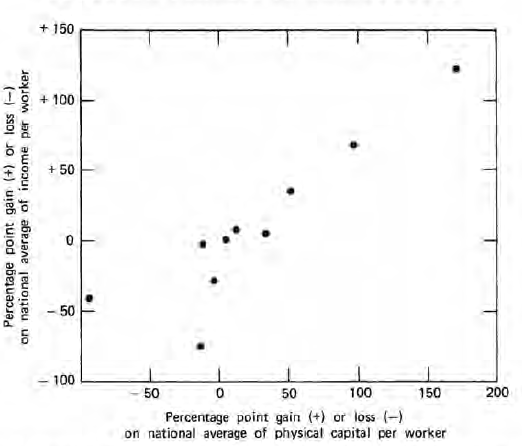
Figure 4.8 Relation between physical capital accumulation and growth of income in agriculture, ten farming regions, 1870–1910. Source: Alvin S. Tostlebe. Capital in Agriculture: Its Formation and Financing since 1870 (Princeton, N. J.: Princeton University, 1957), p. 95.
It might be added that apparently the purely technical difficulties of mechanizing the harvest of the major Southern crops, cotton and corn, were greater than the problems encountered in the mechanical harvesting of small grains.
To be of any consequence new knowledge must be put to use. Not only the rate of invention but also the rate of diffusion of new ideas is crucial in determining the rate at which productivity can advance. In the post-Civil War era three important avenues of diffusion were available: printed material, word of mouth, and the embodiment of new ideas in new capital goods. Farmers could obtain printed information from an extensive rural press, from the reports of state agricultural societies, and from the publications of the Department of Agriculture and the state experiment stations. Probably only a small fraction of all farmers ever read these sources of information. Those who did, however, were typically the relatively wealthy, large landowners who were more inclined toward systematic experimentation. They were the leaders in their communities, and their successful experiments were readily observed and imitated by others who might never have obtained information directly from the published sources. It seems certain that the most extensive avenue for the transmission of information in the countryside was simply word of mouth. Farmers talked of farming with one another—over the fence, at the general store, after the sermon on Sunday. Even Grange meetings, so often considered from a political point of view, might well have been more important as vehicles for the dissemination of technical and economic information. County and state fairs performed a similar function.
Competition among machinery manufacturers led them to embody new ideas in their equipment, and their ubiquitous salesmen were quick to bring such advances to the attention of farmers. Since the embodiment of new ideas in farm machinery was an important avenue of diffusion for technological advances, the rate of productivity increase was indirectly as well as directly tied to the accumulation of material capital. Figure 4.8 shows that a close correspondence did exist between the rate of advance of output per worker and the rate of increase of material capital per worker. Such evidence is very crude and bears only indirectly on the embodiment hypothesis; nevertheless, the available data are consistent with the hypothesis.
21 Eugene M. Lerner, “Southern Output and Agricultural Income. 1860–1880,” Agricultural History, XXXIII (July 1959), 117. 120, 121.
22 Alvin S, Tostlebe, Capital in Agriculture: Its Formation and Financing since 1870 (Princeton, N. J.: Princeton University, 1957), p 95.
23 Robert Higgs, “Railroad Rates and the Populist Uprising,” Agricultural History, XLIV (July 1970).
24 In a statistical sense, the hypothesis that the pre-1897 trend is horizontal cannot be rejected at customary levels of confidence. For the statistical test, see ibid., pp. 294, 296, n. 17.
25 Paul Wallace Gates, “The Homestead Law in an Incongruous Land System,” American Historical Review, XLI (July 1936), 655.
26 Allan G. Bogue, From Prairie to Corn Belt (Chicago: University of Chicago, 1963), p. 51.
27 Ibid., p. 193.
28 Steven N. S. Cheung, “Transaction Costs, Risk Aversion, and the Choice of Contractual Arrangements,” Journal of Law and Economics, XII (April 1969), 29–30.
29 Bogue, 1963, op, cit., p. 60.
30 Fred A. Shannon, The Farmer’s Last Frontier: Agriculture, 1860–1897 (New York: Holt, Rinehart, and Winston, 1945), pp. 115, 169–72. A recent study found that during 1880–1960 “variations in the fertilizer-land price ratio alone explain almost 90 percent of the variation in fertilizers.” See Yujiro Hayami and V. W. Ruttan, “Factor Prices and Technical Change in Agricultural Development: The United States and Japan. 1880–1960,” Journal of Political Economy, LXXVIII (Sept./Oct. 1970), 1133.
31 Steven N. S. Cheung, “Private Property Rights and Sharecropping,” Journal of Political Economy, LXXVI (Nov./Dec. 1968), 1121.
32 Bogue, 1963, op. cit., p. 61.
33 ibid., p, 174.
34 Allan G. Bogue, Money at interest (Ithaca, N. Y.: Cornell University, 1955), p. 160.
35 ibid., p. 272.
36 “The relationship between the ‘real’ interest rate, r, in money units for a stable price level, and the actual market interest rate, R, in money units, if the price level is known to be changing at the rate of p percent a year, is: R = (1 + r) (1 + p) – 1.” See Armen A. Alchian and William R. Allen. University Economics, 2d ed. (Belmont, Calif.: Wadsworth, 1967). pp. 437-38,
37 Robert William Fogel and Jack Rutner, “The Efficiency Effects of Federal Land Policy, 1850–1900: A Report of Some Provisional Findings,” University of Chicago Center for Mathematical Studies in Business and Economics. Report 7027, June 1970, p. 19.
38 Walter T. K. Nugent, “Some Parameters of Populism,” Agricultural History. XL (Oct. 1966), 264.
39 Bogue, 1963, p. 238.
40 Nathan Rosenberg, “Neglected Dimensions in the Analysis of Economic Change,” Bulletin of the Oxford University Institute of Economics and Statistics, XXVI (Feb. 1964), 69–70
- 1Andrew Carnegie, Autobiography of Andrew Carnegie (Boston: Houghton-Mifflin, 1920). pp. 34, 177, 255.
- 2Both, letters as cited in Gilbert C. Fite, “Daydreams and Nightmares: The Late Nineteenth-Century Agricultural Frontier,” Agricultural History, XL (Oct. 1966), 289, 292.
- 3Commercial and Financial Chronicle, XLII (Feb. 13, 1886), 199.
- 4Rodney Welch, “The Farmer’s Changed Condition,” The Forum, X (1891), 695, 699.
- 5Constance McLaughlin Green, American Cities in the Growth of the Nation (New York: Harper Colophon Books, 1965), pp. 148-66; Robert Higgs, “The Growth of Cities in a Midwestern Region, 1870–1900,” Journal of Regional Science, IX (Dec. 1969), 369–70.
- 6Charles C. Nott, “A Good Farm for Nothing,” The Nation, XLIX (Nov. 21, 1889), 406.
- 7Harold Fisher Wilson, The Hill Country of Northern New England: Its Social and Economic History, 1790–1930 (New York: Columbia University, 1936), pp. 97–115.
- 8Armen A. Alchian, “Uncertainly, Evolution, and Economic Theory,” Journal of Political Economy. LX (June 1950); and Milton Friedman, Essays in Positive Economics, pp. 16–23.
- 9David A. Wells, Recent Economic Changes (New York: Appleton, 1889), p. 437.
- 10Frederick L. Hoffman, “American Mortality Progress During the Last Half Century,” in Ravenel, op. cit., p. 102.
- 11For detailed statistics concerning incorporation, see George Heberton Evans, Jr., Business Incorporations in the United States, 1800–1943 (New York: National Bureau of Economic Research, 1948).
- 12Upton Sinclair, The Jungle (New York: Signet Classics, 1960), pp. 40–41.
- 13Alfred D. Chandler. Jr., Strategy and Structure: Chapters in the History of the Industrial Enterprise (Cambridge, Mass.: M. I. T. Press, 1962), p. 37.
- 14On the strategic role of the machine tool industry in economic growth, see Nathan Rosenberg, “Capital Goods, Technology, and Economic Growth,” Oxford Economic Papers, XV (Nov. 1963), and idem. “Technological Change in the Machine Tool Industry, 1840–1910,” Journal of Economic History, XXIII (Dec. 1963).
- 15Mark Twain, Life on the Mississippi (New York: Charles L. Webster, 1891), pp. 570–71
- 16For calculations of the effect of the westward movement on productivity in grain cultivation, see William N. Parker and Judith L. V. Klein, “Productivity Growth in Grain Production in the United States, 1840–60 and 1900–10,” in National Bureau of Economic Research, Conference on Research in Income and Wealth, Output, Employment, and Productivity in the United States after 1800 (New York: Columbia University, 1966).
- 17David A. Wells, Recent Economic Changes (New York: Appleton, 1889). p. 82.
- 18Walter T. K. Nugent, “Some Parameters of Populism,” Agricultural History. XL (Oct. 1966), 264.
- 19Bogue, 1963, p. 238.
- 20Nathan Rosenberg, “Neglected Dimensions in the Analysis of Economic Change,” Bulletin of the Oxford University Institute of Economics and Statistics, XXVI (Feb. 1964), 69–70
- 21To millions of downtrodden Europeans, America was the land of promise. Seeking that promise, William Carnegie, a hand weaver displaced by machinery, left Scotland with his family in 1848 for the United States. Like many other immigrants, however, he found the promise illusory, and his son Andrew, aged 13, went to work in a textile mill at $1.20 a week to help support the family. Many years later Andrew recalled: “It was a hard life. In the winter father and I had to rise and breakfast in the darkness, reach the factory before it was daylight, and, with a short interval for lunch, work till after dark. The hours hung heavily upon me and in the work itself I took no pleasure.” During the years that followed, as a messenger boy, a telegraph operator, a railroad superintendent, and finally an independent businessman of diversified interests, he advanced until in the early 1870’s, already moderately wealthy, he made a fateful decision: “I would concentrate on the manufacture of iron and steel and be master in that.” The decision proved wise. For the next 30 years the rise of Carnegie paralleled the spectacular rise of the American iron and steel industry. His fortune mounted steadily, and in 1901 he finally sold the business for over $225 million and “resolved to stop accumulating and begin the infinitely more serious and difficult task of wise distribution.” One of the world’s richest men, he spent the last 18 years of his life giving away his wealth to promote various humanitarian organizations, many of his own creation. It seemed that America was, after all, really the land of promise.
- 22I take my pen in hand to let you know that we are starving to death. It is pretty hard to do without anything to eat here in this God forsaken country. . . . My husband went away to find work and came home last night and told me that we would have to starve. . . . It is pretty hard for a woman to do without anything to eat when she doesn’t know what minute she will be confined to bed. If I was in Iowa I would be all light. . . . I haven’t had nothing to eat today and it is 3 o’clock.
- 23New steel plants are being put up in all sections of the country. In the Bulletin of the Steel Association for February 10, 1886, we find no less than 13 works for the manufacture of Bessemer steel that have either recently been completed or are in process of construction and expect to be in operation some time in the present year. These new works are going up in a great many different States—Pennsylvania, New York, New Jersey, Ohio, Illinois, West Virginia—and it is true, as the Bulletin says, that the Bessemer steel industry is no longer confined to a few establishments located in three or four States.
- 24I doubt if farmers are any better contented with their lot, or if they obtain more enjoyment from life, than they did in old times. I also question if they are more prosperous. They are generally in a condition of unrest, if not of discontent. Their social condition has not improved, as has that of mechanics and traders. Most of them are anxious to leave the farm for the store, the shop, the mine, or the locomotive. . . . Farmers have long been losing their place and influence in the councils of the State and nation. Our later Congresses have not contained enough farmers from the northern States to constitute the committees on agriculture. Our national law-makers have known so little about what would promote the prosperity of farmers that they have favored measures that have greatly injured agriculture. . . . [T]he price of nearly every farm product has declined sometimes below the cost of the labor required to produce it.
- 25Sharply contrasting changes not only occurred among individuals and industries but had a geographic dimension as well; whole regions developed quite differently. In 1869, the hamlet of Wichita, Kansas, boasted four shops, a blacksmithy, a saddlery, a saloon, and 20 families betting on the future of the little place. It proved a good bet. By 1880 Wichita’s population had expanded to 5000, by 1890 to 24,000. And such growth occurred commonly in that booming part of the country. During the same period, for example, Omaha grew from 16,000 to 149,000, Kansas City from 35,000 to 176,000, and hundreds of new towns sprang up west of the Mississippi.
- 26Midway between Williamstown and Brattleboro . . . I saw on the summit of a hill against the evening sky what seemed a large cathedral. Driving thither, I found a huge, old-time, two-story church, a large academy (which had blended in the distance with the church), a village with a broad street, perhaps 150 feet in width, I drove on and found that the church was abandoned, the academy dismantled, the village deserted. The farmer who owned the farm on the north of the village lived on one side of the broad street, and he who owned the farm on the south lived on the other, and they were the only inhabitants. All of the others had gone—to the manufacturing villages, to the great cities, to the West. Here had been industry, education, religion, comfort, and contentment, but there remained only a drear solitude of forsaken homes.
- 27And the story could have been repeated, with minor variations, for scores of other villages across northern New England.
- 28This example can be generalized to explain why the entire labor force becomes more skilled in a growing economy. The larger the market, the greater is the number of highly skilled, specialized jobs that the market will support. The more potential jobs, the greater is the incentive for workers to invest in becoming skilled specialists. In principle, the person considering an investment in acquiring skills would calculate the present value of the expected net revenue stream associated with having such skills and compare that with the opportunity cost of the training. As in the case of other economic decisions, it need not be true that individuals actually make such elaborate calculations; even though they reach their decisions by considering their alternatives only in a rough-and-ready fashion, still they generally act as if they had performed such calculations. And even if initial decisions were randomly made, only the “correct” ones would be rewarded in the market. Observation of such accidental successes would then encourage subsequent decision makers to move in the most rewarding direction.
- 29Not everyone welcomes these changes, and some people actively resist them. New ideas, new skills, and new machinery add to the economy’s average productivity, but they also give rise to a different distribution of the total product. Those committed to old skills or obsolete machinery, employed in declining industries, or located in areas where important natural resources are exhausted, often suffer. Although changes in the relative income and wealth of different groups are inherent in the process of economic growth, those who suffer the relative (and sometimes absolute) losses have rarely perceived the true source of their misfortune. Often they have ascribed responsibility for their hardship to the successful groups; typically they have sought government intervention to protect them from the vagaries of the market. Of course, people need not be misinformed to react in these ways. Much of what is nowadays described as the “farm problem,” for example, is nothing more than an attempt to resist the transformation of agriculture, to maintain a larger amount of resources in farming than can be supported there without assistance from the government. Many modern farmers surely understand their dilemma; their political actions furnish a good example of a well-informed effort to obstruct the economy’s transformation. To the extent that people fail to adjust to the economy’s transformed structure, economic growth is retarded. Transformation is not only a consequence of growth; it is a condition for further growth. However, for those who must make the adjustments, this transformation is often a painful and costly process, and the economic historian’s inability to measure many of these costs makes them no less real. David A. Wells summarized the issue clearly in 1889 when he said that “pending the interval or necessary period for adjustment, the problem of what to do to prevent a mass of adults, whose previous education has not qualified them for taking advantage of the new opportunities which material progress offers to them, from sinking into wretchedness and perhaps permanent poverty, is a serious one, and one not easy to answer.” Ultimately, of course, no one offered an “answer”; people simply struggled as best they could, sometimes failing utterly. The market system could be efficient to the point of ruthlessness. Inevitably, transformation affected not only economic welfare but political power and social status as well; new attitudes and values appeared in the process. Measuring the growth of per capita income is only a very crude way of indicating a population’s changing well-being, but clearly welfare in a more all-embracing sense is inextricably tied to economic growth and transformation.
- 30These investments in better health yielded returns in several ways. One measure of the improvements in health is the falling death rate. In New York, Boston, Philadelphia, and New Orleans, taken together, the death rate stood at 30 in 1840–1864, at 26 in 1865–1889, and at 19 in 1890–1914. For the nation as a whole the death rate declined from about 23 in the 1870’s to about 15 in 1915. After 1900 great epidemics became increasingly rare and finally nonexistent. Life expectancy at birth increased substantially: in Massachusetts, for which reliable data exist, it rose from about 40 years in 1855 to more than 50 on the eve of the Great War; and fragmentary evidence suggests that the improvement was at least as great elsewhere. That people lived longer and endured less physical pain cannot be doubted. And since many of these improvements worked mainly to reduce child mortality, the sorrow of losing children was diminished and the cost of fruitless pregnancies more often avoided. These improvements in health are surely one of the most significant welfare gains to accompany economic growth.
- 31After the war, incorporation increased greatly, and although the number of incorporations typically fell during business depressions the trend was sharply upward for the next half century. Incorporations of financial firms and utilities declined relatively, while manufacturing incorporations became more prevalent. During the two decades from the mid-1870’s to the mid-1890’s entrepreneurs adopted the corporation in many fields where it had not previously appeared. After the 1890’s the incorporation of trade and service businesses became progressively more common.
- 32The carcass hog was scooped out of the vat by machinery, and then it fell to the second floor, passing on the way through a wonderful machine with numerous scrapers, which adjusted themselves to the size and shape of the animal, and sent it out at the other end with nearly all of its bristles removed. It was then again strung up by machinery, and sent upon another trolley ride; this time passing between two lines of men, who sat upon a raised platform, each doing a certain single thing to the carcass as it came to him. One scraped the outside of a leg; another scraped the inside of the same leg. One with a swift stroke cut the throat; another with two swift strokes severed the head, which fell to the floor and vanished through a hole. Another made a slit down the body; a second opened the body wider; a third with a saw cut the breastbone, a fourth loosened the entrails; a fifth pulled them out—and they also slid through a hole in the floor. There were men to scrape each side and men to scrape the back; there were men to clean the carcass inside, to trim it and wash it. Looking down this room one saw, creeping slowly, a line of dangling hogs a hundred yards in length; and for every yard there was a man, working as if a demon were after him.
- 33The transformation of a loose alliance of manufacturing or marketing firms into a single consolidated organization with a central headquarters made possible economies of scale through standardization of processes and standardization in the procurement of materials. Of more significance, consolidation permitted a concentration of production in a few large favorably located factories. By handling a high volume of output, consolidated factories reduced the cost of making each individual unit. They could specialize further and subdivide the process of manufacturing and also were often able to develop and apply new technological improvements more easily than could smaller units. To a lesser extent consolidations of marketing firms offered comparable advantages.
- 34Expansion of the market led to greater specialization and hence to higher productivity within individual firms, as described above, but economies of scale also appeared in a broader context. In a growing market many firms themselves became more and more specialized. For example, in the early nineteenth century, textile manufacturers produced their own equipment, for the total demand for such machinery was too small in any particular place to support a firm specializing in such products, and transportation charges were too high to permit an economical centralization of machinery production. As the demand for textiles became larger, the demand for textile machinery also increased, and about the middle of the century specialized machinery producers began to appear. This specialization among firms raised productivity throughout the textile industry, for it enabled the machinery firms to benefit from the learning process inherent in specialization and then, through competition with one another, to pass benefits on to textile makers in the form of reduced machinery costs. In a similar fashion countless other new industries emerged. Of special significance was the appearance of a distinct industry producing machine tools, instruments for cutting, grinding, and polishing metals. This became a focus for the discovery and dissemination of new techniques applicable to a wide range of manufacturing processes.
- 35“Nuth’n,” says Smith; and keeps his hat on, and just turns his back and goes to talking with somebody else.
- 36Railroads did not simply provide more cheaply the same service that canals and steamboats had previously supplied. In fact, transport rates on the canals, lakes, and rivers, in cents per ton-mile, remained lower than railroad rates. But the railroad provided a service so superior in quality that it more than compensated for its higher price. Its major advantages were more direct routes, reduced transshipment, greater speed and safety, and year-round service. With the introduction of the railroad, insurance rates and warehousing charges fell, as did the degree of uncertainty surrounding shipping and delivery dates. Commerce became more predictable. Moreover, the railroad permitted the settlement of large parts of the western United States where water transportation was not feasible, and there its influence was most striking. The availability of railroad transportation in the trans-Mississippi West encouraged a far-reaching relocation of agricultural activities; grain and meat production soon concentrated in this area. This relocation contributed substantially toward raising overall agricultural productivity.
- 37In Communications great technological advances occurred. The telegraph had appeared in the 1840’s; the telephone followed in the 1870’s; and both continued to diffuse, supplying progressively more services. Information could now be transmitted in seconds instead of days. The availability of instant communications improved the working of markets by increasing their competitiveness, for traders could now carry out arbitrage operations quickly—buying in one market to sell in another with lugher prices—thus insuring that prices in different markets for the same good would normally differ only by the cost of transportation between the places. Businessmen could discover opportunities for remunerative sales in markets throughout the nation. David A. Wells noted in 1889 that “the command through the telegraph of instantaneous information throughout the world of the conditions and prospects of all markets for all commodities has also undoubtedly operated to impart steadiness to prices, increase the safety of mercantile and manufacturing operations, and reduce the elements of speculation and of panics to the lowest minimum.” In short, the telephone and the telegraph lowered the cost of information and thereby contributed toward increasing productivity throughout the entire economic system by reducing the uncertainties surrounding transactions and by reducing the quantity of resources committed to search activities or tied up in inventory stocks. On the eve of World War I, Western Union handled more than 100 million telegraphic messages annually, and over 10 million telephones facilitated additional communications.
- 38[T]he debt to asset ratio was low (about 13 percent) for most farmers. It was only the farmer with a high debt to asset ratio who was badly hurt by the declining price level. But such farmers were atypical.” We need not dispute this finding to maintain that the combination of deflation and heavy indebtedness probably hurt the farmers of some areas badly; and after all, farmers who joined actively in the various agrarian protest movements were also atypical. Heavy indebtedness was typical of newly settled areas. Walter Nugent’s careful study of Kansas revealed that “mortgage distress was not only real, but particularly severe for the Populists.” And the same conditions probably prevailed in Nebraska, the Dakotas, and other Western strongholds of Populism, though the quantitative research that would test this hypothesis remains to be done.
- 39The American farmer in the post-Civil War era necessarily had to make frequent decisions. What crops should he plant, when, and in what proportions? Should he buy or sell livestock? Should he purchase or hire a newly devised implement? Should he buy or rent more land? Should he use fertilizer, and if so, what kind and how much? Not even the farmers of the older states could avoid such choices, for the technological and economic environments within which they operated changed constantly. They had acquired familiarity with the topography and climate of their areas through long experience, but new competition from the West, the growth of nearby urban markets, new technology, and a host of other changes forced adjustment on them if they were to continue to earn their accustomed rate of return. In the newly settled areas the range of necessary choices was considerably wider. The weather, insects, crop and animal diseases, length of growing season, soil conditions—all these were different, and hence new choices were required. A Norwegian immigrant wrote from Iowa: “I can truthfully say that the only things that seem to be the same are the fleas, for their bite is as sharp and penetrating here as elsewhere.”
- 40Some crops require an unskilled labour input performing nothing but simple, routinized, repetitive tasks—e.g., cotton. . . . [M]idwestern U.S. agriculture has provided a radically different experience. The pattern of agricultural activity in the American midwest was of such a nature that it developed a high degree of commercial and technical sophistication on the part of the labour inputs. Much of the explanation lies in the fact that this was an agriculture centered on livestock husbandry which required a highly efficient and sophisticated system of managerial decision-making. . . . The midwestern farm is often a fairly elaborate enterprise where the decision-maker must be close to the detailed day to day operations of the farm and which require a familiarity with market phenomena and a wide range of technical skills. Midwestern farming has therefore produced effective managers and people well-versed in mechanical skills. . . .

