
The Transformation of the American Economy 1865-1914
III. The Rise of Cities

We had several cities of half a million, and one of more than a million; we had a score of them with a population of a hundred thousand or more. We were very proud of them, and vaunted them as a proof of our unparalleled prosperity, though really they never were anything but congeries of millionaires and the wretched creatures who served them and supplied them. . . . [T]hey were not fit dwelling-places for men, either in the complicated and luxurious palaces where the rich fenced themselves from their kind, or in the vast tenements, towering height upon height, ten and twelve stories up, where the swarming poor festered in vice and sickness and famine.
WILLIAM DEAN HOWELLS
[O]nly the poorest [servants], who cannot find employment in the city, will come to the country, and these as soon as they have got a few dollars ahead, are crazy to get back to town.
FREDERICK LAW OLMSTED
THE URBAN TRANSFORMATION
The most significant aspect of America’s transformation in the post-Civil War era was the relative shift of population from the countryside into cities of increasing average size (Table 3.1). At the end of the Civil War, fewer than a quarter of Americans were urban dwellers; 50 years later half the population lived in cities (incorporated places of at least 2500). In 1870 only 14 cities had more than 100,000 inhabitants, but by 1910, 49 places had attained this size, and three—New York, Chicago, and Philadelphia—exceeded 1.5 million. Indeed, on the eve of the Great War, the population of New York City alone numbered about 5 million! America had become urban as well as industrial, and the consequences were legion.
TABLE 3.1
PERCENTAGE OF TOTAL POPULATION URBAN
AND NUMBER OF CITIES
| Percentage of Total | Number of Cities | ||
| Population Urban | Over 2500 | Over 100,000 | |
| Year | (1) | (2) | (3) |
| 1870 | 26 | 663 | 14 |
| 1880 | 28 | 939 | 20 |
| 1890 | 35 | 1348 | 28 |
| 1900 | 40 | 1737 | 38 |
| 1910 | 46 | 2262 | 49 |
SOURCE. Col. 1: United States Census, 1950: Vol. 1. Population, p. 1–17. “Urban” means residing within an incorporated place of at least 2500. Cols. 2 and 3: U. S. Bureau of the Census, Historical Statistics of the United States, Colonial Times to 1957 (Washington: Government Printing Office, 1960), p. 14.
The urban economy cannot be divorced from the rural economy. Unless the productivity of agricultural workers somewhere in the world is high enough to support both the farmers’ families and a substantial number of others, no large city can exist. Given a sufficiently high level of agricultural productivity to support cities, they might exist for a variety of reasons, some of a noneconomic nature. The first known cities, founded several thousand years ago, apparently served as centers of political administration and religious observance; some modern cities—Washington, D. C., for example—also rest on such a basis. Modern cities, however, are generally economic entities, and only by considering them as such can we understand their growth during the past two centuries. Urbanization, a steady increase in the urban population relative to the total population, required that agricultural productivity be continually rising; in effect, it required economic growth. This relation explains why, even as late as 1800, the bulk of the population everywhere was rural, and large cities were a great rarity. But if urbanization was a consequence of economic growth, it was also a cause, for cities served in various ways to accelerate the rate of productivity increase. (Some of these urban contributions to economic growth we shall discuss later in this chapter.)
An illuminating way to understand cities as economic entities is by constructing a theory that implies that no cities would exist! Since cities do exist, we know that one or more of the assumptions of such a theory must be false. But therein lies the purpose of the exercise, for the negations of these assumptions provide sufficient reasons for the existence of cities. Such a “no-cities model” helps to clarify our thinking about the economic bases of cities.1
The no-cities model contains three assumptions. First, suppose that the earth is a featureless plain, having everywhere the same topography, climate, fertility, and mineral content. Next, suppose that all economic activities are characterized by constant cost; that is, no matter how much output were produced, the average cost of producing a single unit would be the same. Finally, assume that all markets, whether for outputs or inputs, are perfectly competitive. From these assumptions it follows logically that no city will exist, for a concentration of population entails no economic advantage but has a definite disadvantage. The assumptions imply that every consumer can produce the bundle of goods he desires at the site where he wishes to consume it with no loss of efficiency—average cost and output level are independent, and resources are ubiquitous—at the same time avoiding all transportation costs. Furthermore, the population under these conditions will spread itself out at the minimum possible density, because any attempt at agglomeration would raise land rents without any compensating benefit.
The prediction of the no-cities model obviously fails to correspond with reality, and the reasons are plain. First, the earth is far from homogeneous. Areas differ widely in topography, climate, fertility, mineral content, accessibility, and other features. It may therefore prove advantageous to concentrate production in a small area—around a mineral deposit or at a river or railroad junction—forming a city even though the production of commodities occurs at constant cost. Generally, however, we cannot maintain the constant-cost assumption. Especially at rather small output levels, it seems characteristic of many production processes that average unit cost declines as the rate of output increases; that is, economies of scale exist. Concentration of production may then occur because the resulting reductions in average cost more than compensate for the expenses of transportation incurred in assembling raw materials and distributing the finished product to dispersed customers. In sum, cities can exist because of natural or man-made heterogeneity in the spatial environment and because of economies of scale.
Once a city exists, locating there allows savings of transportation costs for many businesses that serve the local market. The city may also attract new businesses because the presence of already established activities reduces the costs of operating related businesses or because larger cities can more efficiently supply certain municipal services like police and fire protection, good streets, water, and power. Because such advantages of an urban location do not depend on the actions of any individual firm, economists describe them as “external economies” from the point of view of the firm. New and expanded businesses in turn attract new workers. Of course, at some point firms in a growing city begin to encounter external diseconomies in the form of traffic and housing congestion, environmental pollution, and overloaded municipal facilities of all kinds. In this case the growth of the city imposes costs on the firm that are independent of the firm’s own actions. Whether a city will attract new businesses and migrants therefore depends in part on the balance between external economies and diseconomies as well as on the potential newcomers’ knowledge of these things, which is always imperfect.
We have already seen that economic growth gives rise to changes, especially in expenditure patterns, that encourage the movement of resources out of agriculture and into manufacturing, trade, transportation, and other nonagricultural activities. By itself this need not lead to the growth of urban population, for nonagricultural goods might conceivably be produced in the countryside. But in fact, these kinds of production typically appear in an urban setting. One reason is that while farming is generally a constant-cost industry, many nonagricultural activities are subject to economies of scale. In addition, these activities often benefit from the external economies realizable only in cities. In short, they are most remunerative when conducted on a large scale—which itself may create a city—or when located in already existing cities. With rising incomes, demand rose relatively faster for nonagricultural goods, and therefore aggregate production increasingly concentrated in urban areas. The result was a more rapid growth of urban than of total population.
This argument explains why the urban population became relatively larger, but it does not explain how urban population gains were divided between an enlargement of existing cities and the establishment of new cities. To answer this question we must distinguish between at least two kinds of city: one is commercial, producing mostly services, and the other has a substantial concentration of manufacturing along with its service activities.
For statistical purposes we shall follow the Census Bureau in defining a city as an incorporated place of at least 2500 people. In the post-Civil War era most cities engaged primarily in commercial functions, especially in retail trade, and only a minority possessed substantial amounts of manufacturing. This pattern prevailed everywhere, but it was particularly evident in the South and the West, where very few cities belonged to the manufacturing category. Most of the manufacturing cities appeared in the Northeast and Great Lakes regions. As the population became more densely settled and per capita incomes rose, more and more commercial cities—geographers aptly describe them as “central places”—grew up in the East. And in the West agricultural settlement and the establishment of central places went hand in hand. The South, with lower incomes and less active trade, witnessed less of this kind of urbanization, but even there the same process occurred (Figures 3.1 and 3.2). In every case the reasons were the same. Farmers and other rural people demanded food, clothing, lumber, fuel, and blacksmith’s services at frequent intervals, and it was uneconomical for them to travel very far to make such purchases. Providing such goods, as well as a railroad station and local markets and storage facilities for farm products, was the function of the central places of 2500 to 10,000 people. Such places linked a large rural population to the rest of the economy, thereby promoting greater specialization. Commercial agriculture like that in the American West could operate efficiently only with the aid of hundreds of almost uniformly scattered central place cities. Significantly, in 1870 almost 500 of America’s 663 cities had populations of less than 10,000; and forty years later 1665 of 2262 cities were in this size class. Of course, not all these small cities were central places. Some exploited minerals; others, particularly in the Far West, provided mainly transportation services; and a few, especially in New England, attracted manufacturing enterprises. But most cities of 2500 to 10,000 were occupied in facilitating the exchange of manufactured goods and urban services for farm products. In brief, the vast majority of America’s cities served central place functions, and the expansion in the number of such places depended quite simply on the increasing rural population density and the rising level of per capita income. As long as local transportation was by horse and wagon these small cities would continue to thrive. We must not forget that the rural population, although declining in relative terms, grew in absolute terms, from less than 27 million in 1870 to about 50 million in 1910. This rural population also became more and more specialized, demanding more and more urban-supplied goods. A rapid expansion in the number of central place cities was a predictable consequence.2
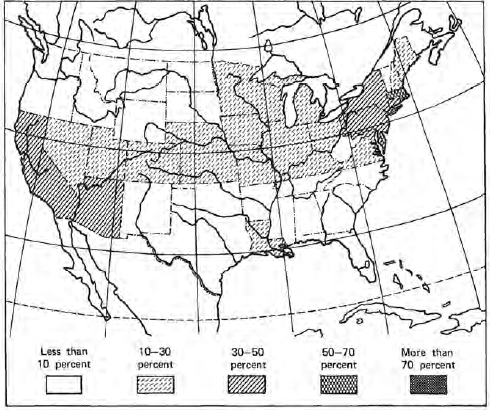
Figure 3.1 Percentage urban in 1870, by states. Source: United States Census. 1950: Vol. I, Population, pp. 1–17 to 1–33.
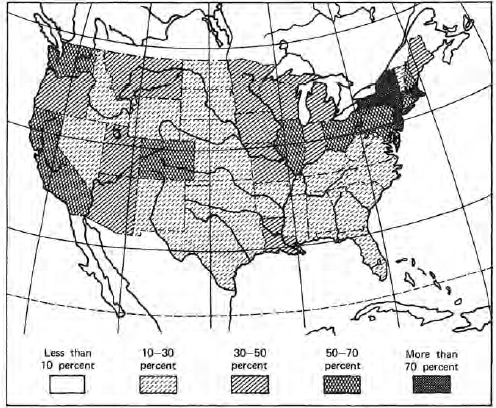
Figure 3.2 Percentage urban in 1910, by states. Source: United States Census, 1950. Vol. I, Population, pp. 1–17 to 1–23.
Central place theory allows us to explain the growth of the great majority of American cities in the post-Civil War era. Places of 2500 to 10,000 accounted for only a fraction—declining from 24 percent in 1870 to 19 percent in 1910—of the total urban population, but many larger cities also served central place functions; indeed, a complete theory of central places predicts that a regular hierarchy of such cities will emerge. Small central place cities exist because their businesses can supply some services so cheaply, on a relatively large scale, that people in the surrounding countryside will incur transportation costs in obtaining such services from the city and still be better off than if they provided them for themselves. But while small-city businesses can realize a normal rate of return on the production of some services, the city faces too small a demand to support a full range of potential urban economic activities. We do not expect to find a stockbroker, a symphony orchestra, or a brain surgeon in a town of 2500. The residents of small towns must obtain such services in larger cities, where the demand is sufficient to support them. Because a continuum of such “demand thresholds” exists, the larger a city is, the greater is the variety of businesses it will contain. The city of 50,000 can surely boast a stockbroker, but the symphony appears only in larger places. Small cities contain businesses whose economies of scale exist only at relatively small output levels; larger cities support businesses whose economies of scale continue relatively longer as output expands. The larger the city, the greater is its “range,” the maximum distance from which its customers travel. Greater scale economies, and hence lower costs and prices, justify the buyer’s incurring greater transportation costs. And the larger the city, the smaller is the proportion of its customers from rural areas, for very large cities serve many buyers and sellers from smaller cities as well as people from the nearby countryside. Larger central place cities prominent in the post-Civil War era included such places as Atlanta, Indianapolis, Des Moines, Sacramento, and Spokane. And surrounding each of these cities was a hierarchy of smaller places, often following a fairly regular rule that the second-ranking place was about one half as large as the largest, the third-ranking place about one third as large as the largest, and so forth. The appearance of such hierarchies confirmed that the free market provided an efficient spatial allocation of activities and resources.3
In 1870 the 14 cities of 100,000 or more contained over 4 million people, more than 40 percent of the total urban population; in 1910 the 49 cities of this size class housed more than 20 million, almost half of the vastly enlarged urban population. Here we find the urban America that stirred the strongest emotions among reformers and rural boosters: the great monster New York, with its towering skyscrapers and cramped tenements; sprawling Chicago,
Hog Butcher for the World,
Tool Maker, Stacker of Wheat,
Player with Railroads and the Nation’s Freight Handler:
Stormy, husky, brawling,
City of the Big Shoulders.4
Here also are dingy Philadelphia, tubercular Boston, and noisome Baltimore that reminded H. L. Mencken of “a billion polecats.” Table 3.2 shows how dramatically the great American cities expanded in the half century before 1910.
Within these cities lay the bulk of the nation’s manufacturing. In 1890, ten major cities—all those in Table 3.2 except Los Angeles—accounted for almost 40 percent of the value added in American manufacturing. Indeed, some cities were commonly identified with their major manufacturing industry: Pittsburgh with iron and steel; Kansas City and Omaha with meat-packing; Minneapolis with flour milling; Detroit, just before World War I, with automobiles. The great cities were also the focus of commerce, finance, and communications. In general, the larger the city, the greater was the number of distinct industries represented there. Though the largest cities almost without exception contained extensive manufacturing activities, they were at the same time more diversified than smaller urban places, as central place theory would predict.
But central place theory applies to mainly commercial cities; it is inadequate to explain the growth of the great manufacturing centers. We must explain the awesome expansion of these cities primarily as a result of the attempt by businessmen to benefit from the external economies inherent in urban agglomeration. The printing and publishing trades provide a good illustration. These businesses were typically located near the city center. Because they depended on a great deal of face-to-face negotiation between buyers and sellers—economists have described them as “communications oriented”—it was essential that they occupy a location of maximum accessibility within the city. In a large city a variety of specialized printing and publishing trades could flourish, and the accessibility and efficiency of these specialized producers accrued as an external economy to their customers within the city. In a host of other cases the concentrated market represented by a great city encouraged the emergence of specialized producers whose enhanced efficiency became an external economy from their customers’ point of view. As noted above, municipal utilities subject to economies of scale, such as electrical power generation, also provided external economies to the businesses in large cities.
TABLE 3.2
POPULATIONS OF ELEVEN LARGE CITIES, 1860 AND 1910
| City | City Population 1860 (Thousands) | City Population 1910 (Thousands) | Metropolitan District Population 1910 (Thousands) |
| New York | 1175 | 4767 | 6475 |
| Chicago | 112 | 2185 | 2447 |
| Philadelphia | 566 | 1549 | 1972 |
| Boston | 178 | 671 | 1520 |
| Pittsburgh | 49 | 534 | 1045 |
| St. Louis | 161 | 687 | 829 |
| San Francisco | 57 | 417 | 687 |
| Baltimore | 212 | 558 | 659 |
| Cleveland | 43 | 561 | 613 |
| Detroit | 46 | 466 | 501 |
| Los Angeles | 4 | 319 | 438 |
SOURCE. Allan R. Pred, The Spatial Dynamics of U. S. Urban-Industrial Growth, 1800–1914 (Cambridge, Mass.: M. I. T. Press, 1966), p. 23.
The dense press of population and economic activity on limited urban land areas pushed land rents to astronomical levels. In the absence of complete data on rents, information on land values provides a good substitute. In Chicago’s central business district, the square mile surrounding State and Madison streets, for example, the value of the land increased during 1873–1910 from about $72 million to about $600 million, an amazing increase of over 700 percent. In 1910 this small area accounted for 40 percent of the value of all the land in Chicago!5 That businessmen valued the land so highly is clear testimony to the advantages of a central location in a great city.
We can now summarize our discussion of the urban transformation. The reasons for the rise in the urban proportion of the population lay in two forces: the economic growth that gave rise to changing expenditure patterns increasingly emphasizing nonagricultural goods, and the decreasing-cost and external-economies characteristics of the activities by which these goods were produced. Under these conditions it was advantageous for entrepreneurs increasingly to concentrate their production in cities. In the process the number of cities grew, mainly by a proliferation of central places attributable to rising per capita income and population density in the rural areas. Although this kind of urban expansion occurred in all regions, it can be seen most clearly in the West, where agricultural settlement and the establishment of hundreds of new central places occurred concomitantly. The enormous growth of the largest cities had its sources in the attempt by businessmen to realize the economies inherent in urban agglomeration and at the same time in many cases to save transportation costs while serving a large local market.
THE ECONOMICS OF IMPROVING URBAN HEALTH
Rapid urbanization raised many new health problems and exacerbated some old ones. In an era when highly communicable, infectious diseases were responsible for most deaths and a great deal of sickness, agglomeration of the population in densely inhabited areas had obvious drawbacks. The primitive state of medical and public health knowledge militated against an effective approach to solving these problems in the immediate post-Civil War years, but the emergence of bacteriology largely eliminated this critical obstacle; by 1890 the germ theory was widely known and accepted. In the three decades before America’s entry into the Great War the health improvements realized, though often dependent on the progress of scientific knowledge, were largely the outcome of economic decisions. The investments made by urban people in an attempt to reap the returns of improved health were important in their own right, but in many cases they had an additional dimension: they represented attempts by governments to improve on conditions in which the unhampered action of individuals failed to promote the social welfare.
In the mid-nineteenth century the health of urban dwellers was markedly inferior to that of rural people. While the death rate in the countryside was not much over 20 per 1000 population, the death rate in the large cities was in the neighborhood of 30. The reasons for this wide divergence are apparent. Dense concentration of population increased the likelihood that communicable diseases such as tuberculosis and diphtheria would spread directly from person to person. Water wells were more likely to be fouled by drainage from poorly sealed privies, and alternative forms of water supply were relatively very expensive. Safe sewage disposal was enormously more difficult than in the countryside. Urban people had less access to fresh milk, fruits, and vegetables, and a poor diet made them easy targets for a variety of infectious diseases.
Beginning in the 1880’s substantial improvements were made in urban health conditions. In part these gains reflected the rising income levels that allowed people to enjoy better diets and more spacious housing. To some extent, however, they resulted from conscious efforts to improve the public health aspects of the environment. These efforts included the provision of pure water supplies and improved means of sewage disposal, the pasteurization of milk, regular garbage collection, swamp drainage, and a variety of other actions. The results were striking. In a group of 35 large cities in 1898–1908, 17 had a typhoid death rate of more than 30 per 100,000 and the others all had a rate exceeding 15; by 1917–19 all but two of these cities had reduced the rate to less than 15.6 As Table 3.3 suggests, the reduction in death rates applied as well to all the major infectious diseases.
Individuals often made expenditures for improved health in the free market. One could voluntarily allocate more of his income toward obtaining a better diet or more spacious living quarters, though lack of knowledge about nutrition hampered the former effort. The important point, however, is that within the constraints of their incomes and their knowledge, consumers had full command over the purchase of better health in these ways; the success of one man’s investment in improved health did not depend on the actions of his neighbors.
In other cases interdependencies prevented individuals from acting alone successfully. Suppose, for example, that John Doe had discovered the ill effects of privy drainage in contaminating his well. He might then have invested in the construction of a properly sealed privy; but it was likely to be a waste of money, because he had no way of compelling his neighbors to undertake similar investments. Unless everyone acted together, any individual’s efforts were unlikely to be successful.
TABLE 3.3
DEATHS PER 100,000 POPULATION IN NEW YORK, BOSTON, PHILADELPHIA, AND NEW ORLEANS
| Disease | Annual Average 1864–88 | Annual Average 1889–1913 |
| Tuberculosis | 365 | 223 |
| Stomach and Intestinal | 299 | 196 |
| Scarlet Fever | 66 | 19 |
| Typhoid and Typhus | 53 | 25 |
| Smallpox | 40 | 2 |
| Cholera | 8 | 0 |
| Diphtheria | 123 | 58 |
| Yellow Fever | 14 | 1 |
SOURCE. Frederick L. Hoffman, “American Mortality Progress During the Last Half Century,” in Mazyck P. Ravenel, A Half Century of Public Health (New York: American Public Health Association, 1921), p. 102.
One way of dealing with such cases is through negotiation and mutual agreement, perhaps including pecuniary compensations, among the parties involved. When the number of involved persons is very large, however, as it typically is in urban public health problems, this kind of negotiated agreement is quite difficult and costly; such problems are therefore seldom resolved in this way.
An alternative manner of approaching these problems is through government action. Because of the government’s ability to coerce uncooperative minorities and to assure a minimum of “free riding” by taxing all the beneficiaries of a public investment, government actions have often taken the place of the market in cases where important interdependencies prevent individuals from acting effectively. In dealing with the problems of urban public health this approach was generally successful, even though it opened new avenues for corruption and political conflict. Sanitary regulations enforced by newly created urban health boards, compulsory vaccination against smallpox, tenement building codes, and public investments in water purification and sewage disposal furnish examples of the wide range of government actions undertaken in the field of urban public health during the post-Civil War era.
Water filtration provides a striking illustration. Before the late nineteenth century, people generally judged the quality of water according to its clarity and taste, without regard for the disease-carrying organisms it might harbor. With the development of bacteriology, the public increasingly demanded filters capable of straining out harmful bacteria, and inventors soon developed a variety of such devices. These reduced the incidence of many diseases, especially typhoid. Filtration lowered the typhoid death rate per 100,000 population from 121 to 26 in Lawrence, Massachusetts; from 104 to 26 in Albany, N. V.; from 49 to 11 in Binghamton, N. Y.; and from 68 to 20 in Watertown, N. Y.7 Table 3.4 shows by a dramatic contrast how powerful the impact of filtration could be: Albany installed its filter in 1899; Troy’s water supply came from the same source, the Hudson River, without filtration.
TABLE 3.4
EFFECT OF FILTRATION ON DEATH RATES AT ALBANY, N.Y., AND A COMPARISON WITH TROY, N.Y., WHERE THE WATER WAS NOT FILTERED
| Death Rate per 100,000 | Percentage Reduction | ||
| 1894–98 | 1900–1904 | ||
| ALBANY | |||
Typhoid Fever |
104 | 26 | 75 |
Diarrheal diseases |
125 | 53 | 57 |
Children under 5 years |
606 | 309 | 49 |
Total deaths |
2264 | 1868 | 17 |
| TROY | |||
Typhoid Fever |
57 | 57 | 0 |
Diarrheal diseases |
116 | 102 | 12 |
Children under 5 years |
513 | 435 | 18 |
Total deaths |
2157 | 2028 | 6 |
SOURCE. George C. Whipple, Typhoid Fever: Its Causation, Transmission and Prevention (New York: John Wiley and Sons, 1908), p. 276.
The interrelated problems of water supply and sewage disposal in Chicago provide another interesting case. Before 1900 the city used Lake Michigan both as a source of water and as a receptacle for sewage. A high incidence of typhoid, including periodic epidemics, was just one of the undesirable consequences. As the city and its sewage discharge continued their spectacular growth, Chicagoans found this arrangement more and more intolerable. The city’s low elevation compounded its sewerage problems, natural drainage being almost totally lacking. In 1886 the Chicago City Council created the Drainage and Water Supply Commission, which finally provided a solution by diverting all sewage from Lake Michigan, discharging it into the Des Plaines River, from which it passed into the Illinois River and hence into the Mississippi River drainage system. This scheme also reversed the direction of the Chicago River’s flow to provide a flushing action for the sewage discharge. Work on the project began in 1890, but the drainage canal did not open until 1900.
Few cities required as spectacular an effort as Chicago’s. Still, the problems were seldom easily solved, and continued urban expansion often made facilities inadequate soon after their installation. On balance, however, public health workers made great progress. Compulsory vaccination, for example, reduced smallpox from a major killer to a statistical rarity by World War I. Filters, chlorination, and aqueducts from pure mountain streams dramatically improved the quality of water supplies. Compulsory pasteurization of milk reduced the incidence of tuberculosis, typhoid, and a variety of other diseases. Construction of modern sewer systems contributed greatly toward a more healthful environment. In the words of a distinguished public health worker, “The two decades between 1890 and 1910 formed in a sense the golden age of public health. . . . No previous period of twenty years had ever seen equal progress in the application of sanitary science and it is doubtful if any similar period in the future will ever witness quite such phenomenal achievements.”8
Significantly, almost all these improvements involved substantial investments. Contemporaries were well aware of the costs but were convinced that the benefits far exceeded them. Recognizing the greater productivity of healthier workers, the economic losses from deaths, and the waste of resources attending sickness, a sanitary engineer asserted in 1908: “To remedy all these conditions will cost money, but it will pay. It will pay not only in the satisfaction of having clean and healthful cities to live in, not only in the joy of having relieved the suffering and saved the dying, but it will pay in hard cash.”9 Often these investments promised a positive return only when undertaken by governments or under the umbrella of government sponsorship or authority. The inter-dependencies that made it difficult or impossible for individuals to cope successfully with the problems of urban health did not forever block a solution, for in this area governments proved their capability for providing services where the free market could not function properly Moreover, a by-product of these government actions was a more rapid dissemination of the new public health knowledge than would otherwise have occurred—for example, through the school nurse program—and with this knowledge people could better act individually to improve their health.
In his recent study of investments in improving health within a group of Northeastern states during the period 1880–1910, Edward F. Meeker considers expenditures made on sanitary sewers, pure water supplies, and municipal health conservation projects. He then estimates the monetary value of increased life expectancy and reductions in work missed because of sickness. The rate of return implied by these costs and benefits is 25 percent. Though Meeker qualifies this result in various ways to take into account unmeasurable costs and benefits, his findings suggest strongly that investments in health paid a substantially greater return than investments in material capital during the late nineteenth and early twentieth centuries.10
URBANIZATION AND INVENTION
While urbanization depended on economic growth, the converse was also true, for the concentration of the population in cities increased the rate of advance in productivity. Entrepreneurs employing techniques that were relatively efficient when conducted on a large scale often created cities around their plants; more often they simply located in existing cities, where their labor demands could be readily satisfied. A variety of external economies attracted businessmen to the cities. New ideas spread more rapidly in an urban environment, and hence the average plant became more up-to-date than it would have been under conditions of geographically dispersed production.
Urbanization also stimulated economic growth by facilitating an expanded flow of inventions. Inventive activity, we have previously argued, is generally an economic endeavor; the greater the expected rate of return, the more inventions will be forthcoming. By extending this argument to include a spatial dimension, we can show that urban people would be expected to produce more inventions than rural people.
An invention is usefully defined as a new combination of previously existing knowledge that satisfies some want. Inventive activity, then, is nothing more than the process of creating new useful information. From this conception of inventive activity, it is only a short step to postulating that just two inputs enter the process: inventive talent and prior information.
If we suppose that inventive talent (native creativity) is distributed throughout the population independently of location, then differences in inventive activity among regions or places must depend on variations in the expected costs of acquiring information. Since rates of return depend on both revenues and costs, two kinds of information are relevant. The first is information about opportunities for invention, that is, about the extent of the market for invention; the second is information that can serve as inputs into the production of inventions. The former determines the potential inventor’s expectation of the revenue stream that his invention will generate, while the latter determines his expectation of the cost of producing the invention. Together these imply an expected rate of return, a signal encouraging him either to devote his energies to inventive activity or to use his talents and time in an alternative manner. To link inventiveness to urbanization within this analytical framework, we must show that information costs differed systematically between rural and urban areas. Such differences are in fact quite plausible for the post-Civil War era.
The expected rate of return depends in part on the expected stream of revenue from invention. Under conditions preceding mass communication, when most reliable information was acquired by direct observation or by word of mouth, the average search cost of information about potential markets for inventions was an increasing function of market distance; therefore, the market as perceived by a potential inventor was largely restricted to nearby locations. Assuming that the locational distribution of actual inventive opportunities coincided with that of the population, the probability that an opportunity would be perceived was then much higher for urban than for rural persons. Given the assumed relation between market distance and the average search cost of information, this proposition follows from the common definition of a city as an area of spatially agglomerated population. Moreover, if the more reasonable assumption is made that, in relation to population, actual inventive opportunities were disproportionately concentrated in the cities, there are even stronger grounds for postulating that the expected stream of revenue from invention was larger for urban than for rural persons.
The expected rate of return also depends on the expected costs of inventing, and here we propose an inverse relation with urbanization. “In a pre-mass-communications context, such as the relatively compact cities of the late nineteenth century, where diffusion of technical knowledge [was] highly reliant upon personal interaction, the possibilities for invention ought to [have been] enhanced by the . . . network of interpersonal communications and confrontations.”11 In the absence of well-developed means of mass communication, the costs of acquiring information depended heavily on spatial proximity. The expected search costs of acquiring informational inputs were lower for the potential urban inventor than for his rural counterpart simply because of the enormously greater proximity of urban information carriers to one another. The greatest handicap of rural persons was their spatial isolation from one another. To the extent that urban people were better educated, their advantages were compounded.
Combining the assumptions about the expected revenue stream and the expected total costs of inventing, we conclude that the expected rate of return on inventive activity was higher in the city than in the countryside. It is now easy to derive the testable hypothesis that, other things being equal, an increasing linear relation existed between inventiveness—that is, inventions per capita—and the proportion of the population in cities.12
A substantial body of evidence is consistent with this view of inventiveness. One recent study found that among American states in the 1870–1920 period a difference of 10 percentage points in the proportion of the population living in cities was positively associated with a difference of 6–9 patents per 100,000 population, even when the influences of manufacturing and regional differences were held constant.13 Another study found that within Connecticut, the nation’s most inventive state, urbanization and inventiveness were closely associated. Citizens of the 12 largest cities generally provided about three fourths of all the patented inventions in a large random sample, and the number of inventions per capita was generally more than twice as great in these cities as elsewhere in the state (Table 3.5).
TABLE 3.5
ESTIMATED LEVELS OF PATENTED INVENTIONS PER 10,000 POPULATION, CONNECTICUT LOCATIONS, 1870–1910
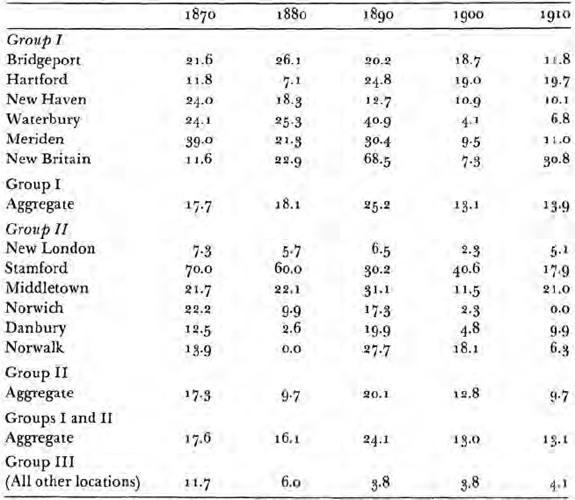
SOURCE. Robert Higgs, “Cities and Yankee Ingenuity, 1870–1920,” in Kenneth T. Jackson and Stanley Schultz, Eds., From Village to Metropolis: Essays on the City in America (New York: Knopf, 1972).
These findings may well be significant for the explanation of economic growth as a self-sustaining process during the post-Civil War era. To vastly oversimplify, urbanization was a response to changes in the relative rates of return on agricultural and nonagricultural activities, which in turn resulted largely from changes in expenditure patterns as per capita incomes rose. In brief, economic growth gave rise to urbanization. But because urbanization encouraged greater inventiveness, it produced a feedback effect on growth by promoting more rapid technological progress. In this way urbanization was a cause as well as a consequence of economic growth, and the circle of a self-sustaining process was closed. Even if the existence of this feedback mechanism is granted, however, the magnitude of its influence on growth remains open to conjecture.
CITY VERSUS COUNTRY: THE NATURE OF THE CHOICE
In the post-Civil War era rapid urbanization gave rise to a variety of problems. Housing, sanitation, water, education, and many other goods were demanded on an unprecedented scale, and supplies expanded only after a lag, Slums, with their associated crime and disease, developed at a frightening pace in the larger cities, inspiring a whole generation of reformers toward projects of civic improvement. But no matter how loudly critics might damn the process of urbanization, urban businesses boomed and the migration to the cities continued unabated. Rural virtues were still extolled, but by their actions both Americans and immigrants revealed that the city, even with all its defects and problems, seemed preferable to the countryside.
Unfamiliar with and romantic about rural life, many modern scholars have regarded this migration as rather paradoxical, as a movement from bad to worse. Contemporary writers and later historians alike have heavily emphasized the unsavory aspects of urbanization; slum housing, unemployment, disease, crime, and alienation figure prominently in urban histories and collections of documents. A California farmer in 1884 declared it “inexplicable that the charms of the city should be sufficiently potential [sic] to attract the boys and girls from the firesides of the country.”14 Perhaps the question should be raised: was the movement to the cities a great mistake? After all, people do make mistakes, and it is easy to believe that many migrated to the city expecting something that was not really there. Nevertheless, this is a weak interpretation, for it seems highly unlikely that a movement based on false information would have continued unabated over more than a century. Though people sometimes make mistakes, they also learn from experience and attempt to rectify their mistakes.
Without ignoring the problems of the city, it is possible to interpret the migration as a rational response to alternative opportunities. Henry George’s characterization was surely close to the situation as perceived by millions of common rural people:
Consider the barrenness of the isolated farmer’s life—the dull round of work and sleep, in which so much of it passes. Consider, what is still worse, the monotonous existence to which his wife is condemned; its lack of recreation and excitement, and of gratifications of taste, and of the sense of harmony and beauty; its steady drag of cares and toils that make women worn and wrinkled when they should be in their bloom. Even the discomforts and evils of the crowded tenement-ho use are not worse than the discomforts and evils of such a life.15
Even the farmer quoted earlier, who found the movement to the cities puzzling, admitted at another point that “farm life is too often the synonym for unrequited toil and harrowing discontent.”16 (In the next chapter we shall elaborate on these observations of rural life.)
A more important point, however, is that focusing on urban problems gives a distorted view of city life. Only a minority of city dwellers lived in the festering slums, yet the stories of these people make up a major portion of the literature of urban social and economic history. At the very least the higher money incomes earned by urban people should be noted. In 1890, for example, estimated average annual earnings were $233 for farm laborers; they were $439 for manufacturing workers, the bulk of whom lived in cities.17 No doubt some of this difference can be attributed to the greater skills of the average manufacturing worker and to the lower costs of living in the countryside, but it is probable that even after such corrections a substantial gap would remain. Income differences, however, were but one aspect of the advantages of urban living. The range of commodities and services on which the higher urban incomes might be spent was enormously greater than in the countryside. Cultural amenities like the theater and concert music were available only in cities. The libraries were there; so were the daily newspapers—not to mention telephones and electric lights. Sociologists have said a great deal about urban alienation, yet from the perspective of the former resident of an isolated farmstead, the mere proximity of neighbors opened up new opportunities for social intercourse, if nothing more than a drink and conversation after work.
The accounts of contemporary writers, reformers, and social workers can be highly misleading. Ultimately people reveal their preferences by their actual choices, and in the post-Civil War era they increasingly chose an urban residence. We can surely learn a good deal about the cities—and the countryside—by focusing on the reasons for that choice, by considering it not as a paradox but as a rational response to alternative opportunities. The problems of urbanization ought to be recognized, but our calculations must include benefits as well as costs if we are to assess the welfare effects of the movement to the cities.
18 The first exposition of the no-cities model appears in Tjalling C. Koopmans, Three Essays on the State of Economic Science. (New York: McGraw-Hill, 1957), pp. 153–54; see also Edwin S. Mills, “An Aggregative Model of Resource Allocation in a Metropolitan Area,” American Economic Review, LVII (May (1967), 198.
19 For some statistical tests of hypotheses derived from central place theory, see Robert Higgs, “The Growth of Cities in a Midwestern Region, 1870–1900,” Journal of Regional Science, IX (Dec. 1969).
20 On the development of urban hierarchies, see Harvey S. Perloff, et al., Regions, Resources, and Economic Growth (Baltimore: Johns Hopkins, i960), pp. 17–19; and Robert Higgs, “Central Place Theory and Regional Urban Hierarchies: An Empirical Note,” Journal of Regional Science, X (Aug. 1970).
21 Carl Sandburg. “Chicago,” 1916.
22 Homer Hoyt, One Hundred Years of Land Values in Chicago (Chicago: University of Chicago, 1933), p. 337.
23 C. E. A. Winslow, The Evolution and Significance of the Modern Public Health Campaign (New Haven: Yak University, 1933). p, 38.
24 George C. Whipple. Typhoid Fever: Its Causation, Transmission, and Prevention (New York: John Wiley and Sons, 1908). pp. 281–82.
25 Winslow, op. cit, pp. 36–37.
26 Whipple, op. cit., p. 285.
27 Edward F. Meeker, The Economics of Improving Health, 1850–1915 (Unpublished doctoral dissertation, University of Washington, 1970), pp. 117–53.
28 Allan R. Pred, The Spatial Dynamics of U. S. Urban-Industrial Growth, 1800–1914 (Cambridge, Mass.: M. I. T. Press, 1966), p. 96.
29 This proof requires only a little algebra. By definition, the total number of inventions I is the sum of those made by urban people Iu and those made by rural people Ir. Thus, I = Iu + Ir. Iu is proportional to the urban population Pu, and Ir is proportional to the rural population Pr; but because of differences in the search costs of information, and therefore in the expected rate of return on inventive activity, the urban proportionality factor α is greater than the rural proportionality factor ß. Thus, Iu = α Pu, and Ir = ß Pr, where α > ß > o. If we substitute these equations into the definition of I and divide both sides of the equation by the total population P, we obtain an expression for inventiveness: I/P = α Pu/P + ß Pr/P. Since Pr/P = (1 – Pu/P), it follows that I/P = ß + (α – ß) Pu/P, where (α – ß) > o.
30 Robert Higgs, “American Inventiveness, 1870-1920,” Journal of Political Economy, LXXIX (May/June 1971).
31 A. G. Burnett, “Address to California State Agricultural Society,” Transactions of the California Stale Agricultural Society during the Year 1884 (Sacramento, 1885), reprinted in Agricultural History, XLII (April 1968), 102.
32 Henry George. The Writings of Henry George (New York: Doubleday and McClure, 1898), III, 236.
33 Burnett, op, cit., 103,
34 U. S. Bureau of the Census, Historical Statistics of the United States, Colonial Times to 1957 (Washington: Government Printing Office, 1060), p. 92.
- 1Andrew Carnegie, Autobiography of Andrew Carnegie (Boston: Houghton-Mifflin, 1920). pp. 34, 177, 255.
- 2Both, letters as cited in Gilbert C. Fite, “Daydreams and Nightmares: The Late Nineteenth-Century Agricultural Frontier,” Agricultural History, XL (Oct. 1966), 289, 292.
- 3Commercial and Financial Chronicle, XLII (Feb. 13, 1886), 199.
- 4Rodney Welch, “The Farmer’s Changed Condition,” The Forum, X (1891), 695, 699.
- 5Constance McLaughlin Green, American Cities in the Growth of the Nation (New York: Harper Colophon Books, 1965), pp. 148-66; Robert Higgs, “The Growth of Cities in a Midwestern Region, 1870–1900,” Journal of Regional Science, IX (Dec. 1969), 369–70.
- 6Charles C. Nott, “A Good Farm for Nothing,” The Nation, XLIX (Nov. 21, 1889), 406.
- 7Harold Fisher Wilson, The Hill Country of Northern New England: Its Social and Economic History, 1790–1930 (New York: Columbia University, 1936), pp. 97–115.
- 8Armen A. Alchian, “Uncertainly, Evolution, and Economic Theory,” Journal of Political Economy. LX (June 1950); and Milton Friedman, Essays in Positive Economics, pp. 16–23.
- 9David A. Wells, Recent Economic Changes (New York: Appleton, 1889), p. 437.
- 10Frederick L. Hoffman, “American Mortality Progress During the Last Half Century,” in Ravenel, op. cit., p. 102.
- 11For detailed statistics concerning incorporation, see George Heberton Evans, Jr., Business Incorporations in the United States, 1800–1943 (New York: National Bureau of Economic Research, 1948).
- 12Upton Sinclair, The Jungle (New York: Signet Classics, 1960), pp. 40–41.
- 13Alfred D. Chandler. Jr., Strategy and Structure: Chapters in the History of the Industrial Enterprise (Cambridge, Mass.: M. I. T. Press, 1962), p. 37.
- 14On the strategic role of the machine tool industry in economic growth, see Nathan Rosenberg, “Capital Goods, Technology, and Economic Growth,” Oxford Economic Papers, XV (Nov. 1963), and idem. “Technological Change in the Machine Tool Industry, 1840–1910,” Journal of Economic History, XXIII (Dec. 1963).
- 15Mark Twain, Life on the Mississippi (New York: Charles L. Webster, 1891), pp. 570–71
- 16For calculations of the effect of the westward movement on productivity in grain cultivation, see William N. Parker and Judith L. V. Klein, “Productivity Growth in Grain Production in the United States, 1840–60 and 1900–10,” in National Bureau of Economic Research, Conference on Research in Income and Wealth, Output, Employment, and Productivity in the United States after 1800 (New York: Columbia University, 1966).
- 17David A. Wells, Recent Economic Changes (New York: Appleton, 1889). p. 82.
- 18To millions of downtrodden Europeans, America was the land of promise. Seeking that promise, William Carnegie, a hand weaver displaced by machinery, left Scotland with his family in 1848 for the United States. Like many other immigrants, however, he found the promise illusory, and his son Andrew, aged 13, went to work in a textile mill at $1.20 a week to help support the family. Many years later Andrew recalled: “It was a hard life. In the winter father and I had to rise and breakfast in the darkness, reach the factory before it was daylight, and, with a short interval for lunch, work till after dark. The hours hung heavily upon me and in the work itself I took no pleasure.” During the years that followed, as a messenger boy, a telegraph operator, a railroad superintendent, and finally an independent businessman of diversified interests, he advanced until in the early 1870’s, already moderately wealthy, he made a fateful decision: “I would concentrate on the manufacture of iron and steel and be master in that.” The decision proved wise. For the next 30 years the rise of Carnegie paralleled the spectacular rise of the American iron and steel industry. His fortune mounted steadily, and in 1901 he finally sold the business for over $225 million and “resolved to stop accumulating and begin the infinitely more serious and difficult task of wise distribution.” One of the world’s richest men, he spent the last 18 years of his life giving away his wealth to promote various humanitarian organizations, many of his own creation. It seemed that America was, after all, really the land of promise.
- 19I take my pen in hand to let you know that we are starving to death. It is pretty hard to do without anything to eat here in this God forsaken country. . . . My husband went away to find work and came home last night and told me that we would have to starve. . . . It is pretty hard for a woman to do without anything to eat when she doesn’t know what minute she will be confined to bed. If I was in Iowa I would be all light. . . . I haven’t had nothing to eat today and it is 3 o’clock.
- 20New steel plants are being put up in all sections of the country. In the Bulletin of the Steel Association for February 10, 1886, we find no less than 13 works for the manufacture of Bessemer steel that have either recently been completed or are in process of construction and expect to be in operation some time in the present year. These new works are going up in a great many different States—Pennsylvania, New York, New Jersey, Ohio, Illinois, West Virginia—and it is true, as the Bulletin says, that the Bessemer steel industry is no longer confined to a few establishments located in three or four States.
- 21I doubt if farmers are any better contented with their lot, or if they obtain more enjoyment from life, than they did in old times. I also question if they are more prosperous. They are generally in a condition of unrest, if not of discontent. Their social condition has not improved, as has that of mechanics and traders. Most of them are anxious to leave the farm for the store, the shop, the mine, or the locomotive. . . . Farmers have long been losing their place and influence in the councils of the State and nation. Our later Congresses have not contained enough farmers from the northern States to constitute the committees on agriculture. Our national law-makers have known so little about what would promote the prosperity of farmers that they have favored measures that have greatly injured agriculture. . . . [T]he price of nearly every farm product has declined sometimes below the cost of the labor required to produce it.
- 22Sharply contrasting changes not only occurred among individuals and industries but had a geographic dimension as well; whole regions developed quite differently. In 1869, the hamlet of Wichita, Kansas, boasted four shops, a blacksmithy, a saddlery, a saloon, and 20 families betting on the future of the little place. It proved a good bet. By 1880 Wichita’s population had expanded to 5000, by 1890 to 24,000. And such growth occurred commonly in that booming part of the country. During the same period, for example, Omaha grew from 16,000 to 149,000, Kansas City from 35,000 to 176,000, and hundreds of new towns sprang up west of the Mississippi.
- 23Midway between Williamstown and Brattleboro . . . I saw on the summit of a hill against the evening sky what seemed a large cathedral. Driving thither, I found a huge, old-time, two-story church, a large academy (which had blended in the distance with the church), a village with a broad street, perhaps 150 feet in width, I drove on and found that the church was abandoned, the academy dismantled, the village deserted. The farmer who owned the farm on the north of the village lived on one side of the broad street, and he who owned the farm on the south lived on the other, and they were the only inhabitants. All of the others had gone—to the manufacturing villages, to the great cities, to the West. Here had been industry, education, religion, comfort, and contentment, but there remained only a drear solitude of forsaken homes.
- 24And the story could have been repeated, with minor variations, for scores of other villages across northern New England.
- 25This example can be generalized to explain why the entire labor force becomes more skilled in a growing economy. The larger the market, the greater is the number of highly skilled, specialized jobs that the market will support. The more potential jobs, the greater is the incentive for workers to invest in becoming skilled specialists. In principle, the person considering an investment in acquiring skills would calculate the present value of the expected net revenue stream associated with having such skills and compare that with the opportunity cost of the training. As in the case of other economic decisions, it need not be true that individuals actually make such elaborate calculations; even though they reach their decisions by considering their alternatives only in a rough-and-ready fashion, still they generally act as if they had performed such calculations. And even if initial decisions were randomly made, only the “correct” ones would be rewarded in the market. Observation of such accidental successes would then encourage subsequent decision makers to move in the most rewarding direction.
- 26Not everyone welcomes these changes, and some people actively resist them. New ideas, new skills, and new machinery add to the economy’s average productivity, but they also give rise to a different distribution of the total product. Those committed to old skills or obsolete machinery, employed in declining industries, or located in areas where important natural resources are exhausted, often suffer. Although changes in the relative income and wealth of different groups are inherent in the process of economic growth, those who suffer the relative (and sometimes absolute) losses have rarely perceived the true source of their misfortune. Often they have ascribed responsibility for their hardship to the successful groups; typically they have sought government intervention to protect them from the vagaries of the market. Of course, people need not be misinformed to react in these ways. Much of what is nowadays described as the “farm problem,” for example, is nothing more than an attempt to resist the transformation of agriculture, to maintain a larger amount of resources in farming than can be supported there without assistance from the government. Many modern farmers surely understand their dilemma; their political actions furnish a good example of a well-informed effort to obstruct the economy’s transformation. To the extent that people fail to adjust to the economy’s transformed structure, economic growth is retarded. Transformation is not only a consequence of growth; it is a condition for further growth. However, for those who must make the adjustments, this transformation is often a painful and costly process, and the economic historian’s inability to measure many of these costs makes them no less real. David A. Wells summarized the issue clearly in 1889 when he said that “pending the interval or necessary period for adjustment, the problem of what to do to prevent a mass of adults, whose previous education has not qualified them for taking advantage of the new opportunities which material progress offers to them, from sinking into wretchedness and perhaps permanent poverty, is a serious one, and one not easy to answer.” Ultimately, of course, no one offered an “answer”; people simply struggled as best they could, sometimes failing utterly. The market system could be efficient to the point of ruthlessness. Inevitably, transformation affected not only economic welfare but political power and social status as well; new attitudes and values appeared in the process. Measuring the growth of per capita income is only a very crude way of indicating a population’s changing well-being, but clearly welfare in a more all-embracing sense is inextricably tied to economic growth and transformation.
- 27These investments in better health yielded returns in several ways. One measure of the improvements in health is the falling death rate. In New York, Boston, Philadelphia, and New Orleans, taken together, the death rate stood at 30 in 1840–1864, at 26 in 1865–1889, and at 19 in 1890–1914. For the nation as a whole the death rate declined from about 23 in the 1870’s to about 15 in 1915. After 1900 great epidemics became increasingly rare and finally nonexistent. Life expectancy at birth increased substantially: in Massachusetts, for which reliable data exist, it rose from about 40 years in 1855 to more than 50 on the eve of the Great War; and fragmentary evidence suggests that the improvement was at least as great elsewhere. That people lived longer and endured less physical pain cannot be doubted. And since many of these improvements worked mainly to reduce child mortality, the sorrow of losing children was diminished and the cost of fruitless pregnancies more often avoided. These improvements in health are surely one of the most significant welfare gains to accompany economic growth.
- 28After the war, incorporation increased greatly, and although the number of incorporations typically fell during business depressions the trend was sharply upward for the next half century. Incorporations of financial firms and utilities declined relatively, while manufacturing incorporations became more prevalent. During the two decades from the mid-1870’s to the mid-1890’s entrepreneurs adopted the corporation in many fields where it had not previously appeared. After the 1890’s the incorporation of trade and service businesses became progressively more common.
- 29The carcass hog was scooped out of the vat by machinery, and then it fell to the second floor, passing on the way through a wonderful machine with numerous scrapers, which adjusted themselves to the size and shape of the animal, and sent it out at the other end with nearly all of its bristles removed. It was then again strung up by machinery, and sent upon another trolley ride; this time passing between two lines of men, who sat upon a raised platform, each doing a certain single thing to the carcass as it came to him. One scraped the outside of a leg; another scraped the inside of the same leg. One with a swift stroke cut the throat; another with two swift strokes severed the head, which fell to the floor and vanished through a hole. Another made a slit down the body; a second opened the body wider; a third with a saw cut the breastbone, a fourth loosened the entrails; a fifth pulled them out—and they also slid through a hole in the floor. There were men to scrape each side and men to scrape the back; there were men to clean the carcass inside, to trim it and wash it. Looking down this room one saw, creeping slowly, a line of dangling hogs a hundred yards in length; and for every yard there was a man, working as if a demon were after him.
- 30The transformation of a loose alliance of manufacturing or marketing firms into a single consolidated organization with a central headquarters made possible economies of scale through standardization of processes and standardization in the procurement of materials. Of more significance, consolidation permitted a concentration of production in a few large favorably located factories. By handling a high volume of output, consolidated factories reduced the cost of making each individual unit. They could specialize further and subdivide the process of manufacturing and also were often able to develop and apply new technological improvements more easily than could smaller units. To a lesser extent consolidations of marketing firms offered comparable advantages.
- 31Expansion of the market led to greater specialization and hence to higher productivity within individual firms, as described above, but economies of scale also appeared in a broader context. In a growing market many firms themselves became more and more specialized. For example, in the early nineteenth century, textile manufacturers produced their own equipment, for the total demand for such machinery was too small in any particular place to support a firm specializing in such products, and transportation charges were too high to permit an economical centralization of machinery production. As the demand for textiles became larger, the demand for textile machinery also increased, and about the middle of the century specialized machinery producers began to appear. This specialization among firms raised productivity throughout the textile industry, for it enabled the machinery firms to benefit from the learning process inherent in specialization and then, through competition with one another, to pass benefits on to textile makers in the form of reduced machinery costs. In a similar fashion countless other new industries emerged. Of special significance was the appearance of a distinct industry producing machine tools, instruments for cutting, grinding, and polishing metals. This became a focus for the discovery and dissemination of new techniques applicable to a wide range of manufacturing processes.
- 32“Nuth’n,” says Smith; and keeps his hat on, and just turns his back and goes to talking with somebody else.
- 33Railroads did not simply provide more cheaply the same service that canals and steamboats had previously supplied. In fact, transport rates on the canals, lakes, and rivers, in cents per ton-mile, remained lower than railroad rates. But the railroad provided a service so superior in quality that it more than compensated for its higher price. Its major advantages were more direct routes, reduced transshipment, greater speed and safety, and year-round service. With the introduction of the railroad, insurance rates and warehousing charges fell, as did the degree of uncertainty surrounding shipping and delivery dates. Commerce became more predictable. Moreover, the railroad permitted the settlement of large parts of the western United States where water transportation was not feasible, and there its influence was most striking. The availability of railroad transportation in the trans-Mississippi West encouraged a far-reaching relocation of agricultural activities; grain and meat production soon concentrated in this area. This relocation contributed substantially toward raising overall agricultural productivity.
- 34In Communications great technological advances occurred. The telegraph had appeared in the 1840’s; the telephone followed in the 1870’s; and both continued to diffuse, supplying progressively more services. Information could now be transmitted in seconds instead of days. The availability of instant communications improved the working of markets by increasing their competitiveness, for traders could now carry out arbitrage operations quickly—buying in one market to sell in another with lugher prices—thus insuring that prices in different markets for the same good would normally differ only by the cost of transportation between the places. Businessmen could discover opportunities for remunerative sales in markets throughout the nation. David A. Wells noted in 1889 that “the command through the telegraph of instantaneous information throughout the world of the conditions and prospects of all markets for all commodities has also undoubtedly operated to impart steadiness to prices, increase the safety of mercantile and manufacturing operations, and reduce the elements of speculation and of panics to the lowest minimum.” In short, the telephone and the telegraph lowered the cost of information and thereby contributed toward increasing productivity throughout the entire economic system by reducing the uncertainties surrounding transactions and by reducing the quantity of resources committed to search activities or tied up in inventory stocks. On the eve of World War I, Western Union handled more than 100 million telegraphic messages annually, and over 10 million telephones facilitated additional communications.

