
The Transformation of the American Economy 1865-1914
II. Economic Growth and Transformation

The American at home, spinning along with his country, can obtain little idea of the amazing rate at which she is moving in comparison with other parts of the world. It is only when he sits down and studies statistics that he becomes almost dizzy at discovering the velocity with which she is rushing on. . . . It is probable that in many future decades the citizen is to look back upon this as the golden age of the Republic and long for a return of its conditions.
ANDREW CARNEGIE
OUTPUT AND PRICE TRENDS
In the 1840’s and 1850’s, and perhaps even earlier, output per capita increased quite rapidly, but the Civil War brought economic progress to a halt. In fact, standards of living fell during the war for most people on both sides. This decline is hardly surprising, for war always diverts resources from productive to destructive uses, and the Civil War was America’s most devastating experience. More than 600,000 men—over 5 percent of the labor force—most of them young adults, died in the conflict. In the South physical destruction was widespread. To make matters worse, the landless emancipation of the slaves, decreed by President Lincoln and later ratified by constitutional amendment, caused organizational chaos in the economic life of the South that had permanently harmful consequences. But not until the political issues had been settled on the battlefield were Americans ready to return to the business of economic progress.
TABLE 2.1
REAL GROSS NATIONAL PRODUCT PER CAPITA
AND IMPLICIT PRICE INDEX
| Period | Annual Average GNP per Capita (1860 dollars) (1) |
Implicit Price Index (2) |
| 1869–1878 | 147 | 123 |
| 1874–1883 | 172 | 115 |
| 1879–1888 | 193 | 106 |
| 1884–1893 | 208 | 97 |
| 1889–1898 | 213 | 92 |
| 1894–1903 | 234 | 94 |
| 1899–1908 | 268 | 103 |
SOURCE. Col. 1: calculated from GNP data in Robert E. Gallman, “Gross National Product in the United States, 1834–1909,” in National Bureau of Economic Research, Conference on Research in Income and Wealth, Output, Employment, and Productivity in the United States after 1800 (New York: Columbia University, 1966), p. 30 and population data in U. S. Bureau of the Census, Long Term Economic Growth, 1860–1965 (Washington: Government Printing Office, 1966), p. 182. Col. 2: Gallman, loc. cit.
The economy grew spectacularly in the half century following the war. Real GNP per capita advanced at an average rate of 2 percent per year, and on the eve of World War I it stood at about three times the 1865 level (Table 2.1).1 Total output expanded even more astoundingly: real GNP grew at an average rate of more than 4 percent per year, increasing about eightfold over the period. Never before had such rapid growth continued for so long. Of course, growth did not occur in a perfectly smooth, regular fashion. Business fluctuations punctuated the whole era, particularly severe depressions occurring in the mid-1870’s and the mid-1890’s. As always in an unregulated market economy, growth proceeded in fits and starts.
After the war, despite brief inflations during the expansion phases of business fluctuations, the trend of the overall price level was downward until 1897. A reversal then occurred, and a generally rising price level characterized the two decades before America’s entry into World War I (Table 2.1). Changes in the stock of money and in total real output underlay these long phases of deflation and inflation.2
We can clarify these relations by considering the equation  where P is the overall price level, M is the money stock in dollars, V is the average number of times that a dollar is spent for currently produced final goods each year, and Y is the quantity of real output. The equation merely states that the price level is, by definition, a ratio of money expenditure (MV) to real quantity purchased (Y). We can transform this definition into a theory of the price level by assuming that over the long run—say, over several decades—V is approximately constant, which is equivalent to assuming that the amount of money the public wishes to hold is a constant fraction of its money income. Changes in the price level, then, depend on changes in the money stock and in real output. If Y increases faster than M, prices will tend to fall because the quantity of goods grows faster than aggregate expenditures, and the total output can be sold only if its average price is reduced. Conversely, when M increases faster than Y, prices will tend to rise.
During the three decades of deflation before 1897, the money stock—including gold and silver coins, bank notes and deposits, and various obligations of the federal government—increased, but not as fast as real output increased. Immediately after the war, the federal government helped to slow monetary growth by reducing the quantity of its fiat money, the famous “greenbacks,” as a step toward reestablishing the currency/gold exchange rate at its prewar level. The government steadfastly resisted the demands of the Greenback Labor Party and others for a large issue of new fiat currency. After 1874, when its free market price fell below its mint price, silver could have pushed the money stock up, but the law provided for only a limited coinage of this metal, and its actual contribution to monetary growth was slight. Under the de facto gold standard after 1878, the stock of money could not vary independently of the gold stock, for besides serving directly as a medium of exchange, gold provided the convertibility reserves on which the quantity of bank notes and deposits depended. Therefore, the growth of the entire money stock was tied to production of the yellow metal, and for 30 years gold production simply did not keep pace with the outpouring of commodities and services. Falling prices were the consequence. After 1897, discoveries of gold in the Yukon, South Africa, and elsewhere, combined with newly devised, more efficient techniques of mining and refining, rapidly expanded the supply of gold and pushed the money stock up faster than real output. The price level rose. Notably, rapid economic growth occurred both before and after 1897; neither a falling nor a rising general price level was uniquely associated with economic growth.
POPULATION GROWTH
Growing at an average rate of over 2 percent per year, the population of the United States almost trebled between 1865 and 1915 (Table 2.2), But a tendency toward slower growth marked the period; the annual rate of growth fell from about 2.3 percent during the early years (1865–80) to about 1.9 percent at the end of the period (1900–15). The country’s population grew because births exceeded deaths and because the number of immigrants exceeded the number of emigrants. Despite unprecedented immigration, natural increase contributed far more to the growth of the population. In the 1870’s the birth rate was probably more than 40 per thousand of population, while the death rate was in the neighborhood of 23; therefore, the rate of natural increase was at least 17 per thousand. Both birth and death rates declined subsequently, and the gap between them became somewhat narrower. Just before World War I the birth rate had fallen below 30, the death rate to about 15, and hence the rate of natural increase to less than 15.
TABLE 2.2
POPULATION AND LABOR FORCE
| Year | Population (Millions) (1) | Labor Force (Millions) (2) |
| 1865 | 36 | 12 |
| 1870 | 40 | 13 |
| 1880 | 50 | 17 |
| 1890 | 60 | 23 |
| 1900 | 76 | 29 |
| 1910 | 92 | 37 |
| 1915 | 101 | 40 |
SOURCE. Col. 1: U. S. Bureau of the Census, Historical Statistics of the United States, Colonial Times to (Washington: Government Printing Office, 1960), p. 7. Col. 2: figures for 1870–1910 from Stanley Lebergott, “Labor Force and Employment, 1800–1960,” in National Bureau of Economic Research, Conference on Research in Income and Wealth, Output, Employment, and Productivity in the United States after 1800 (New York: Columbia University, 1966), p. 118; figures for 1865 and 1915 obtained by extrapolation from Lebergott’s data.
A decline in the birth rate has characterized every nation that has experienced economic growth, and it is closely related to the transformation that accompanies growth. In particular, the migration from the countryside to the cities led to a decline in the desired family size, and hence to a reduction in the number of births per family. On the farm large families furnished hands that, given the nature and organization of work there, could be set to useful tasks at an early age. But in the city the costs of rearing and educating children were greater, while their economic usefulness was smaller. There women found greater opportunities for working outside the home, and hence child rearing involved higher foregone incomes. An incentive therefore arose for limiting the number of children. Other influences also helped to reduce the birth rate. For example, with lower child mortality, a family required fewer births to achieve the desired number of surviving children. But declining fertility probably owed more to urbanization than to any other single cause. Since urbanization was a consequence of economic growth, an ultimate source of retardation in the rate of population growth was economic growth itself.3
A falling death rate resulted from better public health practices and from the improved standards of living that accompanied rising levels of output per capita. Improvements in sanitation, water supply, sewerage, nutrition, and housing all helped to reduce the incidence of infectious diseases like tuberculosis and typhoid. Advances in medical practice had little or no impact on the death rate. Again, as in the case of the declining birth rate, economic growth itself was a principal source of the change. (Later in this chapter and in Chapter III we discuss health improvements in more detail.)
The greatest volume of immigration in recorded history augmented the natural increase of the population. After the Civil War the rate of alien arrivals reached an unprecedented high, and the trend continued upward until the First World War reduced the inflow to a trickle. In the 1920’s the imposition of legal quotas finally closed the doors on the age of massive, unrestricted immigration. Before the 1890’s the so-called “old” immigration predominated, having its sources primarily in the United Kingdom, Germany, and the Scandinavian countries. Beginning in the 1890’s and extending until the war, the so-called “new” immigration accounted for the greater part of the influx. These people came mainly from southern and eastern Europe, with Italy supplying the most, followed closely by Austria-Hungary and Russia. Throughout the post-Civil War era immigration followed a rough correspondence with fluctuations of prosperity and depression in the United States, all the great surges of immigration occurring during periods of American prosperity (Figure 2.1). The reduced employment opportunities that accompanied the business depressions of 1873–1878, 1882–1885, 1893–1897, and 1908 are mirrored in the troughs of the net immigration cycle that correspond to those dates. The push of hard times in the countries of origin undoubtedly played a part also, especially in determining what parts of Europe would contribute most heavily, but the timing of the migrations seems to have been influenced more decisively by the pull of prosperous conditions in the United States. In total, more than 28 million immigrants entered between 1865 and 1915. Perhaps as many as a third eventually returned to Europe, putting net immigration in the neighborhood of 20 million persons. Immigrants provided a large part of the additions to the population in some decades. At the peaks, in the 1880’s and 1900’s. they accounted for about a fifth of the increase in population. Being heavily concentrated in the young adult ages, they constituted an even larger proportion of the total additions to the labor force, at times as much as 30 percent.
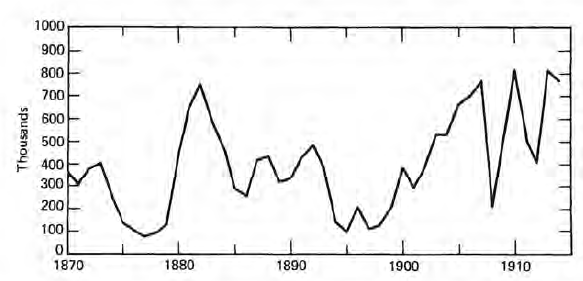
Figure 2.1 Arrivals minus departures, all alien passengers. Source: Simon Kuznets and Ernest Rubin, Immigration and the Foreign Born (New York: National Bureau of Economic Research, 1954), p. 95.
A rapidly growing population had major economic consequences. Most importantly, it provided a growing labor force (Table 2.2). In fact, the labor force grew even more rapidly than the population, because the immigrants augmented the working-aged population proportionately more than the dependent-aged population and because as the birth rate fell the ratio of adults (workers) to children increased. Population growth also expanded the number of consumers, broadening markets and permitting a greater degree of specialization. A rapidly growing population buoyed up investors’ confidence in future market conditions, encouraging them to bear risks in expanding the capital stock. In comparison with Europe, the United States was an economy of labor scarcity and low population density. In such a setting, population growth never operated as a drag on economic growth but rather encouraged the capital accumulation that gave rise to economic progress.
THE SOURCES OF GREATER PRODUCTIVITY
Our understanding of economic growth would be greatly advanced if we could say just how much each source of growth—material capital formation, education, technological progress, and so forth—contributed toward increasing output. In recent years economists have developed several techniques for attributing economic growth to its various sources. Unfortunately, however, it is impossible to provide a very detailed breakdown, and the calculations are subject to errors of unknown magnitude because the available data do not correspond very well with the theoretical concepts and because the data are not very accurate anyhow. Still, such calculations may reveal relative orders of magnitude in a broad way. The figures presented below are based on calculations shown in the Appendix, which some readers may wish to examine before reading any further.4
We can partition the rise in total GNP during the 1869–1914 period roughly as follows: the increase in the number of man-hours worked accounts for about four tenths; the expansion of the material capital stock, including land, explains about three tenths; and all other sources account for the remaining three tenths. Partitioning the growth of output per man-hour, we find that the increase in the ratio of material capital to labor explains over one fourth, and all other sources account for almost three fourths. Crude as these conclusions may be, they are nevertheless of great significance, for they indicate that economic growth—a sustained increase in output per capita—cannot, as economists believed for a long time, be attributed mainly to material capital accumulation. We must not, of course, dismiss material capital accumulation as unimportant; after all, it did account for over one fourth of the increase in output per man-hour. Furthermore, we know that technological advances were often realizable only in conjunction with investment in material capital. Still, to explain economic growth, we must devote the lion’s share of our attention to the accumulation of human and intellectual capital.
Material Capital Accumulation
The nineteenth century saw great expansions in the territory of the United States, which not only added to the country’s arable acreage but also brought land of superior quality into use. Besides farming land, the acquisitions contained vast amounts of other resources, including minerals, timber, and grass. The 1840’s saw a flurry of territorial expansion: Texas was annexed in 1845; claims to the Oregon country were settled with Great Britain in 1846; and the Mexican Cession was acquired as the spoils of war in 1848. These lands added almost 70 percent to the national domain, and as late as 1865 all of them were sparsely populated, some of them virtually uninhabited.
The thrust of the population movement was inexorably westward. By 1865 the frontier—defined as an area of at least two but less than six persons per square mile, cities of 8000 or more not being considered—extended into Minnesota, Kansas, Nebraska, and Texas, and the states in the first tier west of the Mississippi were fast filling up. After the Civil War the population flooded over the trans-Mississippi prairies and the Great Plains, and the Pacific Coast states attracted hordes of migrants. The Superintendent of the Census of 1890 declared: “Up to and including 1880 the country had a frontier of settlement, but at present the unsettled area has been so broken into by isolated bodies of settlement that there can hardly be said to be a frontier line,” In 1893 the historian Frederick Jackson Turner further dramatized the “closing of the frontier,” and many subsequent accounts of westward expansion have placed great emphasis on this event and the date of its occurrence. Actually, the announcement was premature. The hard times of the 1890’s drove both farmers and townspeople eastward, and in 1900 the frontier line miraculously reappeared (without comment) in the census maps. But its days were numbered. In 1910 the maps of settlement showed that no clear cutting edge remained of the frontier, and pockets of population dotted the area between the 100th meridian and the Pacific Coast. Thousands of words cannot compete effectively with a few maps on this subject, so the reader is referred to Figures 2.2–2.6.
It is difficult nowadays to comprehend the importance of land in the nineteenth century. Perhaps a fruitful approach is to consider how nineteenth-century economists viewed its place in the economy. The great English economist David Ricardo and his followers, among whom the influential American writer Henry George may be counted, explained that land operates as a drag on economic growth, for there is only a fixed amount of it. As poorer quality land is put into production to provide for a growing population, the higher quality land commands larger rents. And as the limit of available land is reached, the only means of expanding food production is by cultivating the land more intensively. But here we encounter the specter of diminishing returns: the addition to output obtained by successive applications of labor and material capital to a fixed amount of land tends to become progressively smaller. The real returns to labor and capital decline; both workers and capitalists are eventually impoverished, while useless landlords grow rich, and the economy ultimately arrives at a “stationary state,” with a stable but mostly destitute population. Small wonder that some contemporaries called economics the “dismal science”!
In the United States the seemingly limitless availability of cheap land banished the specter of diminishing returns. In the overly optimistic words of Thomas Jefferson, there was “room enough for our descendants to the thousandth and thousandth generation.” Typically the lack of transportation making it economically accessible, not a scarcity of land itself, constrained the growth of farm production. After the Civil War, with the expansion of the railroad network, farming moved westward on a broad front, and fertile new lands in the Dakotas, Nebraska, Kansas, Oklahoma, Texas, and the Far West all contributed to an unprecedented outpouring of agricultural products. In the twentieth century technological progress alone would conquer diminishing returns in agriculture; but in the nineteenth century, when the pace of technological progress was slower and population growth more rapid, the availability of a vast expanse of unoccupied land played a crucial role in permitting economic growth to continue unhampered by the drag of diminishing returns.
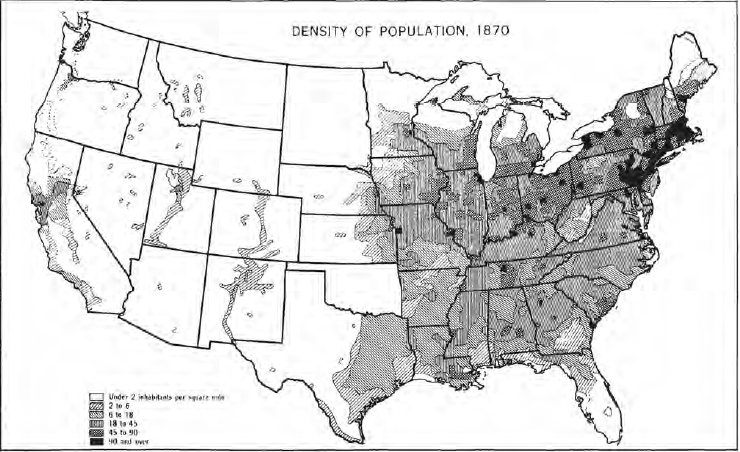
Figure 2.2 Spatial distribution of population, 1870. Source: C. O. Paullin, Atlas of the Historical Geography of the United States (Washington: Carnegie Institution, 1932), plate 77c.
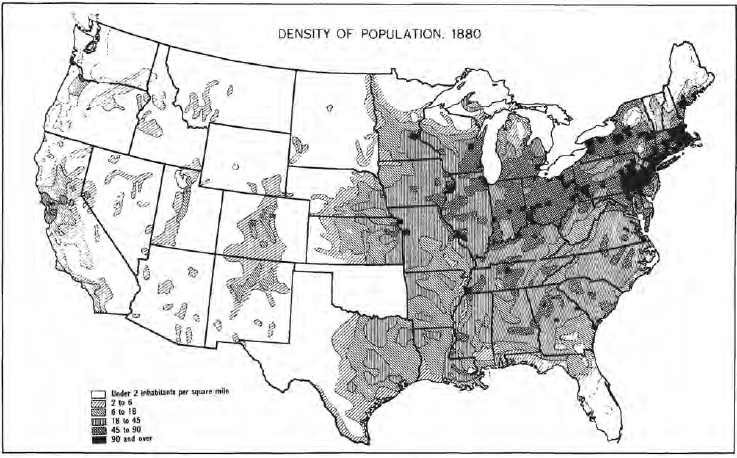
Figure 2.3 Spatial distribution of population, 1880. Source: C. O. Paullin, Atlas of the Historical Geography of the United States (Washington: Carnegie Institution, 1932), plate 78a.
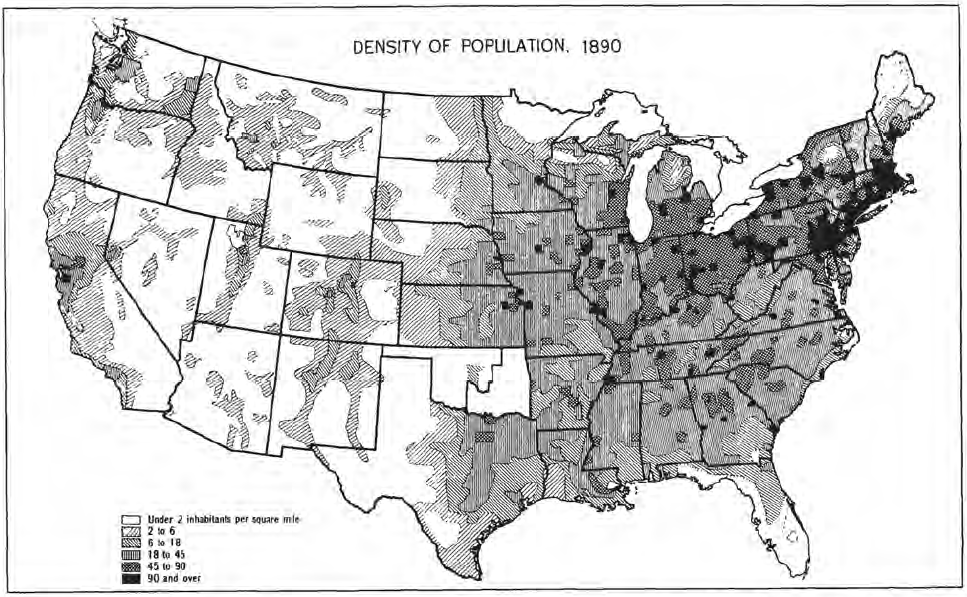
Figure 2.4 Spatial distribution of population, 1890. Source: C. O. Paullin, Atlas of the Historical Geography of the United States (Washington: Carnegie Institution, 1932), plate 78b.
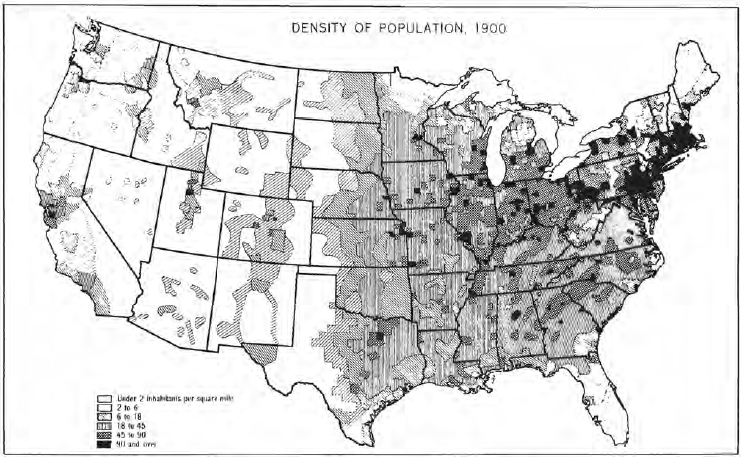
Figure 2.5 Spatial distribution of population, 1900. Source: C. O. Paullin, Atlas of the Historical Geography of the United States (Washington: Carnegie Institution, 1932), plate 79a.
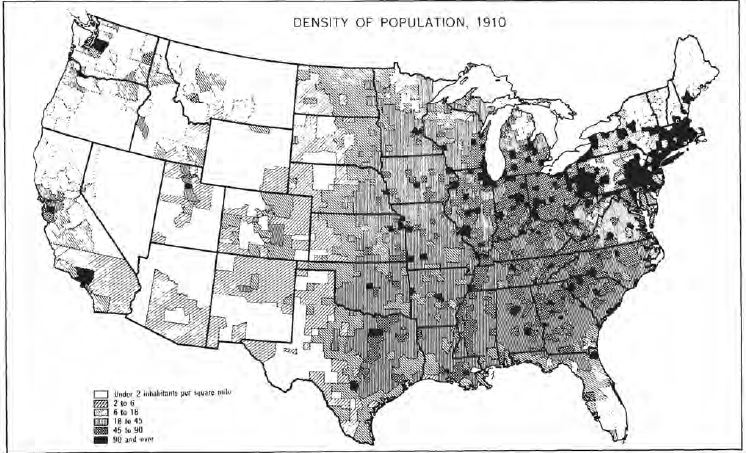
Figure 2.6 Spatial distribution of population, 1910. Source: C. O. Paullin, Atlas of the Historical Geography of the United States (Washington: Carnegie Institution, 1932), plate 79b.
It might be asked: why do we discuss land under the heading “Material Capital Accumulation”? After all, isn’t land a “natural” resource? The answer is that land lies virtually useless to men in its natural state, and it yields its fruits only after human effort has turned it into a productive resource. Virgin soil is lush with weeds, brush, and wild flowers, but the market for these is exceedingly limited. Before it can yield wheat, corn, or cotton it must be cleared, plowed, cultivated, and often drained, fenced, or irrigated. To make the land useful we must invest in it, and the product of our efforts, improved land, is no less capital than is a drill press or a lathe. Like other forms of material capital, the stock of improved land can be augmented. Even trees and minerals are typically useless as they exist in nature; before they can assume a value trees must be cut, minerals dug, both transported to markets.5 It is easy to exaggerate the significance of “natural” resources. America’s immense territory yielded its riches only in response to human effort, and very little was obtained as a gift of nature.
Of course, if a territory lacks coal, no amount of effort or ingenuity will suffice to dig it up. But given the effort and ingenuity, lack of a particular “natural” resource would not matter much, for a good substitute would probably be soon provided. In any case, resources are useful only because the technology describes how to use them, and when a particular resource is relatively scarce—and hence relatively expensive—inventors are presented with a strong incentive to conceive of a good substitute material or a way of economizing on the material even in the absence of a good substitute. Ultimately the influence of the natural resource endowment on economic growth must yield to the much greater influence of technological ingenuity. And as we have already seen, the technological virtuosity of a population in a market economy depends crucially on the way property rights are defined and enforced.
As the labor force and the quantity of improved land increased, the stock of structures and equipment more than kept pace. During the period from 1869 to World War I, this capital stock increased at an annual rate of about 4 percent. Since the labor force grew more slowly, the stock of material capital per worker increased steadily (Table 2.3).
TABLE 2.3
MATERIAL CAPITAL STOCK
| Year | Total Material Capital Stock Net of Capital Consumption (Billions of 1929 Dollars) | Total Material Capital Stock Net of Capital Consumption per Member of Labor Force (Thousands of 1929 Dollars) |
| 1869 | 27 | 2.11 |
| 1879 | 42 | 2.49 |
| 1889 | 68 | 3.06 |
| 1899 | 108 | 3.79 |
| 1909 | 165 | 4.41 |
SOURCE. Simon Kuznets, Capital in the American Economy, Its Formation and Financing (Princeton, N. J.: Princeton University, 1961), p. 64.
In the late 1870’s the proportion of the national output being channeled into material investment was already quite high, in excess of 20 percent on a gross basis—including investment for maintaining the material capital stock as it wears out or becomes obsolete—and about 13 percent on a net basis. These ratios remained high throughout the period; during the decade 1890–1908 the gross material investment ratio was about 28 percent. Before 1860 the bulk of material investment had been in structures, but the relative importance of these declined steadily, while equipment became a larger element—evidence of the increasing extent to which production was being mechanized in the post-Civil War era. A substantial share of the material investment of this period went toward building the railroad network, especially during the 1870’s and 1980’s. Figures showing miles of main track (Table 2.4) give a rough indication of the expansion of the railroad system. The enormous growth of cities also provided major opportunities for profitable additions to the stock of structures and equipment.
TABLE 2.4
MILES OF MAIN RAILROAD TRACK
| Year | Mileage |
| 1869 | 46,800 |
| 1879 | 86,600 |
| 1889 | 161,300 |
| 1899 | 190,000 |
| 1909 | 238,100 |
SOURCE. Albert Fishlow, “Productivity and Technological Change in the Railroad Sector, 1840–1910,” in National Bureau of Economic Research, Conference on Research in Income and Wealth, Output, Employment, and Productivity in the United States after 1800 (New York: Columbia University, 1966). p. 596.
Human Capital Accumulation
The useful skills of the labor force constitute an important part of the nation’s capital stock. Literacy, the most basic of these skills, was always widespread in the United States. In 1870 about 90 percent of adult white Americans could read and write; by 1910, 95 percent possessed these basic skills. For obvious reasons, literacy was much less prevalent among the nonwhite population—predominantly blacks—but improvement was rapid. In 1870 only about 20 percent of the adult nonwhite population was literate; by 1910 the proportion had increased to 70 percent. The erstwhile slaves apparently believed from the very start of their free existence that investment in education would yield a relatively high rate of return. That their property rights in human capital were less easily expropriated than their property rights in material capital may help to explain the blacks’ rapid rate of advance in literacy.
For the nation as a whole, formal education progressed erratically. The school enrollment rate tended slightly upward, from 48 percent of school-aged (5–19 years old) children in 1870 to 59 percent in 1910, but reversals beset the advance. From 1880 to 1900 the enrollment rate fell substantially, from 58 to 51 percent, and then recovered in the first decade of the new century. We must interpret these figures cautiously, for actual attendance at schools fell substantially below enrollment, typically by as much as a third. The average student actually attended school no more than three or four months each year. The quality of the instruction was poor, teachers frequently being trained only marginally better than their students. Teenage girls formed a major part of the teaching staff, but marriage usually removed them from the job after a few years. Teachers’ salaries were relatively low; in rural districts they often earned less than common laborers.
Impressed by such evidence, one scholar has ventured the judgment that, considering the quantity and the quality of formal education in the nineteenth century, “Taken together they do not suggest that formal education was anything like a significant factor in raising the quality of the American labor force, or in stimulating economic growth.”6 In a fundamental sense, however, this judgment may miss the point. Economic growth is the return on mutually interdependent investments; we cannot neglect the complementarity among skilled workers, mechanization, and advancing technology. Growth simply cannot be sustained for long where the bulk of the population is illiterate and unskilled. In the United States illiteracy never obstructed economic progress. And not only was the labor force mostly literate, but an increasing number of workers invested in acquiring additional skills as the tasks to be performed grew more complex and intellectually demanding. In 1870 only about 2 percent of those at least 17 years old had graduated from high school, but in 1914 the proportion exceeded 10 percent. The number of bachelor’s degrees conferred increased from about 10,000 in 1870 to over 44,000 in 1914, and in the latter year the nation’s universities also granted more than 3000 master’s and over 550 doctor’s degrees. Of course these data measure only very imperfectly the formation of human capital, for much education is consumption rather than investment. Yet the evidence suggests quite strongly that the economically useful skills of the average worker did improve and did contribute toward raising the productivity of labor. The question remains: how much growth can be explained in this way? Unfortunately, a firm answer must await the results of future study.
Albert Fishlow’s research indicates that the nation channeled an increasing proportion of its resources into the production of formal education during the nineteenth century (Table 2.5). Merely adding the amounts spent to provide school buildings and to pay teachers’ salaries does not give a complete account of the cost of education. Whether education is viewed from the point of view of the individual student or from that of society, there is an additional cost: the earnings the student foregoes when he occupies himself with studies instead of some alternative productive occupation. This opportunity cost, which was substantial under nineteenth-century conditions of widespread child labor, has been taken into account in arriving at the “total resource cost” figures of Table 2.5. The table also shows that while public education expanded progressively, private education provided a substantial share during the early years and still supplied more than 20 percent in 1900. Catholics and Lutherans led in supplying private education.
TABLE 2.5
COSTS OF EDUCATION
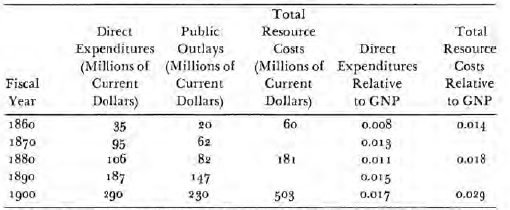
SOURCE. Albert Fishlow, “Levels of Nineteenth-Century American Investment in Education,” Journal of Economic History. XXVI (Dec. 1966), 430.
Workers acquired a large part of their skills not at schools but on the job. Skilled craftsmen—carpenters, masons, blacksmiths, coopers, wheelwrights, printers, mechanics, and many others—typically gained their skills through apprenticeships. The same was true of engineers, lawyers, and physicians. Without doubt, practically all farming skills were transmitted on the farm, often within the family. These kinds of training clearly constitute investment in human capital, but the available evidence is insufficient to indicate the rates at which they were increasing. On-the-job training, however, might well have been more important than formal education during the post-Civil War era. Despite its importance, this subject has yet to be systematically studied.
Health, like education, is a form of capital, but not until near the end of the nineteenth century did Americans make substantial investments in improving their health. Though probably superior to contemporary European standards, American health conditions in the mid-nineteenth century were by present-day standards almost unbelievably poor. Disastrous epidemics occurred frequently—yellow fever, smallpox, cholera, typhoid, diphtheria, and typhus were common scourges. As if these periodic afflictions were not enough, a very substantial part of the population suffered from chronic diseases. Hookworm disease plagued the people of the South. Malaria and dysentery, also prevalent there, spread throughout the great interior basin drained by the Mississippi River system, where the people complained resignedly of the “ague,” and every autumn saw a new onslaught of “fevers.” Tuberculosis, the greatest killer of all, flourished in the rapidly expanding cities. Disease not only took a heavy toll in human lives, but in addition it frequently left the survivors in a debilitated and less productive condition.
The conditions that fostered frequent illness are easily identified. Perhaps the first thing noticed by a modern man, could he be projected back in time-machine fashion to the mid-nineteenth century, would be the ubiquitous filth. Cities were probably more objectionable than the countryside, as evidenced by a physician’s vivid description of New York’s slums in 1865:
Domestic garbage and filth of every kind is thrown into the streets, covering their surface, filling the gutters, obstructing the sewer culverts, and sending forth perennial emanations which must generate pestiferous disease. In winter the filth and garbage, etc., accumulate in the streets to the depth sometimes of two or three feet.
The refuse of the bedrooms of those sick with typhoid and scarlet fevers and smallpox is frequently thrown into the streets, there to contaminate the air, and, no doubt, aid in the spread of those pestilential diseases.
At high tide the water often wells up through the floors [of the cellar apartments occupied by some 18,000 New Yorkers], submerging them to a considerable depth. In very many cases the vaults of privies are situated on the same or a higher level, and their contents frequently ooze through the walls into the occupied apartments beside them.7
Conscious design could hardly have produced conditions more agreeable to the spread of infectious diseases, and the cost of living amid such filth was a sickly and uncertain existence. But although the stench and ugliness sometimes gave rise to complaints, the connection between filth and disease escaped widespread recognition.
Until near the end of the century the causes of almost all diseases remained shrouded in mystery, and hence no really effective steps could be taken to combat them. Medical science, lacking a tested theory of infection, could do very little to relieve the suffering; more often its false cures exacerbated the afflictions of the sick. The most popular theory, that of miasmatic contagion, maintained that disease results from the breathing of air contaminated by the vapors rising from decomposing animal and vegetable matter. (The New York physician quoted above obviously subscribed to this theory.) Interestingly, this false theory did lead to some improvements in public health, for it prescribed the construction of sewers and the removal of garbage from the streets, which reduced the spread of certain diseases. The backwardness of formal medical science probably made little difference, for most physicians were untrained anyhow. A Swedish immigrant recorded with surprise: “A person I have seen going about working as a mason served for a couple of months as an assistant in a drug store in Milwaukee, whereupon he laid aside the trowel, got himself some medical books, and assumed the title of doctor.”8 The nineteenth century abounded in such curious examples of recruitment into the medical profession. Throughout most of the century only two serious diseases responded to the usual treatments: smallpox to vaccination, and malaria to quinine. As late as 1860, “bleed and purge” remained the most common prescription for the treatment of serious disease. Naturally, such remedies destroyed many who would otherwise have survived.
Toward the end of the century the discoveries of Louis Pasteur, Robert Koch, and their followers made possible the first effective campaign against infectious diseases. These scientists showed that many diseases result from the action of microorganisms, bacteria, and that these can be destroyed by substances toxic to them but not to the human organism itself. Within a few years bacteriologists had identified the specific microorganisms responsible for many ailments. In a few cases vaccines were developed to combat the diseases, but of much greater significance was the impetus given to measures designed to impede the transmission of infectious agents. Armed for the first time with firm knowledge about infectious disease causation and transmission, cities devoted increasing amounts of resources to sewage disposal and treatment, the pasteurization of milk, and the provision of pure water. The number of urban people drinking filtered water increased from 30,000 in 1880 to over 20,000,000 in 1920.9
These investments in better health yielded returns in several ways. One measure of the improvements in health is the falling death rate. In New York, Boston, Philadelphia, and New Orleans, taken together, the death rate stood at 30 in 1840–1864, at 26 in 1865–1889, and at 19 in 1890–1914.10 For the nation as a whole the death rate declined from about 23 in the 1870’s to about 15 in 1915. After 1900 great epidemics became increasingly rare and finally nonexistent. Life expectancy at birth increased substantially: in Massachusetts, for which reliable data exist, it rose from about 40 years in 1855 to more than 50 on the eve of the Great War; and fragmentary evidence suggests that the improvement was at least as great elsewhere. That people lived longer and endured less physical pain cannot be doubted. And since many of these improvements worked mainly to reduce child mortality, the sorrow of losing children was diminished and the cost of fruitless pregnancies more often avoided. These improvements in health are surely one of the most significant welfare gains to accompany economic growth.
Organizational Changes and Economies of Scale
In a market economy the fundamental unit of economic organization is the business firm, of which there are three basic kinds according to ownership: the single proprietorship, the partnership, and the corporation. Each has characteristic advantages and might be preferred to the others under certain circumstances. The single proprietorship generally prevails where the scale of operations is small. It allows the owner to have complete control over his business, to operate it as he thinks best. Financial difficulties often arise, however, when a single owner wishes to expand his business; the partnership then becomes attractive. The necessity for mutual trust limits the number of partners. If the business becomes so large by the addition of new partners that no one can keep track of its condition, all may come to grief, because each partner’s legal liability extends to his personal property as well as to that invested in the firm. In addition, the limited life-span of the partners increases the risks of creditors who lend to the partnership, and consequently the business can borrow only at relatively high rates of interest. The corporate form of organization solves the interrelated problems of size, liability, and longevity inherent in the partnership. The corporation can usually obtain funds by selling its stocks—ownership shares in the firm—to the public. Investors often subscribe to such securities even without a detailed knowledge of the firm’s operations because each risks only the amount of his subscription. Unlike the simpler forms of organization, the corporation lives on when all of its original shareholders have died, because the stocks can be passed on to heirs or sold without disrupting the organization of the firm.
Before the Civil War the organization of economic life had been relatively uncomplicated. Most businessmen conducted their affairs within small and highly localized markets, and therefore proprietorships and partnerships predominated. The few existing corporations appeared in industries where the “public interest” intruded, such as turnpikes, railroads, banks, insurance, and utilities. Although several surges of incorporation occurred before the Civil War, the corporation did little more than hold its own with the other forms of business organization.
After the war, incorporation increased greatly, and although the number of incorporations typically fell during business depressions the trend was sharply upward for the next half century. Incorporations of financial firms and utilities declined relatively, while manufacturing incorporations became more prevalent. During the two decades from the mid-1870’s to the mid-1890’s entrepreneurs adopted the corporation in many fields where it had not previously appeared. After the 1890’s the incorporation of trade and service businesses became progressively more common.11
The rise of the corporation reflected several influences. One was the increasing size of markets. As firms expanded to meet a growing demand, they typically found it desirable to assume the corporate form, for reasons already discussed. Another influence was the development of formal markets for corporate stocks and bonds, which reduced the costs of attracting new investors in corporate securities. Changes in the law also encouraged incorporation. As early as 1816 the legislatures of Connecticut and New Hampshire had passed statutes providing for limited liability, thus resolving a long-unsettled legal question, and by 1860 this provision was widespread among the states. In the early part of the century, incorporation had typically required a special charter granted by a state legislature, which explains why so many corporations then bore a close relation to the “public interest.” Although some states had passed general incorporation acts early in the century—for example, New York in 1811—not until the 1870’s did constitutionally required incorporation under general laws become the rule in most states. Under these laws, entrepreneurs could incorporate their firms simply by filing a few papers and paying a small fee. The costs of incorporation being greatly reduced, increasing numbers of businessmen selected this form of organization. By 1916 more than 340,000 corporations had been formed, over 80,000 of them in manufacturing.
An economy in which the corporation is the most important form of business organization is certain to differ in fundamental respects from one in which proprietorships and partnerships prevail: fewer people are self-employed, and more are wage earners; firms are larger, more impersonal, and more bureaucratic; even political power may come to rest with those who control the large corporations. These are important consequences, but our present concern is with the corporation’s relation to economic growth. The question is whether the rise of the corporation led to increased productivity, and the answer is that it did.
The crucial link between greater efficiency and incorporation is size. As we have seen, firms normally assumed the corporate form in order to facilitate their expansion. But expansion did not mean simply producing more in the same way, for larger firms could frequently make use of improved forms of organization that enabled them to reduce the average cost of production. Larger size permitted greater specialization of functions within the firm, which promoted efficiency. A famous novel, written in 1905, gives a graphic description of the efficiency that resulted from the division of labor in the meat-packing industry:
The carcass hog was scooped out of the vat by machinery, and then it fell to the second floor, passing on the way through a wonderful machine with numerous scrapers, which adjusted themselves to the size and shape of the animal, and sent it out at the other end with nearly all of its bristles removed. It was then again strung up by machinery, and sent upon another trolley ride; this time passing between two lines of men, who sat upon a raised platform, each doing a certain single thing to the carcass as it came to him. One scraped the outside of a leg; another scraped the inside of the same leg. One with a swift stroke cut the throat; another with two swift strokes severed the head, which fell to the floor and vanished through a hole. Another made a slit down the body; a second opened the body wider; a third with a saw cut the breastbone, a fourth loosened the entrails; a fifth pulled them out—and they also slid through a hole in the floor. There were men to scrape each side and men to scrape the back; there were men to clean the carcass inside, to trim it and wash it. Looking down this room one saw, creeping slowly, a line of dangling hogs a hundred yards in length; and for every yard there was a man, working as if a demon were after him.12
The use of more efficient techniques requiring highly indivisible, or “lumpy,” capital goods like bristle-scraping machines or conveyers was advantageous only when large outputs were produced. An assembly line like the one described above was economical only for packers handling hundreds, perhaps thousands, of animals each day. In sum, incorporation allowed firms to grow, and growth often permitted the realization of various economies of scale, thus raising productivity.
Besides the rise of the corporation, numerous other organizational changes occurred during the post-Civil War era. The merger movement, for example, reached a crest around the turn of the century. Mergers often led to greater productivity; in Alfred Chandler’s words,
The transformation of a loose alliance of manufacturing or marketing firms into a single consolidated organization with a central headquarters made possible economies of scale through standardization of processes and standardization in the procurement of materials. Of more significance, consolidation permitted a concentration of production in a few large favorably located factories. By handling a high volume of output, consolidated factories reduced the cost of making each individual unit. They could specialize further and subdivide the process of manufacturing and also were often able to develop and apply new technological improvements more easily than could smaller units. To a lesser extent consolidations of marketing firms offered comparable advantages.13
Expansion of the market led to greater specialization and hence to higher productivity within individual firms, as described above, but economies of scale also appeared in a broader context. In a growing market many firms themselves became more and more specialized. For example, in the early nineteenth century, textile manufacturers produced their own equipment, for the total demand for such machinery was too small in any particular place to support a firm specializing in such products, and transportation charges were too high to permit an economical centralization of machinery production. As the demand for textiles became larger, the demand for textile machinery also increased, and about the middle of the century specialized machinery producers began to appear. This specialization among firms raised productivity throughout the textile industry, for it enabled the machinery firms to benefit from the learning process inherent in specialization and then, through competition with one another, to pass benefits on to textile makers in the form of reduced machinery costs. In a similar fashion countless other new industries emerged. Of special significance was the appearance of a distinct industry producing machine tools, instruments for cutting, grinding, and polishing metals. This became a focus for the discovery and dissemination of new techniques applicable to a wide range of manufacturing processes.14
The costs of transacting exchanges fell in most markets during this period. For example, the financial markets, where savings are channeled into investment, became more efficient on a national scale as funds began to flow more freely between regions. In a growing market a host of specialists—brokers, investment bankers, financial journalists, and others—arose to perform services, typically involving the collection and dissemination of information, enabling the market system to operate more efficiently as a by-product of their own pursuit of wealth.
Technological Progress
Technological progress means an increase in useful knowledge. It is useful to think of it as occurring in three steps: (1) invention, the original conception of a new idea; (2) innovation, its original application in a firm’s production process; and (3) diffusion, its spread from the innovator to applications in other firms. Some inventions never become innovations, and some innovations never spread beyond their original application. The diffusion of a new idea may require many years, or even decades. Very often new knowledge is applicable only in conjunction with a new capital good; economists then speak of technological progress as “embodied” in the material capital. Because of this embodiment, material capital accumulation takes on an additional productivity-raising dimension. Not only does it augment the productivity of labor by increasing the material capital/labor ratio, but it provides as well a vehicle for the implementation of new ideas, for raising the intellectual capital/labor ratio. The examples of technological progress considered below comprise only a minute sample from a vast universe. We must remember, too, that major productivity gains often resulted from a series of minor improvements. The spectacular technological advance captures everyone’s attention, but ultimately the small, unspectacular advances may have had an even greater importance.
The steamboat revolutionized inland transportation in the early nineteenth century, and in combination with the canals it gave the United States a transportation system that compared favorably with those of the advanced European nations. The two decades before the Civil War were the golden age of the steamboat, but beginning in the 1840’s the railroad, which had first appeared in the United States in 1830, began to furnish serious competition for the water carriers. By 1860 the railroads operated over 30,000 miles of main lines. The railroad was much less an improvement over the steamboats than the steamboats had been over flatboats, keelboats, and wagons. Still, the iron horse progressively displaced water transportation in most lines. Mark Twain portrayed the trend in a characteristic description:
Boat used to land—captain on hurricane roof—mighty stiff and straight—iron ramrod for a spine—kid gloves, plug tile, hair paned behind—man on shore takes off hat and says—
“Got twenty-eight tons of wheat, cap’n—be great favor if you can take them.”
“‘ll take two of them”—and don’t even condescend to look at him.
But now-a-days the captain takes off his old slouch, and smiles all the way around to the back of his ears, and gets off a bow which he hasn’t got any ramrod to interfere with, and says—
“Glad to see you, Smith, glad to see you—you’re looking well—haven’t seen you looking so well for years—what you got for us?”
“Nuth’n,” says Smith; and keeps his hat on, and just turns his back and goes to talking with somebody else.15
The water carriers, being relatively more efficient in the carriage of bulky, low-value-per-pound goods, survived and even flourished transporting grains, ores, and coal. After the Civil War the development of towboatbarge systems helped the river carriers to retain much of their business on the Ohio and the Mississippi, and enormous ore boats on the Great Lakes continued to expand their trade. But the future belonged to the railroad, and its impact was so great that some historians have dubbed the post-Civil War era the Railway Age. Probably no other single invention in the nineteenth century had such far-reaching influence.
Railroads did not simply provide more cheaply the same service that canals and steamboats had previously supplied. In fact, transport rates on the canals, lakes, and rivers, in cents per ton-mile, remained lower than railroad rates. But the railroad provided a service so superior in quality that it more than compensated for its higher price. Its major advantages were more direct routes, reduced transshipment, greater speed and safety, and year-round service. With the introduction of the railroad, insurance rates and warehousing charges fell, as did the degree of uncertainty surrounding shipping and delivery dates. Commerce became more predictable. Moreover, the railroad permitted the settlement of large parts of the western United States where water transportation was not feasible, and there its influence was most striking. The availability of railroad transportation in the trans-Mississippi West encouraged a far-reaching relocation of agricultural activities; grain and meat production soon concentrated in this area. This relocation contributed substantially toward raising overall agricultural productivity.16
In Communications great technological advances occurred. The telegraph had appeared in the 1840’s; the telephone followed in the 1870’s; and both continued to diffuse, supplying progressively more services. Information could now be transmitted in seconds instead of days. The availability of instant communications improved the working of markets by increasing their competitiveness, for traders could now carry out arbitrage operations quickly—buying in one market to sell in another with lugher prices—thus insuring that prices in different markets for the same good would normally differ only by the cost of transportation between the places. Businessmen could discover opportunities for remunerative sales in markets throughout the nation. David A. Wells noted in 1889 that “the command through the telegraph of instantaneous information throughout the world of the conditions and prospects of all markets for all commodities has also undoubtedly operated to impart steadiness to prices, increase the safety of mercantile and manufacturing operations, and reduce the elements of speculation and of panics to the lowest minimum.”17 In short, the telephone and the telegraph lowered the cost of information and thereby contributed toward increasing productivity throughout the entire economic system by reducing the uncertainties surrounding transactions and by reducing the quantity of resources committed to search activities or tied up in inventory stocks. On the eve of World War I, Western Union handled more than 100 million telegraphic messages annually, and over 10 million telephones facilitated additional communications.
Technological advances in agriculture, where a large proportion of the nation’s total output originated, had a major influence in determining the economy’s overall rate of productivity growth. Improved iron and steel plows, cultivators, seed drills, reapers, and threshing machines had all appeared before the Civil War, but their diffusion continued for decades after 1865. A variety of horse-drawn implements like the springtooth and disc harrows, the gang plow, the self-binding reaper, and the “combine” reaper-thresher appeared after the war. These examples illustrate “embodied” technological progress. Other advances, like new methods of plowing and crop rotation, were “disembodied,” not requiring new capital goods for their implementation. Livestock keepers improved the quality of their animals through selective breeding, and farmers raised the quality of their crops by carefully selecting hardier, more disease-resistant seeds. After 1905 the gasoline tractor came into use, giving indications of even greater productivity gains in agriculture that would come with the replacement of horsepower by the internal combustion engine.
Sweeping technological advances occurred in manufacturing. The sewing machine, invented in the 1840’s, was put to varied use in the garment and shoe industries as well as in homes. In the 1870’s the milling industry adopted roller grinding, which allowed the transformation of hard Western wheats into fine, high-quality flour. Refrigerated railway cars and storage rooms made meatpacking and fresh meat distribution into a unified national industry after 1880, putting fresh meat from the Midwest on the tables of consumers throughout the nation. The Bessemer converter and the open-hearth process revolutionized the steel industry, permitting for the first time the large-scale manufacture of steel at prices so low that it soon became commonly used as a building material throughout industry (Figure 2.7). Steel makers made major productivity gains by rearranging their plants to eliminate much of the reheating of materials and to capture valuable by-products. The productivity of machine tools increased rapidly. High-speed tool steel—an alloy that retains its strength at high temperatures—appeared around the turn of the century, permitting cutting operations to be performed much quicker. During the 1870’s steam surpassed water as a source of power, and after 1890 electrical power was increasingly applied in industrial uses. Between 1865 and 1915 aggregate energy consumption increased more than fivefold, and mineral fuels (predominantly coal), which had provided less than 20 percent of this energy in 1865, furnished over 85 percent in 1915.
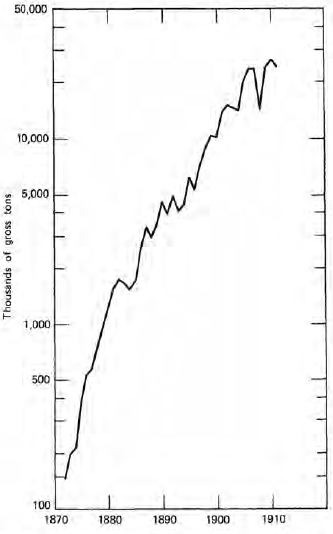
Figure 2.7 Steel production. Source: Peter Temin, Iron and Steel in Nineteenth-Century America (Cambridge, Mass.: M. I. T. Press, 1964), pp. 270–71.
MAIN PATTERNS OF TRANSFORMATION
The composition of the economy’s total output changed dramatically in the post-Civil War era (Table 2.6). As their incomes rose, consumers increased their spending for the products of agriculture only slowly, and for manufactured products much more rapidly. Moreover, the rise in the fraction of total income used to finance material investment placed a greater demand on the manufacturing industries. As a result, the rate of return in manufacturing enterprises became relatively greater, and entrepreneurs moved to expand such production; at the same time many farmers, discouraged by their relative lack of success, sought to improve their condition by seeking nonfarm occupations. The upshot of these movements was the transformation of a predominantly agrarian economy into a great industrial economy—a transformation so sweeping and pregnant with implications that economic historians have called it an “industrial revolution” and made it the focus of a major part of their research for the past century. In 1870, after several decades of industrial growth, the United States had a manufacturing output equal to that of France and Germany combined, but only about three fourths as large as that of the United Kingdom; by 1913 the American manufacturing output equalled that of France, Germany, and the United Kingdom combined! Still the greatest producer of raw materials and foodstuffs, the United States had become the world’s industrial giant as well.
TABLE 2.6
PERCENTAGE DISTRIBUTION OF COMMODITY OUTPUT
| Year | Agriculture | Mining | Manufacturing | Construction |
| 1869 | 53 | 2 | 33 | 12 |
| 1874 | 46 | 2 | 39 | 12 |
| 1879 | 49 | 3 | 37 | 11 |
| 1884 | 41 | 3 | 44 | 12 |
| 1889 | 37 | 4 | 48 | 11 |
| 1894 | 32 | 4 | 53 | 11 |
| 1899 | 33 | 5 | 53 | 9 |
SOURCE. Robert E. Gallman, “Commodity Output, 1831–1899,” in National Bureau of Economic Research, Conference on Research in Income and Wealth, Trends in the American Economy in the Nineteenth Century (Princeton, N. J.: Princeton University, 1960), p. 26.
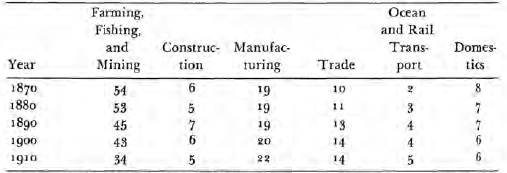
The rapid growth of manufacturing, trade, and transportation outputs and the relative decline of agricultural output led to parallel changes in the distribution of employment among the various sectors (Table 2.7). Most striking was the great reduction in the agricultural share: in 1870 well over half of all workers were farmers or farm laborers; by 1910 only one in three was. The relative employment gains, being spread over several sectors, were less obvious than agriculture’s relative losses. Transportation employment grew fastest of all, trade employment somewhat slower; and the still slower expansion of manufacturing jobs seems really quite moderate in relation to the immense outpouring of manufactured goods. The relatively slow expansion of manufacturing employment is partly a statistical illusion arising from changes in the definition of manufacturing workers starting with the census of 1900, but to a larger extent it reflects the enormous increases in output per worker achieved in the manufacturing sector.
TABLE 2.7
PERCENTAGE DISTRIBUTION OF LABOR FORCE
SOURCE. Stanley Lebergott, “Labor Force and Employment, 1800–1960,” in National Bureau of Economic Research, Conference on Research in Income and Wealth, Output, Employment, and Productivity in the United States after 1800 (New York: Columbia University, 1966), p. 119.
While the sectoral composition of output and employment underwent rapid changes, locational patterns shifted in an equally radical way. The thrust of the interregional movement was westward, but the pattern was more complicated than this simple statement suggests (Table 2.8). In general, opportunities for earning an income determined the locations of productive activities, and individual workers and businessmen adjusted accordingly, though population movements did of course produce a feedback effect on decisions about the location of production. The overall impression of scholars who have studied migration patterns is that Americans moved readily in an attempt to improve their economic condition. This high mobility played an important role in the successful functioning of a geographically vast market economy.
TABLE 2.8
PERCENTAGE REGIONAL DISTRIBUTION OF POPULATION
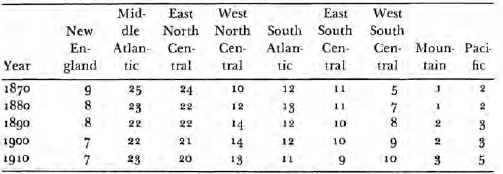
SOURCE. Richard A. Easterlin, “Interregional Differences in Per Capita Income, Population, and Total Income, 1840–1950,” in National Bureau of Economic Research, Conference on Research in Income and Wealth, Trends in the American Economy in the Nineteenth Century (Princeton, N. J.; Princeton University, 1960), p. 136. Percentages may not sum to 100 because of rounding. Regions are defined as follows. New England: Maine, Vermont, New Hampshire, Massachusetts, Connecticut, and Rhode Island. Middle Atlantic: New York, New Jersey, Pennsylvania, Delaware, and Maryland. East North Central: Ohio, Indiana, Illinois, Michigan, and Wisconsin. West North Central: Minnesota, Iowa, Missouri, North Dakota. South Dakota, Nebraska, and Kansas. South Atlantic: Virginia, West Virginia, North Carolina, South Carolina. Georgia, and Florida. East South Central: Kentucky, Tennessee, Alabama, and Mississippi. West South Central: Arkansas, Louisiana, Oklahoma, and Texas. Mountain: Montana, Idaho, Wyoming, Colorado, New Mexico, Arizona, Utah, and Nevada. Pacific: Washington, Oregon, and California.
18 Gross national product, usually abbreviated GNP, is defined as the value at market prices of all final goods produced in a year. It is the most common measure of an economy’s total output. Notice that we count only final commodities and services. For example, suppose a farmer sells wheat to a miller, who makes it into flour for sale to a baker, who makes it into bread for sale to final consumers. Only the bread is a final good; the wheat and the flour are intermediate goods. By accounting convention, we consider durable capital goods and additions to inventories final, even though their sole purpose is to enlarge the capacity to produce, and therefore they are intermediate in an important sense. By speaking of a change in real GNP we refer to a comparison of two collections of goods valued at the same prices. Since prices typically change over time, we can make reliable statements about growth or decline of output only by weighting goods with constant prices. See Armen A. Alchian and William R. Allen. University Economics, 2d ed. (Belmont, Calif.: Wadsworth. 1967). pp. 513–16.
19The following analysis of price trends is highly simplified. For a detailed account, see Milton Friedman and Anna J. Schwartz, A Monetary History of the United States, 1867–1960 (Princeton, N. J.: Princeton University, 1963), pp, 15–188.
20 This brief discussion necessarily omits many aspects of the secular decline in fertility. For detailed analysis and description, see Gary S. Becker, “An Economic Analysis of Fertility.” in National Bureau of Economic Research, Demographic and Economic Change in Developed Countries (Princeton, N. J.: Princeton University, 1960). pp. 209–31, and comments by James S. Duesenberry and Bernard Okun, pp. 231–40; and E. A. Wrigley, Population and History (New York: McGraw-Hill, 1969), especially pp. 217–24.
21 The problems surrounding these calculations are both conceptual and empirical. For an introduction to the literature on productivity measurement, see Solomon Fabricant, “Productivity,” in International Encyclopedia of the Social Sciences (New York: Macmillan, 1968). The most sophisticated contribution to this literature is Dale: Jorgenson and Zvi Griliches, “The Explanation of Productivity Change,” Review of Economic Studies, XXXIV (July 1967). But see also the important criticisms of the Jorgenson-Griliches paper by Edward F. Denison, “Some Major Issues in Productivity Analysis,” Survey of Current Business, IL (May 1969), Pt. II. The whole field is lucidly surveyed by M. Ishaq Nadiri, “Some Approaches to the Theory and Measurement of Total Factor Productivity: A Survey,” Journal of Economic Literature, VIII (Dec. 1970).
22 Recreational uses of resources constitute exceptions to these statements, but such uses were of little consequence during the post-Civil War era.
23 Stanley Lebergott, “Labor Force and Employment, 1800–1960,” in National Bureau of Economic Research, Conference on Research in Income and Wealth, Output, Employment, and Productivity in the United States after 1800 (New York: Columbia University, 1966), p. 126.
24 Cited in C.-E. A. Winslow, The Evolution and Significance of the Modern Public Health Campaign (New Haven: Yale University, 1923), p. 10.
25 Cited in Stanley Lebergott, Manpower in Economic Growth (New York: McGraw-Hill, 1964), p. 120.
26 George C. Whipple, “Fifty Years of Water Purification,” in Mazyck P. Ravenel, Ed., A Half Century of Public Health (New York: American Public Health Association, 1921), p. 166.
27 Frederick L. Hoffman, “American Mortality Progress During the Last Half Century,” in Ravenel, op. cit., p. 102.
28 For detailed statistics concerning incorporation, see George Heberton Evans, Jr., Business Incorporations in the United States, 1800–1943 (New York: National Bureau of Economic Research, 1948).
29 Upton Sinclair, The Jungle (New York: Signet Classics, 1960), pp. 40–41.
30 Alfred D. Chandler. Jr., Strategy and Structure: Chapters in the History of the Industrial Enterprise (Cambridge, Mass.: M. I. T. Press, 1962), p. 37.
31 On the strategic role of the machine tool industry in economic growth, see Nathan Rosenberg, “Capital Goods, Technology, and Economic Growth,” Oxford Economic Papers, XV (Nov. 1963), and idem. “Technological Change in the Machine Tool Industry, 1840–1910,” Journal of Economic History, XXIII (Dec. 1963).
32 Mark Twain, Life on the Mississippi (New York: Charles L. Webster, 1891), pp. 570–71
33 For calculations of the effect of the westward movement on productivity in grain cultivation, see William N. Parker and Judith L. V. Klein, “Productivity Growth in Grain Production in the United States, 1840–60 and 1900–10,” in National Bureau of Economic Research, Conference on Research in Income and Wealth, Output, Employment, and Productivity in the United States after 1800 (New York: Columbia University, 1966).
34 David A. Wells, Recent Economic Changes (New York: Appleton, 1889). p. 82.
- 1Andrew Carnegie, Autobiography of Andrew Carnegie (Boston: Houghton-Mifflin, 1920). pp. 34, 177, 255.
- 2Both, letters as cited in Gilbert C. Fite, “Daydreams and Nightmares: The Late Nineteenth-Century Agricultural Frontier,” Agricultural History, XL (Oct. 1966), 289, 292.
- 3Commercial and Financial Chronicle, XLII (Feb. 13, 1886), 199.
- 4Rodney Welch, “The Farmer’s Changed Condition,” The Forum, X (1891), 695, 699.
- 5Constance McLaughlin Green, American Cities in the Growth of the Nation (New York: Harper Colophon Books, 1965), pp. 148-66; Robert Higgs, “The Growth of Cities in a Midwestern Region, 1870–1900,” Journal of Regional Science, IX (Dec. 1969), 369–70.
- 6Charles C. Nott, “A Good Farm for Nothing,” The Nation, XLIX (Nov. 21, 1889), 406.
- 7Harold Fisher Wilson, The Hill Country of Northern New England: Its Social and Economic History, 1790–1930 (New York: Columbia University, 1936), pp. 97–115.
- 8Armen A. Alchian, “Uncertainly, Evolution, and Economic Theory,” Journal of Political Economy. LX (June 1950); and Milton Friedman, Essays in Positive Economics, pp. 16–23.
- 9David A. Wells, Recent Economic Changes (New York: Appleton, 1889), p. 437.
- 10Frederick L. Hoffman, “American Mortality Progress During the Last Half Century,” in Ravenel, op. cit., p. 102.
- 11For detailed statistics concerning incorporation, see George Heberton Evans, Jr., Business Incorporations in the United States, 1800–1943 (New York: National Bureau of Economic Research, 1948).
- 12Upton Sinclair, The Jungle (New York: Signet Classics, 1960), pp. 40–41.
- 13Alfred D. Chandler. Jr., Strategy and Structure: Chapters in the History of the Industrial Enterprise (Cambridge, Mass.: M. I. T. Press, 1962), p. 37.
- 14On the strategic role of the machine tool industry in economic growth, see Nathan Rosenberg, “Capital Goods, Technology, and Economic Growth,” Oxford Economic Papers, XV (Nov. 1963), and idem. “Technological Change in the Machine Tool Industry, 1840–1910,” Journal of Economic History, XXIII (Dec. 1963).
- 15Mark Twain, Life on the Mississippi (New York: Charles L. Webster, 1891), pp. 570–71
- 16For calculations of the effect of the westward movement on productivity in grain cultivation, see William N. Parker and Judith L. V. Klein, “Productivity Growth in Grain Production in the United States, 1840–60 and 1900–10,” in National Bureau of Economic Research, Conference on Research in Income and Wealth, Output, Employment, and Productivity in the United States after 1800 (New York: Columbia University, 1966).
- 17David A. Wells, Recent Economic Changes (New York: Appleton, 1889). p. 82.
- 18To millions of downtrodden Europeans, America was the land of promise. Seeking that promise, William Carnegie, a hand weaver displaced by machinery, left Scotland with his family in 1848 for the United States. Like many other immigrants, however, he found the promise illusory, and his son Andrew, aged 13, went to work in a textile mill at $1.20 a week to help support the family. Many years later Andrew recalled: “It was a hard life. In the winter father and I had to rise and breakfast in the darkness, reach the factory before it was daylight, and, with a short interval for lunch, work till after dark. The hours hung heavily upon me and in the work itself I took no pleasure.” During the years that followed, as a messenger boy, a telegraph operator, a railroad superintendent, and finally an independent businessman of diversified interests, he advanced until in the early 1870’s, already moderately wealthy, he made a fateful decision: “I would concentrate on the manufacture of iron and steel and be master in that.” The decision proved wise. For the next 30 years the rise of Carnegie paralleled the spectacular rise of the American iron and steel industry. His fortune mounted steadily, and in 1901 he finally sold the business for over $225 million and “resolved to stop accumulating and begin the infinitely more serious and difficult task of wise distribution.” One of the world’s richest men, he spent the last 18 years of his life giving away his wealth to promote various humanitarian organizations, many of his own creation. It seemed that America was, after all, really the land of promise.
- 19I take my pen in hand to let you know that we are starving to death. It is pretty hard to do without anything to eat here in this God forsaken country. . . . My husband went away to find work and came home last night and told me that we would have to starve. . . . It is pretty hard for a woman to do without anything to eat when she doesn’t know what minute she will be confined to bed. If I was in Iowa I would be all light. . . . I haven’t had nothing to eat today and it is 3 o’clock.
- 20New steel plants are being put up in all sections of the country. In the Bulletin of the Steel Association for February 10, 1886, we find no less than 13 works for the manufacture of Bessemer steel that have either recently been completed or are in process of construction and expect to be in operation some time in the present year. These new works are going up in a great many different States—Pennsylvania, New York, New Jersey, Ohio, Illinois, West Virginia—and it is true, as the Bulletin says, that the Bessemer steel industry is no longer confined to a few establishments located in three or four States.
- 21I doubt if farmers are any better contented with their lot, or if they obtain more enjoyment from life, than they did in old times. I also question if they are more prosperous. They are generally in a condition of unrest, if not of discontent. Their social condition has not improved, as has that of mechanics and traders. Most of them are anxious to leave the farm for the store, the shop, the mine, or the locomotive. . . . Farmers have long been losing their place and influence in the councils of the State and nation. Our later Congresses have not contained enough farmers from the northern States to constitute the committees on agriculture. Our national law-makers have known so little about what would promote the prosperity of farmers that they have favored measures that have greatly injured agriculture. . . . [T]he price of nearly every farm product has declined sometimes below the cost of the labor required to produce it.
- 22Sharply contrasting changes not only occurred among individuals and industries but had a geographic dimension as well; whole regions developed quite differently. In 1869, the hamlet of Wichita, Kansas, boasted four shops, a blacksmithy, a saddlery, a saloon, and 20 families betting on the future of the little place. It proved a good bet. By 1880 Wichita’s population had expanded to 5000, by 1890 to 24,000. And such growth occurred commonly in that booming part of the country. During the same period, for example, Omaha grew from 16,000 to 149,000, Kansas City from 35,000 to 176,000, and hundreds of new towns sprang up west of the Mississippi.
- 23Midway between Williamstown and Brattleboro . . . I saw on the summit of a hill against the evening sky what seemed a large cathedral. Driving thither, I found a huge, old-time, two-story church, a large academy (which had blended in the distance with the church), a village with a broad street, perhaps 150 feet in width, I drove on and found that the church was abandoned, the academy dismantled, the village deserted. The farmer who owned the farm on the north of the village lived on one side of the broad street, and he who owned the farm on the south lived on the other, and they were the only inhabitants. All of the others had gone—to the manufacturing villages, to the great cities, to the West. Here had been industry, education, religion, comfort, and contentment, but there remained only a drear solitude of forsaken homes.
- 24And the story could have been repeated, with minor variations, for scores of other villages across northern New England.
- 25This example can be generalized to explain why the entire labor force becomes more skilled in a growing economy. The larger the market, the greater is the number of highly skilled, specialized jobs that the market will support. The more potential jobs, the greater is the incentive for workers to invest in becoming skilled specialists. In principle, the person considering an investment in acquiring skills would calculate the present value of the expected net revenue stream associated with having such skills and compare that with the opportunity cost of the training. As in the case of other economic decisions, it need not be true that individuals actually make such elaborate calculations; even though they reach their decisions by considering their alternatives only in a rough-and-ready fashion, still they generally act as if they had performed such calculations. And even if initial decisions were randomly made, only the “correct” ones would be rewarded in the market. Observation of such accidental successes would then encourage subsequent decision makers to move in the most rewarding direction.
- 26Not everyone welcomes these changes, and some people actively resist them. New ideas, new skills, and new machinery add to the economy’s average productivity, but they also give rise to a different distribution of the total product. Those committed to old skills or obsolete machinery, employed in declining industries, or located in areas where important natural resources are exhausted, often suffer. Although changes in the relative income and wealth of different groups are inherent in the process of economic growth, those who suffer the relative (and sometimes absolute) losses have rarely perceived the true source of their misfortune. Often they have ascribed responsibility for their hardship to the successful groups; typically they have sought government intervention to protect them from the vagaries of the market. Of course, people need not be misinformed to react in these ways. Much of what is nowadays described as the “farm problem,” for example, is nothing more than an attempt to resist the transformation of agriculture, to maintain a larger amount of resources in farming than can be supported there without assistance from the government. Many modern farmers surely understand their dilemma; their political actions furnish a good example of a well-informed effort to obstruct the economy’s transformation. To the extent that people fail to adjust to the economy’s transformed structure, economic growth is retarded. Transformation is not only a consequence of growth; it is a condition for further growth. However, for those who must make the adjustments, this transformation is often a painful and costly process, and the economic historian’s inability to measure many of these costs makes them no less real. David A. Wells summarized the issue clearly in 1889 when he said that “pending the interval or necessary period for adjustment, the problem of what to do to prevent a mass of adults, whose previous education has not qualified them for taking advantage of the new opportunities which material progress offers to them, from sinking into wretchedness and perhaps permanent poverty, is a serious one, and one not easy to answer.” Ultimately, of course, no one offered an “answer”; people simply struggled as best they could, sometimes failing utterly. The market system could be efficient to the point of ruthlessness. Inevitably, transformation affected not only economic welfare but political power and social status as well; new attitudes and values appeared in the process. Measuring the growth of per capita income is only a very crude way of indicating a population’s changing well-being, but clearly welfare in a more all-embracing sense is inextricably tied to economic growth and transformation.
- 27These investments in better health yielded returns in several ways. One measure of the improvements in health is the falling death rate. In New York, Boston, Philadelphia, and New Orleans, taken together, the death rate stood at 30 in 1840–1864, at 26 in 1865–1889, and at 19 in 1890–1914. For the nation as a whole the death rate declined from about 23 in the 1870’s to about 15 in 1915. After 1900 great epidemics became increasingly rare and finally nonexistent. Life expectancy at birth increased substantially: in Massachusetts, for which reliable data exist, it rose from about 40 years in 1855 to more than 50 on the eve of the Great War; and fragmentary evidence suggests that the improvement was at least as great elsewhere. That people lived longer and endured less physical pain cannot be doubted. And since many of these improvements worked mainly to reduce child mortality, the sorrow of losing children was diminished and the cost of fruitless pregnancies more often avoided. These improvements in health are surely one of the most significant welfare gains to accompany economic growth.
- 28After the war, incorporation increased greatly, and although the number of incorporations typically fell during business depressions the trend was sharply upward for the next half century. Incorporations of financial firms and utilities declined relatively, while manufacturing incorporations became more prevalent. During the two decades from the mid-1870’s to the mid-1890’s entrepreneurs adopted the corporation in many fields where it had not previously appeared. After the 1890’s the incorporation of trade and service businesses became progressively more common.
- 29The carcass hog was scooped out of the vat by machinery, and then it fell to the second floor, passing on the way through a wonderful machine with numerous scrapers, which adjusted themselves to the size and shape of the animal, and sent it out at the other end with nearly all of its bristles removed. It was then again strung up by machinery, and sent upon another trolley ride; this time passing between two lines of men, who sat upon a raised platform, each doing a certain single thing to the carcass as it came to him. One scraped the outside of a leg; another scraped the inside of the same leg. One with a swift stroke cut the throat; another with two swift strokes severed the head, which fell to the floor and vanished through a hole. Another made a slit down the body; a second opened the body wider; a third with a saw cut the breastbone, a fourth loosened the entrails; a fifth pulled them out—and they also slid through a hole in the floor. There were men to scrape each side and men to scrape the back; there were men to clean the carcass inside, to trim it and wash it. Looking down this room one saw, creeping slowly, a line of dangling hogs a hundred yards in length; and for every yard there was a man, working as if a demon were after him.
- 30The transformation of a loose alliance of manufacturing or marketing firms into a single consolidated organization with a central headquarters made possible economies of scale through standardization of processes and standardization in the procurement of materials. Of more significance, consolidation permitted a concentration of production in a few large favorably located factories. By handling a high volume of output, consolidated factories reduced the cost of making each individual unit. They could specialize further and subdivide the process of manufacturing and also were often able to develop and apply new technological improvements more easily than could smaller units. To a lesser extent consolidations of marketing firms offered comparable advantages.
- 31Expansion of the market led to greater specialization and hence to higher productivity within individual firms, as described above, but economies of scale also appeared in a broader context. In a growing market many firms themselves became more and more specialized. For example, in the early nineteenth century, textile manufacturers produced their own equipment, for the total demand for such machinery was too small in any particular place to support a firm specializing in such products, and transportation charges were too high to permit an economical centralization of machinery production. As the demand for textiles became larger, the demand for textile machinery also increased, and about the middle of the century specialized machinery producers began to appear. This specialization among firms raised productivity throughout the textile industry, for it enabled the machinery firms to benefit from the learning process inherent in specialization and then, through competition with one another, to pass benefits on to textile makers in the form of reduced machinery costs. In a similar fashion countless other new industries emerged. Of special significance was the appearance of a distinct industry producing machine tools, instruments for cutting, grinding, and polishing metals. This became a focus for the discovery and dissemination of new techniques applicable to a wide range of manufacturing processes.
- 32“Nuth’n,” says Smith; and keeps his hat on, and just turns his back and goes to talking with somebody else.
- 33Railroads did not simply provide more cheaply the same service that canals and steamboats had previously supplied. In fact, transport rates on the canals, lakes, and rivers, in cents per ton-mile, remained lower than railroad rates. But the railroad provided a service so superior in quality that it more than compensated for its higher price. Its major advantages were more direct routes, reduced transshipment, greater speed and safety, and year-round service. With the introduction of the railroad, insurance rates and warehousing charges fell, as did the degree of uncertainty surrounding shipping and delivery dates. Commerce became more predictable. Moreover, the railroad permitted the settlement of large parts of the western United States where water transportation was not feasible, and there its influence was most striking. The availability of railroad transportation in the trans-Mississippi West encouraged a far-reaching relocation of agricultural activities; grain and meat production soon concentrated in this area. This relocation contributed substantially toward raising overall agricultural productivity.
- 34In Communications great technological advances occurred. The telegraph had appeared in the 1840’s; the telephone followed in the 1870’s; and both continued to diffuse, supplying progressively more services. Information could now be transmitted in seconds instead of days. The availability of instant communications improved the working of markets by increasing their competitiveness, for traders could now carry out arbitrage operations quickly—buying in one market to sell in another with lugher prices—thus insuring that prices in different markets for the same good would normally differ only by the cost of transportation between the places. Businessmen could discover opportunities for remunerative sales in markets throughout the nation. David A. Wells noted in 1889 that “the command through the telegraph of instantaneous information throughout the world of the conditions and prospects of all markets for all commodities has also undoubtedly operated to impart steadiness to prices, increase the safety of mercantile and manufacturing operations, and reduce the elements of speculation and of panics to the lowest minimum.” In short, the telephone and the telegraph lowered the cost of information and thereby contributed toward increasing productivity throughout the entire economic system by reducing the uncertainties surrounding transactions and by reducing the quantity of resources committed to search activities or tied up in inventory stocks. On the eve of World War I, Western Union handled more than 100 million telegraphic messages annually, and over 10 million telephones facilitated additional communications.

