

The US president’s new global trade tariffs went into effect at a 10 percent level at midnight on Tuesday, February 23, after a Supreme Court ruling struck down his so-called “reciprocal” tariffs, arguing that using emergency economic powers to impose widespread surcharges on countries around the world is illegal.
These new tariffs, which Trump is imposing under Section 122 of the Trade Act of 1974, will only be in effect for 150 days until Congress decides on the matter. Sectoral exemptions include those for the pharmaceutical industry and goods entering the country under the trade agreement with Mexico and Canada. However, the White House is working to issue a formal order raising the rate to 15 percent.
Amidst all the confusion Trump has accustomed us to, uncertainty now surrounds the path forward for specific agreements his administration reached with a variety of trading partners. Trump—threatening as ever and adding to the astonishment—has confronted some countries that are supposedly beginning to reassess whether these agreements remain in effect, warning them in a social media post not to “play games.”
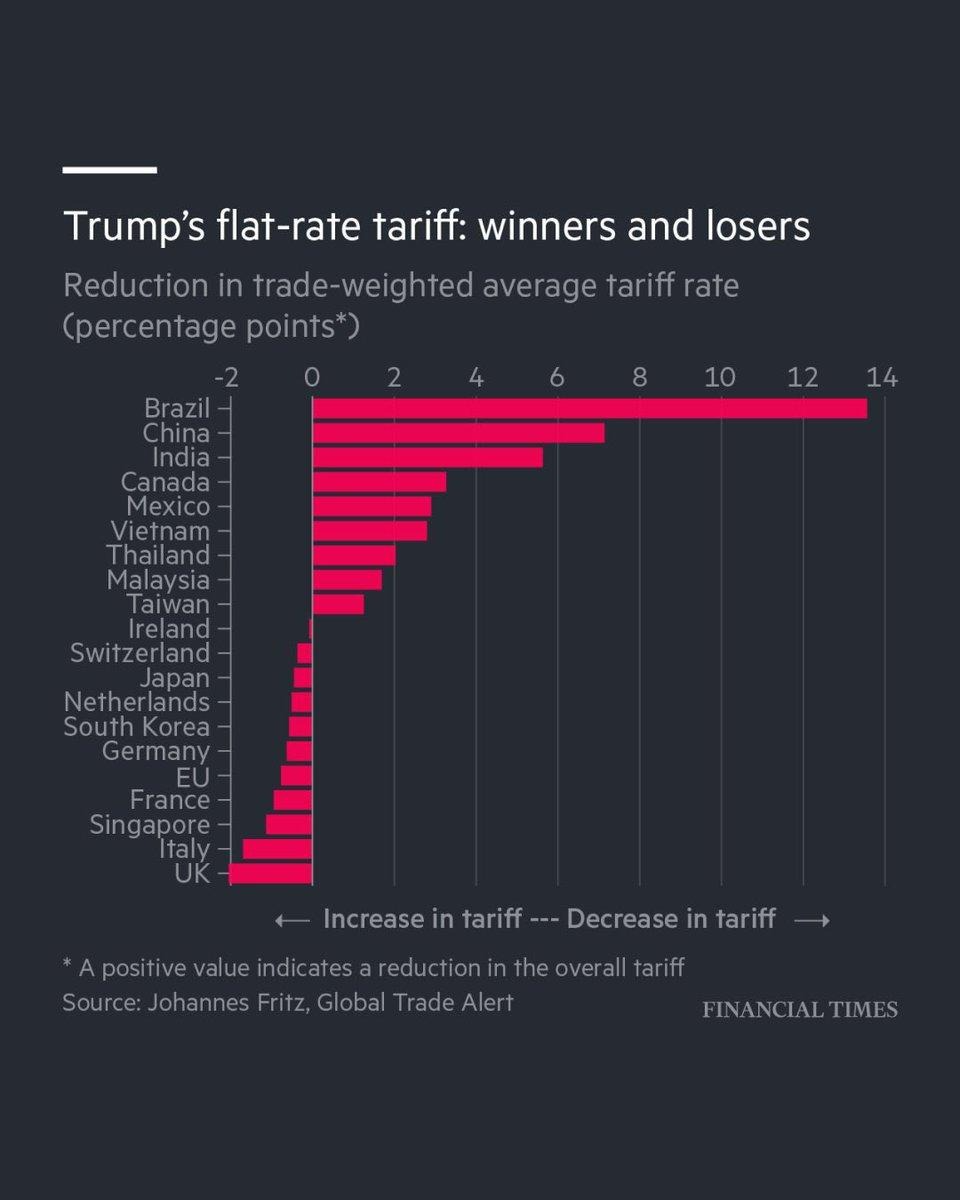
The following graphic from the Financial Times shows winners and losers, with Brazil being the biggest “beneficiary” since—now at 10 percent—its tariffs are reduced by almost 14 percentage points compared to before the Supreme Court ruling. Losers like the United Kingdom “lose out,” as their tariffs increase by 2 percent.
Meanwhile, as if the confusion and disorder weren’t enough, uncertainty is growing about the fate of up to $170 billion collected so far in tariffs. US companies and several states governed by Democrats have announced they will resort to the courts to seek compensation.
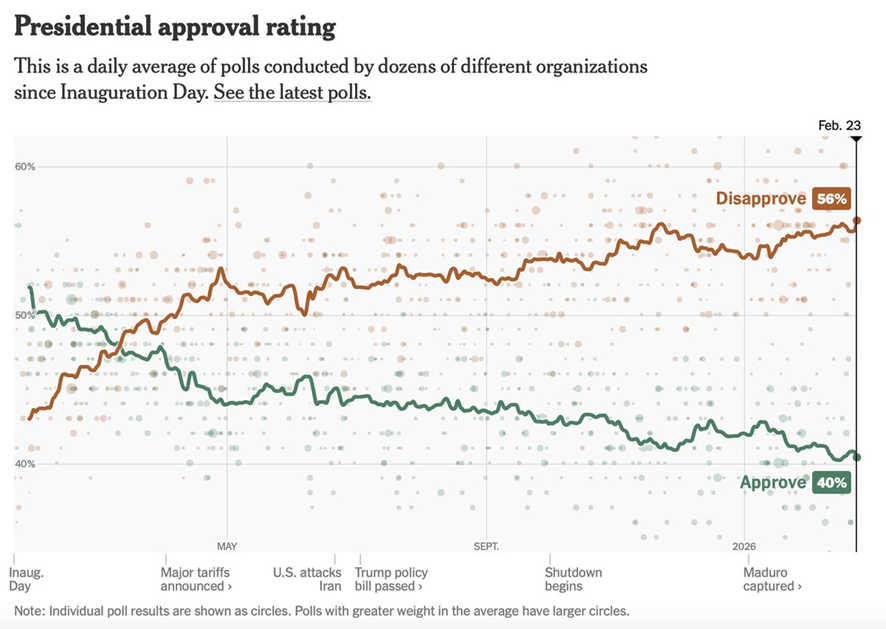
The first thing that becomes clear from all this is the disorder that Trump and his market interventions are causing. And, incidentally, as the prestigious professor Steve Hanke points out, his approval rating has plummeted to 40 percent, with a 56 percent disapproval rating. “Trump is failing because he is crashing,” Hanke states, and he publishes the following chart from his university:
As always, any state intervention in the market is disruptive from the moment it prevents the market from developing freely, that is, from developing naturally and spontaneously. As if bureaucrats could overcome nature, or as if the minds of one or more bureaucrats were capable of overcoming the millions of thinkers who make up the market, who are simply the people of a territory working with their best talents and abilities to progress and help their communities progress.
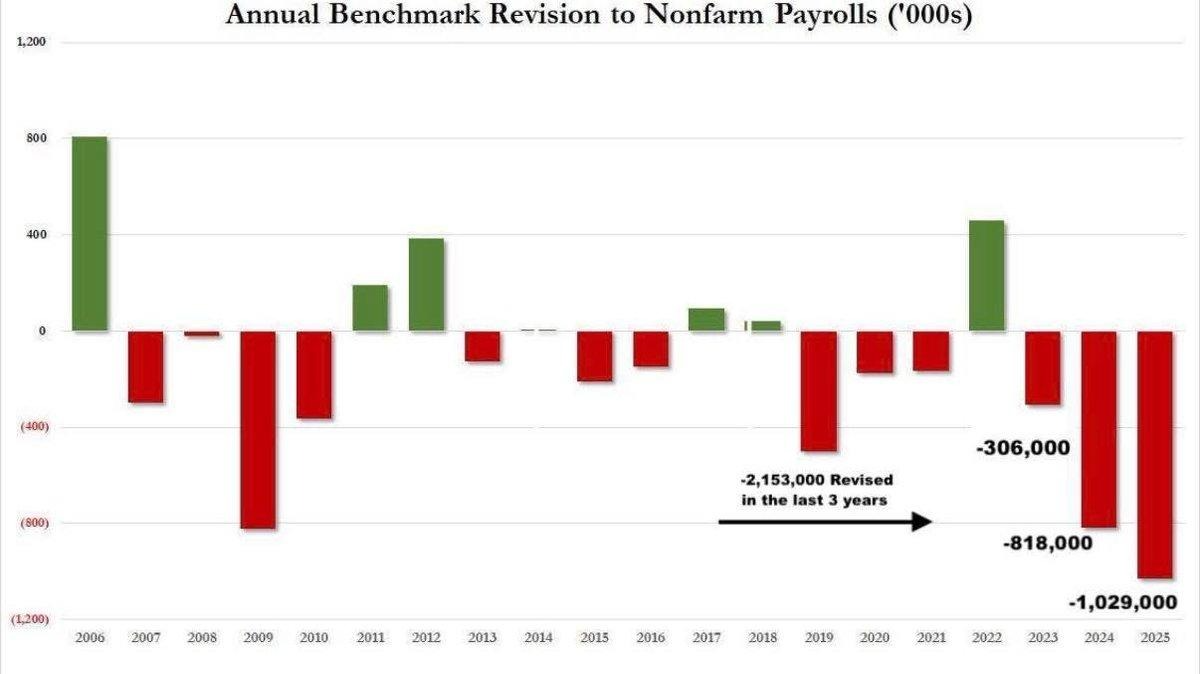
The liberalization of imports since the 1980s was something Trump harshly criticized; however, with Trump’s policies, things have worsened. For example, as prominent economist Roman Sheremeta points out, since he took office in January 2025, 1,029,000 non-farm payroll jobs have been lost, as shown in the following chart:
Meanwhile, the US government has been negotiating new trade agreements with countries like South Korea and India since 2025. Furthermore, negotiations for the USMCA Free Trade Agreement with Canada and Mexico are expected this year.
In any case, bilateral state-level trade agreements are a trap that includes loopholes such as strengthening copyright laws and, indirectly, a hardening of the US-led “war on drugs,” which obviously benefits Washington at a great cost to the rest of the world.
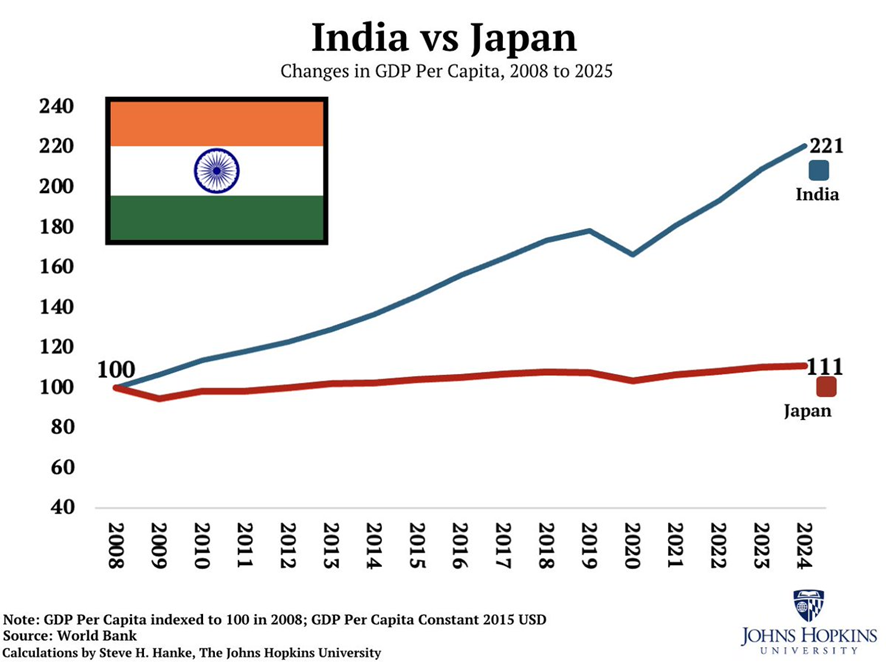
Steve Hanke asserts that the Japanese government remains committed to its trade agreement with the US, while the Prime Minister of India has wisely not signed a trade agreement with Uncle Sam, at least for the time being. And the result is that India’s GDP rises much more than Japan’s, as the following graph shows:
Countries must overcome their fear of freedom—even though it may not be in the best interest of governments and politicians given their vested interests—and unilaterally liberalize their foreign trade. This would entail removing the national state from it because tariffs harm the citizens of the country that imposes them; they are literally a tax on them.
For this, free exchange of currencies is crucial, as it acts as a barrier against the destruction of local production. In other words, it ensures that enough is produced—enough foreign currency—to be able to import, thus balancing the market and preventing the destruction of domestic industry in favor of imports, usually at the expense of the future.
For example, if the foreign currency is “cheaper” due to government intervention, excessive imports destroy jobs in the country, leading to a drop in GDP per capita. Thus, people will have cheaper products today at the cost of reduced purchasing power in the future. If the goal is to increase competitiveness, the necessary steps are to lower the state burden, deregulate, and reduce taxes (direct, indirect, inflation, and manipulated interest rates).
In the extreme case of dumping—contrary to what accommodating industrialists have led people to believe—the citizens of the receiving country benefit because they receive cheaper products and, with the savings, can consume other goods, increasing their production. Conversely, the citizens of the issuing country are harmed because they must pay for the subsidies out of their own pockets.
A particular case is that of Argentina, which is implementing an exceptional “free trade” agreement with Trump. The true intention of this agreement is not genuine liberalization but rather an even greater tether to the US.
Milei’s strengthening of the state is unsustainable in the long run, and he is demonstrating this, since it is being done at the expense of the private sector, which shrinks and, therefore, cannot depend on it. He needs to be bailed out by another state—the most powerful one—and thus depends on Trump and is not interested in unilateral market liberalization.
Incidentally, these bailouts from other governments are short-lived because they serve to incentivize a cumbersome, increasingly-bankrupt state, destroying the private sector, and thus becoming ever more dependent on other governments that, of course, stop cooperating once they reach a certain point.

