

On Friday, the Bureau of Labor Statistics released its September employment report, and it’s clear that the overall job market is anemic, at best. In September, total payroll job growth totaled 29,000, well below expectations, and a very small number as far as job growth goes. This contradicts the administration’s narrative that job growth is resilient or “bouncing back” or otherwise a sign of a strong economy.
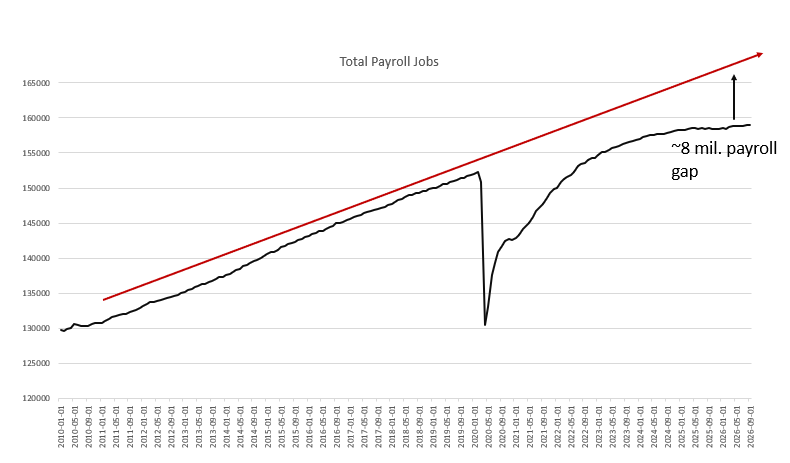
Total payroll job growth is still well below the 2010-2020 trend, with payrolls flattening significantly over the past six years. Total payrolls are now more than 8 million jobs below the trend. Since January of 2025, when Trump took office, growth in payrolls has averaged a lackluster 34,000 per month.
On top of September’s very slight job growth, we might also note that payroll totals for July and August were revised downward, as well. After the release of the August report, the media and apologists for the administration were claiming that the August jobs number was “explosive,” and that the month’s gains were a sign of a big turnaround in the employment market. July’s job gain was also revised upward by 21,000.
Well, it seems like the celebration was a bit premature. Instead, as we now see in the September report, the “explosive” job growth for August was revised down by 29,000, and July’s job “growth” was revised downward by 31,000, back into negative territory. The report now tells us that payroll jobs dropped by 10,000 in July.
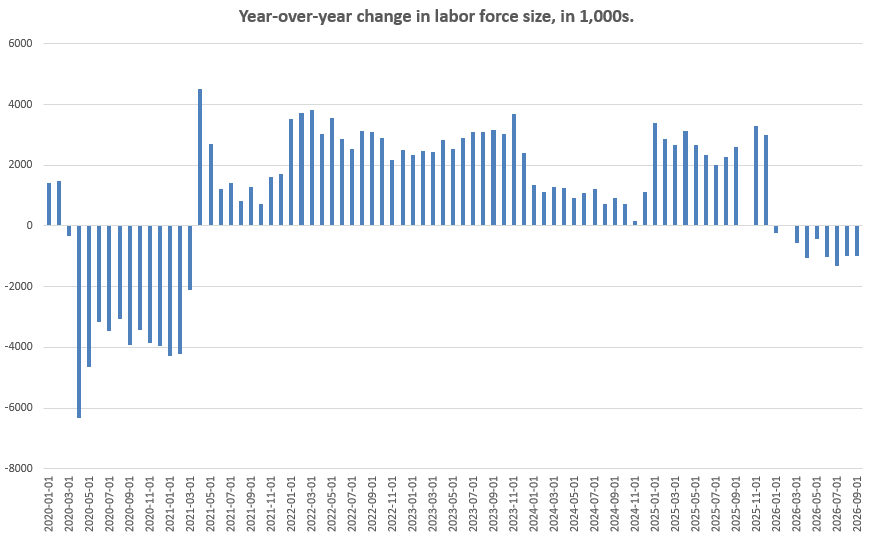
Meanwhile, the unemployment rate ticked upward slightly from 4.1 percent in August to 4.2 percent in September. This was driven by some upward movement in the labor force in September, although the labor force has lost nearly a million workers over the past 12 months. The labor force has shrunk, measured year over year, for the past eight months. This hasn’t happened since the Covid panic of 2020.
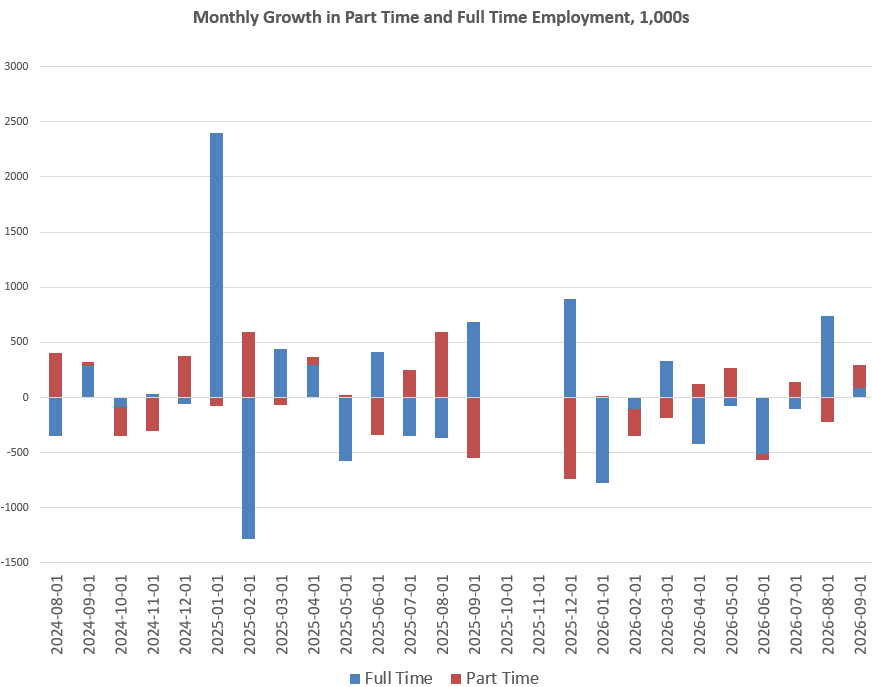
Once again, the majority of employment growth was in part-time employment. If we look to the household survey, which, unlike the payroll survey, makes a distinction between full-time and part-time employment, we find that nearly 70 percent of new employment for September being part-time work.
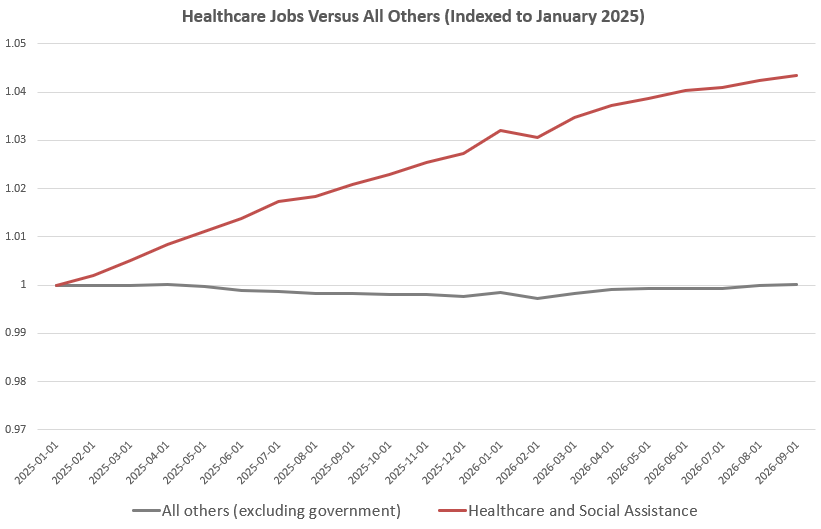
Notably, whether full time or part time, it is clear that what growth there is in payrolls is being driven by employment in the “healthcare and social assistance” sector. Looking to payroll growth since January of 2021, we see that healthcare jobs have increased by 20 percent, but all other types of jobs have increased by 10 percent.
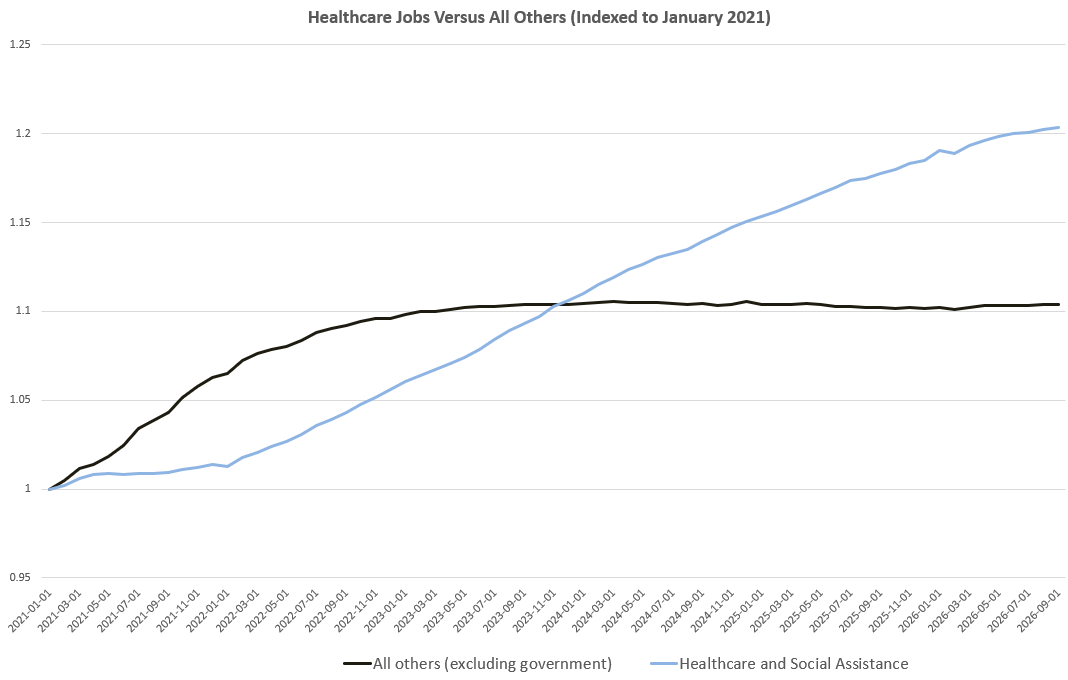
Similarly, since January of 2025, healthcare jobs have increased by four percent, while “growth” in jobs outside the healthcare sector has increased by less than one percent. In other words, without healthcare jobs, there would be virtually no job growth at all since early 2025.
This is problematic because the healthcare sector is one of the sectors that is most heavily subsidized by government spending. For more, see my January 2026 article, “Without Government-Subsidized Industries, Employment Growth Would be Negative.”
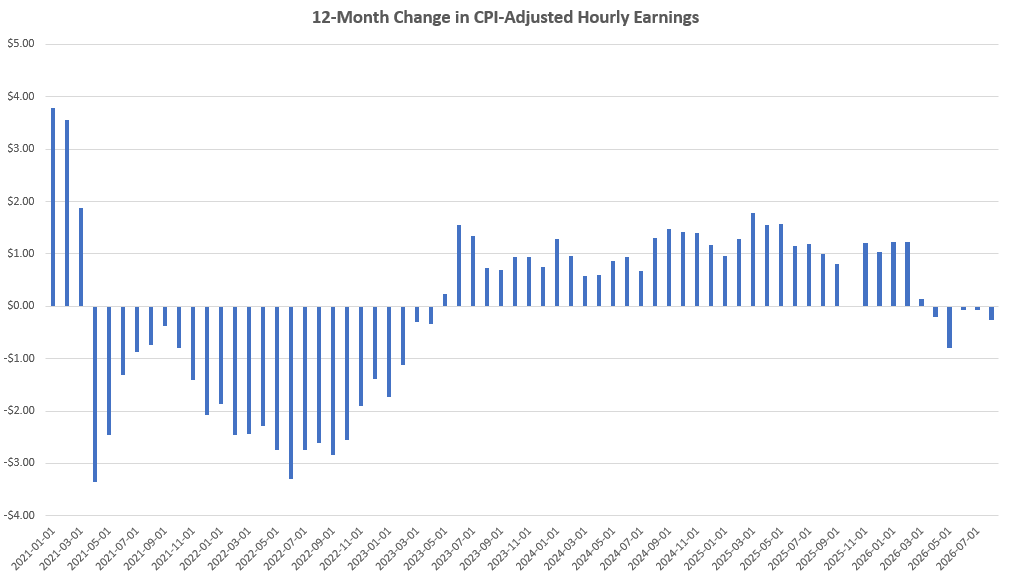
Now, if you’ve been paying much attention to the Federal Reserve’s FOMC press conferences over the past year, you know that the regime’s position—via Fed Chairman Kevin Warsh—is that the jobs economy is fine, or solid or stable—or some other euphemism that may seem apropos. In this view, the lack of robust job growth is blamed on too few immigrants—or a lack of workers in general—and we are to believe that if there were more domestic population growth, then more available workers would lead inexorably to more employed workers. This is hardly self-evident, especially since we’re seeing hourly earnings fall in real terms.
The idea that there is no domestic reservoir of unemployed workers to respond to demand is very suspect when we consider that the unemployed who have been jobless more than 27 weeks is near a 12-year high—excluding the Covid aftermath. Again, if employment were strong or stable, long-term unemployment would be falling, not rising.
Contrary to what the Fed might be claiming, there is good reason to believe that there are indeed workers out there that would return to employment from long-term joblessness—as well as workers who would return to the work force—if job growth were actually as good as Kevin Warsh says it is.

