

The August jobs report was much celebrated by the White House, which pointed to a reported gain of 162,000 jobs in August. The White House called the gain “explosive.“ It would be nice if one month’s worth of job gains pointed to an economic revival, but that is unfortunately not the case. Rather, even with August’s gains in total employment, Americans are still looking at a job market that has gone only sideways for more than 18 months.
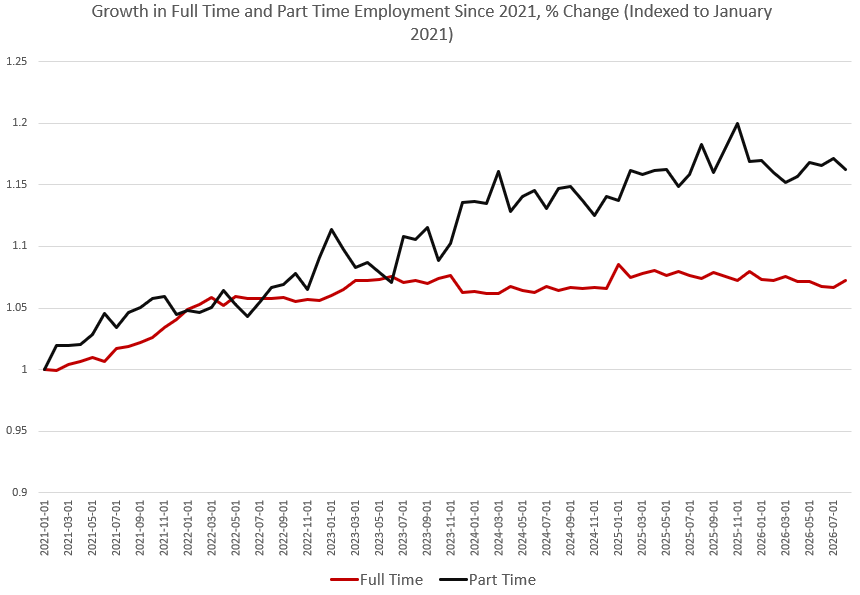
Moreover, full-time employment has been flat for more than three years, with Americans relying more on more on part-time employment to make ends meet.
Yes, the establishment survey—which includes both full-time and part-time jobs—showed jobs gains. And it is not a mystery why the White House press release focused exclusively on the establishment survey’s numbers. It is only in the establishment survey where we find anything that we might call an upward trend in jobs in recent months.
If we look at the household survey, which measures employed persons rather than a mash up of both fulltime and parttime jobs, then the picture is much less rosy. It is true that since January 2025, when Trump took office, the establishment survey has shown an increase of more than 800,000 jobs. That’s about 40,000 jobs per month, on average.
Yet, when we look to the household survey, we find that the total number of jobs has actually fallen by nearly 1.1 million workers. Over that period, on average, there has been 54,000 fewer employed workers per month. More specifically, back in January 2025, the household survey reported a total of 163.8 million employed workers. For August of this year, there were 162.7 million employed workers.
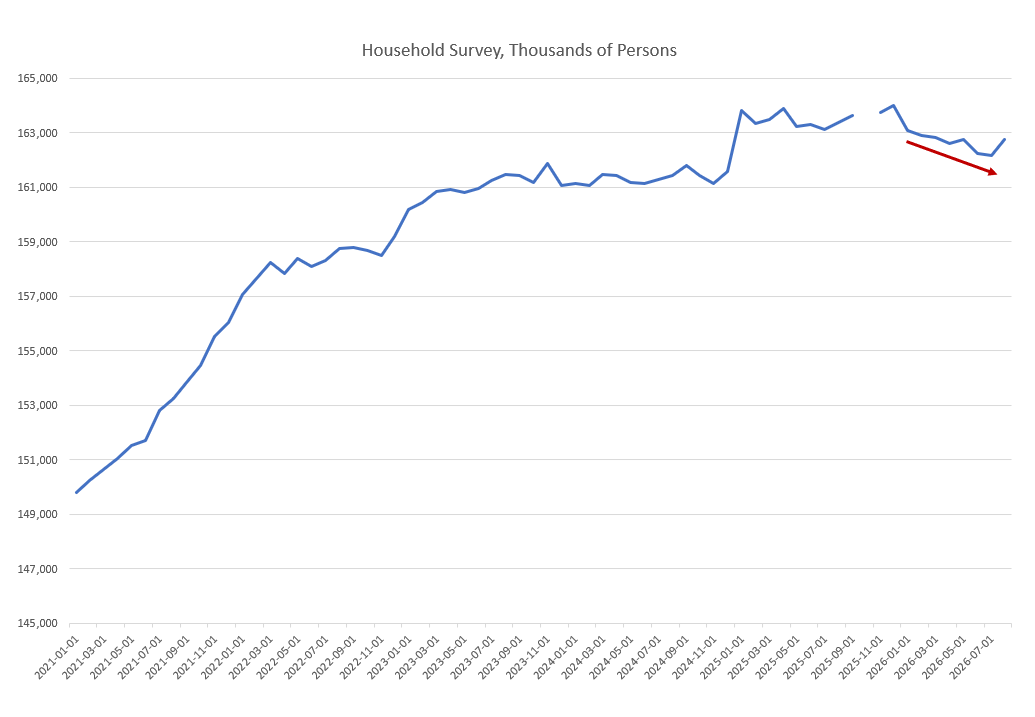
Although the household survey showed a gain of more than a half a million employed workers in August, that came after losses in employed workers in six out of the past eight months.
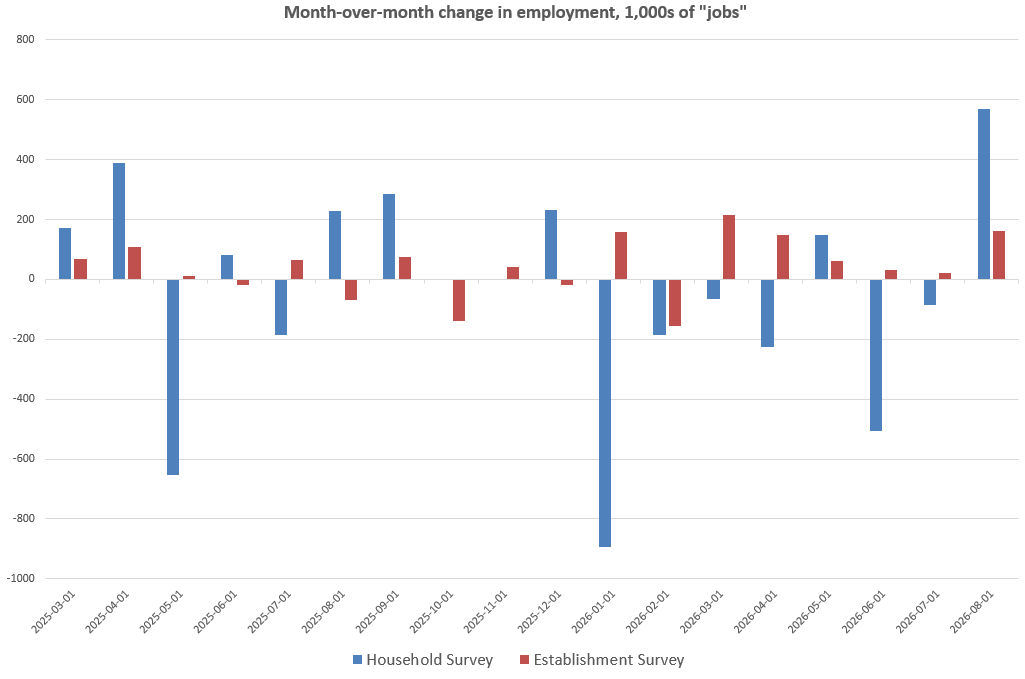
Looking at the overall trend in the household survey, the overall trend during 2025 was very flat. And then, beginning in early 2026, the trend turned downward.
To the extent that there have been significant job gains at all over the past three years, the gains have been based on part-time work. Since January of 2025, when Trump was sworn in, full time employment has fallen by 1.6 million. Parttime workers, on the other hand, have increased by 613,000. Indeed, full-time employment has been very flat since January of 2023. Meanwhile, parttime employment has risen noticeably in that period.
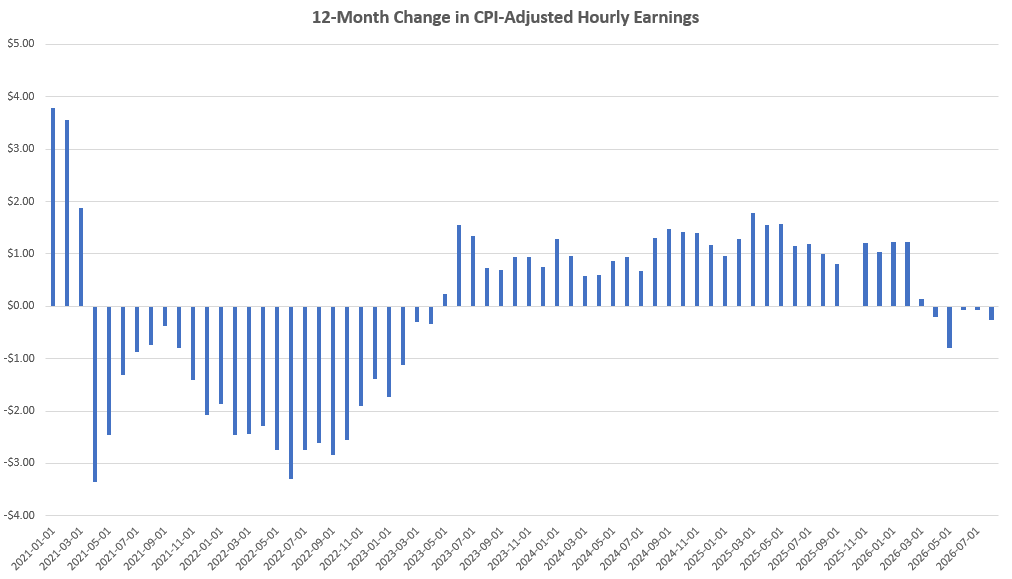
So, are people scaling down to parttime employment because wages have grown so much? Clearly not, given that average hourly earnings have been falling in recent months, and also declined for much of the past five years.
Meanwhile, the number of multiple job holders—workers holding down both a fulltime and a parttime job is near the highest levels we’ve seen in thirty years.

