

With the federal government’s partial shutdown over, the Treasury Department has issued its October report on tax receipts and outlays. Unfortunately, in spite of countless claims from MAGA boosters claiming federal spending will be slashed by Trump, there is still no sign of anything resembling a significant cutback in federal spending. Spending still remains at or above the runaway spending levels of the Covid Panic period.
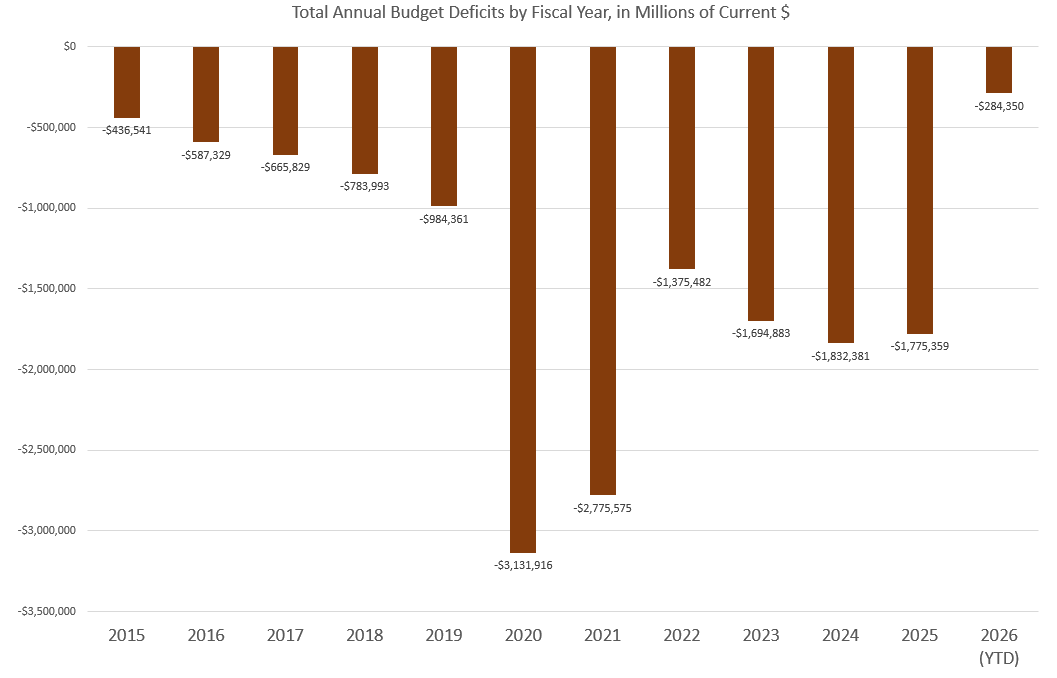
During October, tax revenue remained robust at $404 billion, suggesting that the impact of October’s 20-year high in layoffs has yet to be felt. Federal outlays, however, totaled $689 billion, producing a $284 deficit for the month, the second largest monthly deficit on record, when adjusted for CPI price inflation. Year over year, the federal deficit grew in October by 7 percent, rising from $266 billion. That’s the largest deficit since October 2020, when the US government was spending immense amounts on covid “stimulus.”
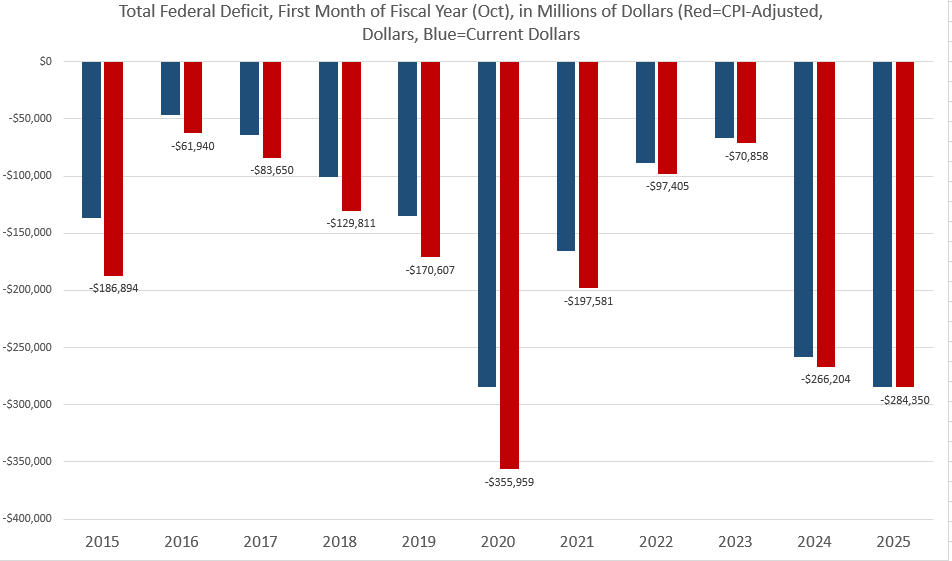
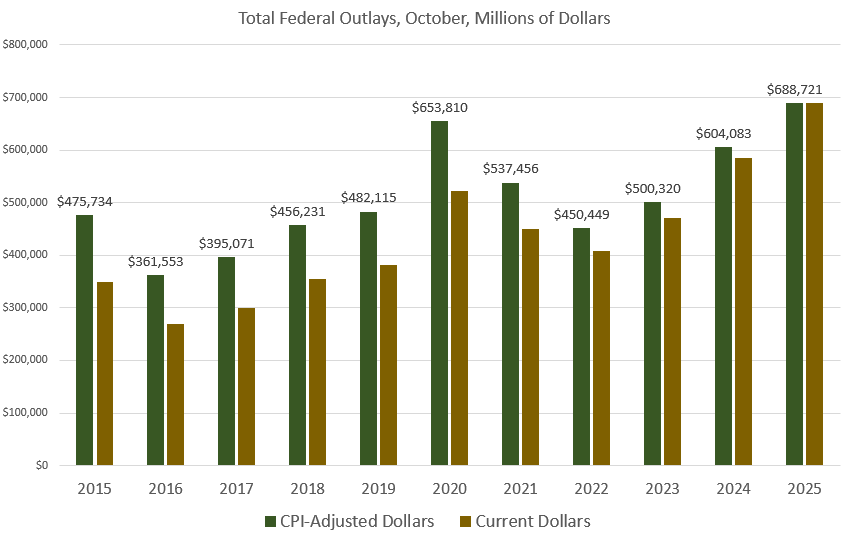
The deficit was largely being driving by continued increases in spending. Federal outlays in October were up by 14 percent, year over year, with 2025’s October total exceeding October 2020’s previous high of $653 billion.
Large monthly deficits continue to fuel the rising national debt which, as of December 3, is $38.4 trillion. This translates into a growing monthly burden in the Treasury/taxpayer in terms of monthly debt service on the debt.
In October, nearly one in seven of every dollar spent went to interest payments on the federal debt. In other words, $104 billion of October’s $688 in outlays did not go to any benefits or services for any current taxpayer, but to interest payments on past spending. Indeed, October’s interest total was the highest yet, even when adjusted for inflation, and was up by 23 percent, year over year.
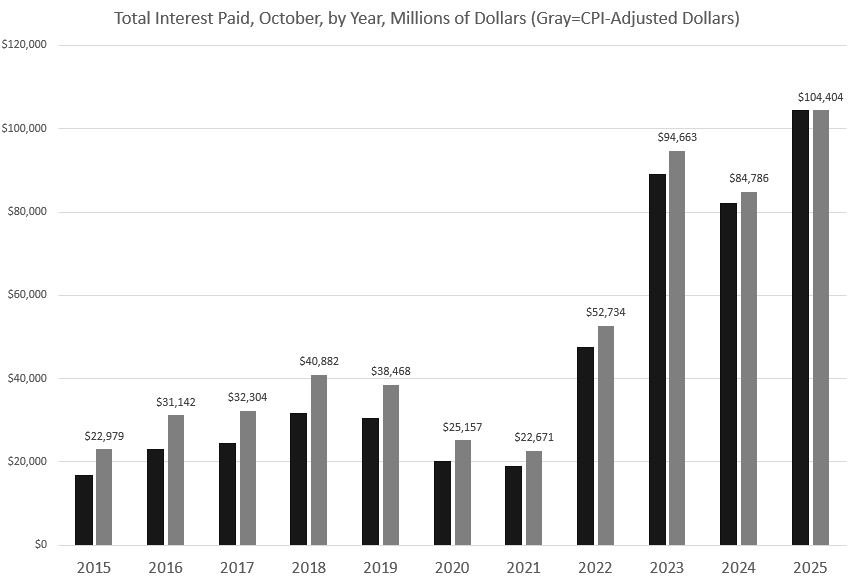
October’s increase reflects ongoing increases in annual totals for interest paid in the debt. Moreover, now that we’re one month into the new fiscal year, October’s total of $104 billion suggests that the Treasury in on pace to match FY 2024’s enormous interest payout of $1.22 trillion.
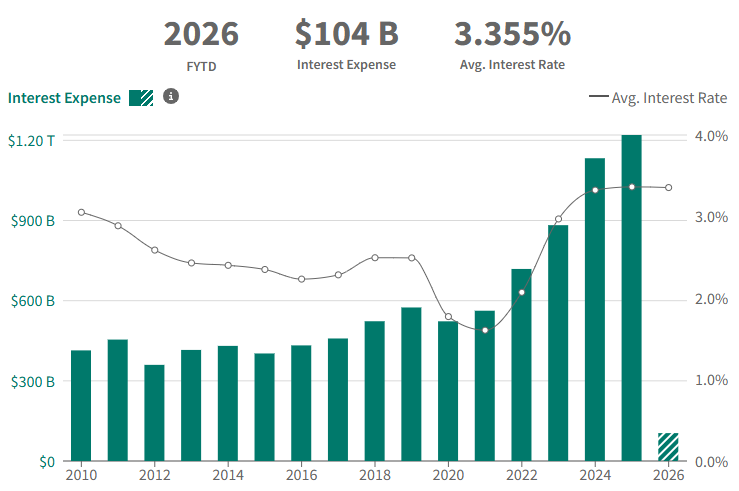
Source: US Treasury.
Similarly, the new fiscal year is starting off at a pace which will make FY 2026 the fourth fiscal year in a row with a deficit of $1.5 trillion or more. (The fiscal year runs from October 1-September 30.)
Treasury officials, it should be noted, have suggested that October’s spending and deficit totals are higher than they would have been in the absence of the government shutdown. Specifically, the AP reports:
The budget results for the first month of the 2026 fiscal year were delayed by a 43-day shutdown of many federal agencies, which caused delays of some payments, such as for salaries of government employees, a Treasury official said.
The deficit last month was up $27 billion, or 10%, from the $257 billion [not inflation-adjusted] deficit posted in October 2024, largely due to the shift of some $105 billion worth of November benefit outlays for some military and healthcare programs into October.
Adjusting for these shifts, the October deficit would have been about $180 billion ...
Outlays for October, including the November benefit payments, totaled $689 billion, up 18% from the $584 billion in October 2024. The Treasury official said the department did not have a precise estimate of how much outlays were reduced by the shutdown-delayed payments from various agencies, but that the Treasury believed the reduction was less than 5% of total outlays.
In other words, it is claimed that October’s spending totals—and therefore it’s deficit total—was inflated by “moved up” benefits spending from November. With these comments, the Treasury appears to imply that November’s spending and deficit will be lower than would have been the case without the shutdown.
We’ll know more next week when the November Treasury report is released. With the “moved up” benefits spending, it may be that November’s year-over-year change will be negative, but given the past eight months of the current administration’s spending, we are unlikely to see any significant departure from the overall trend of rising spending and deficits.

