
The Economics of Prohibition
5. The Corrupting Effects of Prohibition
Heroin abusers are infamous within U.S. society as persons who criminally victimize others. Involvement in nondrug criminality among our heroin abusers was indeed common and even more frequent than has previously been documented.
—(B. D. Johnson et al., Taking Care of Business:
The Economics of Crime by Heroin Abusers)
Corruption is a regular effect of interventionism. An analysis of interventionism would be incomplete if it were not to refer to the phenomenon of corruption.
—(Ludwig von Mises, Human Action)
Several studies have shown an association between the consumption of certain drugs, such as alcohol and heroin, and criminal behavior. This relationship was a crucial reason for the implementation of several prohibitions, including National Alcohol Prohibition, the prohibition of cocaine in several southern states, and the prohibition of marijuana in 1937.
Another motive for enacting prohibition legislation is to reduce corruption of both public officials and the democratic process. People have sold their votes for money or drugs, and the alcohol industry tried to influence elections and public policy. Politicians could also be subject to corruption and blackmail because of alcohol and drugs, and drug use can have a corrupting influence on the actions of political leaders. For these reasons, prohibition was promoted as a means to maintain the integrity of democracy and government.
In general, however, prohibition results in more, not less, crime and corruption. The black markets that result from prohibitions represent institutionalized criminal exchanges. These criminal exchanges, or victimless crimes, often involve violent criminal acts. Prohibitions have also been associated with organized crime and gangs. Violence is used in black markets and criminal organizations to enforce contracts, maintain market share, and defend sales territory. The crime and violence that occurred during the late 1920s and early 1930s was a major reason for the repeal of Prohibition (Kyvig 1979, 123, 167). The nondrug criminal activity of heroin addicts has been associated with the economic effects of prohibition laws and is viewed by Erickson (1969) and others as a major cost of heroin prohibition.
Corruption of law-enforcement officers and other public officials is also a familiar manifestation of prohibited markets. Experience with prohibition has shown it to be a major corrupting influence. The corruption of the Prohibition Bureau proved to be a major stumbling block to the effective enforcement of Prohibition and was also cited as a reason for repeal. Most important, this corruption penetrates beyond the enforcement bureaucracy to government in general. Recent experience has shown that worldwide multidrug prohibition is a major corrupting force in several national governments, such as Colombia and Mexico.
Historical evidence therefore appears to conflict with, or at least to present evidence contrary to, the claims of the prohibitionists. For prohibition to achieve its goals of reducing crime and corruption, several conditions must be met. First, consumption of the product must indeed cause criminal acts and corruption. Second, prohibition must achieve a significant reduction in the consumption of the product without increasing the consumption of other products that cause crime and corruption. Third, prohibition must not lead to significant increases in other forms of crime and corruption.
The use of certain drugs can be considered a contributor to crime. This association along with various other factors may help us describe crime and crime statistics, but they have yet to be established as a sound basis for public policy. First, the use or abuse of certain drugs is not a necessary cause of crime, since crime and corruption can occur without drugs. Second, drugs are also not a sufficient cause of crime because drug use is not by itself able to generate it. Drug use is therefore neither a necessary nor sufficient condition of the criminal activities that prohibition seeks to eliminate or reduce.
If prohibition does reduce certain types of criminal activity while at the same time inducing other criminal activity, then further analysis is required. Several factors, however, argue against reliance on an explicit cost-benefit analysis. First, public policy, I believe, should be based on a generalized approach to prohibition; the specific elasticities examined by cost-benefit analysis are by their very nature unstable and subject to change over time. Second, data on criminal activity are unreliable and in some cases unavailable. Third, the type of criminal activity that prohibition hopes to reduce differs in some cases from the type of criminal behavior induced by prohibition. Fourth, we might expect declines in traditional crime and corruption as prohibition opens up new opportunities and diverts law-enforcement resources.
CRIME
Crime is an important social problem, and a variety of perspectives and theories have been developed to explain its causes. These various approaches can be divided into two categories, economic and environmental, both of which have served as the foundation for public policy.
The general understanding of human action provided by the market-process method is particularly valuable for developing an evaluation of these approaches. It also provides a framework in which the empirical investigations and policy pronouncements can be evaluated and incorporated. Prohibition provides a valuable case study for improving our understanding of crime and social control.
Two Views of Crime
Early notions concerning the causes of crime were firmly grounded on economic factors. Thomas More, Beccaria-Bonesana, Adam Smith, and Frederick Engels all found crime to be associated with poverty and economic conditions. The utilitarian philosopher-economist Jeremy Bentham (1896) argued that criminal behavior was entirely rational. Bentham’s pleasure-versus-pain analysis implicitly incorporates both the low opportunity cost of crime to the poor with the relatively high-value opportunities provided by crime. W. A. Bonger (1916) found that the work of several early French statisticians supported the relationship between crime and economic conditions.
Although crime was viewed as individualistic and economic in nature, all these early commentators called for solutions which were primarily governmental in nature. Even Adam Smith ([1776] 1976) argued for governmental intervention in the area of crime, deeming it one of the three fundamental duties of government, although he had argued the opposite earlier.
Nothing tends so much to corrupt mankind as dependency, while independency still increases the honesty of the people. The establishment of commerce and manufactures, which brings about this independency, is the best policy for preventing crimes. The common people have better wages in this way than in any other, and in consequence of this a general probity of manners takes place through the whole country. Nobody will be so mad as to expose himself upon the highway, when he can make better bread in an honest and industrious manner. (Smith [1763] 1956, 155–56)
Smith’s remarks in 1776 apparently held more sway with English authorities. Experiments in the use of a police force began in 1786 in Ireland and, in a less ruthless form, in England beginning with the Metropolitan Police Act of 1829. As Stanley H. Palmer (1988) has shown, many of the national police forces were formed to deal with those opposed to the government, rather than to fight common crime.
A second theory of criminal behavior emphasizes environmental and genetic factors, disputes the relevance of the economic theory of crime, and claims that criminal behavior is related to characteristics such as the configuration of the skull, reflex activity, race, age, sex, and social class. This sociological paradigm began to displace the early economic approach around the turn of the nineteenth century. For example, Cesare Lombroso argued that criminals were a subspecies of man possessing special characteristics such as unique facial structure or unusually long arms (described in Pyle 1983, 5).
The association of drug use with crime would be classified with the sociological approach to criminal behavior because it is based on observation and probability rather than theory. This sociological theory differs from earlier versions in that it attributes the cause of crime primarily to environmental factors, rather than to genetic ones.
Timberlake (1963, 56–61) noted that progressive sociologists and criminologists who espoused this view opposed liquor use because of its association with a large number of criminal acts and undesirable behavior. For example, in a study of prison inmates, John Koren (1899) concluded that alcohol was the sole cause of 16 percent of all crimes, the primary cause of 31 percent, and a contributing cause of 50 percent. This theory was a two-edged sword, however; it helped establish prohibitions, but it removed cause and guilt from criminal acts. Prisoners began to exaggerate the role that alcohol played in their commission of crimes and to ignore the more serious causes (Timberlake 1963, 58). During the early years of marijuana prohibition, some convicts petitioned for leniency on the basis of their use of marijuana, which, they said, had caused their crimes rather than they themselves.
The Marxist perspective on crime has been a traditional justification for Marxist theory. As a branch of the environmental approach, it contains an element of the economic approach, viewing crime as a reaction of the proletariat to economic development. Rather than genetics, physical features, or drug use, social class is the factor that identifies potential criminals.
Contrary to the early Adam Smith ([1763] 1956), economic development is viewed as the cause of crime rather than a cure. Marxists point to increased crime rates in “capitalist” countries and urban areas as evidence of the viability of the overall Marxist philosophy and beliefs.
The Economics of Crime
According to Paul H. Rubin (1978, 38), “Until about 1968 most academic research on crime was done by sociologists. The basic premise of this work seems to have been that criminals were some-how different from noncriminals, and the major research consisted of searching for the ways in which criminals differed.” Gary S. Becker (1968) reestablished the study of crime and punishment as rational and economic. His contribution has been challenged, refined, tested, and extended. This body of research has come to dominate the modern approach to crime and has had some visible effects on public policy. For example, Isaac Ehrlich’s publications (1973, 1975) based on Becker were cited by the Supreme Court in reestablishing the death penalty. Three law professors who helped extend Becker’s economic approach to crime (Robert Bork, Richard Posner, and Antonin Scalia) received high judicial appointments.
Becker’s (1968) time-allocation model of criminal behavior is formulated in terms of the subjective expected utility of the individual. The individual is shown to form subjective expectations about the probability of arrest and the severity and likelihood of punishment. The potential criminal weighs the subjective value of the expected gain from crime against these costs. The results derived from this model imply that increases in the probability of capture and severity of punishment will deter crime.
The explicit modeling of crime in economic terms presents some problems. For example, it is difficult to speak of a market supply of crime, and even more difficult to speak of a market demand for crime. Markets of crime rarely if ever exist, and crimes such as rape, robbery, and murder simply cannot be called voluntary transactions. These models convert the benefits of crime into purely monetary terms, despite the fact that the benefits of crimes of passion and violence are primarily nonmonetary and extremely difficult to translate into monetary terms.
These models are based on subjectively determined evaluations, but in econometric “testing,” objective or actual measures of the probability of capture and expected punishment are employed. These deviations from theory that are necessary to obtain empirical verification of theory tend to cloak important nuances of criminal behavior, punishment, police behavior, and the criminal firm, thereby limiting our understanding of crime. Samuel Cameron (1989) and others have found, for example, that the puzzling correlations between crime, arrest rates, and police resources “are to be explained in large part by the failure of economists to measure the criminal’s subjective expectations in the subjective expected-utility model” (36).
The Economics of Prohibition Crime
Prohibition creates new profit opportunities for both criminals and noncriminals. For people already engaged in criminal careers, prohibitions provide new and enhanced profit opportunities that may increase the number of crimes they commit or alter the type of crimes they commit. Robbers may become bootleggers, or loansharks may expand into drug dealing. For example, Al Capone expanded his business from gambling and prostitution to bootlegging during Prohibition. The new and expanded profit opportunities will also bring new players into criminal pursuits; these new entrants are likely to come from the consumers of the prohibited product.
The enforcement of prohibition results in higher prices for illegal products, which in turn has a detrimental effect on the consumers of the prohibited product. Some consumers will respond to higher prices by reducing or eliminating their consumption of the product in question—others will not. Consumers who have formed habits, or addictions, to a particular good will remain in the market. They could be classified as having an inelastic demand for the prohibited good in the relevant price range. These consumers will therefore consume less of all other goods (food, clothing, shelter, medical care) as a consequence of prohibition.
For example, a heroin consumer responds to a 1000 percent increase in price by reducing consumption by 50 percent (figure 7). This inelastic response entails a reduction in the consumption of all other goods, shown by a shift in the budget line in figure 8.
The consumer’s initial budget constraint in figure 8 was predetermined by the choice between labor and leisure. The labor-leisure trade-off, however, is also affected by prohibition in a nonconventional way. The tremendous increase in the price of heroin during prohibition results in a new budget constraint. For the individual who has a highly inelastic demand for heroin, prohibition is akin to a famine which increases food prices several hundred percent. The increased price of prohibited products will have little or no effect on nominal wage rates, so real wage rates (purchasing power) fall. Falling real wage rates normally increases leisure time (little consolation for heroin addicts), but here we might expect more labor time or a switch to a job that pays higher wage rates in order to compensate for greater risks (for example, crime). In any case, the heroin user is much worse off and under stress.
In figure 9, income from legal and illegal activity is measured against the amount of risk from criminal activities undertaken by heroin users. Legal income (in terms of purchasing power) is measured along the vertical axis. Illegal income is measured as an expected income line from the vertical axis. Expected income from crime is assumed to increase with the level of criminal activity. Reuter et al. (1990) have completed a study of drug dealers in Washington D.C., which indicates that dealers trade risk for money. They find dealing drugs on the streets presents high risks, while the “profits” are modest.
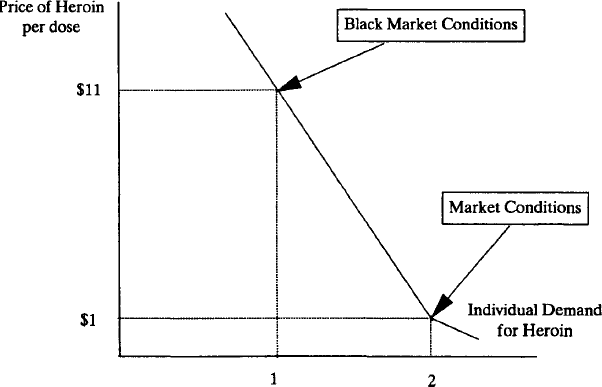
Number of Doses Consumed per Day
Figure 7. The Impact of Prohibition on the Consumption of Heroin.
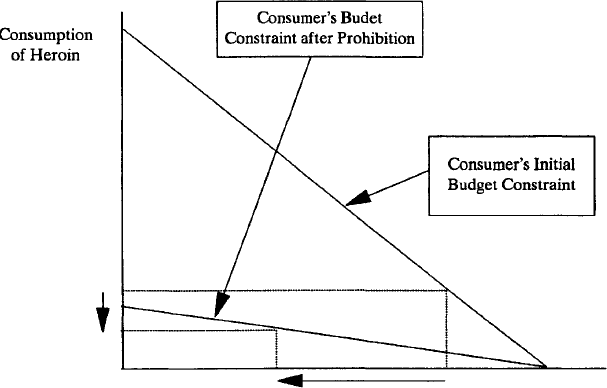
Consumption of All Other Goods
Figure 8. Prohibition’s Impact on the Heroin Addict’s Budget Constraint.
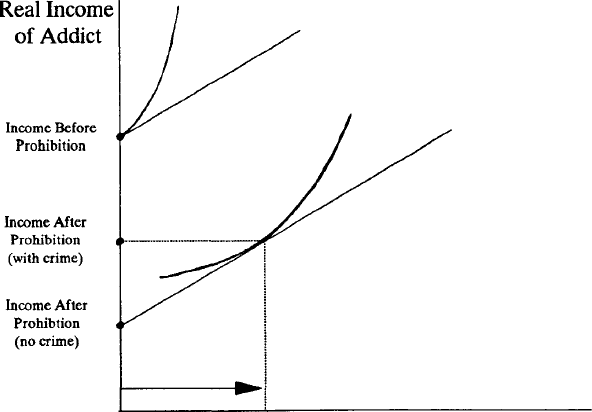
Level of Criminal Activity
Figure 9. Prohibition’s Impact on (addict-related) Criminal Activity.
Indifference curves that indicate crime (risk) as bad have been superimposed on the graph. In the absence of prohibition, consumers with high incomes will be more risk-averse to crime due to the threat of losing their freedom, income, future income, reputation, and so on. Prohibition’s depressing effect on the real wage rates of heroin consumers will induce them to become criminals as their opportunity cost of illegal activities declines.
At the initial income level the individual will engage in little or no illegal activity. As the price of heroin increases, real income falls. At this lower level of income the relative rewards of illegal income are enhanced. The individual will increase their level of criminal activity. Therefore, prohibition will induce some noncriminals into illegal activities such as drug dealing or robbery.
The supply of criminal activity from noncriminal drug users can be viewed as function of the severity of prohibition enforcement. The level of prohibition enforcement is positively related to the price of the prohibited product, and therefore it is negatively related to the real income of addicts and habitual users. The decreased real income from prohibition makes illegal income more attractive. Therefore the higher price for heroin results in more criminal activity. George F. Brown and Lester P. Silverman 1974 presented evidence of this relationship in the short run. Changes in the level of enforcement may also affect the type of criminal activity. For example, as more resources are devoted to prohibition enforcement, property crimes such as burglary become less risky and therefore increase in number. Benson et al. (1990) have shown that increased efforts to suppress illegal drugs have resulted in decreased enforcement efforts against property crime and thus an increase in it.
The Historical Trend in Crime
Theoretically, prohibition increases crime from both the “supply” and “demand” side. Statistically, we would also expect crime to increase because of prohibition “crimes” and the incidental crimes of the underground economy such as those connected with defining market territories and enforcing contracts. Empirical investigations of the causes of crime and changes in crime rates have been notoriously difficult and inaccurate. An overview of the historical trend in crime provides an opportunity to evaluate various theories of crime and the neglected relationship between it and prohibition. According to the economic (market-process) approach to crime, economic development will result in less criminal activity and prohibition will result in greater amounts of crime (in addition to violations of prohibition law). The expected increase in crime due to prohibition is a function of the degree of both enforcement and the underlying demand for the prohibited product.
The Marxist theory of crime has been a major focus of the study of criminal behavior. This theory holds that economic development results in an increasing gap between the rich and the poor and an increasing rate of “crises.” Workers respond to exploitation, alienation, urbanization, and crisis by committing more crimes against capitalism and the upper classes. In support of their theory, Marxists point to the increasing crime during the nineteenth century and recent times in capitalist countries. Lynn McDonald (1976) showed that consensus, biological, and conflict theorists all agree that crime is related to economic development (for different reasons) and that crime rates rose during the nineteenth century.
The nineteenth century was indeed a period of fruition for capitalism, but it was not a pure market economy. In banking, transportation, and education, the seeds were sown for tremendous increases in government interventionism. Also, several points must be raised concerning the evidence on crime that supposedly supports Marxism. First, the urbanization and economic development that occurred between the 1830s and the twentieth century were accompanied by decreased rates of severe and violent crimes. Second, increases in crime rates were largely due to increases in minor crimes, such as public drunkenness. Urban societies apparently become less tolerant of mischievous behavior as population concentrations increase and economic activity becomes more organized. Third, police forces were established in major urban areas during the middle of the nineteenth century. This unquestionably led to an increase in both the awareness of criminal activity and the collection of statistics on crime (Lane 1968). Fourth, and most important, crime rates have been found to have declined, rather than increased, during the nineteenth century in the major capitalist countries, including the United States (McDonald 1982). These latter two points suggest that, contrary to the Marxian explanation, capitalist development results in decreased crime and more social-control mechanisms.
An early example of the impact of prohibition on crime (and a deviation from capitalism) was the liquor control legislation in Massachusetts from 1838 to 1840. While this prohibition actually established the requirement of a fifteen-gallon minimum purchase and was only in effect for two years, several instructive lessons endure. The fifteen-gallon minimum can be viewed as an attempt to use the political process to achieve immediately the social control that only slowly and methodically develops under capitalism. This impatience with capitalism does, however, reflect the general decreased tolerance of disruptive public behavior mentioned earlier.
If prohibition was an outgrowth of intolerance, its intended effect—in the short run—was not achieved. In this more rowdy era, antitemperance forces countered what they considered aggression against their rights (for example, temperance legislation) with aggression. Robert L. Hampel (1982, 90) notes that the severity of criminal activity was correlated with the severity of temperance legislation. “Before and after the experiment with prohibition, vandalism and ridicule were the principal means of harassment. Shaving horse tails, girdling trees, or defacing the front of houses were standard from anti-temperance rowdies. But with the passage of the 15 Gallon Law, physical assaults and mob demonstrations became more common. Where an 1834 Taunton incident involved the tarring and feathering of several homes, the same criminals in 1839 might have gone after the homeowners instead.”
The fifteen-gallon law was both difficult and costly to enforce. The total number of crimes, especially alcohol-license violations, increased significantly. The increased number of violations in turn caused delays in the court and a rapid decline in the conviction rate on all crimes (Hampel 1982, 99–100). This short episode with prohibition resulted in more crime, more violent crime, delay in the courts, and a lower conviction rate on all crimes.
Contrary to Marxist views and early impressions, crime has decreased during economic progress. Eric H. Monkkonen (1981) has reviewed the studies of crime during the nineteenth and early twentieth centuries and has found that only two studies (using individual city data) contradict the trend toward decreased crime. It is only during the Prohibition era that anomalies in national criminal statistics start to occur. For example, Monkkonen (1981, 555) notes that the percentage of crimes that were appealed decreased from before 1870 to 1939, except during the decade of the 1920s. It can be reasonably assumed that the rate of serious crimes was declining because appeals generally represent crimes of a serious nature.
Some observers have suggested that the “crime wave” during Prohibition was just a mere impression, a fabrication of media hype. Even a leading wet, Dr. Fabian Franklin, stated that the “crime wave is a state of mind” (quoted in Fisher 1928, 76). Observers such as Franklin, however, fail to address the nature of changes in the composition of crime, the long-run decline in crime rates before Prohibition, and the social upheaval beginning with World War I.
For example, Franklin notes that crime declined by 37.7 percent during the period 1910–23. This is, however, attributable to a decline in less serious crime—crimes involving violence or theft of property increased by 13.2 percent. Homicide increased 16.1 percent and robbery rose by 83.3 percent over the period, while crime such as vagrancy and malicious mischief decreased by over 50 percent (Fisher 1928, 77). While dismissing the significance of alcohol and drug-prohibition crimes, Franklin does note that the increased homicide rate may be related to “the illegal traffic” (quoted in Fisher 1928, 80).
Fisher himself hints that changes in criminal statistics may have resulted from the new profitable opportunities created by Prohibition and the Harrison Narcotics Act. Fisher’s “interesting suggestion” is essentially to interpret criminal statistics of the Prohibition era using the economic, or market-process, perspective. First, serious crime had been on the decline over a long period of economic development (approximately 1800–1910), while less serious crime was increasing. Higher standards of living, increased expectations of living standards, and increased urbanization had made people less tolerant of unseemly public behavior. The growth in minor crime was thus partly the result of a greater number of unlawful offenses. The subsequent decrease in petty crime and increase in serious crime can therefore be explained by the impact of prohibitions on criminal opportunities.
Warburton (1932) provides evidence which indicates that homicide rates (in large cities) increased significantly from 1910 to 1933; this period includes the third wave of state prohibitions (1910–19), the Harrison Narcotics Act (1914), wartime restrictions on alcohol (1918–19), and Prohibition (1920–33). The greater number of federal prisoners provides further evidence of more serious crime during Prohibition. The number of prisoners in federal prisons, reformatories, and camps grew from 3,889 in 1920 to 13,698 in 1932 (Wooddy 1934, 90–99).
The increase in crime during the 1920s has been described without reference to Prohibition. For example, John A. Pandiani (1982) noted: “A major wave of crime appears to have begun as early as the mid 1920’s [and] increased continually until 1933 . . . when it mysteriously reversed itself” (349). The sudden change in the direction of crime rates was mysterious to many observers because they were predisposed to the Marxian and business-cycle approach to crime. The description of crime statistics put forth by Theodore A. Ferdinand (1967) also recounts a dramatic and “mysterious” decline beginning in 1933 that lasted throughout the 1930s.
Andrew F. Henry and James F. Short (1954) attempted to show that the increased crime from 1929 to 1933 was the result of variations in business activity. Philip J. Cook and Gary A. Zarkin (1985), however, have found that the “major movements in crime rates during the last half century cannot be attributed to the business cycle” (128). Pandiani (1982) attempted to account for the decrease in crime starting in 1933 by showing that the Civilian Conservation Corps (CCC) removed many potential criminals from society.
Fluctuation in economic activity and major government programs such as the CCC no doubt played some role in these criminal statistics, but Prohibition appears to be the significant explanatory variable for changes in the crime rate and the composition of crime. The repeal of Prohibition appears to be the best explanation for the dramatic reversal in 1933 and the return to the long-run decline in crime rates. The two alternative theories have a difficult time explaining the continuous decrease in crime during the remainder of the 1930s.
The resumption of the decline in criminal activity after 1933 is not the result of the absence of all prohibition, but rather the repeal of the most significant prohibition—alcohol. The Harrison Narcotics Act still applied, and marijuana was prohibited in 1937. The use of narcotics and marijuana, however, was insignificant compared with the consumption of alcohol. Budgets for the enforcement of narcotics and marijuana prohibitions were curtailed and enforcement was lax. In addition, after the repeal of Prohibition, the falling price of alcohol provided a low-priced substitute for illegal substances.
According to the theory that crime is based on its association with intoxicants such as alcohol, easy access to alcohol after repeal should have led to increased crime. As Cook and Zarkin (1985, 117) note, “intoxication has long been thought to be an important cause of crime, particularly violent crime.” The evidence they present, however, suggests that the rates for murder, burglary, robbery, and auto theft declined after the repeal of Prohibition, resuming the long secular decline. The national homicide rate declined from the last year of Prohibition to the early 1960s. Eric H. Monkkonen (1981, 556–57) notes that the return to increasing consumption per capita after repeal is associated with fewer arrests for drunk and disorderly conduct. In any case, the consumption of alcohol appears to be a poor explanatory variable; often it is negatively related to crime rates.
Crime rates again deviated from long-run trends in the mid-1960s, when prohibition once again became a significant public policy. Increased exposure of servicemen to drugs during the Vietnam War, resistance to the war, demographic factors increased the demand for drugs such as marijuana. Increased efforts to suppress these markets began what has become known as the war on drugs.
James Q. Wilson and Richard J. Herrnstein (1985, 409) note that the homicide rate began increasing in the mid-1960s and then increased at an alarming rate. According to national crime statistics, the number of murders, burglaries, robberies, and auto thefts, which had been decreasing, began to increase during the 1960s. The rise in crime became dramatic during the late 1960s, leading the Nixon administration to begin its crackdown on drugs. Crime rates continued to increase throughout the 1970s and 1980s.
Prohibition is not the only explanation for the increase in crime over the last quarter century. For example, the philosophy of the justice system has undergone a change from the punishment, restitution, and isolation of criminals to their rehabilitation and reintegration into society. The state, therefore, now acts as a surrogate victim in the absence of a true victim, and the criminal has become a victim of society. The increased use of plea bargaining, probation, commuted sentences, release on bail, community-based correction programs, and the insanity and diminished-capacity defense have made crime easier and have been justified in part by the overcrowding of prisons (see Bidinotto 1989).
Black markets become more organized over time just as legal markets do. Two manifestations of the greater degree of organization are crime syndicates and street gangs. Organized crime has long been associated with prohibition. Prohibitions against prostitution, gambling, “high” interest rates, and the consumption of drugs have served as the basis for virtually all known crime syndicates. Humbert S. Nelli (1985) shows that syndicates that developed during Prohibition survived long after repeal. Street gangs profit and expand based on their role in organizing retail drug sales. Their violent criminal activity has been a growing and very visible result of the war on drugs during the 1980s and 1990s. Gangs also developed in the late 1920s in response to the profit potential provided by Prohibition. In 1930 Frederick Thrasher, a sociologist, warned of the growing threat of gangs. He noted that the economic incentive led gangs to work for criminals and racketeers (Pandiani 1982, 349).
As predicted by Adam Smith, capitalistic economic development tends to reduce the rate of crime. As economic development and its concomitants (for example, urbanization) proceed, new rules, guidelines, and controls on antisocial public behavior are established to deal with the greater complexities of economic life. Deviations from capitalism, such as prohibition, have disrupted the long-term trends toward decreased crime. Crime was shown to increase and become more violent during the time of the fifteen-gallon law in Massachusetts, during Prohibition, and since the late 1960s when enforcement of the prohibition on narcotics and marijuana began to be more rigorous. Further, crime was shown to decrease during nonprohibition periods, although consumption of intoxicants was increasing per capita.
In addition, the theory that prohibition causes crime has been confirmed by the observations of Johnson and his colleagues (1985). They found explicit empirical evidence that narcotics prohibition could be directly related to crimes other than illegal drug sale and use. Sociologists, however, have tended to isolate prohibition from the general study of crime and have failed, along with criminologists and economists, to consider prohibition a worthwhile variable in the explanation of crime rates. While prohibition is certainly not the only cause of crime, its inclusion would improve both the empirical study of theories of crime and the study of the trends in crime rates. The empirical evidence examined in this section indicates that prohibition has increased crime and has imposed a significant cost on society.
CORRUPTION
The control of corruption is of vital interest in any free and democratic society. An important goal of prohibition is the reduction of corruption. Timberlake (1963) claims that political corruption by the alcohol industry was the major reason for establishing Prohibition: “Like many other businesses, the liquor industry sought to influence or control all levels of government in order to promote its interests and to protect itself against unfavorable legislation. But unlike most businesses, it had a special reason to engage in politics: no other enterprise paid such high taxes or contributed such large sums to government” (106). Prohibition seeks to reduce corruption in both the specific sense of the bribery of public officials and in the general sense of maintaining individual integrity, virtue, and moral principles. Experience, however, shows that, on the contrary, the corruption of public officials increases. As Mises notes, “Unfortunately the office-holders and their staffs are not angelic. They learn very soon that their decisions mean for the businessmen either considerable losses or—sometimes—considerable gains. Certainly there are also bureaucrats who do not take bribes; but there are others who are anxious to take advantage of any ‘safe’ opportunity of ‘sharing with those whom their decisions favor’” (1949, 734). This corruption, in the case of prohibition, represents a failure to achieve the goals of prohibition and a major impediment to the enforcement of prohibition.
Academic interest in the corruption of public officials has been growing and appears to be related to the amount of corruption that occurs. The first flurry of research on corruption occurred during the latter half of Prohibition and in the aftermath of repeal. The rate of publication began to increase substantially in the 1960s and apparently peaked in 1975 (Simpson 1977 and Duchaine 1979). The rate of publication remained high throughout the rest of the 1970s, although it seems to have declined somewhat in the 1980s.
The amount of corruption detected has been increasing in recent years. Federal convictions of corrupt public officials has increased from 44 in 1970 to 1067 in 1988 (figure 10). The substantial jump in indictments and convictions in 1983 has been explained by an increased focus on corruption and better reporting of lower-level corruption. While corruption due to prohibition occurs in all areas of government, the federal efforts seem to have been most successful in convicting state and local enforcement officials. Based on the representative cases, 75 percent of state and local law-enforcement corruption is directly related to prohibition (U.S. Department of Justice 1989, 30).
The Economics of Corruption
The literature on corruption generally agrees that corruption is rational, systemic, and functional. The individual participants in corruption are viewed as pursuing their self-interest at the expense of the general, or public, interest. Corruption has also been found to be a characteristic feature of government, particularly of the law-enforcement function. The “function” of corruption is to facilitate transactions when control over transactions has been delegated to government.
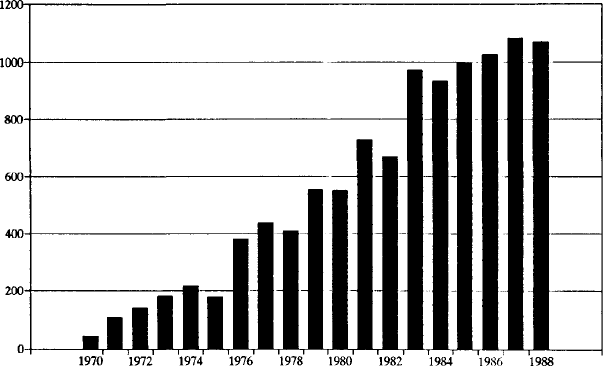
Source: U.S. Department of Justice, Criminal Division, “Report to Congress on the Activities and Operations of the Public integrity Section for 1981,” p. 20; “1988,” p. 29, U.S. Department of Justice, Washington, DC, (mimeographed.)
Figure 10. Federal Convictions of Public Officials: 1970–1988.
Many general definitions of corruption have been put forward. In the legal world corruption is a failure in the principal-agent relationship. The economics of the legal approach is best illustrated in the work of Banfield (1975). This definition is open-ended and applies to both government and the market. In another definition corruption occurs anytime an agent of the government acts to promote self-interest over the public interest. Modern economists, on the other hand, view all action as self-interested, and thus this definition is inappropriate. Interest-group legislation is self-interested, but economists view it as rent seeking, not corruption.
Economists such as Murray N. Rothbard (1970), Susan Rose-Ackerman (1975), and Bruce L. Benson (1981) have defined corruption as the illegal sale or purchase of property rights. In this definition corruption is rational, systemic, and functional. It is legalistic, but not universal in scope. For example, it once was legal to sell one’s vote, but it no longer is. Therefore, vote buying is now viewed as a corrupt practice. It is illegal for law-enforcement agents to accept tips and compensation directly from the people they serve in the United States, but it is both legal and acceptable in other societies. The lack of universality does not affect the analysis of corruption; in fact, it facilitates recommendations for reform.
While most disciplines have sought to discover the function of corruption, economists have searched for the source or cause of corruption. Rothbard (1970) views corruption as a consequence of government intervention. Activities in the market that are similar to corruption are either transactions or crimes, such as theft. Far from dismissing the possibility of private individual involvement in corruption, however, this perspective suggests that private citizens do become corrupt, but only as a consequence of government intervention. Even the opponents of the view that corruption is solely the result of government intervention, such as Rose-Ackerman (1978), fail to provide an example of corruption in a purely competitive market.
Corruption is therefore a cost of government intervention. Most modern research on corruption and its control seeks as its objective the optimization or minimization, rather than the elimination, of corruption. Bruce L. Benson and John Baden (1985, 393) claim that “it is impossible to drive the level of government corruption to zero.” If all the costs of government intervention, however, including corruption and its control, are considered (and Benson and Baden make a point of this [410]), it is conceivable that zero corruption could be achieved by eliminating all government (or nearly so) or by eliminating the tax-based foundation and property-rights-determination functions of government.
Corruption occurs at all levels of government, and it involves politicians, bureaucrats, law-enforcement officials, and private individuals. Corruption can be associated with four areas of government activity: government procurement, public finance (taxation), election fraud, and regulation. In the first three categories, corruption is a function of the size of government. Prohibition, along with price controls and building codes, would come under the heading of regulation. This type of corruption is related to the stringency of regulation on property rights and the resulting profit opportunities. Therefore, to understand corruption resulting from prohibition, an analysis of property rights and their value must be undertaken.
The economics of corruption is best developed in the work of Benson (1981, 1988) and Benson and Baden (1985), in which corruption is seen as the result of government control over property rights. Political corruption essentially is the illegal sale of property rights by those in government to private individuals. The incentives for corruption are adapted from Becker’s (1968) analysis of crime. Corruption depends on its expected payoff, the probability of detection, and the severity of punishment. The extent of corruption is shown to be an increasing function of the size of government (408–10).
Benson (1988) applied the property-rights approach to the corruption of criminal justice officials. He found the criminal justice system to be a major source of corruption. He also found that corruption accelerates if law-enforcement budgets, the number of crimes, and police discretion continue to increase. Not only are the number of officials who can allocate property rights increasing, the incentive to sell these rights is increasing. Detection is also less likely as the criminal justice system expands while resources to monitor the system are “relatively fixed” (157–59).
Corruption and Prohibition
In addition to these contributions to the economics of corruption, several contributors to the economics of heroin prohibition, such as Rottenberg (1968) and Moore (1977), have described in detail the role and effects of corruption in prohibition enforcement, the costs and benefits to the corrupting parties, and methods of reducing corruption.
Drug prohibition represents a fundamental change in property rights, which are subject to the forces of rent seeking and corruption. By far the most important and direct source of corruption, however, is the black-market activity resulting from prohibition. Prohibition creates illicit profit opportunities that would not exist in its absence. The enforcement of prohibition creates profit opportunities for the agents of the government who are best able and most willing to take advantage of them. These profit opportunities result in corruption of public officials.
Two results of the enforcement of prohibition play an instrumental role in the corruption of public officials. The higher price caused by increased enforcement enables suppliers to cover the costs of risk bearing and avoiding detection. Suppliers can lessen some of the risk by agreement with public officials. This reduction results from the public official’s failure to enforce the prohibition law against a supplier (the briber), his participation in the shipment of prohibited products, or his selective enforcement of prohibition against competitors of the briber. In return for this protection, the public official receives money, quantities of the illegal products, or if blackmail is involved, the silence of the briber.
Corruption is a function of the price of the prohibited product. As enforcement increases, the price of a prohibited product and the costs of avoiding detection rise relative to the basic costs of production. We should expect that suppliers would be willing to pay to reduce their risk. A higher price involves both a greater risk of apprehension and a greater incentive to provide monetary payments to public officials.
As enforcement increases, the risk of apprehension rises and the quantity of output decreases. The divergence between price and the basic costs of production increases. Increased enforcement therefore increases the ratio of costs of risk to the cost of production. The result is an increased profit opportunity for entrepreneurship in avoiding detection. Many avenues exist by which entrepreneurs can reduce detection risks. They can use faster boats and planes, smaller and easier-to-conceal products, or deceptive packaging. One way to shift the burden of risk is to corrupt the public officials charged with the enforcement of prohibition. As enforcement efforts increase, corruption (like potency) will gain a comparative advantage in avoiding detection over transportation, technology, and deception. We therefore expect corruption to increase with increased enforcement efforts, whether or not total revenues in the industry increase. This assumes that the underlying demand for the product, penalties for both prohibition and corruption, and the efforts to reduce corruption are held constant.
Suppliers in black markets pay public officials to provide protection or risk reduction to them. Public officials are able to reduce the risk to suppliers, but they also face the risk of losing a prestigious and high-paying job. This higher cost to public officials is offset by a higher payoff from the suppliers, based on the value of illegal transactions. The value of drug transactions within the jurisdiction of a public official is typically hundreds of times larger than the official’s annual salary.
The literature on crime suggests that the commission of one crime can have a tremendous effect on the subjective evaluation of the costs of committing additional crimes. The cost of the first criminal act is high due to uncertainty and lack of familiarity with crime. When an official commits one act of corruption, the costs of additional acts decline, in a fashion similar to the marginal cost of production in a firm.
One important factor in the entry of public officials into corruption is their familiarity with rent seeking. Public-choice theory views the public official as being in the business of selling property rights to interest groups. Rent-seeking behavior is “corruption” in the broader sense. This exposure to “corruption” would seem to make politicians particularly vulnerable to the more narrowly conceived corruption.
The incentives of both suppliers and government officials combine to form mutual profit opportunities. Moore (1977) and Rose-Ackerman (1978) provide a description of the actual forms of corruption and the constraints faced by suppliers and public officials.
Increased enforcement also has an interactive effect on drug potency and bribery, since it changes capital requirements. More physical capital is required in order to increase the potency of existing drugs or to produce higher-potency drugs. Higher potency generally requires more refining and more complex capital equipment. Fixed capital, however, is susceptible to detection in an already risky environment. Again, bribery becomes a cost-effective technique for reducing risk compared with other methods, such as concealment.
In addition to capital requirements, corruption accelerates for the reasons described by Benson and Baden (1985). In their analysis, growth in government increases the difficulty of monitoring and controlling employees. A diminished rate of detection combined with greater payoffs will accelerate corruption.
Corruption during Prohibition
The history of corruption in America dates back to the founding of the country. The literature on the history of corruption represents a variety of perspectives. Three major trends can be garnered from an examination of this literature. First, whether corruption is viewed as a “people” problem or as an institutional problem, it is both persistent and positively related to government control of society. Second, while persistent and “petty” corruption cannot be eliminated in government, it can be minimized through the use of controls and higher salaries for enforcement officials, as noted in Becker and Stigler (1974). Third, corruption is a pervasive factor in governments that attempt to enforce victimless crime laws. Because of the lack of a self-interested injured party, corruption due to prohibition is more difficult to detect than corruption associated with government contracts, minimum wage laws, or rent controls.
Corruption was a major feature of Prohibition and many researchers have found a causal connection between the two. Gerald Astor (1971) noted the connection between police corruption in New York City and Prohibition during the 1920s. Emanuel H. Lavine (1936) provides a journalistic account of it. Edward D. Sullivan ([1929] 1971) found that a large segment of the criminal population consisted of law-enforcement officials and that the major corrupting influences were gambling and Prohibition. Mark H. Haller (1970), investigating corruption in Chicago in the early twentieth century, found that reformers who wanted control of prostitution, gambling, and alcohol were ineffective because they attacked police corruption. In contrast, businessmen achieved protection from property crimes, which generally did not lead to police corruption. Lear B. Reed (1941) showed that the nature of crime and corruption in Kansas City was different before and after Prohibition and recommended that politics be divorced from law-enforcement policy. Reginald W. Kauffman (1923) also concluded that the corruption found during Prohibition was inherent in bootlegging and was further stimulated by the political nature of law-enforcement officials. A. F. Brandstatter (1962) found that a general disrespect for the law resulted from the corruption that occurred under the Volstead Act.
The Wickersham Report (1931) provides a review of the first ten years of Prohibition. The emphasis on corruption points to the fact that it played an important role in Prohibition. It should be noted that the original organization of Prohibition law enforcement was not satisfactory. Reorganization in 1927 placed employees under Civil Service requirements. By June 1930 more than 1,600 employees had been dismissed for causes often related to corruption or dereliction of duty. Detection of corruption and resulting dismissals did decrease in 1929 and 1930, “yet to the extent that these conditions have existed or may now exist, they constitute important factors in the problem of prohibition enforcement and are vital considerations as affecting the government generally” (Wickersham Report 1931, 17). As the report goes on to note, the number of dismissals represents only a fraction of the actual wrongdoing by enforcement officials and does not include wrongdoing by others outside the Prohibition unit. Civil Service reform, rather than reducing the amount of actual wrongdoing, may really reduce reporting of wrongdoing in order to maintain the reputation of bureaucracies in the interest of lifelong bureaucrats.
In evaluating the negative aspects of Prohibition the report begins:
As to corruption it is sufficient to refer to the reported decisions of the courts during the past decade in all parts of the country, which reveal a succession of prosecutions for conspiracies, sometimes involving the police, prosecuting and administrative organizations of whole communities; to the flagrant corruption disclosed in connection with diversions of industrial alcohol and unlawful production of beer; to the record of federal prohibition administration as to which cases of corruption have been continuous and corruption has appeared in services which in the past had been above suspicion; to the records of state police organizations; to the revelations as to police corruption in every type of municipality, large and small, throughout the decade; to the conditions as to prosecution revealed in surveys of criminal justice in many parts of the land; to the evidence of connection between corrupt local politics and gangs and the organized unlawful liquor traffic, and of systematic collection of tribute from that traffic, for corrupt political purposes. There have been other eras of corruption. . . . But the present regime of corruption in connection with the liquor traffic is operating in a new and larger field and is more extensive. (Wickersham Report 1931, 44)
Herbert Hoover had organized the National Commission on Law Observance and Enforcement (known as the Wickersham Commission from the name of its head, George W. Wickersham) to improve on the enforcement of Prohibition. Instead he received a report that questioned the effectiveness of Prohibition and in which many dissenting opinions were voiced. In the separate statements by members of the commission, almost all voiced opposition to Prohibition.
The strongest statement against Prohibition was made by Harry Anderson, who noted the existence of pervasive corruption and argued that the problems of Prohibition would not improve with reorganization because they were systemic and might cause problems beyond the confines of the drink problem. He noted: “These principles of economic law are fundamental. They cannot be resisted or ignored. Against their ultimate operation the mandates of laws and constitutions and the powers of government appear to be no more effective than the broom of King Canute against the tides of the sea” (Wickersham Report 1931, 97). Anderson also admitted that effective enforcement was a possibility, but only at an expenditure beyond all practical limitations. He noted that even with complete enforcement, economic laws would prevail: “This would inevitably lead to social and political consequences more disastrous than the evils sought to be remedied. Even then the force of social and economic laws would ultimately prevail. These laws cannot be destroyed by governments, but often in the course of human history governments have been destroyed by them” (98). While many of the members of the commission agreed with Anderson on most points, enough of them wanted further experimentation with Prohibition that the commission’s final recommendations were diluted.
The prohibition of narcotics, gambling, and prostitution has also been shown to cause a great deal of corruption. Ralph L. Smith (1965), Leonard Shecter and William R. Phillips (1973), Robert H. Williams (1973), and James Mills (1986) all show the prevalence of corruption due to these prohibitions. Corruption associated with narcotics has largely been associated with the biggest single market for heroin and other narcotics, New York City. The Knapp Commission on Police Corruption in New York City found “significant levels of corruption” within the Narcotics Division of the New York City Police Department and at other levels of government (Moore 1977, 193–95). Richard Kunnes (1972) provides some anecdotal evidence for the argument above as it relates to the prohibition of heroin: “Profits are so great that corruption of law enforcement officials has become pandemic. In fact, the more officials hired for heroin suppression work, the more are bribed, or worse, become distributors themselves. Thirty federal agents within the last eighteen months alone have been indicted for being directly involved in the heroin (i.e. junk) trade” (43). Ashley (1972, 136) adds that the enforcement of narcotics prohibition “has created a business whose profits make the rum-running of the Prohibition Era appear bush league by comparison . . . [and] these profits have corrupted our police.”
The international scope of narcotics and marijuana prohibition has resulted in corruption at the highest levels of governments. The intense enforcement within the United States and at the borders has exported the problems associated with prohibitions, especially corruption, to foreign countries. Ethan A. Nadelmann (1988) has noted that this high-level corruption in foreign countries is the direct result of drug-prohibition policies:
Government officials ranging from common police officers to judges to cabinet ministers have been offered bribes many times their annual government salaries, and often for doing nothing more than looking the other way. In addition, the limits on what can be bought with corruption have evaporated. Supreme court judges, high-ranking police and military officers, and cabinet ministers are no longer above such things. The ultimate degree of corruption is when government officials take the initiative in perpetrating crimes. This has occurred not just in the major drug-producing countries but throughout the continent as well. No country, from Cuba to Chile, seems to be immune. (86–87)
Indeed, the number of countries affected by corruption because of drug-prohibition policies is substantial.1
The Cost of Corruption
Corruption imposes serious costs on society through its general effects and those on government and police organizations. By facilitating exchange in prohibited markets, corruption not only goes against the goals of prohibitions but also makes the reduction of consumption more difficult. Attempts to control corruption represent an additional cost of prohibition, and in places such as Hong Kong, strong corruption-control agencies have been shown to suppress political opposition groups and civil liberties. The existence of pervasive corruption results in a diminished respect for law in general, adding further to the problems of crime, productivity, and delinquency.
Several authors have considered the potential benefits of corruption. Dorothy H. Bracey (1976) and Herman Goldstein (1975) note that increased mutual interdependence, the ability to overcome bureaucratic red tape, and the desire of bribe takers to be considered good employees may reinforce the chain of command and may reduce organizational problems in corrupt police departments. Sisk (1982) notes that bribery reduces the cost of government by supplementing salaries. Indeed, an examination of the vast literature on corruption, particularly in developing countries, indicates that economists should consider bribery as a primary method of public finance alongside taxation, borrowing, and inflation. James M. Buchanan 1973 has noted that monopolies in illegal goods are socially preferable because monopolies restrict output in order to increase profits.
These “benefits” are, of course, more than offset by other considerations. Once a relationship is established between police officials and black-market monopolists, the police become responsive to the monopolist and are less responsive to the needs of the general public. The police officials may even become actively involved in the management and maintenance of the monopoly. The police may condone or participate in violent crimes against new entrants or third parties in the pursuit of maintaining the monopoly and its profits. Further, the police may act to extend the monopoly or to create new ones. As Sisk (1982) concludes: “If the true consequences of such laws, police corruption, and the possibility of using taxes to impose costs on these activities were well publicized, supporters of such laws could no longer hide behind a shield of morality” (403).
Corruption leads police officials either to break the laws they are hired to enforce or to neglect their duties in favor of more profitable activities of supporting the monopoly. Therefore, the corruption resulting from prohibition not only reduces the effectiveness of prohibition, it may also cause an increase in the (victimless) crimes it was supposed to reduce and may increase crimes of a serious nature.
_________________
2 Countries with significant prohibition-induced corruption include Venezuela, Colombia, Brazil, Peru, Bolivia, Panama, Cuba, Mexico, the Bahamas, Lebanon, Morocco, Turkey, Iraq, Iran, Afghanistan, Pakistan, the countries of Southeast Asia, Italy, France, Spain, and the United States. This list is not intended to be complete, nor is it in any particular order.
- 1See Friedman 1989.
- 2In recent years economists have led the fight to legalize—actually, to relegalize—drugs. The Nobel Prize-winning economist Milton Friedman has been the outspoken leader of the relegalization forces. His open letter to “Drug Czar” William Bennett, published in the Wall Street Journal, is just his latest salvo against the prohibitionist establishment. Friedman began this battle in the 1960s, writing in Newsweek that the prohibition of drugs was ineffective and that more reasonable and prudent approaches to the problems of drug abuse were available. He (with his wife, Rose Friedman) later attacked drug prohibition in Free to Choose and The Tyranny of the Status Quo, linking the harm it causes with the experience of alcohol prohibition in the 1920s. The Friedmans are careful observers of history who oppose drug prohibition both on ethical and practical grounds.

