
The Economics of Prohibition
4. The Potency of Illegal Drugs
Another factor contributing to increased health consequences of marijuana use is the increase in potency over the past several years.
—The White House Drug Abuse Policy Office, 1984 National Strategy for Prevention of Drug Abuse and Drug Trafficking
Drug prohibition establishes a wholly superfluous discovery process with respect to the potency of illegal drugs. Black-market entrepreneurs are spurred on by artificial, prohibition-created profit opportunities in a similar fashion to entrepreneurs in a legal market responding to profit opportunities. At one level, the entrepreneur supplies a profit-maximizing quantity of the product, in both legal and illegal markets. On another level, the profit motive prompts entrepreneurs to alter production techniques, product quality, and the product itself.
Market forces lead to certain industry standards, such as twelve ounces in a can of soda and four rolls of toilet paper per package. Each product line in the market, whether breakfast cereals or light bulbs, moves toward an efficient level of product diversification (heterogeneity), the lowest cost of production, and optimal quality levels for the product. In the black market similar tendencies exist. In prohibited markets, however, consumers face fewer choices at any time, but severe product variability over time.
The potency of narcotics, cocaine, alcohol, and marijuana increased significantly after the enactment of prohibition. In the United States during the past century, opium was virtually replaced by morphine and, later, morphine by heroin. The original Coca-Cola contained small concentrations of cocaine. Today cocaine is sold in the form of a high-potency powder or as concentrated nuggets called crack. During Prohibition consumption of beer plummeted, and consumption of distilled spirits and moonshine increased. The potency of marijuana increased several hundred percent after a “prohibitive” tax was enacted in 1937. Synthetic narcotics and combinations of drugs, such as “speedball” (heroin and cocaine) or “moon-shot” (crack cocaine and PCP), have been introduced.
Since 1968 when Simon Rottenberg published his germinal article, “The Clandestine Distribution of Heroin: Its Discovery and Suppression,” economists have investigated many aspects of illegal drug markets, including alcohol prohibition, the problem of addiction, and public policy toward addiction and black markets.1 Rottenberg examined several hypotheses for changing potency but concluded that his analysis did not answer the question of changing potency. “It is like explaining why Falcon automobiles will be manufactured, as well as Continentals, but would not explain why the fraction of Falcons rises and the fraction of Continentals falls” (Rottenberg 1968, 83).
The question of potency remains unanswered and largely uninvestigated despite its implications for public policy, the effectiveness of law enforcement and addiction, and the health of illegal drug users. The questions of potency and product quality also have important implications for basic theoretical and empirical investigations of prohibition and other public policy. Crawford et al. (1988) and Reuter, Crawford, and Cave (1988) found (indirectly) that entrepreneurs switched to smuggling higher-potency drugs when faced with increased enforcement.
Higher potency reduces the overall effectiveness of law enforcement because it means that smaller quantities represent greater effective amounts of the product. Higher-potency drugs are thought to be more dangerous and produce a greater risk to the health of the user, but actually great variance in the potency of a product poses a greater risk to the user. Higher-potency drugs are also thought to be more addictive. In the black market the potency of a product is not fixed, consumers have less information about potency and added ingredients, and the producers are not legally liable in the same sense as pharmaceutical companies. In a recent study on the relegalization of drugs, James Ostrowski (1989, 47) claims that 80 percent of the 3,000 deaths per year associated with heroin and cocaine are the result of the illegal nature of the market, not drug use per se. (See also National Institute on Drug Abuse 1981–84.)
What caused the tremendous increases in drug potency after prohibition? Exogenous technological changes and shifting consumer tastes might provide explanations. For example, in figure 4 the market for drugs has been divided into high-potency and low-potency submarkets. If a technological change occurs that decreases the costs of high-potency drugs, shifting the supply curve to the right, this shift would cause a decrease in price and an increase in the quantity demanded. The changes in the market for high potency would lead to a decrease in the demand for low potency. These events would explain also the type of result observed under prohibition.
Technological changes are typical after prohibitions are instituted, but the type of technological change that occurs is not new technology but a different implementation of existing technology (see A. D. Little 1967).
The experience of prohibition, particularly of National Alcohol Prohibition, seems to rule out changes in consumer tastes as a cause for the increased potency of drugs. Once Prohibition was repealed, the pre-Prohibition expenditure patterns for both high- and low-potency alcohol reemerged. It appears that the dramatic change in potency of prohibited drugs is directly related to prohibition itself. The decrease in average potency over time of legal drugs, such as caffeine, nicotine, and alcohol, reinforces this proposition (Ippolitio, Murphy, and Sant 1979).
The explanation of higher potency offered here depends crucially on the effect prohibition has on relative prices of the same drug of different potency, the relative prices of different drugs, and the incentive for innovation in new drug products. The penalty structure, the level of enforcement, and the incentives of law-enforcement officials will be examined as causes for higher-potency and more dangerous drugs.
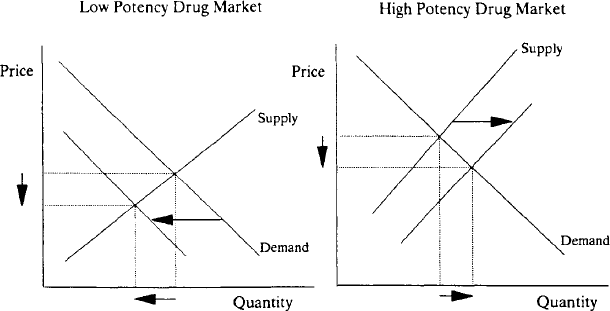
Figure 4. Effect of Improved Technology for High-Potency Drug Production.
THE ECONOMICS OF POTENCY
Lancaster’s approach to consumer behavior (1966) provides a convenient structure for analyzing the economics of potency. This approach has helped solve many problems in neoclassical economics and has allowed economists to undertake the study of many new problems. The approach is based on the simple idea that goods are valued for their attributes, characteristics, or properties and are not the direct objects of utility. Economists have begun to investigate the composition of a good with the same zeal as physical scientists investigate the components of the atom.
Goods contain a variety of attributes that can be combined in a large number of finished products. Potency is but one attribute of drugs, representing the strength or concentration of the drug in its final form. Even a pure drug product would have additional attributes, such as coloring, taste, and freshness.
Each characteristic of a good represents an independent opportunity cost for the producer. Likewise, consumers evaluate each characteristic to determine the product’s value and how much to buy. Therefore, for each attribute, supply and demand conditions exist; they may or may not be independent of other characteristics. While an enormous variety of products is possible, it would be inefficient for all possible products to exist at one time. The entrepreneur’s job is to assemble attributes into a final product that maximizes profit.
Lancaster’s approach helps answer two related questions in the realm of illegal drugs. First, what causes the tremendous increases in potency, and second, when all attributes are taken into account, what happens to overall quality?
Drugs have a number of characteristics that can be altered, and new characteristics can be added. Consumers demand the final products according to the value they place on the combination of attributes provided. The supply of products is based on the costs of producing a product with a particular combination of attributes, with each attribute having its particular cost. The products that survive in the market are those which provide the most efficient combination of attributes in relation to the costs of production.
PROHIBITION AS A TAX
Economists have drawn the analogy of taxation to represent the effects of prohibition. The enforcement of prohibition creates risk for suppliers of illegal products. This risk acts as a tax, thus increasing price and reducing output.
The theorem developed by Armen A. Alchian and William R. Allen (1964) provides a good example of how prohibition can affect the attributes of illegal drugs. In the original application of the theorem, constant transportation cost was applied to apples of various prices, resulting in a change in relative prices favoring the apples of higher price. More higher-priced apples are thus shipped out (table 3).2 A similar change in relative prices should occur with prohibition if the prohibition “tax” is similar to a transportation charge or unit tax.
Yoram Barzel (1976) examined the effect of per-unit and ad valorem taxes on product attributes, after-tax price, and overall quality. His analysis indicated that depending on the type, taxation does affect the attribute composition of the product and therefore may be useful for understanding prohibition’s influence on potency. A tax, depending on the type, results in a price and an output that differ from those predicted by the constant-quality model. According to Barzel, “Commodities as transacted in the market are complex, and the margins with respect to which optimization takes place are numerous. Because commodity tax statutes will not generally cover all these margins, any tax will induce multiple changes not only in resource allocation away from the taxed commodity and into others but also in the ‘quality’ of the commodity and how it is transacted, a substitution away from the taxed attributes and into the others” (1195). A per-unit tax imposed on commodity X containing n characteristics will induce inclusion of more of the untaxed characteristics. The commodity is defined by statute as containing a minimum amount of characteristics 1, . . ., e. The remaining characteristics, e + 1, . . . n, are unconstrained by the tax. The imposition of the tax results in relatively more of the unconstrained-untaxed characteristics being included in commodity X. Quality upgrading and a higher-than-predicted price are the results (Barzel 1976, 1181). The per-unit tax, like the transportation cost for fresh food, induces quality upgrading.
Table 3. Shipping the Good Apples to New York

Source: Alchian and Allen 1972, 71.
An ad valorem tax imposed on a commodity with n characteristics has different results from both the constant-quality model and the constant per-unit tax. The tax would define the commodity as a minimum amount of characteristics 1, . . ., e. The ad valorem tax, however, would tax all the characteristics included in the product. Therefore, the inclusion of a characteristic and its level will depend crucially on whether it is cheaper to include the characteristic or to sell it separately to avoid the tax. The unconstrained attributes (those not defined in the statute) will be reduced, eliminated, or sold separately in order to avoid taxation. The product will sell for less than predicted by the constant-quality model and will result in a lowerquality product (of fewer characteristics). The ad valorem tax therefore reduces taxation by eliminating product characteristics in a way similar to that in which transportation charges eliminate characteristics. For example, fresh oranges and fresh orange juice can be considered higher-quality products than frozen or reconstituted orange juice. Suppliers of orange products, however, can greatly reduce the transportation “tax” on orange juice by shipping frozen concentrate, which is much less bulky than an equal amount of the fresh product. The frozen concentrate is then reconstituted with the addition of water and labor at the point of consumption.
Barzel found support for his hypothesis in the response of cigarette prices to changes in cigarette taxes. Excise taxes tended to increase the tar and nicotine level of cigarettes. Johnson (1978) provides additional evidence that ad valorem taxes result in lower prices and unit taxes result in higher prices than predicted by the traditional model of taxation. Harris (1980) also recognizes that increasing the per-unit taxes on cigarettes leads to a substitution of high-potency cigarettes for low-potency cigarettes. Sumner and Ward (1981) question the applicability of the evidence on cigarette prices by suggesting alternative explanations for diverging prices.
Feenstra (1988) found that the effect of a 25 percent ad valorem tariff on imported pickup trucks was ambiguous with respect to overall quality, while the import quota on Japanese automobiles led, as expected, to quality upgrading. These decisions are based on the cost of including a characteristic versus selling the characteristic separately. The ambiguous result from the ad valorem tax, however, is not unexpected in this particular case. Barzel (1976, 1183n.) notes that the price of the parts of an automobile was two and a half times the price of the same automobile assembled. In this example, the savings involved in purchasing an assembled car dwarf the effects of the 25 percent ad valorem tax. Japanese producers have also responded to the tax incentives by adding extra features to their “truck” products in order to get them classified as vans, which are subject to only a 2 percent tariff.
THE IMPACT OF PROHIBITION ON POTENCY
The type of taxation and the definition of the taxed commodity by the tax statute result in different effects on the quality and attributes contained in a product. The prohibition statutes and their enforcement play a similar role in determining product composition, quality, output, and price. The directives and incentives of law-enforcement officials will influence market outcomes such as product composition.
Prohibition establishes a gambling environment rather than an explicit tax. Participants who are actually caught face huge losses from lost revenue, fines, confiscations, and jail terms. Those not caught reap large monetary profits. All market participants, however, incur large costs of risk bearing. The tax is evaluated as a function of the penalties and the likelihood of capture and conviction.
Prohibition statutes generally consist of three parts. First, to be illegal, products must contain a minimum amount of a certain drug. During alcohol prohibition, products that contained more than 0.5 percent alcohol were illegal. A product containing any detectable amount of heroin is illegal. Second, penalties are generally levied on the basis of weight. For example, maximum penalties for marijuana possession in Indiana are a one-year prison sentence and a $5,000 fine for amounts up to thirty grams. The limits on penalties are doubled for amounts over thirty grams. Finally, penalties are established for production, distribution, and possession.
The prohibition statutes consistently define the product in terms of minimum potency (without constraining the maximum). Also, the heavier the shipment, the more severe the penalty. Since penalties are based on the weight of a shipment, suppliers will reduce the attributes that are not taxed when separated from the product.3 Potency is unconstrained and will likely increase as suppliers raise the value of the shipment to reduce the relative burden of the tax. This aspect of prohibition statutes therefore acts as a constant per-unit tax.
In addition to the prohibition statutes, the probability of capture plays an important role in risk. The efficiency of law enforcement relative to the size of the black market for drugs establishes (in part) the probability of capture. Suppliers of illegal drugs evaluate law enforcement and penalties to determine the risk they face and the allocation of their resources to avoid capture.
A key to avoiding capture is concealment of the shipment. While this can take many forms, the size of the shipment is a basic factor. Size is related to weight and will act as a constant per-unit tax, inducing a higher-than-market potency. Concealment efforts would increase at the margin as law-enforcement resources or efficiency increased. These factors therefore act to increase quality and result in a higher price than that predicted by the constant-quality model. Potency increases, and this increase is largely responsible for the increase in the overall “quality.”
Prohibition may act like an ad valorem tax as a result of the directives of legislatures and the incentives of law-enforcement officials and judges. Lindsey (1976) showed that bureaucrats have the incentive to produce goods and services with attributes that are easily monitored and desired by Congress, while shirking the production of attributes that are not or cannot be monitored by Congress. For example, Lindsey found that whereas Veteran Administration hospitals produced measurable output (patient-days) at lower cost, proprietary hospitals provided more staff per patient, “better” physicians, shorter stays, less crowding and waiting, and more environmental amenities. Thus, in the same sense that taxation alters the attributes of products, the incentives of bureaucrats can alter the attributes of products.
With prohibition, the type of service provided by law-enforcement bureaucrats to Congress and state legislatures can have important effects on the mix of attributes in illegal drugs. One example of bureaucratic behavior is the technique of estimating the dollar value of drug confiscations. The value of drug confiscations is estimated using average “street price.” The street price is the highest per-unit price because it represents the last step in product distribution. This estimation is akin to a farmer’s ascertaining how much flour is required to make a loaf of bread and then multiplying the retail price of bread (per pound) by the total weight of his freshly cut wheat, including chaff, to determine the value of his crop.
Likewise, law-enforcement bureaucrats might view the capture of large or high-potency shipments as promoting their self-interest and satisfying the directives of the legislature. The capture of large shipments provides the bureaucracy with publicity about the effectiveness of their work and may help stimulate demand for their product (enforcing the drug laws). The concentration of law-enforcement resources on the interdiction of high-potency drugs would reduce the risk of shipping low-potency and less dangerous drugs such as marijuana and increase the risk of shipping high-potency and dangerous drugs such as heroin. Because the risk would increase so would their market value. This incentive would have an effect similar to that of either an ad valorem or ad potere (according to potency) tax.
Similar incentives may exist in the court system. High-potency shipments and more dangerous drugs may influence the probability of conviction. The court system has some discretion in determining penalties. According to current federal sentencing guidelines, higher-potency shipments may bring longer prison sentences and larger fines. The discretion of the court could therefore act as a constraining factor on potency and as an ad valorem tax.
The incentives of law enforcement and the court system, like ad valorem taxes, result in lower than expected quality and price, but do they constrain or reduce potency? Are these incentives—or ad valorem taxes—empirically relevant, as in Feenstra’s (1988) examination of the import tax on Japanese pickup trucks?
Several points must be made about the existence or strength of the ad valorem effect on potency. First, it is likely that law-enforcement officials benefit more from capturing larger shipments that increase estimated street value than from higher-potency shipments that do not. Second, there is no reason to believe that law-enforcement officials have the means to discriminate between a high-potency and a low-potency shipment of a particular drug, except with respect to where in the chain of distribution it is confiscated. Third, while judges do have some sentencing discretion according to drug potency, this discretion is limited to interpreting the intent of the defendant within the penalty structure based on weight. Last, the pure ad valorem tax is not expected to have a marked effect on potency but rather a proportional effect on all product attributes.
Law enforcement may create an ad valorem tax in a multidrug illegal market. Concentration on more dangerous drugs such as heroin would have effects similar to those of an ad valorem tax on the entire illegal drug market, since the probability of capture from a unit of heroin would be greater than from a similar unit of marijuana. This aspect of prohibition enforcement does not constrain potency as a product attribute—it merely focuses greater resources and penalties on the more dangerous drug types. The expected results are similar to the situation of higher penalties for heroin relative to penalties for marijuana. We would expect that the higher penalties for heroin would result in higher potency relative to the increases in potency of marijuana, which is subject to lower penalties.
Many factors, such as the definition of illegal drugs, penalties based on weight, and probability of capture, do not constrain potency and therefore result in higher-potency drugs. Only the limited discretion of the courts was found to place a small constraint on potency. In a multiple illegal-drug market, differences in penalties and the incentives of law-enforcement bureaucrats intensify the effects of prohibition on heroin and reduce the effect on potency for drugs such as marijuana.
The evaluation of risk therefore places a strong incentive in increasing the potency of illegal drugs. Empirically, the cost of bearing the risk of prohibition is high relative to the cost of production and distribution in a legal environment. Edward Erickson (1969) estimated the prohibition tax on heroin at 20,000 percent. The cost of one ounce of marijuana is well over one hundred times the market price of an equal weight of cigarettes. Such high rates of taxation obviously have a major impact on the attribute mix of products.
POTENCY IN PROHIBITED MARKETS
The lack of reliable data concerning prohibited markets makes rigorous econometric testing impossible. Nonetheless, history provides several instructive illustrations concerning the potency of products in such markets. Two prominent episodes, Prohibition and the modern “war on drugs,” are presented here.
These episodes provide enough information to present the correlations among prohibition, relative prices, and potency, as well as the correlations among changes in law-enforcement resources, relative prices, and potency. This information illustrates the product alteration and innovation that occurs during prohibition. In terms of regression analysis, even these limited goals are difficult to establish because adequate data are simply not available. In these cases, using proxies for variables is like substituting Ping-Pong balls for turtle’s eggs in a recipe.
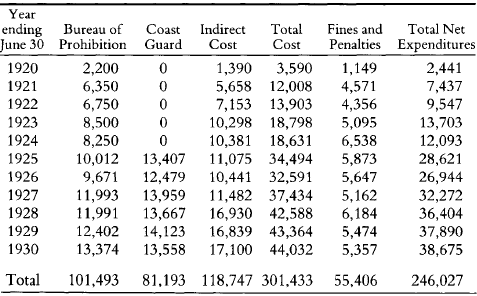
Table 4. Federal Expenditures upon the Enforcement of Prohibition (thousands of dollars)
Source: Warburton 1932, 246.
ALCOHOL PROHIBITION
An examination of the prohibition on alcohol during the 1920s provides useful and interesting evidence on “shipping the hard liquor in.” During Prohibition a variety of law-enforcement resources were mobilized through the Volstead Act in an attempt to curtail the production, sale, and consumption of alcohol. Enforcement created risks for alcohol suppliers, risks that had pervasive effects on how, when, where, and what kind of alcohol was consumed.
Table 4 provides information concerning the federal prohibition enforcement effort.4 Total expenditures grew from less than four million dollars in the second half of 1920 to almost forty-five million in 1930. The annual budget of the Bureau of Prohibition doubled during this decade, with the greatest growth occurring between 1920 and 1925. In 1925 the Coast Guard’s budget was augmented to enforce prohibition, doubling the resources devoted to interdiction and enforcement. The indirect cost, which included such expenditures as the costs of criminal prosecutions, also grew throughout the decade.
Fines, penalties, and net expenditures are not relevant for the purpose of determining law-enforcement resources. Fines and penalties do, however, provide some evidence of the effectiveness of law-enforcement resources. This effectiveness appears to have been weakened by the development of specialists in illegal production, the development of rigidities within the bureaucracy, and the corruption of public and law-enforcement officials.
Clark Warburton and Irving Fisher were opponents in the academic debate over Prohibition, but they both presented evidence concerning the dramatic change in relative prices that occurred during Prohibition. We would expect the change in relative prices to result from the risk imposed by law enforcement.
Warburton demonstrated that the price of spirits fell relative to the price of beer. Based on the average of four separate estimates of probable prices had National Prohibition not been enacted, the price ratio of spirits to beer would have been 15.42 to 1. The actual estimated ratio of retail prices in 1929–30 was 11.78 to 1, while the estimated cost ratio of homemade alcohol to homemade beer was 3.33 to 1 (Warburton 1932, 148–66). Estimates of full cost would lower these price ratios under Prohibition. Buyers faced the risk of confiscation, but this risk was lower for spirits because of its compact size.
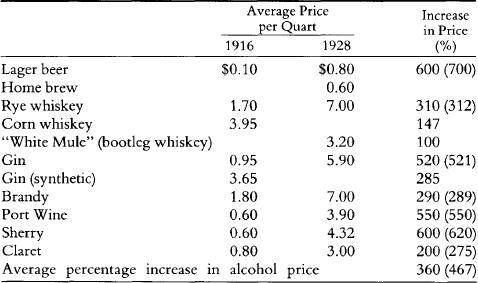
As noted earlier, Irving Fisher was a major proponent of Prohibition. He used observations of increased prices to claim that Prohibition was drying up the supply of alcohol. Fisher used the data in table 5 to support his case. Calculations in parentheses are mine. Fisher’s calculations to the right are of unknown origin. He did in fact show in his “alcohol price index” that alcohol increased in price. He also showed that lager beer increased in price by 700 percent while rye whiskey increased by only 312 percent, again supporting the case that the relative price of high-potency alcohol fell.
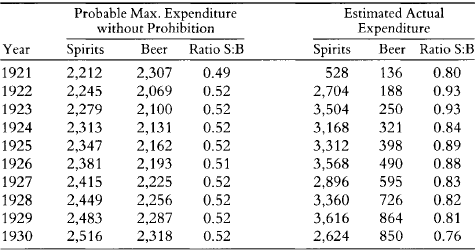
It is generally agreed that as a result of the increase in the price of alcohol, the absolute quantity of alcohol purchased declined, a fact confirmed by Warburton. Consumption of high-potency-alcohol products, however, rose relative to low-potency-alcohol products, such as beer. The effect of lowering the relative price of spirits during Prohibition on expenditures and consumption is shown in table 6. Without explicitly making the connection to the change in relative prices, Warburton noted that “Prohibition has raised the amount spent for spirits to three and a half billion dollars, and reduced that for beer to less than a billion dollars” (1932, 170). Fisher was also aware of the “well known fact that Prohibition has been more effective in suppressing the drinking of beer than of whiskey” (1927, 29). T. Y. Hu, who lacked an understanding of relative prices, doubted this finding.
Table 5. Fisher’s “Alcohol Price Index,” 1916–1928
Source: Fisher 1928, 91.
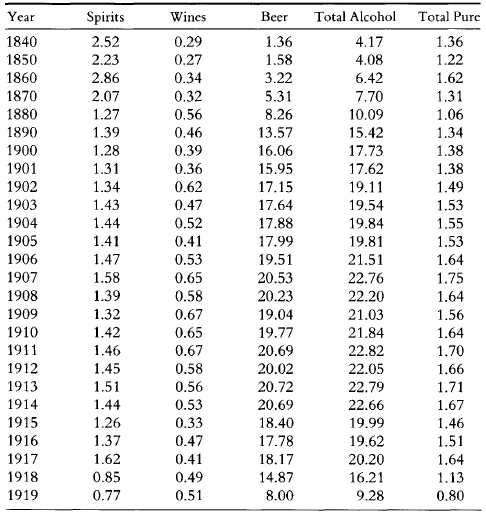
Prohibition’s impact on consumption is further illustrated by placing it in historical perspective (table 7). Although alcohol consumption is related to various factors, such as income and alcohol taxes, certain trends are suggested. First, the consumption of beer increased during Prohibition, partly as a result of the decline in its relative cost of production and distribution. Second, total consumption of pure alcohol was more or less stable throughout the period.
Table 6. The Effect of Prohibition on Alcohol Expenditures (millions of dollars)
Source: Warburton 1932, 170.
Third, expenditures declined before Prohibition because of increased taxation, wartime prohibitions, and state prohibitions.
Expenditures on alcohol as a percentage of national income declined by 2 percent from 1890 to 1910, more being spent on beer than spirits (55:45), a ratio that continued from 1911 to 1916 (Warburton 1932, 114–15). This pre-Prohibition consumption pattern was reestablished after the repeal of Prohibition, distilled spirits again accounting for only about half of all alcohol expenditures. During Prohibition (1922–30) expenditures for distilled spirits as a percentage of all alcohol expenditures grew to 70–87 percent. For the period 1939–60 distilled spirits accounted for 42–53 percent of total alcohol sales.
Did Prohibition lead to the innovation of new products that were highly potent and dangerous? Fisher’s “alcohol price index” provides some evidence of this (table 5). Several new products, such as “White Mule” bootleg whiskey contained 50–100 percent more alcohol than the average market whiskey. Fisher noted that highly potent and dangerous products were responsible for distorting statistics, such as arrests for drunkenness. “I am credibly informed that a very conservative reckoning would set the poisonous effects of bootleg beverages as compared with medicinal liquors at ten to one; that is, it requires only a tenth as much bootleg liquor as of pre-prohibition liquor to produce a given degree of drunkenness. The reason, of course, is that bootleg liquor is so concentrated and almost invariably contains other and more deadly poisons than mere ethyl alcohol” (1927, 28–29, emphasis added). Friedman and Friedman (1984) also note that producers of these new products often used dangerous substitutes, such as wood or denatured alcohol, to increase the potency of the product: “Under Prohibition, both bootleggers and do-it-yourselfers producing bathtub gin sometimes used wood alcohol or other substances that made the product a powerful poison, leading to the injury and sometimes death of those who drank it” (140–41, emphasis added). Producers tended to practice poor distilling techniques and conducted little testing of the product. Adulteration is expected in prohibited markets because of a lack of a market for reputation, which Hayek (1948, 97) argues is necessary to ensure competition and contract performance. In addition to precluding recourse to negligence and liability law, prohibition also violates the conditions described by Klein and Leffler (1981) that ensure such performance and maintenance of quality in a pure market environment. With the consumption of alcohol declining, the increase in potency and the use of adulterants may indeed help explain why statistics on drunkenness and alcoholism did not also decline significantly during Prohibition.5
Table 7. Per Capita Consumption of Alcoholic Beverages in Gallons, 1840–1919
Source: Johnson 1917, 321, and Warburton 1932, 24.
It is reasonably clear from evidence provided by both opponents and proponents of Prohibition that changes in relative prices were the result of Prohibition and these changes led to increased consumption of higher-potency drugs (spirits), as well as other higher-potency and dangerous products (moonshine).
THE PROHIBITION OF MARIJUANA: A SIMPLE TEST
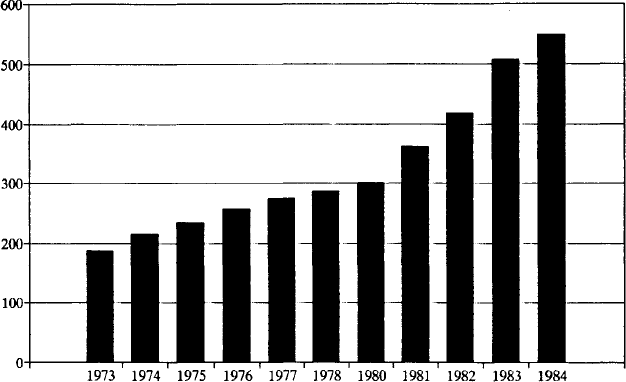
The effect of prohibition on relative prices, potency, and consumption patterns of alcohol also applies to illegal drugs such as marijuana, cocaine, and heroin. Cannabis (marijuana) is an ancient crop, grown for commercial, medicinal, and recreational uses. Essentially it has been illegal since the Marijuana Tax Act of 1937. Marijuana became a major public-policy concern in the United States during the 1960s, when its recreational use increased significantly. In 1969, resources devoted to federal drug-law enforcement were expanded to curtail the importation and sale of illegal drugs such as marijuana and heroin. The commitment to prohibition has resulted in increased budgets for many federal agencies, such as Customs, Coast Guard, Drug Enforcement Administration, the Federal Bureau of Investigation, and the Internal Revenue Service. The combined budget of these agencies (attributable to drug-law enforcement) is used to represent the federal law-enforcement effort in figure 5.6
Source: Adapted from, The Budget of the United States Government: Appendix, U.S. Bureau of The Budget, USGPO: Washington, D.C., 1973–1985 editions.
Figure 5. Federal Budget for Enforcement of Drug Laws, 1973–1984 (millions of 1972 dollars).
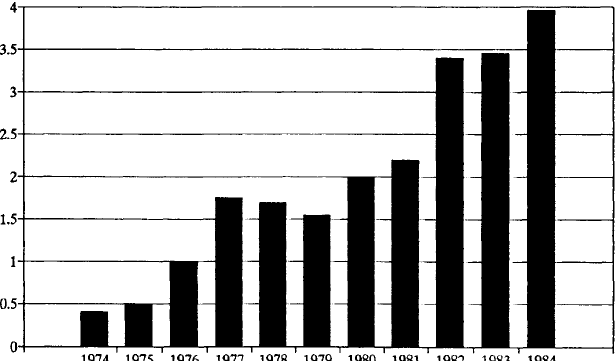
One effect of more intense law-enforcement effort is to increase the risk of supplying illegal drugs. A price-theoretic model based on the change of relative prices due to risk would predict increases in the average potency of illegal drugs such as marijuana. Information about the potency of marijuana is limited because of the illegal nature of the market, but data have been collected since 1973 by the Potency Monitoring Project sponsored by the National Institute on Drug Abuse (see ElSohly and Abel 1986). The increase in average potency of marijuana from 1974 to 1984 can be clearly seen in figure 6, but the complex nature of this market and severe data limitations preclude a detailed statistical investigation.
To explore the relationship between law enforcement and marijuana potency, I have employed a simple regression using the total drug-law-enforcement budget of selected federal agencies as an explanatory variable for the potency of marijuana. This variable was found to have considerable explanatory power for describing changes in the potency of marijuana (1973–84).7 The coefficient of the independent variable indicates that an expenditure increase of one million (1972) dollars will result in an increase in potency of .01 of 1 percent. The t statistic of 11.4 indicates that this positive relationship is significant at the .01 level. The R-square statistic indicates that the federal budget devoted to interdiction explains 93 percent of the observed increase in potency (F = 129.8). Although problems with simple regression, such as data limitations and specification errors, should of course be recognized, these results indicate that there is more here than just data anomalies.8 While this test does not provide unquestionable proof, it does establish “reasonable inferences” about the connection between the enforcement of prohibition, relative prices, and the potency of marijuana.
Source: Quarterly Reports of the Marijuana Potency Monitoring Project, National Institute of Drug Abuse, Oxford, Miss: University of Mississippi, 1974–84.
Note: THC (tetrahydrocannabinol) is the active ingredient in marijuana.
Figure 6. Average Potency of Marijuana, 1973–1984 (percentage THC).
BEYOND CANNABIS
The potency of many illegal drugs besides marijuana, such as cocaine, has also increased, and new, highly potent forms of cocaine, such as “crack,” have become available.
Another feature of the modern prohibition of drugs is the substitution of one drug for another. While each drug has some unique characteristics, most illegal drugs also have some similar attributes. Changes in relative prices can therefore induce substitution of lower-priced for higher-priced illegal drugs. For example, Rottenberg (1968, 89n.) argued that individuals were willing to substitute barbiturates for marijuana on the basis of price.
The recent trend of increased consumption of cocaine may, in part, be a result of changing relative prices. In 1973 the price of cocaine was $410 per pure gram, whereas the price of marijuana was $0.63 per gram (651:1). By 1983 the price of cocaine had fallen to $110 per pure gram, and the price of marijuana had increased to $2.50 per gram (44:1). Even the increased potency of marijuana cannot offset the tremendous decline in the relative price of cocaine (U.S. Department of justice Bureau of justice Statistics. 1985, 437).9
Another significant aspect of the modern prohibition of drugs is the formulation of new, highly potent products. Both the new products and the increased-potency versions of existing drugs were produced largely with preexisting techniques and technology. Synthetic opiates, for example, can be readily produced using existing techniques. The chemical composition of these extremely powerful drugs can be changed by suppliers to avoid punishment altogether (in the short run) (see Gallagher 1986). It is clear that the availability of extremely potent and dangerous drugs, such as synthetic opiates, is the result of prohibition—not of technological factors.10 The technology exists to produce the active ingredient in marijuana, THC (tetrahydrocannabinol), in pure form, but the penalties are too low to justify the expense.
The probable cause-and-effect relationship between prohibition and potency is one of the problems that arise with the use of prohibition as a public-policy tool. It may also help to explain the “common wisdom” that marijuana use can lead to heroin addiction. Changes in relative prices in favor of high-potency drugs would lead consumers from marijuana to cocaine and from cocaine to heroin. In the extreme, prohibition, law enforcement, and the penalty structure may be more important than the physical properties of drugs in determining what the most dangerous drugs are.
For example, marijuana prohibition is the youngest prohibition, imposes the weakest penalties, and is arguably the least stringently enforced. Methods do exist to increase the average potency of marijuana by five times. In fact, the active ingredient in marijuana, THC, can be produced chemically in nearly pure form, through methods that now appear uneconomical. Nonetheless, these methods could reduce 100 pounds of pre-prohibition marijuana to a sixteen-ounce cola bottle. One would expect that the ingestion of such a quantity to be extremely dangerous, if not fatal. One could further speculate that such a product, produced and consumed in a nonmarket environment, would be nearly as dangerous as heroin. Conversely, heroin prohibition is the oldest of the major prohibitions, involves the most stringent penalties, and is arguably the most strictly enforced given the size of the market.
Compared to their legal predecessors, prohibited products are dramatically lower in quality and higher in potency. The severity of penalties and the intensity of enforcement of the prohibition also determine, in large part, the relative health dangers associated with consuming illegal drugs.11 Such findings raise fundamental questions about the advisability of employing prohibition of a product to reduce the quantity consumed.
_________________
12Rottenberg’s article contains no references to economists or economic journals. Much of the recent research on illegal drug markets contains corrections, improvements, and extensions of Rottenberg 1968. The modern literature has generally ignored the economic analysis and experience of National Alcohol Prohibition.
13T. E. Borcherding and E. Silberberg (1978) found the Alchian and Allen theorem empirically reliable. They noted that the income effect could destroy most economic propositions. In prohibition the income effect strengthens the potency effect, and addicts attempt to hold income constant by resorting to criminal activities. Also see Gould and Segall 1968.
14An example of such an attribute would be a substance used to reduce cocaine from a pure product to a potency that consumers would desire in the absence of prohibition. This is referred to as the “cut.” This “cutting” of potency does take place but does so as the product proceeds to the ultimate consumer and the risk of capture and penalties decreases. The cutting may be done by several different individuals along the chain of distribution, and several different “cuts” may be used to adjust the potency.
15According to Warburton (1932, 247) no evidence exists which suggests that state and local governments spent larger sums during Prohibition than they spent formerly on regulatory or prohibitory laws.
16 While the number of deaths per thousand due to cirrhosis of the liver did decline during the 1920s, it was declining prior to 1920. Changes in the age distribution (as a result of the men killed during World War I) and improvements in medical diagnostics and care also contributed to the decline. It should also be remembered that some people gave up alcohol altogether, so that the number of deaths due to cirrhosis and alcoholism per drinker was likely higher during Prohibition.
17State and local enforcement of drug laws is an important consideration for which no detailed information exists. It can be noted, however, that inflation-adjusted, per capita police expenditure increased 37 percent between 1970 and 1980 (“Police Employment and Expenditure Trends,” Bureau of Justice Statistics Special Report, February 1986). Drug-law enforcement is a subcategory of “police protection,” and these expenditures increased 85 percent at the federal level, 90 percent at the state level, and 108 percent at the local level over the period 1976–85 (“Justice Expenditure and Employment, 1985,” Bureau of Justice Statistics Bulletin, March 1987). Although no statistics are available, drug-law enforcement as a percentage of total “police protection” has increased over the period of this study (telephone interview with Ernie O’Boyle, Bureau of Justice Statistics, September 1987).
18No information on potency is available before 1973. The budget for drug-law enforcement increased in 1985–86 (and after), but information is incomplete and is complicated by a large but undisclosed amount of military resources devoted to drug-law enforcement. Potency also continued to increase through 1985–86. The reported average potency did decline as a result of increases in domestic, season-long eradication programs, which greatly increased the percentage of immature and unusable marijuana that was tested for potency. Beginning in 1985–86, most categories of cannabis did increase in potency. These results were originally presented in Thornton 1983 and 1986.
19The RESET test was developed by J. Ramsey to detect specification errors. The test was run at the strongest level of significance available. At the .10 level, the F-critical value was 3.07, while the F-statistic was 3.00, indicating no specification error. In order to check further for specification error and time-trend problems, a time-trend variable was added to the original regression. Although the coefficient of this explanatory variable fell, it remained significant at the .05 level (t = 2.4).
20That the absolute price of cocaine would fall in price as enforcement increased may be counterintuitive. The change in absolute prices is a change in relative prices. In 1984 a drug task force dramatically increased its efforts in the Miami area and virtually eliminated the supply of marijuana, but the price of cocaine fell substantially, as marijuana smugglers quickly converted to cocaine smuggling.
21In 1967 Arthur D. Little Inc. warned of the potential of these drugs: “If United States law-enforcement policies become so efficient as to prevent altogether the smuggling of heroin, the black market can readily convert to narcotic concentrates that are a thousand or even ten thousand times more potent, milligram for milligram. A few pounds of these concentrates might supply the entire United States addict market for a year. The skills required are not beyond those possessed by the clandestine chemists who now extract morphine from opium and convert the morphine to heroin, or of better chemists who might be recruited” (quoted in Brecher 1972, 96).
22Data collected by the Drug Abuse warning Network established by the National Institute on Drug Abuse indicate that deaths and emergency-room episodes with the higher-potency drugs such as cocaine and heroin have been increasing, but not with other abused drugs.
- 1See Friedman 1989.
- 2Ekelund and Tollison’s conclusions are based in part on Thornton 1986, an earlier version of chapter 4 of this book.
- 3Postmillennial pietists believe that there will be a thousand-year kingdom of God on earth and that it is man’s responsibility to establish the necessary conditions as a prerequisite for Jesus’ return.
- 4In a sobering passage, Newcomb (1886, 11–13) used the drinking of alcohol (i.e., “gratifying the morbid appetite”) to distinguish correctly between the sphere of moralists and the role of political economists—to separate “the totally different . . . questions whether an end is good and how an end can best be attained.” Newcomb suggests that the “economist might say in conclusion” that he knows “of no way in which a man can be made to accept that which he desires less in preference to that which he desires more, except positive restraint.”
- 5Boswell 1934, 48; also see Fox 1967, 104–5. Most American economists of this time took a dim view of alcohol use. It is interesting to note that Veblen built his concept of “conspicuous consumption” partly on the basis of goods such as alcohol, tobacco, and narcotics.
- 6Fisher’s main contributions to the study of Prohibition include those published in [1926] 1927, and 1930. A biography of Fisher by his son, Irving Norton Fisher (1956), details Fisher’s activist approach to social problems.
- 7The attention received for this distinction is described in Fisher’s biography (I. N. Fisher 1956, 48–50). Edgeworth’s review of Fisher’s dissertation appeared in the March 1893 issue of Economic Journal.
- 8For further illustration of Irving Fisher as a technocratic-type socialist, see his presidential address to the American Economic Association in 1919.
- 9Fisher himself considered the adoption of the Prohibition Amendment a premature act. He felt that more time was needed to establish a national consensus and to provide for education and policy development. Fisher often praised the indirect benefits of World War I, such as the collection of statistics by the federal government, the passage of Prohibition, the opportunity to study inflation, and the powerful jobs made available to economists. See I. N. Fisher 1956, 154; I. Fisher 1918 and 1919; and Rothbard 1989, 115.
- 10By 1933 Fisher must have been thoroughly disheartened with the course of events. A new age of prohibition and scientific management of the economy—a permanent prosperity—had come crashing down around him. Not only had Prohibition been repealed and the economy devastated by the Great Depression, he had lost his personal fortune on his own advice in the stock market. With respect to alcohol he turned his attention to the temperance movement by publishing three editions of a book on the evils of alcohol consumption.
- 11A search of the Index of Economic Journals showed Herman Feldman’s contributions were limited to two review articles and four monographs on labor policy.
- 12In recent years economists have led the fight to legalize—actually, to relegalize—drugs. The Nobel Prize-winning economist Milton Friedman has been the outspoken leader of the relegalization forces. His open letter to “Drug Czar” William Bennett, published in the Wall Street Journal, is just his latest salvo against the prohibitionist establishment. Friedman began this battle in the 1960s, writing in Newsweek that the prohibition of drugs was ineffective and that more reasonable and prudent approaches to the problems of drug abuse were available. He (with his wife, Rose Friedman) later attacked drug prohibition in Free to Choose and The Tyranny of the Status Quo, linking the harm it causes with the experience of alcohol prohibition in the 1920s. The Friedmans are careful observers of history who oppose drug prohibition both on ethical and practical grounds.
- 13The growing importance of and interest in prohibition has led some economists to include discussions of laws against alcohol, drugs, gambling, and pornography in their textbooks. Normally restrained and politically neutral, several writers of economic text books have taken a skeptical view of all prohibitions. For example, when examining the current drug prohibition, Edwin G. Dolan and John C. Goodman (1989, 35) present “misgivings raised on grounds of efficiency, equality, and liberty.” Robert B. Ekelund and Robert D. Tollison (1988, 108) find that “(e)conomic analysis casts doubts on the effects of directing increased resources into enforcement without careful analysis of the probable consequences of such programs,” and they suggest “that government expenditures would be better directed to the demand side of the problem.”
- 14Many of the founding members were raised in puritanical households of postmillennialist pietism. During their days as university students many became atheists, substituting a secular approach to perfectionism for the religious approach of their parents. Some, such as Richard T. Ely, adopted a prosocialist orientation, while others, such as John Bates Clark, adopted a “dog-eat-dog” evolutionary perspective on capitalism. What they shared was an evangelical outlook and a strong dislike of such products as alcohol.
- 15Many of the founding members were raised in puritanical households of postmillennialist pietism. During their days as university students many became atheists, substituting a secular approach to perfectionism for the religious approach of their parents. Some, such as Richard T. Ely, adopted a prosocialist orientation, while others, such as John Bates Clark, adopted a “dog-eat-dog” evolutionary perspective on capitalism. What they shared was an evangelical outlook and a strong dislike of such products as alcohol.
- 16On this argument, Patten formed the economic rationale for prohibition and helped set the alcohol agenda of American economists. Like William Graham Sumner and John Bates Clark, he perceived that survival of the fittest would eventually eliminate the drunkard from society. The interventionist bias in his education, however, propelled Patten to conclude that prohibition combined with evolutionary competition would achieve the desired results (total abstinence) much quicker than evolution alone.
- 17Fisher’s staunch support of Prohibition helped to insulate the policy from criticism. He wrote three books on Prohibition in which his academic status and objectivity thinly cloaked his avid support. He promoted the claims that Prohibition would reduce crime, improve the moral fabric of society, and increase productivity and the standard of living. Indeed, he maintained that Prohibition was partly responsible for the economic prosperity of the Roaring Twenties.
- 18The thesis was applauded by Francis Yisdro Edgeworth, who repudiated aspects of his own theory after reading Fisher’s work. Vilfredo Pareto wrote Fisher an eight-page letter in which he spoke scornfully of the “adversaries of mathematical methods,” and praised Fisher’s distinction between utility of “that which cannot be useful, and that which is really useful.” It was this distinction that Fisher used later in the analysis of alcohol consumption.
- 19To admirers of Fisher’s more scientific contributions, he appears eminently scientific and objective. His work on Prohibition reveals a thin layer of scientific veneer that is important for evaluating all his contributions, for Fisher was clearly an advocate of government intervention in the economy. A key insight into his viewpoint is illustrated by an excerpt from his speech to the Yale Socialist Club in November 1941.
- 20During World War I, Fisher volunteered his services to the Council on National Defense, where he was assigned the task of establishing wartime policy on alcohol. Under his direction the council recommended wartime prohibition and dry zones around all army cantonments. The alcohol interests blocked the first measure, which Fisher supported because he considered the war an excellent opportunity to experiment with prohibition. Fisher also surmised that this defeat provided the necessary impetus to bring about prohibition in 1920.
- 21In his final contribution on Prohibition (1930), Fisher uncharacteristically compromised with the wets by supporting the “right” to home production and consumption. He claimed that legalizing home production would reduce the requirements on law enforcement and eliminate the personal-liberty argument from the public debate. It is unclear whether Fisher used this as a last-ditch effort to save Prohibition or if he realized its futility. He admitted that such a modification would decrease the number of opponents of Prohibition by “thousands, if not millions” and would allow law enforcement to concentrate on bootleggers without compromising the closure of saloons. He also made one statement admitting the infeasibility of prohibition: “Yet, it is absurd to expect home production to be prevented by enforcement officers” (1930, 454). Both the admission of the infeasibility and the compromise are unique statements from Fisher, and they appear only on the last page of his last book on Prohibition.
- 22In Prohibition: Its Economic and Industrial Aspects (1930) Herman Feldman, an otherwise undistinguished economist, published an important contribution to the statistical investigation of the “economic” aspects of Prohibition. His book is based on twenty articles written for the Christian Science Monitor, and the statistical information derives from a detailed survey. The book is most impressive in its caution concerning the use of survey data, statistical analysis, and the conclusions made throughout the book.

