
3. The Use of Knowledge in Society
CHAPTER 3
The Use of Knowledge
in Society*
I
What is the problem we wish to solve when we try to construct a rational economic order?
4. The Meaning of Competition
CHAPTER 4
The Meaning of
Competition*
I
5. The Non Sequitur of the “Dependence Effect”
CHAPTER 5
The Non Sequitur of the
“Dependence Effect”*
6. The Pretense of Knowledge
CHAPTER 6
The Pretense of Knowledge*
7. Choice in Currency: A Way to Stop Inflation
CHAPTER 7
Choice in Currency:
A Way to Stop Inflation*
I
Money, Keynes, and History
Annotated Bibliography
Annotated Bibliography
Prepared by David Gordon
The items included are listed, for the most part, by the date of publication of the first English edition. In my comments on Hayek’s books about monetary theory and the business cycle, I have relied on Joseph T. Salerno’s introduction to Prices and Production and Other Works, Ludwig von Mises Institute 2008.
Prices and Production. New York: Macmillan, 1932. A full statement of Austrian business cycle theory. It stresses how money influences the stages of production.
Index
Index
Compiled by Roger E. Bissell
abstraction, abstract models, 14, 22, 24–25, 27, 29, 66, 110, 112, 117, 138–40
adaptation, 67, 88, 90
advertising, 83
aggregate of money expenditure, 104–5, 111, 120
algebraic equations, algebraic technique, 109
animistic thought, 140
anti-capitalism, 45
anti-semitism, 45
Aristophanes, 130, 130n4
Atlantic Community, 129
Austen, Jane, 98
Austria, 45
Austrian School (of economics), 10
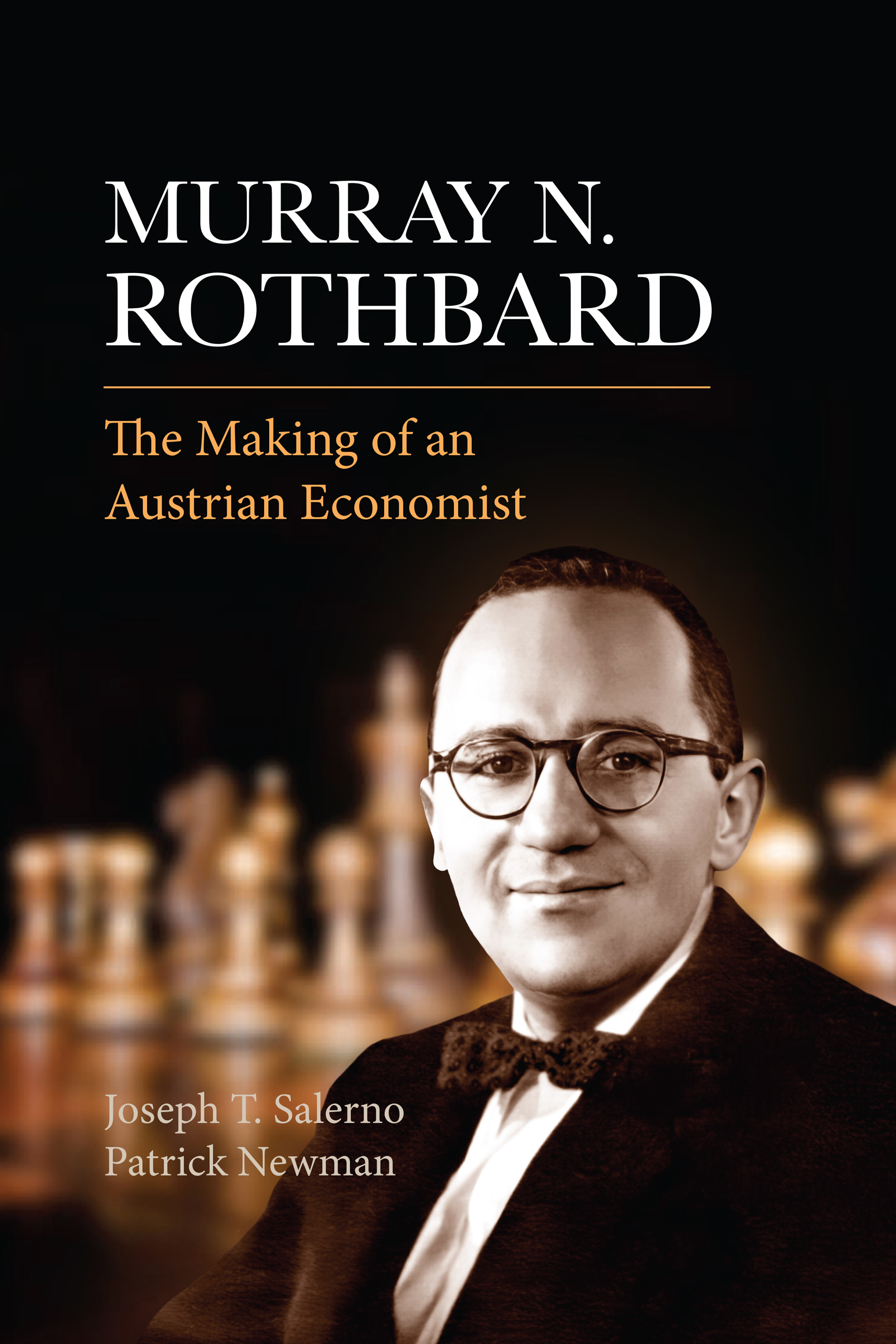
Murray N. Rothbard The Making of an Austrian Economist
Hf
Front
The Mises Institute dedicates this volume to all of its generous Supporters and wishes to thank these, in particular:
|
Anonymous Jeffrey A. Barnes Steven R. Berger Mr. and Mrs. J. Robert Bost Mr. and Mrs. Roger H. Box John D. Breen Bryan Lee Briggs Mr. Mitch Cantor and Ms. Patricia Coronado David Capshaw |
