
Which Career?
Which Career?
As the nineteenth century drew to a close, and Ludwig reached the age of legal maturity, he took some time to consider the path that lay ahead. Austria-Hungary offered four career options for well-educated young men. These were, in order of their prestige: the military, public service, the liberal arts, and commerce.
3. Alma Mater Rudolphina
Alma Mater Rudolphina
WHEN MISES STUDIED LAW and government science, the University of Vienna was one of the best institutions of higher learning in the world. It had been founded in 1365 by Emperor Rudolf IV, thus the school’s Latin name, Alma Mater Rudolphina. For centuries it preserved the three typical features of medieval universities: political and legal autonomy; only four departments (law, medicine, the arts, and theology); and management by the Catholic Church.
The Grünberg Seminar
The Grünberg Seminar
The university seminars gathered smaller groups of students around a professor who directed their reading and research in his field of expertise. Mises profited in particular from his participation in the seminar of Carl Grünberg, a young and energetic professor who had just received a full professorship at the department.10
Military Service and Death of His Father
Military Service and Death of His Father
On October 1, 1902 Mises presented himself as a one-year volunteer at the Imperial and Royal Division Artillery Regiment number 6 (later renamed the Imperial and Royal Field Cannon Regiment number 30).24 Jews had been subject to military obligations after 1788. They were usually employed in transport and the artillery, thus Mises was a typical case.25 He spent exactly one year in his regiment, which was stationed near Vienna, and returned on September 30, 1903 to his studies.
In the Philippovich Seminar
In the Philippovich Seminar
At the onset of the twentieth century, most German economists held the teaching of economic theory in disdain. They thought that political economy, insofar as it was a science at all, was a historical discipline (“historicism”). Mises recalled, certainly with his teacher Grünberg in mind:
Birth of an Economist
Birth of an Economist
Around Christmas of 1903, Mises had just received his officer’s commission and had recently returned to his studies when he first read Menger’s Principles. It was an intellectual encounter that would forever change his outlook on science and the world.
Years with a Master
Years with a Master
The decisive boost to Mises’s intellectual development came when Eugen Ritter von Böhm-Bawerk opened his seminar at the University of Vienna in the summer semester of 1905—“a great day in the history of the University and the development of economics.”54 Böhm-Bawerk was Carl Menger’s most important follower and had gained international fame as an economic theorist with his Kapital und Kapitalzins (Capital and Interest), a two-volume treatise on economics and the history of economic ideas.
P ART II T HE A USTRIAN S CHOOL
The Austrian School
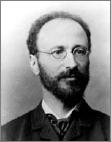
Eugen von Böhm-Bawerk
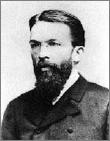
Carl Monger
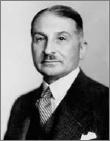
Ludwig von Mises
4. Fin de siècle Economic Science
Fin de siècle Economic Science
THE PROBLEMS AND IDEAS that moved Mises in his early years were addressed by the work of four great economic theorists: Carl Menger, Eugen von Böhm-Bawerk, Friedrich von Wieser, and Joseph Schumpeter.
Carl Menger—Pioneer of “Empirical Theory”
Carl Menger—Pioneer of “Empirical Theory”
Mises knew all four personally, but Menger had retired from teaching a year before Mises discovered Menger’s Principles. They met for the first time around 1910, when Mises was attending Böhm-Bawerk’s seminar and preparing his first treatise, The Theory of Money and Credit. It was then customary that young men wishing to pursue an academic career in economics paid Menger a visit.
