
Preface
IN THE SUMMER OF 1940, with Hitler’s troops moving through France to encircle Switzerland, Ludwig von Mises sat beside his wife Margit on a bus filled with Jews fleeing Europe. To avoid capture, the bus driver took back roads through the French countryside, stopping to ask locals if the Germans had been spotted ahead—reversing and finding alternative routes if they had been.
Acknowledgments
THIS WORK WOULD NOT have been possible without the initiative of Lew Rockwell, who encouraged me to write a Mises biography and then provided relentless support when the project grew bigger and bigger, far beyond our initial plans. It would not have been possible without the financial support of numerous dedicated men and women, and in particular of those patrons who are mentioned on the front pages of this book. Many other persons have helped and encouraged me in the course of my work. I have been especially blessed with generous aid from Mrs.
P ART I Y OUNG L UDWIG
Young Ludwig
1. Roots
Roots
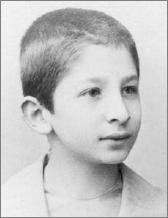
ON SEPTEMBER 29, 1881, Ludwig Heinrich Edler von Mises was the first in his family to be born a nobleman. A few months earlier, the Austrian emperor had ennobled Ludwig’s greatgrandfather, Meyer Rachmiel Mises. The family would henceforth bear the new name “von Mises.” The emperor also conferred on them the honorific “Edler” which literally translates into “the noble” and was frequently accorded to Jews.1
2. School Years
School Years
THE MISES FAMILY MOVED to Vienna some time between 1883 (when Ludwig’s brother Richard was born) and 1891. The move probably occurred before the fall of 1887, when six-year-old Ludwig began the mandatory four years of elementary schooling. The family settled in a suburban apartment in close proximity to what was then the city of Vienna and today is its first district. From his home at Friedrichstrasse 4, young Mises set out for many excursions and became acquainted with the city, its history, and its people.
Vienna
Vienna
For many centuries, Vienna had been the administrative center of the Habsburg Empire. After the revolution of 1848–1849 and Franz Joseph’s abortive attempt to reintroduce royal absolutism, the Austrian liberals had risen to power at the end of the 1850s. Their reign lasted about thirty years, enough time to reshape the city to reflect their ideals.
Viennese Jews
Viennese Jews
Ludwig’s parents could rely on a closely-knit network of relatives that greatly helped their integration in Vienna. In particular, Arthur and Adele could build on blood ties with the local members of the Mises and Landau clans, as well as with the Nirensteins and Kallirs. Ludwig and Richard would have lifelong friendships with the young Nirensteins and Kallirs. On weekends Ludwig often saw his maternal grandfather, Fischer Landau, whom he admired very much (his paternal grandfather had died before he entered the gymnasium).
Akademisches Gymnasium
Akademisches Gymnasium
In September 1892, shortly before his eleventh birthday, Mises entered the Akademische Gymnasium where he would be schooled for the next eight years. The gymnasium schools were very particular institutions, more demanding and quite dissimilar from their present-day successors.
Austria-Hungary
Austria-Hungary
Austria-Hungary as a political entity came into being after the defeat of the older Austrian Empire in 1866 by the Prussian armies at the Bohemian town of Königgrätz. The conflict with Prussia was over supremacy within the Germanies. The military defeat settled the question in favor of Prussia, but the Habsburg family did not abandon its plans to regain its traditional position of leadership.
Socialisms, Austrian Style
Socialisms, Austrian Style
The national conflicts within the empire were compounded by social conflicts resulting directly or indirectly from the liberal reforms of the 1850s and 1860s. The liberalization of trade, transport, banking, and industry had completely transformed the Austrian economy, undermining the social and political position of the old elites.
