Time Preference: The Key Behind the Increase in the Long-Term Interest Rates
After closing at 4.26 percent in January this year the yield on the 10-year US Treasury Bond settled at 4.70 percent at the end of August.
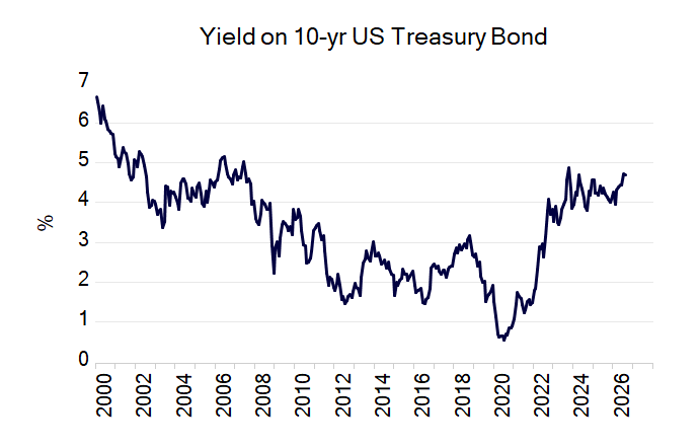

After closing at 4.26 percent in January this year the yield on the 10-year US Treasury Bond settled at 4.70 percent at the end of August.
After Lexington and Concord, Congress had a war on their hands and needed a way to finance it. The Americans were in large measure tax rebels, so taxation of their own would have to wait. After giving some thought to borrowing, Congress decided instead to call upon their old friend, the printing press.
The colonists had a long history with paper money. They had been inflating since the 1690s and had all but driven silver specie out of circulation. In 1751, Parliament banned further note issues in New England, and by 1764 extended the prohibition to the rest of the colonies.
The modern state is often described as an institution that coordinates social life. It provides legal, educational, financial, security, healthcare, and countless other services. The question is not whether these functions exist, but who has the final authority to define, regulate, and enforce them. Agustín Toptschij’s recent analysis of the state begins precisely at this point. He argues that the distinctive problem of the modern state is not merely its size but its claim to be the ultimate source of law.
In an era of chronic federal deficits, monetary inflation, and increasing centralization, states searching for a viable alternative to Washington’s fiscal disorder should examine Florida under Governor Ron DeSantis. While far from a pure free market society, Florida has demonstrated how lower taxation, spending restraint, stronger property rights, and sound money policies can produce economic growth while limiting the burden of government.
When it comes to legendary cluelessness, France’s House of Bourbon and its émigrés had nothing on the current ruling class of America. Twenty-five years after 9/11 it somehow self-righteously declares itself a victim and survivor while simultaneously perpetrating the same type of atrocities (e.g., bombing girls schools in Minab and wedding parties in Sirik) that led to that fateful and horrible day twenty-five years ago when 2,977 Americans, including over 400 first responders, were needlessly killed because of at least 52 previous years of American meddling in the Middle East.
[The Ethics of Social Democracy: Justice Meets Capitalism by Richard D. Miller (Oxford University Press, 2026; xii + 392 pp.)]

