
Bibliography
BIBLIOGRAPHY
Acton, John. Essays on Freedom and Power. New York: A Meridian Book, 1955.
Adams, Donald. Finance and Enterprise in Early America. Philadelphia: University of Pennsylvania Press, 1978.
American Political Leaders. Washington, D.C.: CQ Press, 2000.
Appleby, Joyce. Capitalism and a New Social Order. New York: New York University Press, 1984.
Atack, Jeremy, and Peter Passell. A New Economic View of American History. New York: W.W. Norton & Company, 1994.
Index of Subjects
INDEX OF SUBJECTS
(compiled by Patrick Newman)
Absolutism, 23, 27, 47
Adams–Onís Treaty, 237, 245-46
Address of 1790, 87, 121, 126, 129
Address of the Minority, 67
Address to the People of the United
States, 287
Albany Regency, 199, 213, 232, 253
Alien and Sedition Acts, 125-30, 133
Alliance of Throne and Altar, 23, 25, 27, 45-46, 83, 215
American Anti-Slavery Society, 308
American Colonization Society, 241
Index of Names
INDEX OF NAMES
(compiled by Patrick Newman)
“A Non-Impost Man,” 53
Acton, John, 14
Adams, John, 33, 37, 44, 45, 47, 57, 72, 113, 115, 209
Adams, John Quincy, 18, 171, 219, 225, 243, 244, 263, 266, 269, 309
Adams, Robert, 305
Adams, Sam, 32-34, 37, 46, 59, 69
“Agrippa,” 67
Ames, Fisher, 68, 73-74, 75, 88, 108, 121-22
Anderson, Richard, 248
Anne, Queen, 27
Astor, John, 152, 177, 191, 194, 196, 205, 206, 216
Back
THE MISES INSTITUTE, founded in 1982, is a teaching and research center for the study of Austrian economics, libertarian and classical liberal political theory, and peaceful international relations. In support of the school of thought represented by Ludwig von Mises, Murray N. Rothbard, Henry Hazlitt, and F.A. Hayek, we publish books and journals, sponsor student and professional conferences, and provide online education. Mises.org is a vast resource of free material for anyone in the world interested in these ideas.
Early Speculative Bubbles
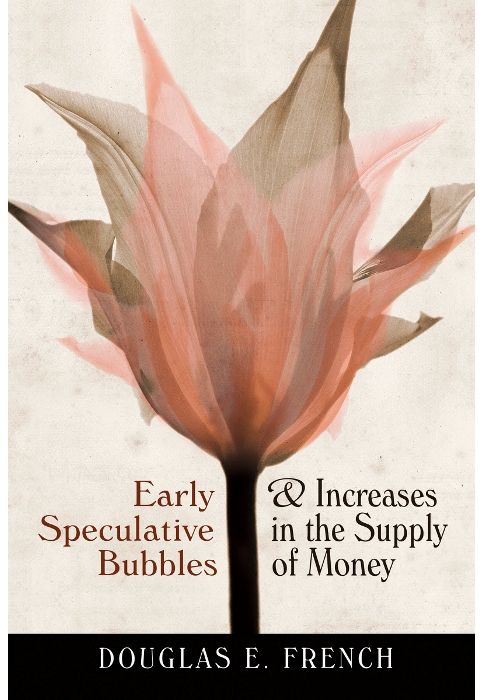
Title Page
Increases in the Supply of Money
DOUGLAS E. FRENCH
Second Edition
MISES INSTITUTE

Copyright
First edition ©1992 by Douglas E. French
Second edition © 2009 by the Ludwig von Mises Institute and published under the Creative Commons Attribution License 3.0. http://creativecommons.org/licenses/by/3.0/
Ludwig von Mises Institute
518 West Magnolia Avenue
Auburn, Alabama 36832
www.mises.org
ISBN: 978-1-933550-44-2
Dedication
To Deanna,
for loving me through
the boom and the bust.
Introduction
As all the world economies writhe in financial pain from the cleansing of the largest bubble in financial history, the question is being asked—how could this happen? Of course the usual answers are trotted out—human greed, animal spirits, criminal fraud, or capitalism itself. Modern financial history has been a series of booms and busts that seem to blend together making one almost indistinguishable from the next.
Chapter 1--The Greater Fool Theory
Speculative bubbles have occurred throughout history. These episodes are characterized by a continuous sharp rise in the price of a particular asset or group of related assets, leading to further price increases driven by new speculators seeking profits through even higher prices. These higher prices are driven by the potential profits to be made through trading, rather than the earning capacity or economic value of the asset. These speculative manias then come to abrupt and dramatic endings, as expectations change and buyers quickly become sellers, in mass.
