The Front Lines of the Language Wars
Language is the perfect instrument of empire.
—Antonio de Nebrija, bishop of Ávila, 1492

Language is the perfect instrument of empire.
—Antonio de Nebrija, bishop of Ávila, 1492
Back in 1976, Joseph Salerno lamented that “there exists today in Anglo-American economics a veritable ‘conspiracy of silence’ regarding the works and achievements of the French Liberal School of Economics.” Not a whole lot has changed since then, and the same can be said about the contributions of the French liberals—what are now called classical liberals—in general.
In my second article on the college problem, I discussed the public policy factors that contribute to the rising cost of higher education. But politics makes its way into education through more than public policy, as professors bring their political views into their classrooms and research. Nothing has contributed more to my personal disillusionment with higher education than seeing the extent to which the ideological problem has affected the university system.
In my previous article on the college problem, I discussed the cultural factors that have contributed to the falling value of a university degree, which I hoped would show that we cannot reduce the decline of higher education to public policy failures. However, bad policy has been a major contributor to the problems plaguing the university system, both at the federal and state levels.
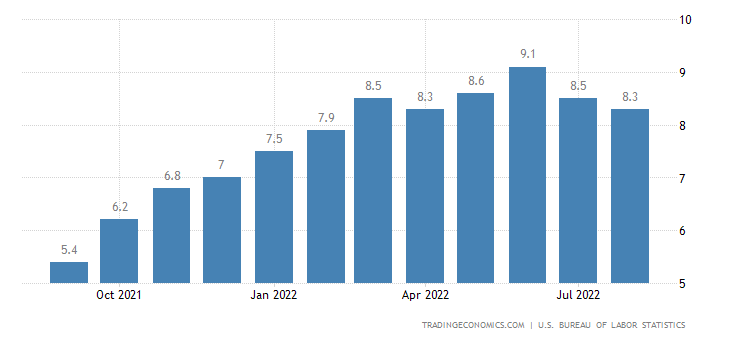
On September 21st, the Fed announced another 0.75 percent rate hike. The target is 3 percent to 3.25 percent. The annual rate of the CPI went down in July and in August, standing at 8.3 percent.
Popular thinking says that banks are the key factor in the expansion of credit. However, is this really the case?
For example, take a farmer Joe that produces two kilograms of potatoes. For his own consumption, he requires one kilogram, and lends the rest for one year to a farmer Bob. The unconsumed one kilogram of potatoes that he agrees to lend is his savings.