
The Wild Wheel
Envoy
IT IS customary in the beginning to say why one is going to write a book. That was done. If at the end it is not clear there is very little that can be done about it. The theme was Laissez Faire, the subject was Henry Ford, and the idea was to illustrate the theme by means of the subject, so that one might say,
Man hath the design of his time.
There was the promise in the Foreword that there should be no moral judgment. Simply, for better or worse, it was like that. Let the reader do with it what he will.
It was a world many people grew not to want, or wanted so little that they were unwilling to defend it. Only the strong could love it. Anyhow, it is gone. The number of those who knew it is rapidly dwindling. In a little while nobody living will be able to remember it at all. For that reason the book is not round if it omits to say wherein it differed from the world we now have.
The first condition in it was freedom of the human will—freedom in all dimensions. What a man would, that he could—if he could, provided only he did not cross the right of another to do likewise.
The only law he had to think about was one forbidding him to restrain trade by conspiracy, and that was something Ford never had the slightest intention of doing. He was a complete individualist.
There was no Federal Trade Commission to mind his way of doing business.
Taxes were nominal. There was no progressive taxation to penalize growth or bigness. If a man made a dollar it was all his own.
There was no law to compel him to bargain collectively with union labor. There was no law requiring him to recognize unions.
Wages were determined, not by the employer, as the saying was, but by the law of supply and demand acting in a free labor market. The employer paid such wages as were necessary to command a supply of the kind of labor he wanted. If he wanted better he paid more; if he paid less he got the leavings and the ineffectives. There were high-wage shops and low-wage shops; also high-wage industries and low-wage industries. In good times wages would rise, as the demand for labor increased; in bad times they would fall, but seldom if ever back to where they were before, because, owing to the mechanization of industry, the productivity of labor was always rising, and for that reason this was a high-wage country, with a rising standard of living, and attracted labor from all over the world.
Now wages are determined neither by the employer, as was once said, nor by the law of supply and demand acting in a free labor market, but by the industry-wide bargaining power of an organized and legal labor monopoly.
There was then no intervention by the Federal government in what now we call labor relations, touching the hours of labor, the terms of bargaining between employer and employee, or fixing a minimum wage.
Ford’s most celebrated single act was to double the wage rate, not in a gradual manner but by one dramatic stroke. Such a thing had never happened before; it could not happen again. If the law had been then what it now is, and if labor then had been organized as it is today, he would have been haled before the National Labor Relations Board and charged with an unfair labor practice, on the ground that since he did it as an act of his own will and without consulting the labor leaders, his motive could only have been to discredit unionism. Cases of that curious kind are on the record. And certainly, if afterward he had increased the tempo of production in the shop, organized labor would have shut him up.
In that world that is gone the employer controlled the speed of the assembly line. Now labor controls it.
In that world the employer could hire whom he liked and fire whom he disliked, and it was nobody’s business. Now a wage earner cannot be fired but for good reason and by consent of the union. The employer must prove his case, and if he fails he will be compelled to rehire the man he fired and pay him wages for the time he was idle. The new way is much more humane, especially as a protection for the weak; the old way is almost forgotten and anyone who speaks of its grim merits will be deemed antisocial.
But most important of all, a man then could do what he would with his profits. Now he has to account for them to the Federal tax collector and share them with the government. The more profit he makes the more of each dollar he must surrender to the government.
The secret of Ford’s prodigious achievement lay in what he did with his profits. He shared them with labor by paying high wages, and with his customers by continuously reducing the price of the automobile, and then, but for a relatively small part declared as dividends on the stock, all the rest year after year was returned to the business to buy more and better machines to make more and more automobiles at less and less cost.
But now you have to account to the government for every new machine you buy, and if the tax collector thinks the inefficient old one you threw away was not yet worn out you will have to go on paying taxes on that one besides being taxed on the new one too.
It is easier to imagine other Fords than it is to believe that another would be able to do in this regulated world what Henry Ford did in his free world. He would not be permitted to plow back his profits in that reckless manner as capital; he would not be permitted to parlay his assets out of earnings. He would have to borrow his capital to begin with, instead of creating it as he went along, and his profits on that borrowed capital would be limited—all to the making of a very different story.
Laissez Faire did not survive Henry Ford. It was betrayed by its friends, not for thirty pieces of silver but for debased paper money that would be legal tender for debt. Then it was stoned to death by the multitude and buried with hymns of praise for the easier life.
The obsequies were performed by the government, which assumed at the graveside ultimate responsibility for the continued success, well-being and growth of the national economy; by the government’s tax collector, who was to become insatiable, and by organized labor, whose economic power against that of the employer was increased by law, deliberately, on grounds of social policy.
You may like it better this way. Many people do. In any case, it was not to be argued. Only this—that if Laissez Faire had not begotten the richest world that ever existed there would have been much less for the welfare state to distribute.
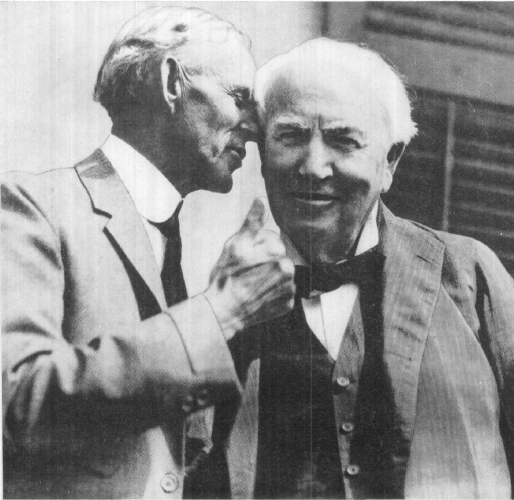
The Mechanic and the Wizard:
Unscientific architects of the Ford-Edison World, who never knew what would work until they tried it. They lived the same arc . . . heroes of the same mythology. One played with wheels and the other with an invisible force. Emotionally they were children. Power was their toy. It had a built-in volcano. As they set it free in a muscle-weary world, the roar and heat and light of it filled them with innocent glee.
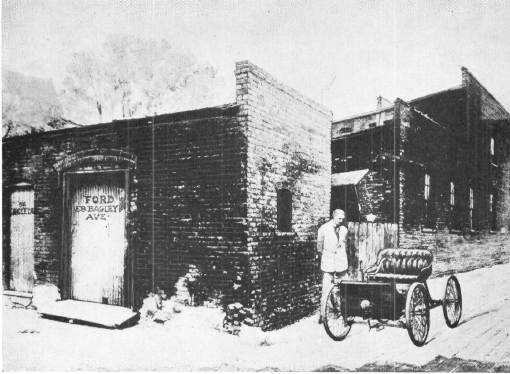
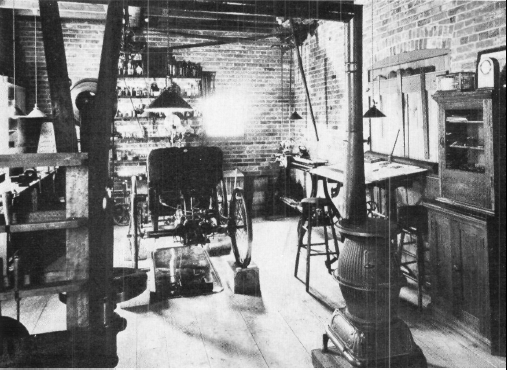
When and how the Ford egg was hatched.
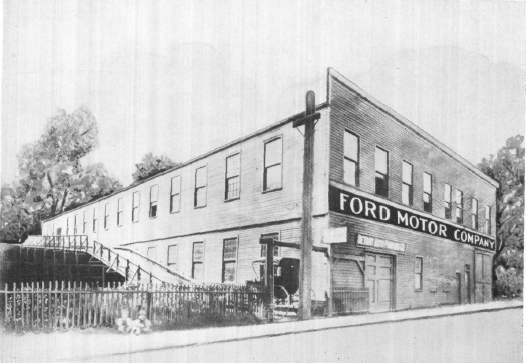
The first Ford factory.
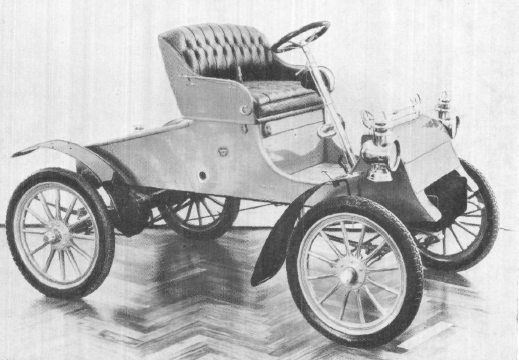
The first successful Ford car; not yet the Model T.
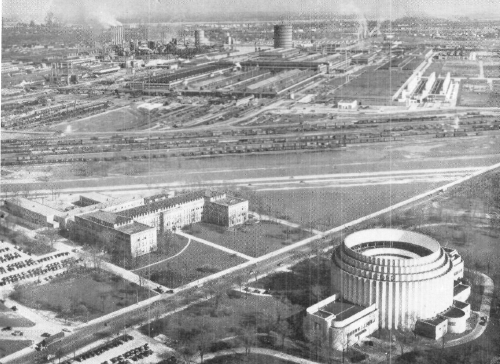
Twenty-five years later.
The River Rouge Monster.
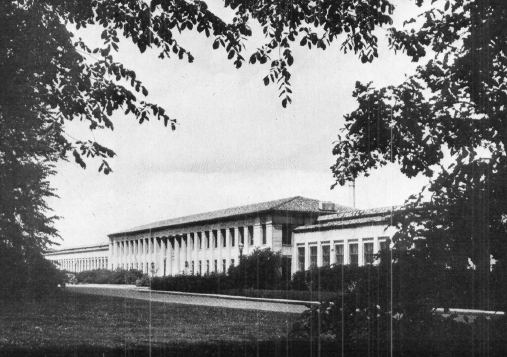
The Experimental Laboratory, all bought and paid for out of profits plowed back.
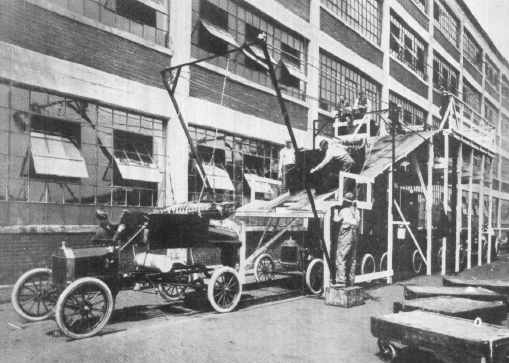
Two ways of putting the body on.
The Model T at Highland Park. They would try anything once.
The V-8 at River Rouge. The finished technique.
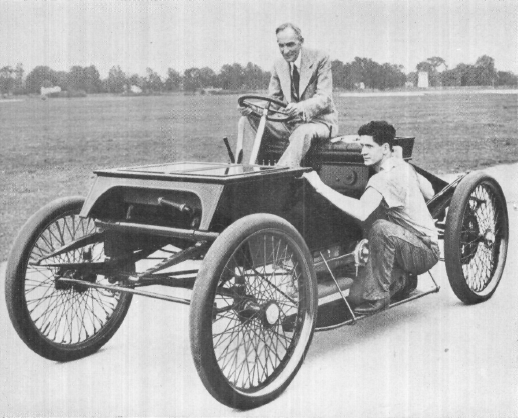
Fond Recollections: Twenty years later Ford dragged out of his trinket pile the original racing car in which he made his famous speed record on the ice, reconditioned it and took it out on the Ford Motor Company’s proving ground. Just to see if it would still run? No. But to get the feeling of it again. The boy on the running board reproduces the mechanic who rode that way in the race to cut off the gas in case the wide-open throttle should freeze fast. (See pages 50, 51.)
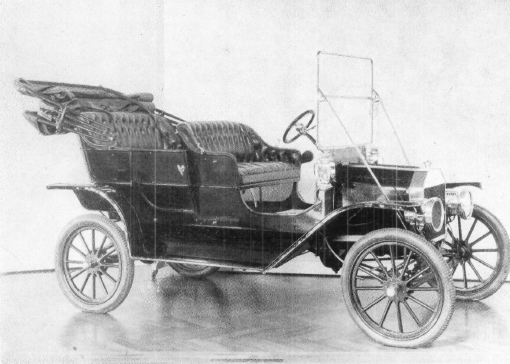
The original Model T.
It sold for twenty cents a pound. The number sold was fifteen million. Its life was nineteen years.
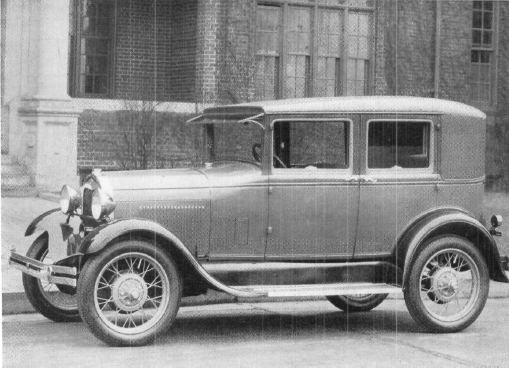
Its successor, the Model A.

