
Upcoming Event

Making of an Austrian Economist Members-Only Online Seminar
November 12, 2026
•
Auburn, AL

1. Laissez-Faire vs. “Flattening the Curve”: Lessons from Government Attempts to Deal with Economic and Health Disasters
CHAPTER 1
Laissez-Faire vs. “Flattening the Curve”: Lessons from Government Attempts to Deal with Economic and Health Disasters
Roger E. Bissell
There are no libertarians in a pandemic.
—Derek Thompson
Even if the above tweet by Atlantic writer Derek Thompson1 is not literally correct, liberty is not a free-floating ideal that can simply be waved about like the Gadsden Flag to rally freedom-fighters to the cause—and tossed to the wind when it is perceived that one’s cause is hopeless. Instead, it is a human value and political principle with deep conceptual roots and wide consequential branches; making the full case for it is never easy and often fraught with difficulty. This is rarely more so than now, at a time when the world is locked in a life and death struggle with a deadly virus—the so-called coronavirus, SARS-CoV-2, or COVID-19 for short—and with the accompanying social and economic disruption and damage. Concerns for the preservation, let alone the relevance, of individual liberty have been largely cast aside.
On the other hand, it is not impossible, and there will never be a better time than right now, to explore the nature and context of individual liberty and the proper role of government in defending it—and nothing like living through a severe, deliberately induced economic recession and a severe (perhaps also deliberately induced) pandemic to help motivate those explorations.
Conspiracy theories abound, and I will not delve into any of them here, not even the very existential question of whether this is a novel disease epidemic at all, rather than just another flu strain with deaths being borrowed, so to speak, from other disease categories, in order to perpetrate a hoax on the people of the world for political reasons. My own research has convinced me that such claims are false, that there truly are “excess deaths” this year, and that the disease and its reported death toll are real; but making that case is beyond the scope of this essay. I also will not examine the extent of the culpability of the People’s Republic of China for the origin and spread of COVID-19 from their country, and what therefore might be an appropriate response by the other countries of the world.
Those issues aside, then, how bad is the COVID-19 crisis? Does it rise to the level of drastic intervention by government in order to defend individual rights? Or, to put it another way, what limits do liberty and individual rights place on the use of government force to deal with the pandemic? These are the questions that we will explore for the rest of this essay.
As in other situations such as economic recessions or severe weather disasters that are met with calls for government action and the inevitable curtailments of individual liberty, the COVID-19 crisis has prompted calls for government to (as the saying goes) do something, in some cases ostensibly to mitigate if not completely prevent such damage and to decrease the spread and severity of the pandemic, but also in other cases opportunistically to gain more power and control and to shift the political and social landscape in a more favorable direction. In regard to the latter, the usual ideological warfare accompanying such situations has been considerably intensified in the present instance due to the pandemic’s unfortunate occurrence during not just a quadrennial Presidential campaign, but one of the most contentious ones in recent memory, and one whose results are still being determined as of this writing.
In addition, we are working through a sharp, largely self-induced recession in which unemployment quickly spiked to nearly 15 percent during April 2020 and has more gradually receded to just under 7 percent at the current time (November 2020).2 Although voluntary measures by the entertainment, hospitality, and other service sectors had already had a substantial effect on economic activity by late March,3 that effect was intensified by the federal government’s appeal to states and localities to lockdown for “15 days to slow the spread” in order to avoid overwhelming healthcare facilities.4 This turned into “30 days to slow the spread”5 and then into an indefinitely longer shutdown in many areas that has only gradually and erratically been lifted.6 Harsh criticism has been leveled at states like Florida for allegedly reopening their economies and schools too soon (or like South Dakota for not locking down at all).7 Meanwhile, other states still suffer draconian lockdowns—such as California, where the Disney Company has laid off 28,000 employees and Governor Newsom has urged restaurant diners to raise their face masks to cover their mouths between bites of food; and Michigan, where the state Supreme Court has given Governor Whitmer only a partial rollback of her unilateral shutting down of the state’s businesses, schools, and social gatherings.8
As a result, countless businesses have permanently closed, and many so-called non-essential workers are struggling to make ends meet. Massive though sporadic government assistance programs for the unemployed and for small businesses have provided only partial compensation for lost wealth and income, and the collateral damage of deaths due to untreated medical conditions, alcohol and drug abuse, violent crime and domestic violence, and suicide have yet to be tabulated with the same care and precision as the 250,000-plus victims of the pandemic.9
At the same time, in response to outrage over alleged police brutality, several straight months of rioting, arson, and looting have occurred in over 140 American cities where, despite the cost of the damage already running to an estimated $1–2 billion,10 mayors and state governors have for the most part allowed such activities to continue as (so-called) mostly peaceful protests, ordering their police to stand down and/or often releasing rioters shortly after being apprehended. While these demonstrators and/or rioters have been allowed mostly free rein, law-abiding people wishing to attend church or social gatherings have been forbidden by decree to do so as part of state or locally imposed COVID-19 policies.
As the foregoing selectively sketched summary attempts to convey, our current situation is not limited to one easily defined and analyzable issue of liberty or individual rights, but instead is a complex circumstance that includes a major health crisis, a major economic crisis, and severe social unrest and violence. Each of them presents its own cluster of specific challenges, and all of them interact in ways that mutually intensify them and exacerbate attempts to solve them.
In an effort to divide and perhaps conquer,11 this essay will focus primarily on the COVID-19 pandemic aspect of our present difficulties, highlighting its challenges to individual liberty and exploring ways to communicate the advantages of the laissez-faire approach to solving political, economic, and social problems. In particular, I will argue that, despite certain issues concerning temporary inadequate knowledge of the magnitude and severity of the problem, the pre-1929 laissez-faire approach to economic recessions should have been more widely employed in the current health crisis from the very outset. It is superior in terms of moral and practical outcomes and is, more fundamentally, the only approach consistent with individual liberty.
THE PERSPECTIVE AND FRAMEWORK OF MY ARGUMENT
So much good material has been written in defense of a laissez-faire approach to the pandemic, it is tempting to create a pastiche of material from various sources such as the American Institute for Economic Research, the Mises Institute, the Foundation for Economic Education, and the Heritage Foundation and be done with it. However, I think it would actually be more helpful to come at the subject from a much different angle—to view it from 50,000 feet, as it were, defining and carrying out a multi-level approach that incorporates the analytical insights of Chris Matthew Sciabarra, Douglas B. Rasmussen, and Douglas J. Den Uyl.12
My methodological orientation is to view such complex issues through the lens of Sciabarra’s version of dialectics which he calls “dialectical libertarianism”13 and which he says is “an indispensable tool for any defense of human liberty.”14 Sciabarra writes of dialectical libertarianism as ideally being “the seamless conjunction of a realist-individualist-libertarian content with a radical, dialectical method.”15 I wholeheartedly embrace this synthesis of method and content, and I hope to do it some justice here.
Sciabarra has offered a number of illuminating discussions of the nature of dialectics more generally, which he refers to in simplest, non-technical terms as “the art of context-keeping,” and which he roots firmly in the writings of Aristotle, who “presented numerous techniques by which one might gain a more complete picture of an issue by…[shifting] one’s perspective.”16 He explains: “Understanding the wider context of a single problem by comprehending it from different vantage points and on different levels of generality would make transparent the relationships among diverse problems as both preconditions and effects of the system they jointly constituted.”17
One such pair of vantage points that is especially relevant to the COVID-19 crisis is the immediate or short-term vs. long-range consequences of an action or policy. As the great French economist Frédéric Bastiat wrote:
The entire difference between a bad and a good Economist is [that a] bad one relies on the visible effect while the good one takes account both of the effect one can see and of those one must foresee…[A] bad Economist will pursue a small current benefit that is followed by a large disadvantage in the future, while a true Economist will pursue a large benefit in the future at the risk of suffering a small disadvantage immediately. This distinction is also true, moreover, for…the moral code.18
Equally important is Sciabarra’s insight about how to resolve a conflict between two schools of thought, each of which “in its partiality and one-sidedness, perpetuates a distorted view.”19 The task of the dialectical thinker is “to uncover the common roots of apparent opposites” and to “present an integrated alternative that examines the premises” that underlie the opposition, so that it can be transcended with a more fundamental and complete view.20 Sciabarra notes that “In some cases, the transcendence of opposing points of view provides a justification for rejecting both alternatives as false. In other cases, the dialectical thinker attempts to clarify the genuinely integral relationship between spheres that are ordinarily kept separate and distinct.”21 Both kinds of cases will be evident later in this essay.
A couple of dialectical tools Sciabarra discusses in his works will be particularly useful in this study. One, shown below, is my own (work-in-progress) modification of Sciabarra’s Tri-Level Model of Social Relations.22 My version combines Sciabarra’s Tri-Level diagram with his diagram of spheres and tiers,23 enlarging upon the latter, with the tiers being displayed below horizontally as a set of three “phases” on each level.24
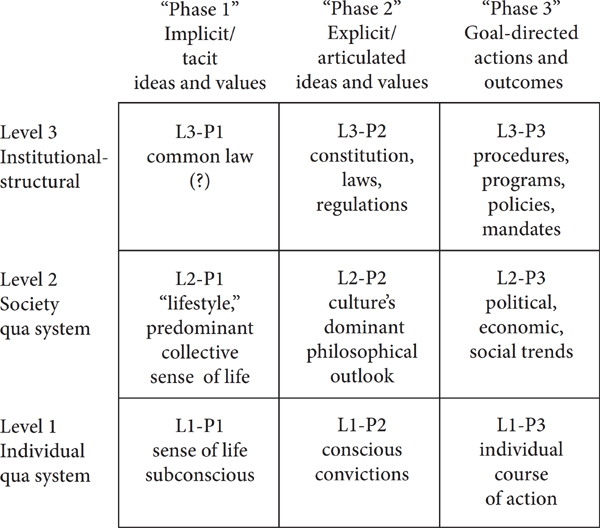
Adapted from Sciabarra 2000 & Sciabarra [1995] 2013.
Copyright 2020 by Roger E. Bissell.
The basic purpose of my adaptation is to capture three stages or phases in the unfolding of social interactions on each of the three levels of social structure.25 Ayn Rand stated the pattern shown in the phases contained in the bottom row of the diagram in regard to individual sense of life and then extended it to the sense of life or “life style” of a nation;26 I have further attempted to extend it to the institutional level. Rand wrote:
In order to form a hypothesis about the future of an individual, one must consider three elements: his present course of action, his conscious convictions, and his sense of life. The same elements must be considered in forming a hypothesis about the future of a nation.27
Not represented in this diagram, there are two-way relationships of influence (36 in all) between every pair of the nine aspects (level-phase combinations) of social relations; and the reader is encouraged to visualize arrows connecting each of the nine boxes to each of the others. For the most part, my analysis will focus on things taking place in the four upper-right-hand boxes where L2, L3, P2, and P3 intersect.28
Another dialectical tool I will use is the analysis of false alternatives. In the second book of his Dialectics and Liberty Trilogy, Sciabarra writes of how Rand “rejected nearly every imaginable dichotomy,”29 and he more recently has noted that she viewed such false alternatives as often being “variants of the mind-body dichotomy,” among which was “morality versus prudence”—or, in Randian terms, the moral vs. the practical. “Such false dichotomies,” Sciabarra says, “obscure the essentially integrated nature of human being.”30 Or, as Rand more pointedly put the matter, in life-and-death terms:
If the practical, whatever you must practice to exist, whatever works, succeeds, achieves your purpose, whatever brings you food and joy, whatever profits you, is evil—and if the good, the moral, is the impractical, whatever fails, destroys, frustrates, whatever injures you and brings you loss or pain—then your choice is to be moral or to live.31
As we will also see, the moral vs. the practical dichotomy in particular has operated in very significant ways during this pandemic to obscure the essentially integrated nature of human society, by offering the false choice of human decency or human prosperity. Underlying this false alternative is, in Sciabarra’s words, “the genuinely integral relationship between spheres that are ordinarily kept separate and distinct”—in the present case, what Henry Hazlitt calls “the ethical and the economic point of view, or…Ethics and Economics,” which, as he states, “are, in fact, intimately related.”32 You might never know it, to hear some of the partisans of laissez-faire and lockdowns, who seem to be at fundamental loggerheads over whether or not to lockdown the economy and society, and for how extensively or how long. However, Hazlitt notes, as soon as
we begin to discuss the desirability of one economic policy as compared with another…we have entered the realm of Ethics…Ethical conclusions…cannot be arrived at independently of, or in isolation from, analysis of the economic consequences of institutions, principles, or rules of action.
There is hardly an ethical problem, in fact, without its economic aspect. Our daily ethical decisions are in the main economic decisions, and nearly all our daily economic decisions have, in turn, an ethical aspect.
Moreover, it is precisely around questions of economic organization that most ethical controversy turns today… [I]t is futile today to defend [capitalism] merely on technical grounds (as being more productive, for example) unless we can show also that the socialist attacks on ethical grounds [of its being materialistic, selfish, unjust, immoral, callous, cruel, etc.] are false and baseless.33
Yet another Aristotelian dialectical tool with specific application to this issue is revealed by the nature of definitions, which we form, Aristotle says, in order “to make known the term stated, and we make things known by taking…such [terms] as are prior and more intelligible.”34 To Aristotle, this was a “commonplace rule,”35 and while often unnamed in the tradition, it is variously stated as requiring that definitions be “essential,” “basic,” or “fundamental.”36 Rand has dubbed this “the rule of fundamentality,”37 and it is among a number of her epistemological insights that, in Sciabarra’s words, “merit consideration in their own right as texts in dialectical instruction.”38 That Aristotle felt the same way about the dialectical importance of fundamentality in definitions is clear in his recommendation to “get a good stock of definitions; and have those of familiar and primary ideas at your fingers’ ends: for it is through these that reasonings are effected.”39
Since, in any given context of knowledge, there can only be one definition of the same thing (“for of each real object the essence is single”40), that unique definition is the one stated in fundamental terms—that is, according to priority and intelligibility. Or, as Rand has formulated it: the essential or fundamental characteristic is, metaphysically, “that distinctive characteristic which makes the greatest number of others possible” and, epistemologically, “the one that explains the greatest number of others.”41 The first portion of these formulations is the key to how I propose to use the rule of fundamentality: the idea of primaries trumping things that follow from them or, as H. W. B. Joseph elaborated on the idea that definitions “must give the essence of that which is defined…the attributes included in the definition should always be such as are the ground of others rather than the consequences.”42
With these tools at the ready, what intellectual handiwork can we perform upon the currently pressing matter of individual liberty in the face of a serious health crisis? The general approach in dialectically resolving disputed issues is to first lay out the two (or more) positions on the matter, comparing and contrasting them—then to identify whatever facts one or both positions may not be satisfactorily accounting for and which renders them one-sided and inadequate in dealing with the issue—then identifying the underlying false premise (if any) they may hold in common and the correct premise that they are lacking—and then resolving the dispute in terms of the new perspective uncovered in the preceding process. That is the approach I will follow in the remainder of this essay.
THE CURE VERSUS THE DISEASE: DUKING IT OUT IN THE REALM OF THE MORAL VS. THE PRACTICAL
Liberty-oriented thinkers have long studied the attempts of governments to mitigate economic crises and collapses and have a rich data base from which to compare instances in which a hands-off approach was taken with those involving significant government intervention. Situations involving deadly communicable diseases during the past couple of centuries or so have increasingly come under similar scrutiny, and the current pandemic offers a unique opportunity to examine the varied efforts of governments of numerous cities, states, and countries to cope with the difficulties in not one but both areas. As I will show, there is a strong parallel between how economic recessions were handled by the federal government before and after 1929 and how it handled pandemics prior to and during 2020.
Recessions and depressions prior to 1929, even severe ones, were allowed to heal themselves without the government intervening, and while they were often difficult to endure, they were quickly over and done with. As Murray Rothbard notes:
Generally, depressions last a year or two; prices and credit contract sharply, unsound positions are liquidated, unemployment swells temporarily, and then rapid recovery ensues. The 1920–21 experience repeated a familiar pattern, not only of such hardly noticeable recessions as 1899–1900 and 1920–1921, but also of such severe but brief crises as 1907–1908 and 1819–1821. Yet the Great Depression that ignited in 1929 lasted, in effect, for eleven years.43
Similarly, Mark Honigsbaum points out in regard to the 1957 influenza epidemic, once outbreaks occurred in the United Kingdom, “while some members of the College of General Practitioners called for the UK Government to issue a warning about the dangers presented by the virus and coordinate a national response, the ministry of health demurred. Instead, the virus was permitted to run its course.” This so-called Asian flu ended up killing over a million worldwide, and approximately 20,000 in the UK and 80,000 in the United States.44 Honigsbaum also notes that the 1968 influenza epidemic, the so-called Hong Kong flu, killed between one and four million globally, yet “there were few school closures and businesses, for the most, continued to operate as normal.”45 As for the United States, according to the National Institutes for Health, there was no national pandemic policy until 1978.46
Thus, just as “Laissez-faire was, roughly, the traditional policy in American depressions before 1929,”47 so it was the traditional American pandemic policy until 1978—though, for all intents and purposes, until just this year. Similarly, just as economic laissez-faire “was the policy dictated both by sound theory and by historical precedent,” but in 1929 “was rudely brushed aside,”48 so was the precedent of pandemic laissez-faire emphatically discarded in 2020. As Jeffrey A. Tucker put it regarding the coronavirus epidemic response: “Nothing like this has been tried in the whole history of humanity, certainly not on this scale.”49
What kinds of precedent-breaking things were done in each case? In 1929 and following years, Rothbard points out, the federal government, under the leadership of both President Herbert Hoover and President Franklin Roosevelt, carried out “an anti-depression program marked by extensive governmental economic planning and intervention—including bolstering of wage rates and prices, expansion of credit, propping up of weak firms, and increased government spending (e.g., subsidies to unemployment and public works).”50 In 2020, as Tucker enumerates: “The methods were the same in nearly every country. Ban large gatherings. Close schools. Shutter businesses. Enforce stay-home orders. Mandate human separation. Masks. Travel restrictions.” More: “Billions of lives fundamentally altered. Economies wrecked. Centuries-old traditions of liberty and law thrown out. Police states everywhere.”51
We have been told by experts such as Dr. Anthony Fauci that even with stringent mitigation efforts in dealing with the COVID-19 pandemic, “it will be easily by the end of 2021, and perhaps even into the next year, before we start having some semblances of normality.”52 Notably, however, “we” does not include countries such as Sweden, which received harsh criticism for the light hand it took as it passed through the pandemic phase during the four-month period from mid-March to mid-July, peaking at just over 110 daily deaths in mid-April, the numbers steadily falling off from that point, displaying three bell-curve patterns characteristic of pandemic outbreaks. Here is that diagram, as displayed on February 16, 2020:53
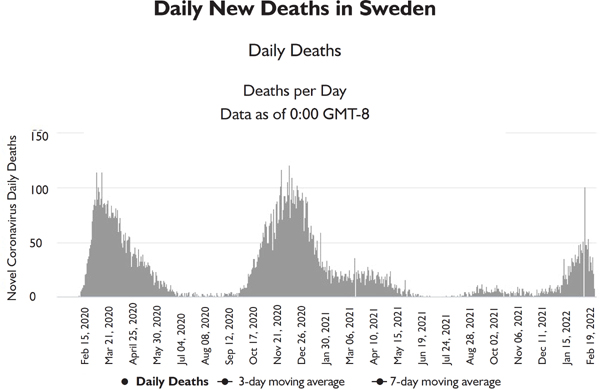
This pattern was first uncovered in 1840 by a British epidemiologist and statistician, William Farr.54 He theorized from data about the preceding smallpox outbreak that the infection process during the epidemic was mirrored, after some time-lag, by the resulting deaths, and that, due to inadequate and variable testing for the infection, the peak and fall-off in deaths could be a useful stand-in for the infection process itself. Based on the time-lag between infection and death, the peak and descent of death figures could be used as an indication that the infection had already substantially subsided. This information would aid in the process of safely reopening societies that had been locked down. On the assumption that the predicted time-lag between COVID-19 infection and deaths is between about 21 and 28 days,55 the April 15, 2020 peak in deaths, in Sweden, for instance, thus also provides, in retrospect, the useful inference that its COVID-19 outbreak peaked sometime between March 17 and March 25.
After three months at next to zero daily deaths, Sweden has for about three weeks (as of this writing) been in what might be a seasonal “endemic” recurrence of the virus, with about 5–10 daily deaths.56 By all accounts and all appearances, Sweden is back to “normal,” and it is now barely in the top 20 countries for coronavirus mortality, at one time having been much higher on the list. Most tellingly, reported The New York Times in late September, although “many European countries are imposing new restrictions,” in response to new outbreaks, “political leaders, anxious to avoid unpopular and economically disastrous lockdowns, are relying mostly on social-distancing measures, while trying to preserve a degree of normalcy, with schools, shops, restaurants and even bars open. In essence, some experts say, they are quietly adopting the Swedish approach.”57 Antoine Flauhault, director of the Institute for Global Health, in Geneva, was quoted as saying that although “all of the European countries are more or less following the Swedish model…none will admit it.” Publicly, however, they continue to call it “inhumane and a failure.”58 Let me underscore this: a pandemic policy that is (more or less) laissez-faire is “inhumane and a failure”—or, in other terms: immoral and impractical.
This, of course, is the mantra of those who hate the very idea of laissez-faire in general, let alone in dealing with depressions or pandemics, and would certainly have been the charge leveled at President Warren Harding, had the 1920–21 depression not resolved so quickly and powerfully as it did. It could have turned out much differently (and worse). Woods notes that: “Secretary of Commerce Herbert Hoover—falsely characterized as a supporter of laissez-faire economics—urged President Harding to consider an array of interventions to turn the economy around. Hoover was ignored.”59 (Though, not completely, as Grant points out: “One of the top items on Harding’s legislative agenda was the creation of a new, cabinet-level department of public welfare…The Harding proposal went nowhere,” after critics chimed in that “the government was under a prior obligation to live within its means.”60)
Instead, as Benjamin Anderson so laconically put it: “In 1920– 21, we took our losses, we readjusted our financial structure, we endured our depression, and in August 1921 we started up again.”61 It was widely agreed, Grant says, that “the slump was inevitable, unstoppable and even salutary,” so that even though “many Americans were suffering,” a Hippocratic Oath-like, “do no harm” approach was called for: “The government ought not to make things worse by costly or ill-conceived intervention.”62 Instead, it was decided to follow the traditional approach of:
balancing the federal budget, raising interest rates to protect the Federal Reserve’s gold position, and allowing prices and wages to find a new, lower, level. Critically, what it would not do was what the Hoover administration so energetically attempted to do a decade later: there would be no federally led drive to maintain nominal wage rates and no governmentally orchestrated work sharing.63
Hoover had his chance, beginning in late 1929, when an economic crisis erupted after he had been in the White House for less than a year. While “Presidents Wilson and Harding, each for his own reasons, had met the depression of 1920–21 with inaction,” Grant states, Hoover instead “chose a whirlwind of intervention” in response to the 1929 stock market crash and subsequent events.64 As a result, states Ralph Benko, in 1929 and following years, “The aggressive measures implemented by President Hoover and then by FDR…protracted what otherwise might have been a short downturn into a decade of perhaps the longest era of economic misery America has experienced.”65
In this connection, see the graph of the U.S. unemployment rate during 1910–60,66 and note especially that the unemployment took about 3 years (1920–1923) to rise from 5 percent to 8.5 percent and back down to 5 percent, while it took 13 years (1929–1942) to rise from 5 percent to 21.5 percent and back down to 5 percent.
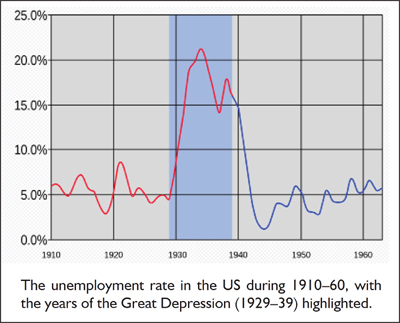
The contrast is stark: the mitigated unemployment of the Great Depression took about four times as long to return to normal (5 percent) as unmitigated unemployment in the depression a decade earlier. Compare this graph also to the one referenced above67 for Sweden’s pandemic phase of COVID-19, and note that Sweden returned to normal in four months, as against some estimates (by Fauci and others) that normalcy will not return for 18–24 months in other countries. These data suggest that, as a very rough rule of thumb, vigorous governmentally imposed mitigation efforts may quadruple the crisis-and-recovery processes of both depressions and pandemics.
This could all have been avoided by instead following the policy articulated so well by Rothbard in regard to economic depressions, with adaptations appropriate for disease pandemics:
If government wishes to alleviate, rather than aggravate, a depression, its only valid course is laissez-faire—to leave the economy alone. Only if there is no interference, direct or threatened, with prices, wage rates, and business liquidation will the necessary adjustment proceed with smooth dispatch.68
The question in each case is, then: why subject people to such a protracted period of misery? Perhaps not surprisingly by this point, the answers are fundamentally the same. The following comment about economic downturns by Benko could as easily have been phrased in terms of disease epidemics:
A severe economic downturn causes immense human suffering. The estimable quality of empathy beckons those in authority to alleviate such suffering…It now may be intolerable, politically, for a government to do nothing to alleviate the deep misery associated with a recession.69
Of course, Woods’s observation about the 1920–21 depression could equally well apply to Sweden’s response to COVID-19: “The conventional wisdom holds that in the absence of government countercyclical policy, whether fiscal or monetary (or both), we cannot expect economic recovery—at least, not without an intolerably long delay. Yet the very opposite policies were followed during the depression of 1920–1921, and recovery was in fact not long in coming.”70
As already noted, it was in 1978 that it officially became “intolerable, politically” for the U.S. federal government to “do nothing to alleviate the deep misery associated with” a pandemic. However, several epidemics—HIV/AIDS (1981), SARS-CoV (2002), H1N1 (2009), and MERS-CoV (2012)—came and went without worldwide mobilization, which only occurred for the first time this year with COVID-19 (which is also known as SARS-CoV-2).
The official goal of health experts for COVID-19 (and for epidemics in general) is population immunity (also referred to as “herd immunity” or “community immunity”) which, as Ray Bhopal explains, is the protection from a contagious disease that results when “a high proportion of people are immune, thereby impeding transmission of infection from person to person.”71 The politically accepted way to attain immunity is through vaccination, which takes longer and may also require stringent social and economic measures such as community or neighborhood lockdowns, suspension of social activities, and business closures. Immunity also occurs naturally from infection and is in fact the only way that immunity will result without an effective vaccine. However, as Bhopal points out, “Allowing the pandemic to unfold uncontrolled would rapidly produce population immunity, but this is not a palatable public health response…”72 The reason, of course, is the “immense human suffering” (as Benko puts it) that results in rapidly escalating death tolls and the accompanying fear and anguish in the community. Even though the infection process characteristically peaks and subsides rather quickly, it is widely held to be much preferable to “flatten the curve,” to spread the suffering and deaths over a longer period of time, in hope that some may be spared who otherwise might have died, as well as avoid possibly overloading and breaking down the healthcare system and to buy time for development of effective therapeutic treatments and vaccines.
The problem with this approach, Bhopal says, is that although lockdowns shield those at highest risk, immunity is acquired much more slowly, and such a drawn-out process “may cause more morbidity and mortality than COVID-19.”73 He insists that we should “evaluate the health consequences of lockdowns, assessing the benefits and costs” and that we should quantify “the balance between the damage caused by COVID-19 and that caused by lockdowns.”74 In particular, since the risk to children and young people with no serious underlying health conditions is very low, Bhopal suggests that we should “consider allowing young people without underlying disorders to get COVID-19 naturally while shielding those most at risk through continued social distancing and isolation.”75 Even though such an approach is “currently taboo,” provoking “hostility and controversy” for reasons already noted, it may well be the case that “population immunity is the only long-term solution.”76
Allowing the young and healthy to naturally acquire COVID-19, Bhopal argues, is (1) the safest way to achieve population immunity, while (2) “protecting those most at risk and maximising benefits for society, whether in terms of the economy or achieving the full potential of future generations,” and most importantly (3) allowing young people to “make decisions that are logical for them given their risks and life circumstances,” recognizing that everyone “has the right to balance risks and benefits in relation to their own quality of life.”77 Jayanta Bhattacharya expressed it in more general terms: based upon the actual deadliness of COVID-19, the degree of risk to various population groups, and the degree of harm of the widespread lockdowns, the appropriate rational response should be to “protect the vulnerable, treat the people who get infected compassionately, develop a vaccine. And while doing these things we should bring back the civilization that we had so that the cure does not end up being worse than the disease.”78
Unlike most other countries, Sweden bucked the taboo and took a more Hippocratic approach, proceeding roughly along the lines suggested by Bhopal and Bhattacharya, and may, as a consequence, have achieved population immunity without having to go through prolonged lockdowns with the attendant collateral deaths and socio-economic damage suffered elsewhere. Although the acrimony directed toward Sweden for its relatively lax policy toward COVID-19 was a European as well as an American phenomenon, it is impossible to quantity how much of the political intolerance toward Sweden’s relatively laissez-faire approach was ideologically and morally driven, as opposed to being an aspect of partisan maneuvering and manipulation during the quadrennial U.S. presidential election. In any case, the former is the principal concern of this discussion.
To relate the preceding to the ideas discussed in the methodology section, it will be helpful to think of the contending points of view in terms of those favoring lockdowns (LD) vs. those favoring laissez-faire (LF). LD and LF are two primarily ethical positions in the L2-P2 sector of the Tri-Level diagram shown again below, but they manifest in policy agendas in the L2-P3 sector.
Both groups then apply pressure on behalf of their agendas upon the people in charge of the political-legal structure in L3-P2, which has various laws as well as emergency powers available that, when applied, have outcomes affecting the economy and society in L3-P3. This results in a zig-zag pattern in the diagram from L2-P2 over to L2-P3, then up through L3-P2 and over to L3-P3. (There are also effects of the outcomes on individuals in L1-P3 and groups in L2-P3, and these feed back up through Level 3 in an ongoing loop, as long as there is contention between the opposing perspectives.)
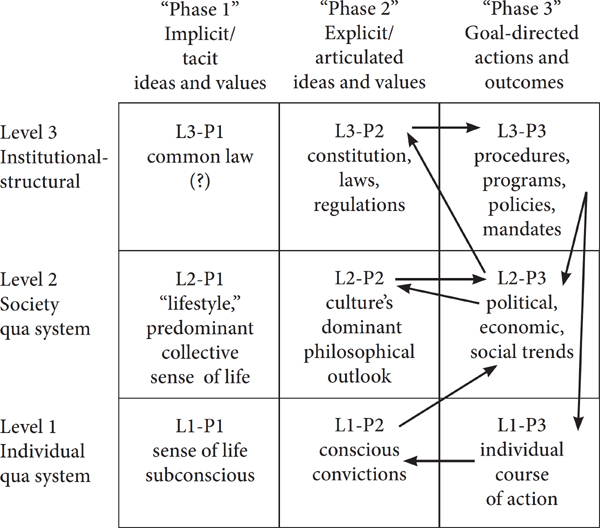
Adapted from Sciabarra 2000 & Sciabarra [1995] 2013.
Copyright 2020 by Roger E. Bissell.
A false alternative is being claimed by LD proponents between their view, which they portray as one of moral decency and caring about lives, and that of the LF advocates, who are said to be more willing to take unwise risks in order to enjoy their freedom and property. In fact, however, we are not immaterial ghosts who can subsist on good thoughts and feelings. Our freedom and property (Hazlitt’s Economic point of view) are just as much an essential and integral—and moral—part of our lives as our physical survival and well-being (the Ethical point of view). As Rasmussen and Den Uyl express the matter:
…since we are beings whose conceptual powers allow us to create, control, and use relationships, the exploitation of opportunities in the world is a fundamental expression of what and who we are.
Taking control of another’s property against that other’s wishes can now be seen as nothing less than taking control of one of the central relationships that constitute a human being’s life. There is and can be no dichotomy between a human being’s natural right to life and liberty and his or her natural right to private property. The latter is the expression of the metaphysical fact that human beings are material things that live and flourish through the exploitation of opportunities in the material world.79
Moreover, the vantage point of long-range consequences (Bastiat’s “unseen”) is omitted or falsely represented by LD proponents. As a result, they assert that shutting down society is both moral (humanitarian) and practical (preventing the healthcare system from overload and collapse), while keeping society open is both impractical (because medical services will be swamped) and immoral (because many people will die).
In reality, however, LF advocates have it right: locking society up is both impractical (shortages of needed jobs, goods, and services) and immoral (deaths are shifted from pandemic victims onto victims of drug and alcohol abuse, suicide, and physical abuse and onto those deprived of needed medical care in deference to pandemic victims).80 Keeping society open, on the other hand, is both practical (the economy keeps producing needed goods and services and people have jobs) and moral (non-pandemic victims are not forced into deaths from despair, abusive treatment, or deprivation of medical care).
Thus, rather than the clash being between Ethicists (the moral who are also practical) and the Economists (the immoral who are also impractical), it is actually between Bad Economists and Good Economists. The former see only the alleviation of suffering and death that lockdowns provide to some and fail to see the accompanying shift in suffering and death, which makes them also Bad Ethicists. The latter, however, are willing to accept greater short-term suffering accompanying a laissez-faire approach, as a cost of ensuring that there will be less overall damage to society and a quicker return to normal life, which makes them also Good Ethicists—both from a utilitarian perspective and from the perspective of not treating non-pandemic victims unjustly and subjecting them to harm.
The clearest mark of this ethical clash between LD and LF is in the issue of shifting the incidence of suffering and death from pandemic victims to the uninfected. It is, in effect, a socialization of human lives, an attempted redistribution of death, but actually an egalitarian spreading of death—not only not resulting in significantly fewer pandemic deaths, but also needlessly causing more deaths among the uninfected. The latter are more difficult to detect and tabulate and tend to go unnoticed by those observing or reporting on the pandemic, while every presumably saved COVID-19 victim is a relatively conspicuous occasion for joy. At root, this indicates that the basic clash is not between ethical and economic points of view, but between two ethical perspectives: collectivism-socialism (LD) and individualism (LF).
With all of this having been said, however, the ethically motivated battle over outcomes is not the fundamental issue at stake in identifying how individual liberty is to be defended in pandemics, economic depressions, and other crises.
LIBERTY AS A CONTEXTUAL ABSOLUTE: LIMITS ON GOVERNMENTAL POLICY TOWARD DEPRESSIONS AND PANDEMICS
As I noted in a recent discussion comparing Aristotle’s and Ayn Rand’s ethical views,81 Rand argues that while happiness and self-benefit are both legitimate goals for one’s ethical actions, neither is a moral primary or an appropriate standard for ethics.82 While they are very desirable and worthy things to strive for, and more often than not follow from doing what is in your rational self-interest, I observed, if you treat either of them “as your basic guideline in ethics,” you may instead “be undercutting your rational self-interest and your long-term happiness and well-being…Instead, they are properly viewed as consequences of and derivatives from the standard of man’s life.”83 Or, in Randian terms,84 “the relationship of cause to effect cannot be reversed,” which is what happens when either happiness or self-benefit is elevated to the status of ethical primary and standard of value in ethics.Centering ethics on such outcomes would be a form of utilitarianism or consequentialism, which is eschewed by Rand’s Objectivism. Instead, fundamentally, she views ethics as rooted in rational self-interest which, however much it tends to lead to superior results in producing happiness and self-benefit, is a non-consequentialist ethical principle.
Similarly, just as certain non-fundamental ethical outcomes (happiness, self-benefit) are wrongly taken by some as primaries for ethical action, certain non-fundamental social outcomes—such as material prosperity or moral excellence—are wrongly treated by some theorists as political primaries, as the litmus test for good or bad in political policy. Instead, in political philosophy, it is rights that are fundamental: As John Stuart Mill wrote:
The moral rules which forbid mankind to hurt one another (in which we must never forget to include wrongful interference with each other’s freedom) are more vital to human well-being than any maxims, however important, which only point out the best mode of managing some department of human affairs…It is their observance which alone preserves peace among human beings…a person may possibly not need the benefits of others; but he always needs that they should not do him hurt.85
Just as ethics takes on a utilitarian cast when it is formulated non-fundamentally in terms of outcomes, “the problem of a utilitarianism of rights,” Rasmussen and Den Uyl note, “arises when the social order is conceived in an ‘end state’ fashion—that is, as pursuing some practical outcome or goal.”86 Instead, they state, “Rights are certainly nonconsequentialistic ethical principles…”87 Thus, as they affirm: “While we would certainly agree, and indeed insist, that following rights leads generally to a better and richer society and that a political/legal order based on such rights is ethically preferable to others, we do not assume that observing rights necessarily or even always leads to worthwhile consequences for or good moral practices by everyone.”88 Instead, they argue that there is a valid basis for claiming rights, “even if worthwhile consequences did not immediately follow from observing them.”89
In other words, the purpose of liberty, individual rights, and properly limited government is not to guarantee some outcome or other—neither good, happy individual lives or some equivalent mass utilitarian good or happiness, nor morally better or more cooperative people—and particularly, in the present situation, neither moral decency, consideration, compassion, health, or physical survival, nor socio-economic flourishing and prosperity. Instead, their purpose is to secure the condition necessary for any human action whatever “to qualify as moral”—the condition, that is, which “must be present for moral responsibility to occur,” namely, self-directedness.90 And since self-directedness or “self-direction cannot exist when certain people direct others to purposes to which they have not consented,” the purpose of “the individual right to liberty is to ban legally [the initiation of physical force] in all its forms.”91 Hence, a political framework of liberty, individual rights, and properly limited government.92
How, then, does this framework—of principles, not desired outcomes—apply to the COVID-19 crisis? In such a situation, how are rights defended and liberty maintained, without conflict? Whose natural rights are threatened by other people during the COVID-19 crisis, and what is the appropriate governmental remedy?
For the present discussion, a crucial issue to clarify about natural rights and individual liberty is the limits and context within which they apply. As Rasmussen and Den Uyl explain, “natural rights apply…whenever human social and political life is possible, and the social and political community is possible, then, whenever it can secure its purpose—namely, provide a context in which people might live among each other and pursue their highly individualized and self-directed well-being.”93
It is important to note, however, that the “whenever” in their description is a “when and only when.” As they state: “…when social and political life is not possible, when it is in principle impossible for human beings to live among each other and pursue their well-being, consideration of individual rights is out of place; they do not apply.”94
In other words, the fact that rights are social co-existence conditions does not mean that they attach to you whenever and wherever someone else is in your presence but, very specifically, only when it is not “in principle impossible for people to live together and flourish.95 There must be time or opportunity to do something other than simply “attempt to escape from the desperate situation.”96 If there is, then rights continue to exist and should be defended against violation by the appropriate use of force, whether by individuals, groups, or governments. If not, then (in such thankfully rare situations) the social context is broken, at least temporarily and, for that length of time, rights are not operative.
Now, suppose a society’s governmental leaders see such a situation looming, a societal collapse, where the very possibility of continued social coexistence is seriously and credibly threatened. Since their function is (or should properly be) to defend rights, and that situation threatens the very existence of the condition for rights that they are authorized to defend, they would understandably (if not legitimately) want to declare a “clear and present danger” of the society’s collapsing and to take “reasonable and proper” actions to prevent that from happening. Even if those actions temporarily abridged people’s liberty, that abridgement would properly be for only the duration of the general emergency and on the premise that normal conditions and fully functioning rights would then be restored—like a surgeon stopping a patient’s heart temporarily in order to perform life-saving surgery so that the heart can beat again healthily.
At least, that is the rationale we were presented in late March of 2020 for the nuclear option: let’s all agree to shut down the society and the economy for “fifteen days to slow the spread,” in order to keep COVID-19 from overwhelming the healthcare system and decimating the population. We were persuaded to go along with this because, as Angelo Codevilla states, the belief (or argument) was that “COVID-19 is so infectious as well as plague-like in its lethal danger to the general population, that a wave of desperately ill and dying patients would submerge American hospitals unless its natural course were slowed.”97 But, of course, despite lurid accounts and photographs of stacked dead bodies and the like, COVID-19 wasn’t nearly that deadly, not even in the areas that had the worst outbreaks, such as the northeastern United States and western Europe.
So, in May, once the daily death count had peaked and then steadily subsided in those areas, Fauci quietly discarded his counterfactual rationale of avoiding the overcrowding of hospitals and catastrophic obliteration of the population, replacing it with the new claim “that extending the lockdowns was necessary to prevent so many apparently healthy young people from eventually infecting the old and infirm.”98 The switch part of Fauci’s bait-and-switch is the idea that asymptomatic-though-infected people are (or may be) “super spreaders” who can transmit a deadly disease through the population in a manner similar to that of the infamous Typhoid Mary of long ago.99 School-age children, who are least susceptible to the virus, are (it is claimed) most likely to present a menace to the rest of the society, including not only their teachers, but also older members of their households.
Was this reasonable? Perhaps, but it should be remembered that this is the same Fauci who in the mid-1980s created a panic about HIV/AIDS by suggesting that although prenatal transmission of the virus was possible, “[p]erhaps more important is the possibility that routine close contact, as within a family household, can spread the disease,” adding that if “nonsexual, non-blood-borne transmission is possible, the scope of the syndrome may be enormous.”100 Although Fauci recanted this hypothesis the following year, as Daniel Payne and John Solomon point out, “the paranoia and fear surrounding the vulnerability of the general population to AIDS persisted for years afterward. In New York in 1985, for instance, 85 percent of schoolchildren at one public elementary school stayed home during opening week, while hundreds of parents demanded the school system bar any HIV-positive children from attending classes.”101
But sure, let’s consider this issue a bit more closely, for here we have not necessarily just a moral clash over desired outcomes between those wanting the moral decency and presumed safety associated with mandatory widespread sheltering in place (the LD’s) and those wanting the sociality and material prosperity associated with risk-taking and free association (the LF’s)—but perhaps instead or also the concern about whether the natural rights of some individuals are being jeopardized by the inadvertent, thoughtless, or negligent acts of others (those others being infected-but-asymptomatic schoolchildren and their parents who selfishly want to work and support their families).
When the allegation is made that someone has caused harm to another, the burden of proof is on the person making the allegation. In identifying Typhoid Mary as a super-spreader, medical and scientific inferences were made to identify her as the vector of the disease.102 Imagine the horrific infection-tracing challenge of ferreting out potentially millions of young COVID-19 Marys.
However, such an indirect process is thankfully not necessary, since for months now we have had testing available to identify those who were infected even though free from symptoms of COVID-19. Now that rapid testing is available, it’s nearly as simple as a breathalyzer test for detecting drunk drivers and taking them off the streets.
That, I submit, should be sufficient to satisfy the demands of both the preservation of individual liberty of uninfected individuals and the protection of each individual’s natural rights from violation by infected people. The appropriate policy for dealing with COVID-19 should be: shelter the vulnerable (especially the aged and/or those with medical vulnerabilities), quarantine the infected, and let everyone else go about their businesses, their careers, their schooling, and their lives.
As Andy Craig has said, what is needed in such situations is not “big government” rather than “small government” (another false alternative) but, as always, “a government limited in scope but sufficient to meet that scope…Government has a role to play in responding to the pandemic in much the same way it is the government’s job to prosecute murderers or defend the country from invasion.”103 He adds that “[e]mergency powers should be limited in duration and limited to directly addressing the present situation based on the facts as best we know them” and “repealed at the earliest feasible opportunity,” not “larded up with a pre-existing wish list of unrelated concerns” (such as fiscal bail-outs and social mandates).”104
And that, with all due respect to Derek Thompson, is how one applies libertarianism to pandemics.
CONCLUDING UNSCHOLARLY POSTSCRIPT: WHAT THE HELL DO WE DO, GIVEN THE CONDITIONS THAT EXIST?
Context is so important. Short of an impending complete collapse of society, the existing government should not suspend constitutional/natural rights in order to “protect” people against (or bail them out from) various and sundry forms of misfortune, whether disease, fire, earthquake, bad weather, or whatever. Instead, everything that government does should be aimed at, and only at, defending people’s rights against violation by others. The question then is: how do we justify curtailing people’s freedom when there’s no “probable cause” that they’re going to harm others? Or is a pandemic automatically a “probable cause” situation?
There’s a conflation that we should be careful to avoid between the ethics of emergencies and the politics of emergencies—by which I mean, what should people voluntarily do (and not do) vs. what should government make people do (and not do)? Rand’s 1963 essay on emergencies is fine for the former,105 as are Hazlitt’s contemporaneous thoughts;106 and we’ve seen many people and businesses take such measures before any mandates were issued—while other people continued to behave more hedonistically or self-centeredly and without concern for disease spread. But as Rumsfeld famously said, “you go to war with the army you have”107—which translates into: if you don’t have a free society and free economy that has a well-functioning medical and research system, but instead one hobbled by government intervention and distortion, you still have to do the best you can in the context, just like in regard to retirement (Social Security) or medical care for the aged and poor (Medicare/Medicaid).
As my friend Chris Sciabarra recently told me in personal correspondence: with regard to operating in the real world, we have principles, but we also have realities. For instance, on the one hand, we have Rand’s pointed suggestions about how to live a rational life in an irrational society108—we have Rasmussen and Den Uyl’s clarifying framework of natural rights based on human nature but distinct from the ethical norms by which we live our lives among others—we have the hard-won insights of the Austrian school about how best to deal with economic recessions—and so much more. But on the other hand, everything gets filtered through the realities of our politics and the political system. In this case, as with any emergency, we must fight it with the “army,” i.e., the structures, we have—and some of these structures may save lives, while others will kill people, and the whole thing might further damage an already awful situation with regard to individual rights.
I’ve seen libertarians get all tangled up in how to apply individual rights and limited government ideas to such a mixed polity and economy as we have. They try to be ethical and principled—but with one hand tied behind their backs. To be fair, it is not easy to sort out how to move forward in a compromised society—one that is compromised in terms of ethics (altruism vs. utilitarianism vs. egoism vs. eudaimonism etc.), where collectivist and altruist catch-phrases and ad hominem attacks like “you’re selfish and out of control and will kill us all” and “you’re self-righteous and controlling and will kill us all” get hurled around with reckless abandon—and compromised as well because of the fact that a lot of the back and forth about policy and blame is driven by the fact that this is an election year. In order to get the broad, big picture in focus, you have to take one big step backward, and then at least one more—but then, of course, some people will accuse you of being cold-blooded and not caring about the fact that two people are dying each day in Sweden because of their monstrous policy. (Actually, they are just as likely to brush this inconvenient fact under the rug.)
This points to a moral issue people don’t consider often enough: the Hippocratic Oath, by which medical people swear to “do no harm.” This means, above all, to not take any action that causes deaths. So, if in order to save x-thousand lives, they implement or cooperate with things that end up destroying x-thousand or x-plus-y-thousand lives, have they kept their oath—or have they violated it? We might be charitable and chalk it up to the operation of the Law of Unintended Consequences—except that these medical professionals and public officials must certainly know that there will be collateral deaths in addition to the lives they save. True, those deaths fall in someone else’s category of responsibility: poverty deaths—social workers; drug overdose and alcohol deaths—behavioral psychologists; suicides—mental health. However, the buck has to stop somewhere. I suggest that epidemiologists and policy makers, as well as their defenders, should not be allowed to turn a blind eye to all of this, and instead should be urged not to impose policies that make the cure worse than the disease.
In one respect, this is a really bad topic for an essay about defending individual liberty, considering that one would like to write something that is, on the one hand, cogent and coherent and principled and yet, on the other hand, humanitarian and sensitive to the horrific circumstances so many, especially in crowded urban areas, face with friends and loved ones dying all around them. There is no ethical Archimedes to show us where to stand to place our lever so that we can move the world, without immediately being branded a moral monster or a heartless sociopath—or someone who is naïvely or cynically demanding that government do something, even if it is ineffective or, worse, counterproductive.
It has been said that war is the health of the state. More generally, it is clear that fear is the health of the state. Fear has fueled countless ill-considered and disastrous and immoral government programs and wars, and they have all led to greater government control over our lives and greater loss of individual liberty. Unfortunately, it is not true, as Franklin Roosevelt claimed, that “we have nothing to fear but fear itself.” We most assuredly must fear, and fight at every turn, those who would exploit others’ fears, real or concocted, for the purpose of controlling others and destroying those whom they hate but who have done no harm to them other than opposing their agendas. The current situation is no exception, and we could use another Patrick Henry now more than ever. And we must watch those people like hawks. Another Thomas Jefferson would be helpful, too. David Gordon’s comment that “Even a small chance that emergency measures will permanently subvert civil liberties needs to be considered”109 applies equally well to economic freedom—and considering the permanent subversions of liberty that have accumulated over the centuries, the need for this issue, liberty as an endangered species, to be “considered” is an understatement, indeed!
We are not living in a libertarian utopia—nor, thank God, in a totalitarian hellhole. We live in a country of mixed moral and political premises, swept by sharply conflicting crosscurrents of demands for more freedom and more control, and ne’er the twain shall meet, it seems. We are living in a wonderful, feisty, troubled, amazing, beautiful, angst-ridden country that we absolutely do not want to see go down the drain. Yet, at the time of this writing, with the triple threat of pandemic, recession, and civil chaos all occurring during a very ugly, contentious election campaign, we could see all of our fervent hopes and our fond projects swamped and swept away by some combination of forces over which we have absolutely no control. If that’s not enough to make you want to jump off the nearest bridge or pier like Ayn Rand’s Cherryl Taggart in Atlas Shrugged, what would be! But here we are, anyway, trying to turn enough of our attention off of the craziness surrounding us so that we can get some work done and have some fun and enjoyment with our friends and loved ones—and, especially, pay tribute to the honoree of this volume. So, with that, I say, “L’Chaim!” And on we go…
1March 3, 2020, online at https://twitter.com/DKThomp/status/1234952340807077892.
2Bureau of Labor Statistics, The U.S. Department of Labor, “The Employment Situation—October 2020,” November 6, 2020, online at https://www.bls.gov/news.release/pdf/empsit.pdf.
3See Abigail Devereaux, “Longer Lockdowns Associated with Much Worse Economic Outcomes,” AIER, August 1, 2020, online at aier.org/article/longer-lockdowns-associated-with-much-worse-economic-outcomes/. The United Nations Conference on Trade and Development (UNCTAD) asserted that by mid-April 2020, “strict measures deployed to combat the pandemic have nearly destroyed personal service sectors such as tourism, hospitality and transport.” (“Coronavirus deals severe blows to services sectors,” UNCTAD, April 14, 2020, online at https://unctad.org/news/coronavirus-deals-severe-blow-services-sectors.)
4President Donald J. Trump and the White House Coronavirus Task Force, “15 Days to Slow the Spread,” March 15, 2020, online at https://www.whitehouse.gov/articles/15-days-slow-spread/.
5Trump et al, “30 Days to Slow the Spread: The President’s Coronavirus Guidelines for America,” March 30, 2020, online at https://www.whitehouse.gov/wp-content/uploads/2020/03/03.16.20_coronavirus-guidance_8.5x11_315PM.pdf?. Also see Tamara Keith, Franco Ordonez, Ayesha Rascoe, and Roberta Rampton, “How 15 Days Became 45: Trump Extends Guidelines to Slow Coronavirus,” National Public Radio, March 30, 2020, online at https://www.npr.org/2020/03/30/822448199/how-15-days-became-45-trump-extends-guidelines-to-slow-coronavirus.
6Dan Sinker, “Covid-19 150 Days Out: Trump’s 15 Day Plan to Slow the Spread 150 Days Later,” Esquire, August 13, 2020, accessed online at https://www.esquire.com/news-politics/a33587951/coronavirus-slow-the-spread-one-hundred-fifty-day-anniversary/.
7Jocelyn Grzeszczak, “Florida Governor Responds After Fauci’s Remark About Reopening Too Soon, Says There’s ‘No Justification to Not Move Forward,” Newsweek, July 11, 2020, online at https://www.newsweek.com/florida-governor-responds-faucis-remark-about-state-reopening-too-soon-says-theres-no-1517140; Karma Allen, “South Dakota Gov. Kristi Noem says lockdowns are ‘useless’ as state’s COVID-19 cases soar,” ABC News, October 6, 2020, online at https://abcnews.go.com/US/south-dakota-gov-kristi-noem-lockdowns-useless-states/story?id=73451385.
8Bloomberg, “California theme parks must stay closed for now, Newsom says,” Los Angeles Times, October 7, 2020, online at https://www.latimes.com/business/story/2020-10-07/california-theme-parks-disneyland-reopening-not-imminent; and Caitlin O’Kane, “California governor’s office tells diners to wear masks ‘in between bites’,” CBS News, October 6, 2020, online at https://www.cbsnews.com/news/gavin-newsom-california-face-mask-restaurant/; David Eggert and Ed White, “Michigan governor’s virus powers upended with court ruling,” The Washington Post, October 2, 2020, online at https://www.newsweek.com/florida-governor-responds-faucis-remark-about-state-reopening-too-soon-says-theres-no-1517140.
9The Centers for Disease Control says that only about 5 percent of these had no “comorbidities” or predisposing conditions making them significantly more vulnerable to the virus. Had the 2018–19 and 2019–20 flu seasons not been lighter than the 2017–18 season, there would have been thousands fewer medically vulnerable elderly persons to be taken by the coronavirus pandemic, as can be inferred from various graphs on the website of the CDC. See “Excess Deaths Associated with Covid-19,” online at https://www.cdc.gov/nchs/nvss/vsrr/covid19/excess_deaths.htm. See also Ivor Cummins, “Viral Issue Crucial Update Sept 8th: The Science, Logic, and Data Explained!” September 8, 2020, online at https://www.youtube.com/watch?v=NxhGch0C6hE; Cummins, “USA Viral Update—the Latest Data Explained in Brief—Know the Data!” October 10, 2020, online at https://www.bitchute.com/video/013L9J7WhuU/; and Cummins, “Key Viral Update Oct 30th – A Riposte to Anonymous Twitter Attacks,” October 30, 2020, online at https://www.bitchute.com/video/TRbtGd70-Ow/. Cummins makes a parallel case about recent flu seasons in Sweden in “THE Important Lesson from Sweden—Short, Sharp, and Viral!” October 9, 2020, online at https://www.youtube.com/watch?v=D0KyWBksWrU.
10Jennifer A. Kingson, “Exclusive: $1 billion-plus riot damage is most expensive in insurance history,” Axios (September 16, 2020), online at https://www.axios.com/riots-cost-property-damage-276c9bcc-a455-4067-b06a-66f9db4cea9c.html.
11A vigorous attempt to unite and conquer was made by Angelo Codevilla in “The Covid Coup,” The American Mind, August 8, 2020, online at https://www.americanmind.org/essays/the-covid-coup/.
12I gratefully acknowledge the value of over 120 combined years of personal and intellectual association with Dr.’s Sciabarra, Rasmussen, and Den Uyl, and I encourage readers to explore the complex, nuanced development of their respective ideas in the works I have cited. I do, however, accept full responsibility for any errors or omissions I have made in interpreting and applying their ideas herein.
13Chris Matthew Sciabarra, Total Freedom: Toward a Dialectical Libertarianism (College Park: Pennsylvania State University Press, 2000).
14Chris Matthew Sciabarra, “Toward a Dialectical Libertarianism” in The Dialectics of Liberty: Exploring the Context of Human Freedom, eds. Roger E. Bissell, Chris Matthew Sciabarra, and Edward W. Younkins (Lanham, Maryland: Lexington Books, 2019), p. 26.
15Chris Matthew Sciabarra, Ayn Rand: The Russian Radical, 2nd edition (College Park: Pennsylvania State University Press [1995] 2013), p. 18.
16Sciabarra, “Toward a Dialectical Libertarianism,” p. 35.
17Ibid., p. 21.
18Frédéric Bastiat, “What is seen and what is not seen, or political economy in one lesson” [July 1850] in Selected Essays on Political Economy, trans. Seymour Cain, ed. George B. de Huszar, introduction by F.A. Hayek (Irvington-on-Hudson: Foundation for Economic Education, 1995). Online at https://oll.libertyfund.org/pages/wswns. Bastiat’s thesis was popularized for 20th century readers by Henry Hazlitt, who described his Economics in One Lesson (New Rochelle, New York: Arlington House, 1946) as “a modernization, extension and generalization of the approach found in Bastiat’s pamphlet,” p. 10.
19Sciabarra, Russian Radical, p. 148.
20Ibid., p. 15.
21Ibid., p. 15.
22The original version of Sciabarra’s Tri-Level diagram is in his Russian Radical, p. 278, and an updated version is in his Total Freedom, p. 380. There is considerable discussion of the Tri-Level model in each of the above-cited works by Sciabarra. He offers it as a schematization of the kind of social criticism and analysis of statist relations of power that Rand uses throughout much of her social and political commentary. See especially Russian Radical, pp. 276–358. There is, of course, nothing magical about the number three. Bertell Ollman, in Dialectical Investigations (New York: Routledge, 1993) discusses “seven major levels of generality into which Marx subdivides the world” (pp. 53–67), the first three being roughly equivalent to those in Sciabarra’s model. A somewhat different framework, comprising four levels of social analysis, is proposed by Oliver Williamson in “The New Institutional Economics: Taking Stock, Looking Ahead.” Journal of Economic Literature 38, no. 3: 595–613. Sciabarra cites Institutionalism as adding valuable perspective, complementary to that from Austrian economic analysis (Total Freedom, pp. 376–7).
23Sciabarra, Russian Radical, pp. 298, 338. A sphere in Sciabarra’s tiers discussion appears to be equivalent to a level in his previous discussion on p. 278; this served to motivate my combining the two diagrams. It should be noted that the levels in Sciabarra’s original version were referred to in somewhat different terms as Level 3 (L3), Structural (Economic/Political), Level 2 (L2), Cultural (Linguistic/Ideological), and Level 1 (L1), Personal (Psycho-Epistemological/Ethical).
24A discussion comparing this modification with Sciabarra’s original version is online at https://www.facebook.com/photo.php?fbid=10158011099444803&set=p.10158011099444803&type=3. The original is posted online at https://chrismatthewsciabarra.com/images/trilevel.jpg.
25To be clear, this is my interpretation of Sciabarra’s tiers, which I see as being in a diachronic, process interrelationship, as against the synchronic, structural relationships between his levels. See also Ollman, Dialectical Investigations, pp. 133–45.
26See Ayn Rand, The Romantic Manifesto: A Philosophy of Literature 2nd edition (New York: Signet, 1975), pp. 25–33, and Ayn Rand, Philosophy Who Needs It (Indianapolis: Bobbs-Merrill, 1982), pp. 250–62. See also Sciabarra, Russian Radical, pp. 297–300.
27Rand, Philosophy Who Needs It, p. 250. Clearly, the three elements Rand refers to correspond to the boxes labeled L1-P3, L1-P2, and L1-P1, respectively, in the preceding diagram.
28One issue that I will not be addressing here, but which has great personal and social significance, is the psychological effect that pandemic-related policies (L3-P3) and trends (L2-P3) have on individual sense of life (L1-P1) and social “lifestyle” (L2-P1), as well as the equally intangible but important influence that the latter have on the former. (We can think of this as the resilience vs. fragility of “the American spirit” in the face of harsh governmental control.)
29Sciabarra, Russian Radical, p. 420, n. 5.
30Sciabarra, “Toward a Dialectical Libertarianism,” p. 26.
31Ayn Rand, Atlas Shrugged (New York: Random House, 1957), p. 1053, emphasis added.
32Henry Hazlitt, The Foundations of Morality (New York: Van Nostrand, 1964), p. 301, emphasis in original.
33Ibid., pp. 301–2.
34Aristotle, Topics 141a27–29, in The Works of Aristotle, volume 1, trans. W. D. Ross; volume 8 of Great Books of the Western World, ed. Robert Maynard Hutchins (Chicago: Encyclopedia Britannica, 1952), p. 194, emphasis added.
35Ibid., 142b20, p. 196.
36For a trifecta, there is this by Francis H. Parker and Henry B. Veatch: “Definitions should be essential (fundamental or basic).” Logic as a Human Instrument (New York: Harper & Brothers, 1959), p. 59.
37Ayn Rand, Introduction to Objectivist Epistemology: Expanded Second Edition, Harry Binswanger and Leonard Peikoff, eds. (New York: Meridien, 1990), p. 45.
38Sciabarra, Total Freedom, p. 138–9, emphasis added.
39Aristotle, Topics, 163b19–21, p. 222, emphasis added.
40Ibid., 141a32–35, p. 194.
41Rand, Introduction to Objectivist Epistemology, p. 45.
42H. W. B. Joseph, An Introduction to Logic (Oxford: Oxford University Press, 1916), p. 111, emphasis added.
43Murray N. Rothbard, America’s Great Depression (New York: Van Nostrand, 1963), p. 1.
44Mark Honigsbaum, “The art of medicine: Revisiting the 1957 and 1968 influenza pandemics,” The Lancet 395 (June 13, 2020), p. 1824, online at https://doi.org/10.1016/S0140-6736(20)31201-0.
45Ibid.
46John Iskander, Raymond A. Strikas, Kathleen F. Gensheimer, Nancy, J. Cox, and Stephen C. Redd, “Pandemic Influenza Planning, United States, 1978–2008,” Emerging Infectious Diseases 19, no. 6 (June 2013), pp. 879–85, online at https://www.ncbi.nlm.nih.gov/pmc/articles/PMC3713824/.
47Rothbard, America’s Great Depression, p. 167, emphasis in original.
48Ibid., p. 168. Also see Robert P. Murphy, “The Depression You’ve Never Heard Of: 1920–21,” Foundation for Economic Education, November 18, 2009, online at https://fee.org/articles/the-depression-youve-never-heard-of-1920-1921/; Thomas E. Woods, Jr., “The Forgotten Depression of 1920,” The Intercollegiate Review 44, no. 2 (Fall 2009), pp. 22–29, online at https://isi.org/intercollegiate-review/warren-harding-and-the-forgotten-depression-of-1920/; James Grant, The Forgotten Depression—1921: The Crash That Cured Itself (New York: Simon & Schuster, 2014); Ralph Benko, “The Biggest Recession You’ve Never, Ever Heard Of,” Forbes, February 2, 2015, online at https://www.forbes.com/sites/ralphbenko/2015/02/02/the-biggest-recession-youve-never-ever-heard-of/.
49Jeffrey A. Tucker, “The Virus Doesn’t Care about Your Policies,” AIER, July 31, 2020, online at https://www.aier.org/article/the-virus-doesnt-care-about-your-policies/.
50Rothbard, America’s Great Depression, p. 168.
51Tucker, “The Virus Doesn’t Care…”
52Madeline Holcombe, Holly Yan, and Amir Vera, “US may not be back to normal until 2022, Fauci says,” CNN, October 28, 2020, online at https://www.cnn.com/2020/10/28/health/us-coronavirus-wednesday/index.html.
53https://www.worldometers.info/coronavirus/country/sweden/.
54See Carl Heneghan and Tom Jefferson, “COVID-19: William Farr’s way out of the Pandemic,” Center for Evidence-Based Medicine, April 11, 2020, online at https://www.cebm.net/covid-19/covid-19-william-farrs-way-out-of-the-pandemic/. See also William Farr, “Causes of Death in England and Wales: Letter to the Registrar-General,” June 4, 1840, Appendix to Annual report of the Registrar-General of births, deaths, and marriages in England. (London: H.M.S.O., 1839-1922), online at https://babel.hathitrust.org/cgi/pt?id=njp.32101064041955&view=1up&seq=71.
55Heneghan and Jefferson, “COVID-19: William Farr’s way out….”
56Ibid. Also on this web site, compare Sweden’s new cases and daily deaths graphs with those of northeastern U.S. states and western European countries also heavily struck by the pandemic in the spring but pursuing considerably more stringent policies—e.g., New York: https://www.worldometers.info/coronavirus/usa/new-york/, and Ireland: https://www.worldometers.info/coronavirus/country/ireland/. The bell-curves of daily deaths and the steady fall-off to near-zero are strikingly similar, with and without lockdowns. In this regard, also see Codevilla, “The Covid Coup;” and Tucker, “The Virus Doesn’t Care…,” who writes: “Prof Isaac Ben-Israel, head of the Security Studies program at Tel Aviv University and the chairman of the National Council for Research and Development, looked at the data around the world and concluded that the virus comes and goes after 70 days regardless of the policies deployed. He found no relationship at all between locking down and transmission and death.”
57Thomas Erdbrink, “Vilified Early Over Lax Virus Strategy, Sweden Seems to Have Scourge Controlled,” The New York Times, September 29, 2020, online at https://www.nytimes.com/2020/09/29/world/europe/sweden-coronavirus-strategy.html.
58Ibid.
59Woods, “The Forgotten Depression of 1920.”
60Grant, The Forgotten Depression—1921…, p. 165.
61Benjamin M. Anderson, Economics and the Public Welfare: A Financial and Economic History of the United States, 1914–1946 (Indianapolis: Liberty Press, 1979 [1949]), p. 92.
62Grant, The Forgotten Depression—1921…, p. 164.
63Ibid., pp. 72–72.
64Ibid., p. 213.
65Benko, “The Biggest Recession…”.
66 https://en.wikipedia.org/wiki/Great_Depression.
67See note 53.
68Rothbard, America’s Great Depression, p. 167.
69Benko, “The Biggest Recession…,” emphasis added.
70Woods, “The Forgotten Depression of 1920,” emphases added.
71Raj S. Bhopal, “COVID-19 zugzwang: Potential public health moves towards population (herd) immunity,” Public Health in Practice 1 (November 2020), p. 1, online at https://www.sciencedirect.com/science/article/pii/S2666535220300306.
72Ibid., p. 3, emphasis added.
73Ibid., p. 3.
74Ibid., pp. 3, 1.
75Ibid., p. 5.
76Ibid., pp. 1, 4.
77Ibid., p. 5.
78Jayanta Bhattacharya, “A Sensible and Compassionate Anti-COVID Strategy,” AIER, November 4, 2020, online at https://www.aier.org/article/a-sensible-and-compassionate-anti-covid-strategy/, emphasis added.
79Rasmussen and Den Uyl, Norms of Liberty, p. 106.
80See Peter C. Earle, “What Economists Can Teach Epidemiologists,” AIER, July 11, 2020, online at https://www.aier.org/article/what-economists-can-teach-epidemiologists/.
81Roger E. Bissell, “Eudaimon in the Rough: Perfecting Rand’s Egoism,” The Journal of Ayn Rand Studies 20, no. 2 (December): 452–78.
82See Ayn Rand, The Virtue of Selfishness: A New Concept of Egoism (New York: Signet, 1964), pp. viii, x; 32–34.
83Bissell, “Eudaimon in the Rough,” pp. 464–5.
84Rand, Virtue of Selfishness, pp. x, 34.
85John Stuart Mill, “On the Connection between Justice and Utility,” in American State Papers; The Federalist; J. S. Mill; volume 43 of Great Books of the Western World, ed. Robert Maynard Hutchins (Chicago: Encyclopedia Britannica, 1952), pp. 473–4, emphasis added.
86Douglas B. Rasmussen and Douglas J. Den Uyl, The Realist Turn: Repositioning Liberalism (New York: Palgrave Macmillan, 2020), p. 68, emphasis in original, citing Robert Nozick, Anarchy, State, and Utopia (New York: Basic Books, 1974); see especially Nozick, p. 30.
87Douglas B. Rasmussen and Douglas J. Den Uyl, Norms of Liberty: A Perfectionist Basis for Non-Perfectionist Politics (University Park: Pennsylvania State University Press, 2005), p. 266, n. 1 (emphasis in original).
88Rasmussen and Den Uyl, The Realist Turn, p. 119.
89Ibid., pp. 118–19.
90Douglas J. Den Uyl and Douglas B. Rasmussen, The Perfectionist Turn: From Metanorms to Metaethics (Edinburgh: Edinburgh University Press, 2016), p. 94. See Rasmussen and Den Uyl, Norms of Liberty, where they define self-directedness, or self-direction, as “the act of using one’s reason and judgment upon the world in an effort to understand one’s surroundings, to make plans to act, and to act within or upon those surroundings,” p. 89.
91Rasmussen and Den Uyl, Norms of Liberty, pp. 89–90.
92Rasmussen and Den Uyl present detailed discussions of the components of their argument for individual rights in Norms of Liberty, pp. 269–83, and, more briefly, in The Realist Turn, pp. 41–43. In these same two works, on pp. 284–339 and pp. 97–129, respectively, the authors address numerous objections to their argument.
93Douglas B. Rasmussen and Douglas J. Den Uyl, Liberty and Nature: An Aristotelian Defense of Liberal Order (La Salle, Illinois: Open Court, 1991), pp. 144–5, emphasis in original.
94Ibid., p. 146.
95Ibid., p. 149, emphasis in original.
96Ibid., p. 149.
97Codevilla, “The Covid Coup.”
98Ibid.
99Veronique Greenwood, “The Frightening Legacy of Typhoid Mary,” Smithsonian Magazine (March 2015) online at https://www.smithsonianmag.com/history/the-frightening-legacy-of-typhoid-mary-180954324/.
100Anthony Fauci, “The Acquired Immune Deficiency Syndrome: The Ever-Broadening Clinical Spectrum,” editorial for Journal of the American Medical Association 249 (1983), p. 2375.
101Daniel Payne and John Solomon, “Fauci Files: Celebrated doc’s career dotted with ethics, safety controversies inside NIH,” Just the News, July 23, 2020, online at https://justthenews.com/accountability/political-ethics/fauci-says-americans-should-trust-doctors-himself-his-career. See also the discussion of how Fauci needlessly raised alarm in 2016 about possibility of a global epidemic of the Zika virus which never materialized.
102See Greenwood, “The Frightening Legacy…”
103Andy Craig, “Libertarianism and the Coronavirus Pandemic,” Cato at Liberty, March 25, 2020, online at https://www.cato.org/blog/libertarianism-coronavirus-pandemic.
104Ibid.
105See Rand, Virtue of Selfishness (New York: Signet, 1964), pp. 49–56.
106Hazlitt, Foundations of Economics, pp. 92–127.
107Eric Schmitt, “Iraq-Bound Troops Confront Rumsfeld Over Lack of Armor,” The New York Times (December 8, 2004), online at https://www.nytimes.com/2004/12/08/international/middleeast/iraqbound-troops-confront-rumsfeld-over-lack-of.html.
108See Rand, Virtue of Selfishness, pp. 79–92.
109David Gordon, “Posner (Again) Blesses Statism” (review of Richard A. Posner, Law, Pragmatism, and Democracy), in Gordon, An Austro-Libertarian View, Volume 1: Economics, Philosophy, Law (Auburn, Alabama: Mises Institute, 2017), p. 256.

