Copyright Page

PRINTED BY
WILLIAM HODGE AND COMPANY, LIMITED
GLASGOW EDINBURGH LONDON
Preface
PREFACE
THE German edition of this book was written in 1929 and 1930, and published early in 1931 under the title Börsenkredit, Industriekredit und Kapitalbildung. The book was No. 2 in the series Beiträge zur Konjunkturforschung of the Austrian Institute for Trade Cycle Research.
Comparison Between The Present And The Firstedition
COMPARISON BETWEEN THE PRESENT AND THE FIRST
EDITION
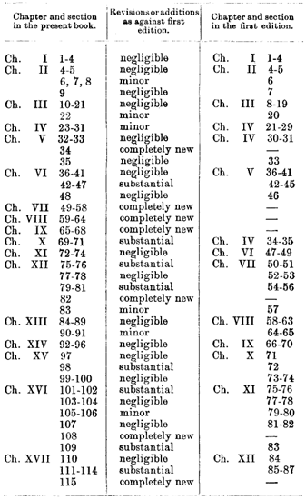
Note—Revisions or additions are called negligible if they are confined merely to slightly changed formulations of otherwise unchanged ideas; minor if several paragraphs are reformulated, or qualifications added ; substantial if elaborations or qualification simply changes in ideas or in emphasis ; completely new if the whole section was not contained in the first edition.
From The Preface To The German Edition
FROM THE PREFACE TO THE GERMAN EDITION
Current affairs have prompted this study of the relationships between the stock market, credit, and capital formation. The growth of stock-exchange credits during the prosperity period evoked the interest, and in some part the serious concern, of those in charge of economic and monetary policy. Lending to the stock exchange was officially assailed during recent years in Germany (1927) and in the United States (1928-1929). Intervention against stock-exchange lending was undertaken supposedly in defence of industrial interests.
Chapter I: Competition in the Credit Market
CHAPTER I
COMPETITION IN THE CREDIT MARKET
1. The various types of borrowers, who compete for the limited supply of credit, evoke very different sentiments among critical observers of the economic system. The class of borrowers which is least sympathetically regarded by the critics is that which uses the purchasing power, put at its disposal, on the stock exchange. This is not surprising considering the attitude adopted by a large section of the community towards stock exchanges, towards the business that is transacted thereon, and towards the people who frequent them.
Chapter II: Concepts Used and Problems Discussed
CHAPTER II
CONCEPTS USED AND PROBLEMS DISCUSSED
4. Our main task in discussing the question of stock exchange credit is to examine the assertion that “the stock exchange absorbs capital.” This contention is the chief indictment in the case against stock exchange credit. This is evident from the fact that Cassel, the leading defender of stock exchange credit, used the same words in the title of two of his articles on the subject. One of these is entitled “Does the Security Market absorb Capital?”1 and the other “Does the Stock Exchange absorb Capital?”2
Chapter III: The Role of Capital in Security Transactions
CHAPTER III
THE ROLE OF CAPITAL IN SECURITY TRANSACTIONS
10. There is one sense in which the contention that the securities markets involve either a permanent or a temporary absorption of capital is so obviously absurd as to require no further discussion. Real capital or produced means of production, such as bricks, iron girders, machines, pulleys, cranes, &c., are neither absorbed nor tied up by security speculation.
Chapter IV: The Absorption of Capital in Stock Exchange Speculation
CHAPTER IV
THE ABSORPTION OF CAPITAL IN STOCK EXCHANGE SPECULATION
23. What does it really mean to say that money capital is absorbed in unproductive uses? By definition money capital is purchasing power which, not being used for present consumption, is available for the production of future goods or, that is, of capital goods. The foregoing of present consumption would make it possible to increase the productive yield of the future.
Chapter V: The Loss of Capital in Stock Exchange Speculation
CHAPTER V
THE LOSS OF CAPITAL IN STOCK EXCHANGE SPECULATION
32. While it is perfectly clear that an individual capitalist or speculator may make losses on the stock exchange, it is very doubtful whether “society” can make such losses. We are not, of course, referring here to the losses of one society to another, for instance, to the losses which the inhabitants of any particular country may suffer in respect of investments or stock exchange operations abroad.
Chapter VI: Demand for Money by the Stock Market
CHAPTER VI
THE DEMAND FOR MONEY BY THE STOCK MARKET
36. In this chapter we shall carry out the promise made on several occasions in previous chapters to analyse our problem more closely from the standpoint of monetary theory.