
Bibliography
Abad, C. H., “The Munitions Industry in World Affairs,” Scribner’s, September, 1933, pp. 176–181.
Allard, Paul, “Le Comité des Forges Seul Vainqueur de la Guerre,” Vu, Oct. 4, 1933, pp. 1525ss.
Allard, Paul, “Les Marchands de Canons ont-ils Besoin de la Guerre?” Les Annales, April 7, 1933.
Anonymous, “Arms and Two Men,” Du Pont Magazine, vol. 26, No. 5, May, 1932, pp. 5ss.
Index
A
Abdel Krim, rebellion and arms supply, 192-193
Abyssinia, and arms smuggling, 267
Addis, Tom, Winchester salesman, 43-44
Aerial camera gun, in China, 250
Affaire des carbures, World War scandal, 169-170
Airplanes: failures, U. S., in World War, 188-189; order in Great Britain by Hitler, 4; U. S. exports, 249-250
Aluminum, use in World War, 170
Alva, Duke of, purchase of arms from Liége, 15
Back
How Diplomats Make War
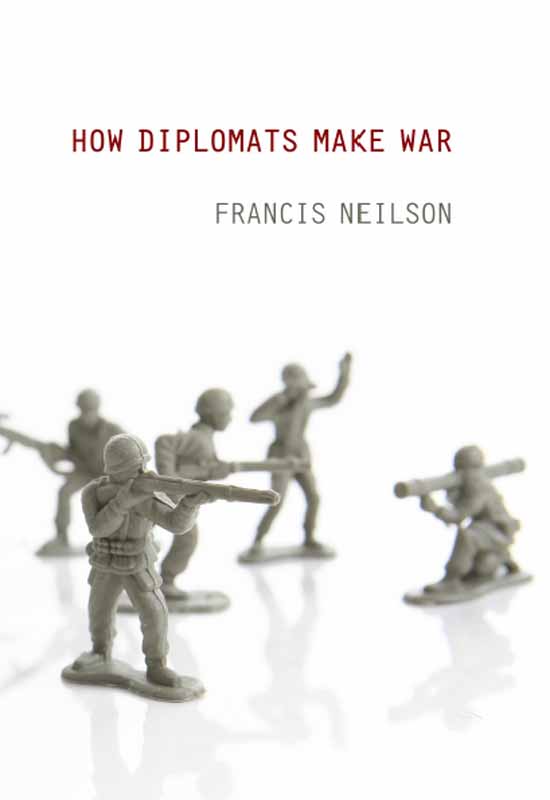
Title Page
HOW DIPLOMATS MAKE WAR
BY
FRANCIS NEILSON
Member of Parliament, January, 1910-December, 1915.

The whole theory of the universe is directed to one single individual—namely, to You.
—WALT WHITMAN.
NEW YORK
B. W. HUEBSCH
MCMXV
Copyright Page

Copyright, 1915, by
B. W. HUEBSCH
First edition, November, 1915
Second edition, May, 1916
Third printing, January, 1918
Fourth printing, November, 1921
Fifth printing, October, 1940
PRINTED IN U. S. A.
Introduction To The Fifth Edition
Francis Neilson’s How Diplomats Make War is one of the classic books of World War literature. Published anonymously a quarter of a century ago, in 1915, it still holds its place as a standard work. Innumerable later writers have plowed deep in the soil first broken by this volume. Whole libraries have been reared on the foundation structure of its original and creative thought. But How Diplomats Make War stands memorable for its courage, vision, rigorous scholarship, and proud proclamation, in an age of fear and falsehood, of the truth.
Chapter I: 1815
“WHAT, speaking in quite unofficial language, is the net purport and upshot of war? To my own knowledge, for example, there dwell and toil, in the British village of Dumdrudge, usually some five hundred souls.
Chapter II: “Scraps of Paper”
Alas, the country! how shall tongue or pen
Bewail her now uncountry gentlemen?
The last to bid the cry of warfare cease,
The first to make a malady of peace.
For what were all these country patriots born?
To hunt, and vote, and raise the price of corn?
But corn, like every mortal thing, must fall,
Kings, conquerors, and markets most of all.
And must ye fall with every ear of grain?
Chapter III: 1870
“HEAVY banks of cloud with occasional breaks of brighter sky over Europe; and all the plot, intrigue, conspiracy, and subterranean scheming, that had been incessant ever since the Crimean War disturbed the old European system, and Cavour first began the recasting of the map, was but the repulsive and dangerous symptom of a dire conflict in the depths of international politics. The Mexican adventure, and the tragedy of Maximilian’s death at Queretaro, had thrown a black shadow over the iridescent and rotten fabric of Napoleon’s power.
