Another Brick in the Wall
While the song is not the first example of the antieducation theme in popular music, it came at a time when increasing numbers of students are questioning the value of their education.

In the early 1920s, Ludwig von Mises became a witness to hyperinflation in Austria and Germany — monetary developments that caused irreparable and (in the German case) cataclysmic damage to civilization.
Mises’s policy advice was instrumental in helping to stop hyperinflation in Austria in 1922. In his Memoirs, however, he expressed the view that his instruction — halting the printing press — was heeded too late:
A friend of mine is going to be a panelist at this event, World’s Fair Use Day, which
Austrian economists dominate the Money and Monetary Policy bestseller list for Kindle downloads. Mises’s The Theory of Money and Credit is ensconced in 2nd place. Friedman and Schwartz’s A Monetary History of the United States is in 4th place sandwiched between Rothbard’s The Case Against the Fed in 3rd place and Mises’s Human Action in 5th place.
Every schoolboy learns that, to reach a true conclusion, one must start with true premises and use valid logic. The lesson, unfortunately, is largely forgotten later in life. Most lack the intelligence, interest, or courage to apply the lesson rigorously. Many break or bend the rules to further their own agendas or careers. Others can only muster the will to follow the rules in some part or in some cases. Rare is the person who masters the lesson.
In a recent New York Times op-ed, economist Robert Shiller (coproducer of the famous housing-price index) recommended that the US government begin to sell claims on fractions of Gross Domestic Product. Besides the practical problems with his proposal, it rests on the premise that the US government owns the entire economy. It will be instructive to parse Shiller’s column to see just how badly his collectivist thinking misleads him.
There are various ways to explain what is wrong with IP. You can explain that IP requires a state, and legislation, which are both necessarily illegitimate. You can point out that there is no proof that IP increases innovation, much less adds “net value” to society. You can note that IP grants rights in non-scarce things, which rights are necessarily enforced by physical force, against physical, scarce things, thus supplanting already-existing rights in scarce resources.
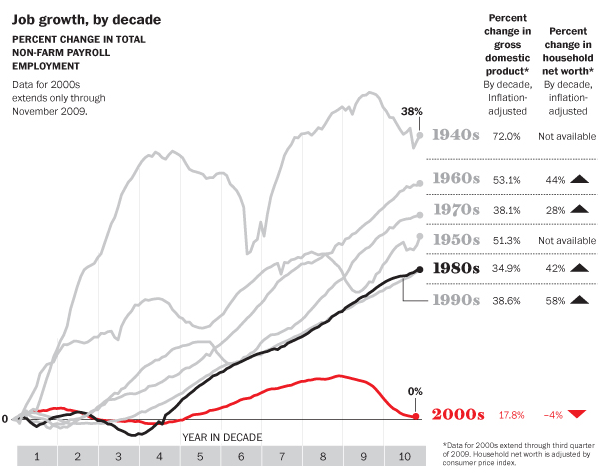
Here is a beautiful illustration, with a visual that originated in the Washington Post – the newspaper of the city that generated the false boom that ended in devastation:
Uninformed critics of Austrian economics sometimes dismiss it as “religion, not analysis.” Perhaps they should heed statistician Andrew Gelman’s advice “to retire use of the term ‘religion’ to mean ‘uncritical belief in something I disagree with.’” Right on! I mean, how often have you been chided for your “belief” in “free-market fundamentalism”? Gag.
