
1. Introduction: The Austrian Theory in Perspective
2. The “Austrian” Theory of the Trade Cycle
Ludwig von Mises
Nowadays it is usual in economics to talk about the Austrian theory of the trade cycle. This description is extremely flattering for us Austrian economists, and we greatly appreciate the honor thereby given us. Like all other scientific contributions, however, the modern theory of economic crises is not the work of one nation.
3. Money and the Business Cycle
Gottfried Haberler
I
If I speak of the business cycle during this lecture I do not think only or primarily of such financial and economic earthquakes as we have experienced during the last few years all over the world.
4. Economic Depressions: Their Cause and Cure
Murray N. Rothbard
We live in a world of euphemism. Undertakers have become “morticians,” press agents are now “public relations counsellors” and janitors have all been transformed into “superintendents.” In every walk of life, plain facts have been wrapped in cloudy camouflage.
5. Can We Still Avoid Inflation?
Friedrich A. Hayek
In one sense the question asked in the title of this lecture is purely rhetorical. I hope none of you has suspected me of doubting even for a moment that technically there is no problem in stopping inflation. If the monetary authorities really want to and are prepared to accept the consequences, they can always do so practically overnight.
6. The Austrian Theory: A Summary
Roger W. Garrison
Grounded in the economic theory set out in Carl Menger’s Principles of Economics and built on the vision of a capital-using production process developed in Eugen von Böhm-Bawerk’s Capital and Interest, the Austrian theory of the business cycle remains sufficiency distinct to justify its national identification. But even in its earliest rendition in Ludwig von Mises’s Theory of Money and Credit and in subsequent exposition and extension in F. A.
Further Reading
Further Reading
Bellante, Don and Roger W Garrison. “Phillips Curves and Hayekian Triangles: Two Perspectives on Monetary Dynamics,” History of Political Economy 20, no. 2 (Summer 1988): 207–34.
Butos, William N. “The Recession and Austrian Business Cycle Theory: An Empirical Perspective,” Critical Review 7, nos. 2–3 (Spring-Winter 1993): 277-306.
7. Index
(Prepared by Timothy Terrell)
Beveridge, Lord William, 100
Böhm-Bawerk, Eugen von, 9, 27, 111
Bretton Woods, 109, 110
Business cycle
Austrian theory of, 7–10, 17–21, 25–35, 27n, 37–64, 81–91, 111–20
Currency school theory of See Currency school, British Keynesian theory of, 21, 22, 66, 67, 20
Marxist theory of, 69
monetarist theory of, 22–23
Ricardian theory of, 74–81
8. About the Authors
Ludwig von Mises (1881-1973), leading proponent of the Austrian School in the 20th century, received his doctorate from the University of Vienna, where he taught. He was also economic advisor to the Austrian Chamber of Commerce. Mises later taught at the Graduate Institute for International Studies in Geneva and New York University. His most important works include The Theory of Money and Credit, Socialism, Theory and History, and Human Anion.
The Ludwig von Mises Institute
The Mises Institute, established in 1982, advances the Austrian School of economics, free markets, sound money, and private property on campus and in American life.
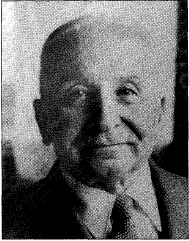
Ludwig von Mises
Supported by private donations, the Institute publishes an academic journal, books, monographs, study guides, occasional papers, a quarterly book review, and a monthly, The Free Market.
