
VII. Conclusion
Confronted with the nation’s first great panic, Americans searched widely for the causes of and remedies for their plight. Their search led them to a wide variety of suggestions and controversies, many of which showed keen insight and economic sophistication. Discussion was carried on in the newspapers, in monographs, and in the halls of legislatures. Particularly striking is the high caliber economic thinking of the influential journalists of the day and of many leading political figures.
Appendix A Minor Remedies Proposed
Aside from major controversies already discussed, other scattered proposals and discussions appeared during the depression. Internal improvements financed by the states, for example, were suggested in many quarters as remedial measures for the depression, thus anticipating modern public works proposals. These suggestions were reflections of the growing interest in internal improvements since the end of the War of 1812.
Appendix B Chronology of Relief Legislation
RELIEF LEGISLATION
Stay laws imposed moratoria on collections of debts; minimum appraisal laws set a fixed price below which the debtor’s property could not be sold at auction; compulsory par laws prohibited anyone from exchanging bank notes of the state at a discount; the “summary process” was a particularly rapid procedure for collection of debts to banks.
| 1818 | |
| October | Vermont: House passed stay bill. |
Bibliography
GOVERNMENT PUBLICATIONS
Alabama General Assembly. 1821. Journal of the Senate, 1821.
Annals of Congress of the United States. 1827. 15th Congress, 2d Session to 17th U.S. Congress. The Public and General Statutes Passed by the Congress of the United States of America. Boston: Wells and Lilly. Vol. 2.
Cincinnati Directory. 1819. Cincinnati.
Index
Abbott, Edith, 214n
Abbott, James, 201n
Abernethy, Thomas Perkins, 12n, 47n, 68n, 81n, 82n, 84n, 122n
Adair, John, 77, 102, 138–40, 141, 144
Adams, George, 132
Adams, John, 198, 198n, 210
Adams, John Quincy, 120n, 152, 198, 198n, 200n, 207
“Agricola,” 150, 159
Agricultural production, 27
Alabama, 81–84
Alabama, Bank of the State of, 83
Back
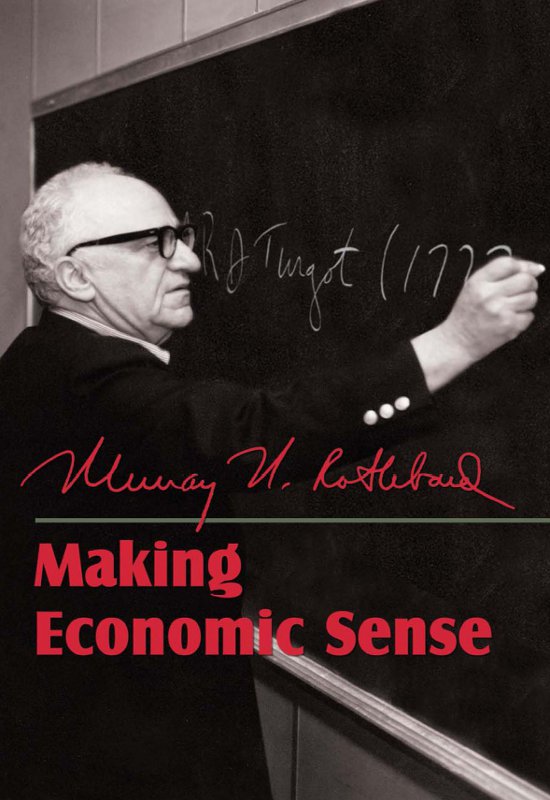
Making Economic Sense
Title Page
Making Economic Sense
2nd Edition
Murray N. Rothbard
Copyright Page

Copyright © 1995, 2006 by the Ludwig von Mises Institute
All rights reserved. No part of this book may be reproduced in any manner whatsoever without written permission except in the case of reprints in the context of reviews. For information write the Ludwig von Mises Institute, 518 West Magnolia Avenue, Auburn, Alabama 36832.
ISBN: 0–945466-46–3
Preface by Llewellyn H. Rockwell, Jr.
PREFACE
The academic contributions of Murray N. Rothbard (1926–1995) are legion, but he also had a passion for public persuasion. A free society can only be sustained if the general public is aware of the vital importance of the market and the terrible consequences of statism. That’s why Rothbard hoped to convince everyone about the virtues of the free economy. For Rothbard, educating the public was strategically necessary and morally obligatory. It was also lots of fun.
