

Please consider helping us publish these new books. Every donor of $600 or more will be listed in every book as a Patron. To become a Patron, click here. The deadline to be included is June 24.
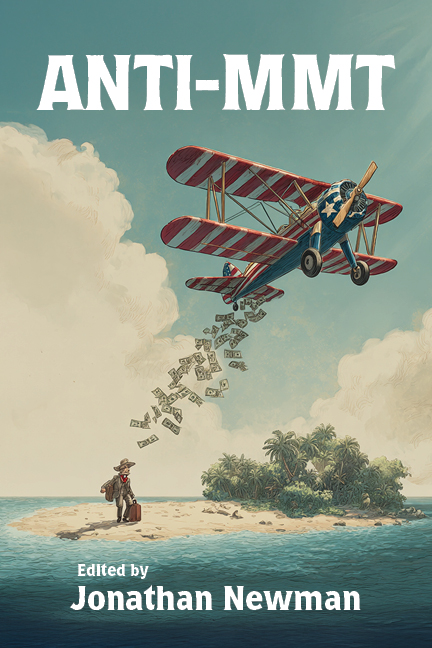
Edited by Jonathan Newman
Modern monetary theory says that we shouldn’t worry about large government debts and budget deficits. We can use the printing press to finance all the nice things we want the government to do, and we can use higher taxes to fight inflationary fires. MMT is essentially a blank check for government spending backed by economic lies, and it’s rapidly gaining ground in popular discourse and among politicians. In Anti-MMT, the most outspoken economists of the Austrian School set to work demolishing MMT point by point. They show that MMT is a baseless theory that is wasteful at best, and that if put into practice, MMT will be yet another experiment that destroys all the prosperity that our forebears worked so hard to build.

By Daniella Bassi
Most fur trade histories blame capitalism for the dispossession and subjugation of indigenous peoples, arguing that dependence on guns and other European goods made them helpless to resist colonialism. Histories of the Canadian North are no different, blaming the fur trade for the injustices suffered by the Inuit and other northern peoples. In An Interlude of Freedom, Mises Institute editor and historian Daniella Bassi uses natural rights theory and Austrian economics—rather than the usual Marxism and historicism—to reinterpret this unique historical moment by reframing it around state power. She shows that the Canadian government disrupted a mutually beneficial trade as it encroached on the free Arctic in the twentieth century and that it created disorder by replacing Inuit natural law with Canadian rule.
Murray Rothbard on Politics, Philosophy, and History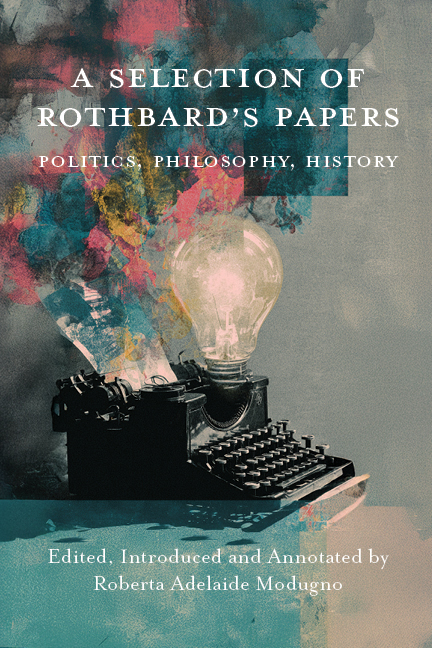
Edited by Roberta Adelaide Modugno
In honor of Murray Rothbard’s 100th birthday, the Mises Institute is unveiling a new collection of Rothbard’s writings. This special collection, edited and annotated by premier Rothbard scholar Roberta Adelaide Modugno, consists of book reviews and memos written during Rothbard’s Volker Fund years (1953–69), as well as essays on political philosophy, history, and, of course, economics. Many of these writings are published here for the first time, while others, such as “A Fable for Our Times” and “Toward Strategy for Libertarians,” will be recognized as early versions of Rothbardian classics. The book reviews show Rothbard’s analytical mind at its best and supply a much-needed radical libertarian perspective on many respected books. This collection is an invaluable resource for the students of liberty.

Compiled by Edward Fuller
Mises A to Z is the long-awaited companion to Rothbard A to Z. This is the ultimate Mises reference book, bringing together quotes and excerpts from all his writings. Mises wrote widely throughout his life, leaving us many great books and articles. Mises A to Z is a great resource for those of us who are short on time or just looking for a starting point for deeper reading. In this book, you’ll find Mises’s positions on numerous subjects and his best moments as a writer organized by topic and by book. Compiled by Edward Fuller, the scholar behind Rothbard A to Z, the book contains an extensive bibliography and is designed to lead you back to Mises’s masterpieces.
The Development of Economic Theory from Adam Smith to John Stuart Mill, by Frank A. Fetter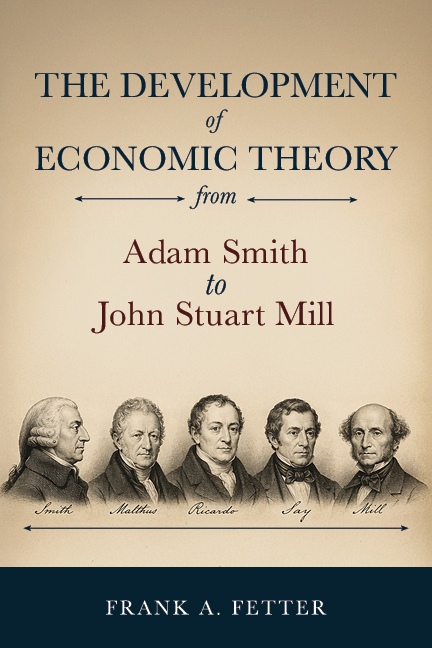
and
Markets versus Monopoly, by Frank A. Fetter
Edited by Matthew McCaffrey
After thriving from 1900 to 1920, the American Austrian School was being snuffed out by bad economics. Economist Frank Fetter kept the flame lit long enough for Hayek, Mises, and Rothbard to build up a roaring fire again. But Fetter’s valuable contributions to Austrian thought have long been a sort of missing link that hasn’t been fully incorporated into the Austrian canon. Rothbard saw the importance of Fetter’s scholarship early on and edited his own book of Fetter’s writings, Capital, Interest, and Rent (1977). In honor of the Year of Rothbard, we’re continuing Rothbard’s mission to bring Fetter’s work to light by posthumously publishing two new Fetter manuscripts.

The Development of Economic Theory from Adam Smith to John Stuart Mill is a history of economic thought that strongly critiques the classical economics of Malthus, Ricardo, and Mill. In it, Fetter argues that the misguided labor theory of value and Malthusian pessimism about population growth drew economics away from the correct theories of Say and other proto-Austrians, throwing it far off course for a long time. A radical retelling of economic history, The Development of Economic Theory is a terrific complement to Rothbard’s History of Economic Thought.
Markets versus Monopoly is a brilliant and wide-ranging collection of essays covering everything from the history of big business and monopoly in America to immigration and cosmopolitanism. Together, these essays present a much-needed portrait of early Austrian economics in America.
Help us publish these great books today! Every donor of $600 or more will be listed in every book as a Patron! Donate online at mises.org/sixbooks or call (334) 321-2100.

