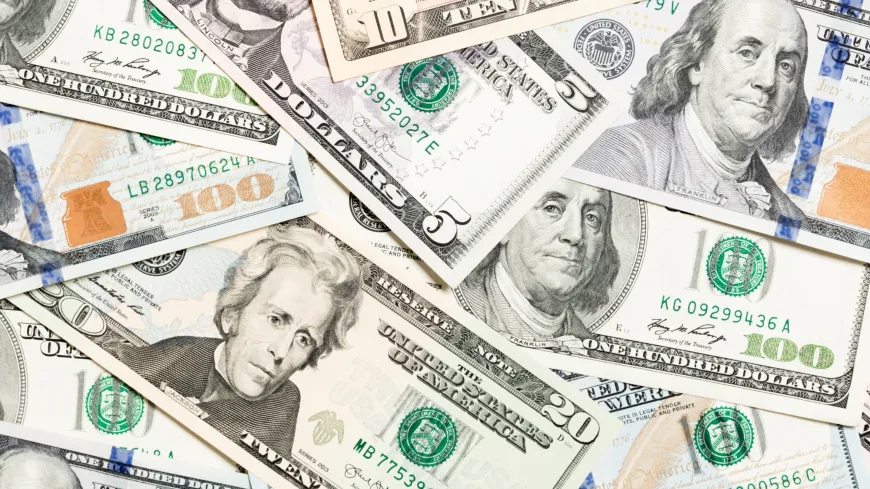

How should voters determine what politician to vote for? Who is “able” and “competent” enough to rule over others? If one were to accept the premise that somebody has to lead the nation by force (one which I do not accept), how would voters decide who to choose?

Well, a reasonable way would be to look at past experience: “Let us look then and see, how they manage their concerns – they for whose cause we are to labour, devote ourselves, and grow enthusiastic.” Let us see how the person performed when they had the same means at their disposable as anyone else, as you and me; if they truly managed to harness their talent and transform society for the better.

People like Henry Ford, one of the first to successfully apply assembly lines in mass production, directly brought down the cost of automobiles, and indirectly influenced other industries to mass produce in similar ways. Perhaps it is such people that should be considered viable candidates.

For surely a man who more than doubles the wages of his workers from his own money1 is far more worthy of praise than morally bankrupt politicians who are able merely to redistribute what is not theirs. 

One is compelled to remember Lord Acton's eminent observation that “Power corrupts, and absolute power corrupts absolutely.” A statement for which, as though it were not already unnecessary given ample historical examples, empirical proof is being developed2. And if it were not bad enough that power can corrupt good people, voters elevate to high stations people who from the very outset seek power.

If a man such as Henry Ford is performing well for society, is it perhaps not precisely because of their constraints? He must not only compete with others for the satisfaction of peoples' wants; but he has no privileges that set him above others3, no power except that which he has earned, and this power could evaporate the moment he mistreats his customers.

By what inane logic would you promote one who is doing well, to a position where whether they do well or not no longer affects their power or revenue? A position where they have neither need, nor incentive, nor ability to be competent. Who in their right mind, would actually make the effort of enacting the Peter Principle4? Why would people surrender exactly those rights which protect them from men of power?

Something is wrong when voters willingly promote incompetent men from positions of relative harmlessness to that of absolute power.

For those interested, the why was answered in Étienne de La Boétie's Discourse on Voluntary Servitude.

Still, I find it fascinating, that in this day and age when the rejection of gods has become quite fashionable; that those same skeptics who profess incredulity with matters of religion, suddenly act like gullible infants when it comes to politics. That they would build a cult of personality for their idols, suspend their faculties of reason, and worship a man as they would not dare worship a god. You have not freed yourselves, but merely replaced the uncertain slavery of organised religion with the inevitable servitude inflicted by man.


____________________________

1. http://www.americanheritage.com/articles/web/20060105-henry-ford-five-dollar-day-model-t-ford-motor-company-assembly-line-james-couzens-highland-park-detroit-automobiles.shtml

2. http://www.economist.com/sciencetechnology/displayStory.cfm?story_id=15328544

3. Actually, Ford used patents to secure his advantage over competitors, but this too was only permitted by the government.

4. http://en.wikipedia.org/wiki/Peter_Principle

It is often remarked that the existence of unions is proof of the inefficiency and failure of markets to pay workers adequate wages. That workers, as a great multitude with little individual influence, must form socialistic collectives in order to provide a counterweight to the great power wielded by corporations. Moreover, since unions have virtually no power of their own, and must be granted special rights and privileges by governments; governments themselves becomes exalted as an entity both capable of, and requiring intervention in markets.

The usual counterarguments are that theoretically, wages ought to be kept sufficiently high due to competition for labour between corporations themselves. Historical examples can often be quoted to support this view. In 1914 Henry Ford almost doubled wages to $5 a day (more than 110 dollars in current terms) in order to attract workers from his competitors, and he was able to do so largely due to the incredible efficiency he had achieved using machinery and conveyor belts, technologies ironically regarded by some as altogether destructive of employment. Some go further to say that government intervention through taxation, regulation, anti-trust laws, etc., restricts competition in the first place, helping to create this problem.

And thus unions' existence is first ensured by government intervention, and then enabled through it. Yet there is something even more fundamental and sinister at work in making unions necessary, which seems to have, to my knowledge, gone largely unaccounted for.

This is the factor of inflation. All modern states exist in an almost permanent state of price inflation, infrequently interspersed with bouts of deflation, or fears thereof caused by disinflation. It is my belief, that this is the most fundamental reason for which unions can exist. If the role of a union is to raise wages for its members, and a currency is being devalued from year to year, were workers to continue being paid the same nominal wage, then their real wage would be going down. Thus, unions exert power upon employers to raise nominal wages in line with inflation. Firms themselves are often unwilling to raise wages because to do so they must also raise nominal prices – something highly unpopular.

Firms often end up absorbing a part of inflation through efficiency gains and timorousness in raising prices. We already know from game theory that oligopolistic markets face a kinked demand curve, that any firm individually raising prices will lose market share, and that the only "fair" solution to this for all firms involved would be an illegal cartel raising prices in accordance with inflation simultaneously.

If governments pursue a doctrine of inflation, then nominal prices, which are sticky upwards, will have difficulty being raised in line with inflation, causing firms to underpay employees in real terms, leading to a clamour for unions.

If, on the other hand, governments pursue a doctrine of price deflation due to a stable money supply, then as the supply of goods and services increases, their prices will fall as firms vie for market share in price wars beneficial to consumers; while employers will have a hard time reducing nominal wages, which are sticky all the more so downwards. Thus will the real purchasing power of employees rise, without the need for unions, and in accordance with productivity increases passed on through a competitive slashing of prices.


P.S. I am fully aware that a corporation itself is a collectivist legal construct manifested only through government help, i.e. limited legal liability, acts of incorporation, etc. and as such is not an entirely free market phenomenon, making socialist criticism of corporatism as an example of the inequity of free markets as a cheap straw man, if one they may be unaware of.


Why is it that illicit black market activities always seem so full of violence, even if violence itself is not one of the goods or services provided in that market? Let us take the example of drugs. Those drugs that are legal, such as paracetamol, antihistamines, etc., can be bought either over the counter, or with a simple prescription. At no point in the transaction between my chemist and myself does violence occur. Nor is there any violence involved in the manufacture or supply of pharmaceuticals. Is it then the nature of illegal drugs that makes business surrounding them violent, or is it their status as illegal?

This question can be answered using simple economic theory. When a State decrees an economic good illegal, it does not suddenly stop being traded and consumed. Why is that? In explaining the nature of a good, Carl Menger outlines four requirements that must be fulfilled for a thing to have goods-character: a human need; properties that enable the thing in question to satisfy such a need; knowledge of this causal connection; and sufficient command over the thing to direct it towards the satisfaction of said need. You will notice that no where does the factor of legality come into play.

The legal status of a good does however send signals to market actors about the risk involved. Most people will automatically cease consumption and trade of a good deemed illegal. These can be broken down into roughly three categories. Those that are risk aversive personality types; those who have a low time preference; and those with a highly developed link between state laws and their perception of morality.

Thus we are left with people who do not fear the State's power, people who are willing to take risks, people who, perhaps, are confident in their ability to violently resist the State's own violence. In this set of people, very few will enter black markets just for thrill-seeking purposes. Most will enter because of greed and the possibility of high profits that comes from restriction of supply in the market. It would seem that from the very beginning, a very restricted and specific set of people will participate in black markets.

Moreover, black markets fail to have many of the characteristics common to white markets. The State's monopoly on justice and simultaneous prohibition of certain goods, makes arbitration through State courts for inside disputes impossible. Thus a demand for the arbitrating function of many crime organisations arise, which, because of the violence-prone set of people that participate in it, will itself display a harsh and violent form of dispute resolution.

The need to stay secretive about their operations will also create incentives for criminal organisations to take on a form which is perhaps in some ways economically inefficient, sacrificing productivity for security. “Blood is bad for business”, the saying goes; but at the same time these black market “firms” become resilient, which is why when one cut's off the hydras' head, another immediately grows in its place. This is to be the perennial outcome if countless billions of taxpayers' money continues to be spent hacking away at the branches, and not the roots, of this artificial evil.

The biggest irony of them all is that the harder the government tries to eradicate black markets, the more it will fuel them. With every new restriction and regulation the government puts up; and with every greater effort it takes to enforce its regulations, the government raises the risk, and hence the profit associated with participation in a black market. To further complicate this problem, as profits in black markets soar, greater incentives arise for the corruption of the police itself. The results of such “noble” experiments could have been painlessly predicted using simple economics, and stupid policies would not have had the chance to create breeding grounds for organised crime for decades to come. One could perhaps excuse regulators' failure to use aprioristic reasoning in this respect, but the failure to see the empirical connection between drug regulations as a rehash of the prohibition era alcohol restrictions is indeed grave.

Ignoring the moral aspect of this argument, which concerns whether people have the right to do what they will to their own bodies; has anybody in the government done a proper cost-benefit analysis of breeding black markets in society? Proponents of prohibition argue that if, for example, drug markets were legalized, everybody would become a drug addict. But besides lack of any empirical proof of this whatsoever, what of the consequences of blacklisting these products in the first place?

Scarcity can be defined as the ownership of something tangible which necessarily excludes others from using it. Thus, if I own a fork, I exclude others from using it, unless I either give it away or temporarily transfer availability of it to someone else, which in turn means I cannot at that point in time use it. Should someone steal it from me, the act of theft can be characterised by two features. First, the transfer of property is involuntary on the part of the original owner, and does not involve mutual consent. Second, the transfer of ownership excludes the previous owner from using the property – that is to say, if someone steals my fork, I can no longer use it.

Intellectual property, on the other hand, is not a scarce resource. If I see you making a sandwich and decide to make one myself using my own bread and cheese, I am not taking away your idea from you – you still have possession of your idea. When I make a sandwich based on your idea, you do not lose your own ability to make a sandwich. Ideas themselves are therefore not in principle scarce economic goods. Having said that, you could certainly create artificial scarcity by hiding your idea of making a sandwich from me, and thus try to imbue your idea with added value due to its newly acquired scarcity. Such means of protecting ones' ideas are in my opinion perfectly valid.

If however you were to try to stop me from making my own sandwich once I had already acquired the idea, you would be violating my very real physical property rights. You would in fact be restricting the ways in which I can use my physical property (bread and cheese), and in so doing would also be laying claim to ideas inside my mind, violating my self-ownership too. This contradiction between self ownership and physical property rights on the one hand and intellectual property rights on the other cannot logically be valid, since intellectual property rights can only come about as a consequence of self-ownership and physical property rights. You must first own yourself, in order to own your ideas. Of course, there is nothing stopping you from getting me to voluntarily sign a contract agreeing to not disclose your idea to others, or to use it in limited ways, but such a contract must be explicit, and signed by both parties.

If one were to assert that the copying of another's idea, and its subsequent mass production is damaging the owner of the original idea, then using that same logic, if two people were to try to get a job where only one placement exists, the person who gets the job should be held liable for hurting the other person. But this reductio ad absurdum works precisely because there is a critical misconception here. In the case of a job, what is lost is not owned. In other words, the person who fails to pass an interview for a job does not lose the job itself, but merely the opportunity of obtaining this job. Since opportunities are not one's property, indeed – opportunities are usually created by others for us to take advantage of, then the loss of an opportunity as a result of someone else does not constitute a crime. To try to instate a system as to the contrary would require violation of the rights of the employers and other creators of opportunity. Oh wait...

In any case, it is scarcity that makes property rights both necessary for a well-functioning society that wishes to avoid the perennial tragedy of the commons problem, and it is scarcity that provides the ethical justification for property rights and against theft, since theft of scarce resources actually does hurt the original owner – by excluding them from their possessions.

Likewise then, we can apply this to piracy. Let us take, for example, movie piracy. If I were to download a movie from the internet (assuming I did not explicitly and voluntarily sign a contract with the producer restricting my use of the product), and then sell DVDs of this movie to other people at a lower price than the original DVD producer was selling them at – this does not represent theft. The loss of sales that the original producer experiences is not a loss of property, and so cannot possibly constitute theft. This is because all sales are opportunities – they may or may not occur, and when I undercut the original DVD producer therefore taking customers away from them, this is merely a manifestation of market mechanics in which they fail to price their goods adequately (usually due to monopoly power) or fail to protect their ideas through non-coercive means, and therefore lose the opportunity to sell their goods to some people. Thus, intellectual property can only be safeguarded through secrecy or explicit contracts with the users of said property, if it is to remain consistent with the idea of self-ownership.

It is also worth addressing the argument that actually, ideas are scarce. It is claimed that ideas have scarcity because it is difficult and costly to obtain certain knowledge, skills, experience, etc. Take the example of teaching. To acquire an education implies a certain expense, regardless of who pays for it. Yet this is primarily because teachers are often scarce – especially good teachers, and both teachers and the act of teaching constitute a physical good or action in the real world. Moreover, it is the teachers' constraint of time, and the limited amount of teachers, that does not enable them to spread their ideas more freely. It is thus the natural limitations of the physical world that cause the transmission of ideas to be scarce – not the ideas themselves.


Born of the fire,
Fuelled by desire,
Rises an idol
forsaken by hell.

This spirit of madness,
the terror it wrought.
None now remember,
the havoc it sought.

Enslaving our minds
in the shackles of hate.
Its emblem was blood,
but its enemy fate.

Yet now it revolves,
breeds anew its disorder.
With merciless lies,
it coerces the truth.

It proclaims itself light,
yet its veil obscures all.
In the darkness of plight,
it destroys wherewithal.

When will the truth,
the beauty of love.
Send spite its venom,
send soaring the dove.

How long must wait I for people to sober,
how long will fools praise what's always in vain.

After reading this blog post on Karl Poppers work, I was particularly interested in the way in which human beings adapt to circumstances, or solve problems using exosomatic means. Now at first this may not seem necessarily new. I think most people will have realised that the key difference between humans and other animals is the use of tools as opposed to purely biological adaptations. However, what sparked my interest was that “when tentative solutions fail it is not man that dies with it, but the idea.”(1)

This led me to think of an analogy that can be drawn up between free markets and state monopolies. Even if man is fallible, stupid, and corrupt – through the evolutionary idiosyncrasy of the market, the bad entrepreneurs are weeded out, just like bad ideas. Indeed, just like man has overcome the need to die in order to adapt, so has the market overcome the need to impose upon everyone a false solution before it can be improved. Just as man has created an exosomatic exposé of ideas that compete between each other, so is the market a conduit for the competition and comparison of ideas and methods of organisation.

If a government, and in the extreme case, a world government, imposes one single solution on people, and it fails, people suffer, and eventually die. If however there are free alternatives between which people can choose and flee to should some ideas fail, the organisational system or idea will die much quicker, than if one single form is imposed by force. As Laurence Peter said, “Bureaucracy defends the status quo, long past the time when the quo has lost its status".

For example, if several different products or services exist on a market, when one of the firms raises its price by an exorbitant amount, people will quickly switch to alternatives. If however there is a monopoly in a certain industry, the time it takes for a new firm to enter the market and provide a competitive product is much greater. But what if, yet worse, there is no freedom of entry?

Society ought to lower barriers to entry for ideas and their implementations. If as neoclassical economists contend, barriers to entry are a serious inhibition to the functioning of a market in a competitive manner, then certainly the government's imposition of one ideology, set of laws, etc., to a society is the greatest barrier to entry possible, and an unnecessary one at that. It is patently obvious that not everyone wants this imposition. The consumers of the good known as democracy are dissatisfied. Even in the case when elections are won by a majority, there is most often a large minority that disagrees with the government, and if we take into account voter turnouts, almost all democratically elected government represent a minority of citizens – a minority of ideas. Yet for some reason policies are imposed in a geographically monopolistic manner.

Markets allow differing consumer tastes and niches to be satisfied simultaneously, state programmes and policies do not. Historical examples of competitive markets exist for every single good and service that the state has ever sought to provide, and in every case that I have encountered so far, the markets fair better – as is obvious when we take into account the virtues of competing ideas that can be voluntarily chosen or abandoned versus a coercive imposition of one set of ideas and policies. To take the example of law, the state's provision of law does not prove that law cannot be provided by a competitive market process.

If we were to look at medieval Iceland, the chieftaincies acted as dispute resolution organisations that could be subscribed to or left voluntarily if one was dissatisfied with their services, and they did so without maintaining any geographical borders. Just as it is unthinkable today that market provided goods such as PCs and Macs require monopolistic borders in order for the market to function, so was a monopolistic and involuntary imposition of law upon an arbitrarily defined geographical area unthinkable to the denizens of medieval Iceland.(2)

The automatic sorting system provided by the market is far superior than the forced system of the government, to reform which requires lobbying, protests, revolutions, or civil wars. The market system not only takes into account human nature by exploiting the profit-motive; but it also restricts avarice and intellectual sloth through competition – to the extent that even if humans had absolutely no intelligence, pursued no defined ends, and acted entirely randomly, the market would still yield beneficial results. This is comparable to many individuals within one specie behaving differently or having different DNA so that the best survive and the worst die out. Yet we restrict the “DNA pool” of ideas to one large organism, without allowing comparative analysis to help us. And so when the system dies, human civilisation is liable to die with it – at least for a time.

The importance of correct comparative analysis cannot be overstated. The failure of economists and governments to accurately mathematically model and s(t)imulate an economy is partly because of the impossibility of simultaneously taking into account an array of changing variables. However, if we were to look at two firms competing in the same market at the same time, we can adequately compare them because many factors are kept constant by reality, e.g. the system of laws in place, market conditions for both the goods demanded and the materials required, the labour market, the culture, etc., Whereas differing government systems of monopoly become practically impossible to compare. That is to say that under the present conditions, only one government system in a society can ever be tried at any one time, and to compare different governments requires to account for, compensate, and hold constant a multitude of exogenous factors – which is at best extremely difficult, and at worst impossible.

Many people with anti-market sentiments argue that markets destroy livelihoods when businesses fail. Yet this is not true. It is precisely this exosomatic market system that allows failing business models to be abandoned, for firms to look to their more successful competitors, and subsequently emulate their ideas and methods without going bankrupt. Indeed, they have every incentive to do so, a sort of second chance if you will. It is only when firms fail to both come up with a viable idea, and also to emulate successful methods of business conduct and organisation by other firms, that they go bankrupt – yet even then there is no loss of life.

Besides, under what conditions is welfare diminished? When one business fails, or when a multitude of customers are forced to continue to consume lower quality or over-priced goods because of government subsidies and bailouts. The state not only maintains a monopoly on many sectors directly, but it also maintains and in so doing perpetuates bad ideas for business management and investment in many markets. Such activity is unquestionably harmful and devastatingly myopic.


____________________________________________________________

1.  http://mises.org/Community/blogs/thecritiques/archive/2009/06/29/thoughts

-on-popper-s-theory-of-all-life-as-problem-solving.aspx


2.  http://libertariannation.org/a/f13l1.html